Thyromine Thyroid Support Review 2026: Can This Supplement Really Support Your Thyroid?
Thyromine Thyroid Support Review 2026: Can This Supplement Really Support Your Thyroid?

⚡ Quick Answer
Thyromine Thyroid Support is a multi-ingredient supplement containing L-tyrosine, iodine, selenium, ashwagandha, and guggulsterones — ingredients with varying degrees of published research relating to thyroid function. Individual components have shown modest promise in small clinical trials, but no multi-ingredient thyroid support blend has been validated in large, independent studies. It may be of interest to readers exploring nutritional support for mild, non-diagnosed symptoms, but it is not a substitute for medical treatment of thyroid disease.
🛒 Shop the product
Approx. £32 / $40.00 per bottle — affiliate link, see disclosure above.
If you have been feeling persistently tired, struggling with unexplained weight changes, or noticing that your mood and concentration seem off, it is natural to wonder whether your thyroid might be involved. The thyroid — a small, butterfly-shaped gland at the base of the neck — regulates metabolism, energy production, and body temperature. Even a subtle underperformance can leave you feeling flat, foggy, and unlike yourself. It is no surprise, then, that "thyroid support" supplements have become one of the fastest-growing categories in the wellness space.
Thyromine Thyroid Support is one such product, marketed as an expertly formulated blend of natural ingredients designed to promote a healthy metabolism and provide essential nutrients for optimal thyroid function. It contains a combination of amino acids, minerals, and herbal extracts — each chosen for a specific role in the thyroid hormone pathway. But how much of this is supported by published research, and how much is simply good marketing?
In this review, we will walk through the ingredients individually, examine the available clinical evidence, flag safety considerations — especially for anyone already on thyroid medication — and give you an honest assessment of what you can realistically expect. If you have already decided that a thyroid support supplement is something you want to explore, this guide should help you make that decision with your eyes open.
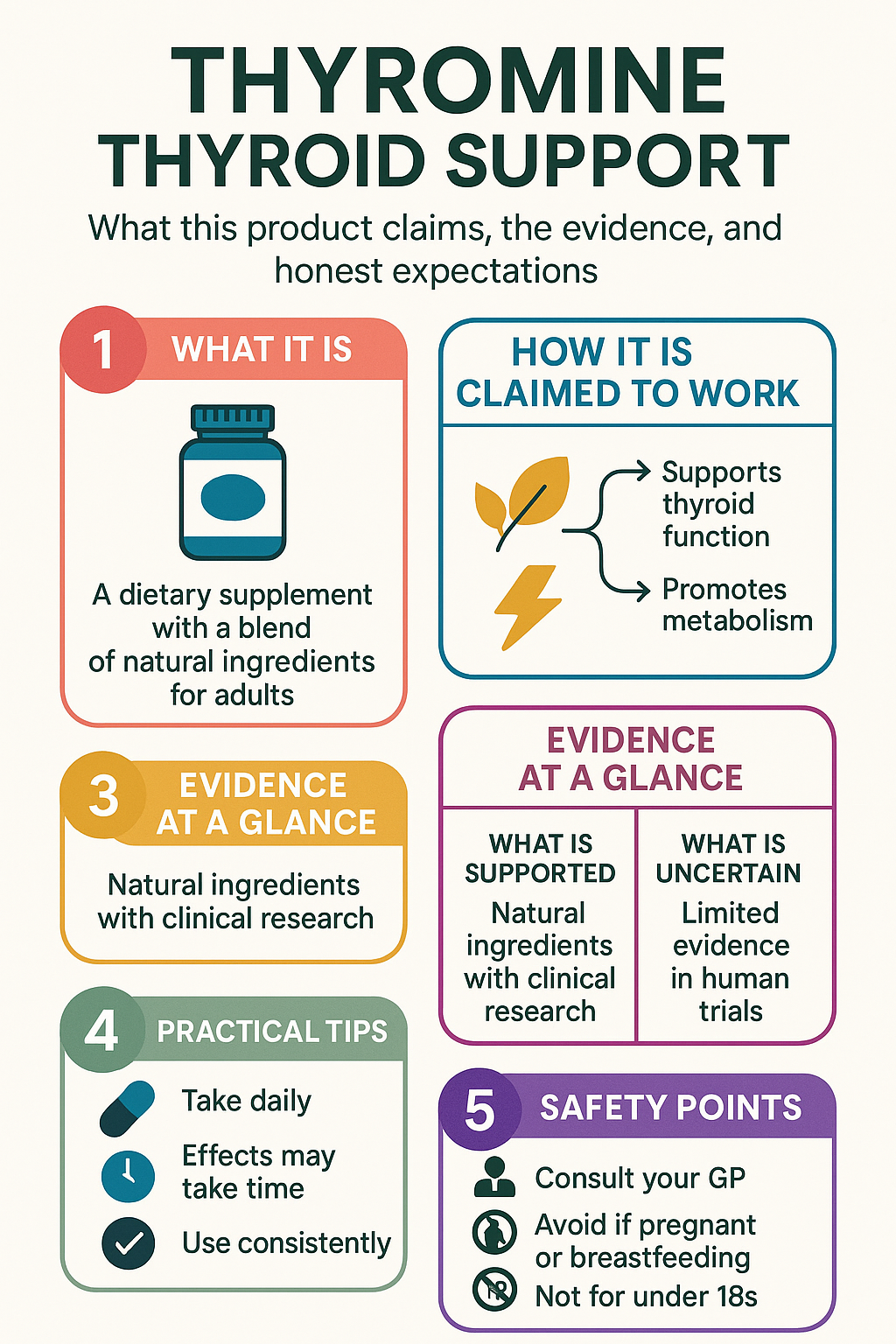
What Thyromine Actually Is
Thyromine is a dietary supplement — not a medicine. This distinction matters enormously. In the UK, dietary supplements are regulated by the Food Standards Agency and MHRA as food products, not as licensed pharmaceuticals. That means Thyromine has not undergone the same clinical trials, regulatory scrutiny, or approval process that a medicine like levothyroxine would go through.
The product is sold online and ships internationally. Its formula typically combines several ingredients that have individually been studied in relation to thyroid function: L-tyrosine, iodine (from plant sources such as bladderwrack), selenium, zinc, ashwagandha root extract, guggulsterones, and piperine from black pepper. Each of these has a plausible biological mechanism by which it could support thyroid health — but plausible does not mean proven, and the dose in a multi-ingredient blend may differ significantly from what was used in clinical research.
Key ingredients at a glance
What is in the Thyromine formula?
- L-Tyrosine — amino acid precursor to thyroid hormones T3 and T4
- Iodine (from bladderwrack/kelp) — essential for hormone synthesis
- Selenium — supports conversion of T4 to active T3
- Zinc — cofactor in thyroid hormone metabolism
- Ashwagandha — adaptogen studied for TSH modulation
- Guggulsterones — traditional Ayurvedic ingredient with limited clinical data
- Piperine (black pepper extract) — included for bioavailability enhancement
How the Ingredients Work in the Body
To understand why a manufacturer might combine these particular ingredients, it helps to know the basics of thyroid hormone production. The thyroid gland produces two hormones: thyroxine (T4), which is largely inactive, and triiodothyronine (T3), which is the biologically active form. Your pituitary gland monitors circulating hormone levels and releases thyroid-stimulating hormone (TSH) to tell the thyroid to produce more when levels fall.
Iodine is the raw material the thyroid uses to build these hormones — without adequate iodine, production stalls. L-tyrosine is the amino acid backbone on which iodine atoms are attached. Selenium acts as a cofactor in the deiodinase enzymes that convert T4 into the more potent T3 in peripheral tissues. Zinc plays a supporting role in hormone signalling and immune regulation. The rationale is straightforward: supply the building blocks and cofactors, and the thyroid has what it needs to function well.
Ashwagandha (Withania somnifera) operates through a different mechanism. As an adaptogen, it appears to influence the hypothalamic-pituitary-thyroid axis — essentially, it may help the brain communicate more effectively with the thyroid gland. Guggulsterones, derived from the resin of the Commiphora mukul tree, have been studied in animal models for their potential to stimulate thyroid function, though human data remains limited. Piperine is included primarily to enhance the absorption of other compounds in the formula.
The Evidence: What Research Actually Shows
This is where we need to be most careful. Several of Thyromine's individual ingredients have published research behind them, but the quality, size, and relevance of those studies varies considerably.
Ashwagandha has the strongest individual evidence. A 2018 randomised, double-blind, placebo-controlled trial published in the Journal of Alternative and Complementary Medicine found that 600 mg daily of ashwagandha root extract over eight weeks significantly improved serum TSH, T3, and T4 levels compared to placebo in adults with subclinical hypothyroidism. A 2021 RCT in the Journal of Ayurveda and Integrative Medicine reported similar findings. However, these were relatively small studies (50–80 participants) and focused on ashwagandha alone at a defined dose — not in combination with other ingredients at unknown quantities.
Selenium has a meaningful evidence base in autoimmune thyroiditis (Hashimoto's disease). A 2017 Cochrane-adjacent meta-analysis found that selenium supplementation (typically 200 mcg/day) reduced thyroid peroxidase antibody levels in patients with Hashimoto's, suggesting an anti-inflammatory effect on the thyroid gland. Whether the dose in Thyromine matches what was used in trials is unclear.
Iodine is well-established as essential for thyroid hormone production, and deficiency is a known cause of hypothyroidism worldwide. However, in the UK and most developed countries, iodine deficiency is relatively uncommon thanks to dairy and iodised salt intake. Excess iodine can paradoxically suppress thyroid function or trigger autoimmune flare-ups — a particular concern for those with undiagnosed Hashimoto's. L-tyrosine is often marketed as a thyroid-supporting amino acid, but clinical evidence for its benefit as a supplement in people who are not deficient is thin.
⚠️ Reality check — what we do not know
No clinical trial has been published on the Thyromine formula as a whole. We do not know the exact doses of each ingredient in the blend (proprietary formula), how they interact when combined, or whether the product produces measurable changes in TSH, T3, or T4 in a real-world population. This does not mean it cannot work — it means we lack the data to say confidently that it does. That is an important distinction, especially when the thyroid is involved.
How to Use It
The manufacturer recommends taking Thyromine as a daily supplement, typically with food. As with most nutritional supplements, consistency is more important than timing — the ingredients need to accumulate in your system over weeks rather than delivering an acute effect.
If you are taking levothyroxine or another thyroid medication, it is standard practice to take supplements containing iron, calcium, or iodine at least four hours apart from your thyroid medication to avoid absorption interference. This is particularly important with iodine-containing products. We would strongly recommend discussing the timing with your pharmacist.
Before starting, consider getting a baseline TSH blood test from your GP. This is a simple, widely available test that costs the NHS nothing if done through your surgery. Having a baseline reading allows you — and your doctor — to assess whether any changes you notice are real or coincidental. Without a baseline, you are essentially guessing.
Side Effects and Who Should Think Twice
Thyromine's ingredients are generally well-tolerated at the doses typically found in supplements, but there are several groups who should exercise particular caution:
Anyone with diagnosed thyroid disease. If you have hypothyroidism, Hashimoto's, Graves' disease, or any other diagnosed thyroid condition, adding iodine, selenium, or ashwagandha without medical supervision can alter your thyroid hormone levels unpredictably. This is not theoretical — ashwagandha has been documented to cause thyrotoxicosis in a small number of case reports, and excess iodine can trigger either hypothyroidism or hyperthyroidism depending on the underlying condition.
Pregnant or breastfeeding women. Thyroid demands change significantly during pregnancy, and iodine requirements increase. However, self-supplementing without guidance can be harmful to both mother and baby. This product is not designed for use during pregnancy.
People on blood pressure or blood sugar medications. Ashwagandha may lower blood pressure and blood sugar, which could compound the effects of certain medications. If you are on regular prescription drugs, a conversation with your pharmacist is a sensible precaution before starting any new supplement.
Those with autoimmune conditions. Ashwagandha can modulate immune function, and while this is sometimes framed as a benefit, it could theoretically worsen autoimmune activity in susceptible individuals. The evidence is not clear enough to make confident claims either way.
Possible side effects, though uncommon, may include mild gastrointestinal upset, headache, or changes in appetite. These tend to be transient and resolve when the supplement is stopped. If you experience symptoms of hyperthyroidism — such as rapid heartbeat, anxiety, tremor, or unexplained weight loss — stop taking the product and consult your GP promptly.
A Focused Look at This Product
Thyromine is positioned as a natural, multi-pathway approach to thyroid support. The combination of building-block nutrients (tyrosine, iodine), cofactor minerals (selenium, zinc), and herbal adaptogens (ashwagandha, guggul) is at least logically coherent — it covers several of the biological steps involved in thyroid hormone production and activation. Whether the doses in this particular product match what the research supports is the central unanswered question.
The product is manufactured in the United States and sold through an international retail platform. As with many supplements in this category, independent third-party testing data is not publicly available, which is worth noting for readers who prioritise verified quality assurance.
🔬 Product snapshot — Thyromine Thyroid Support
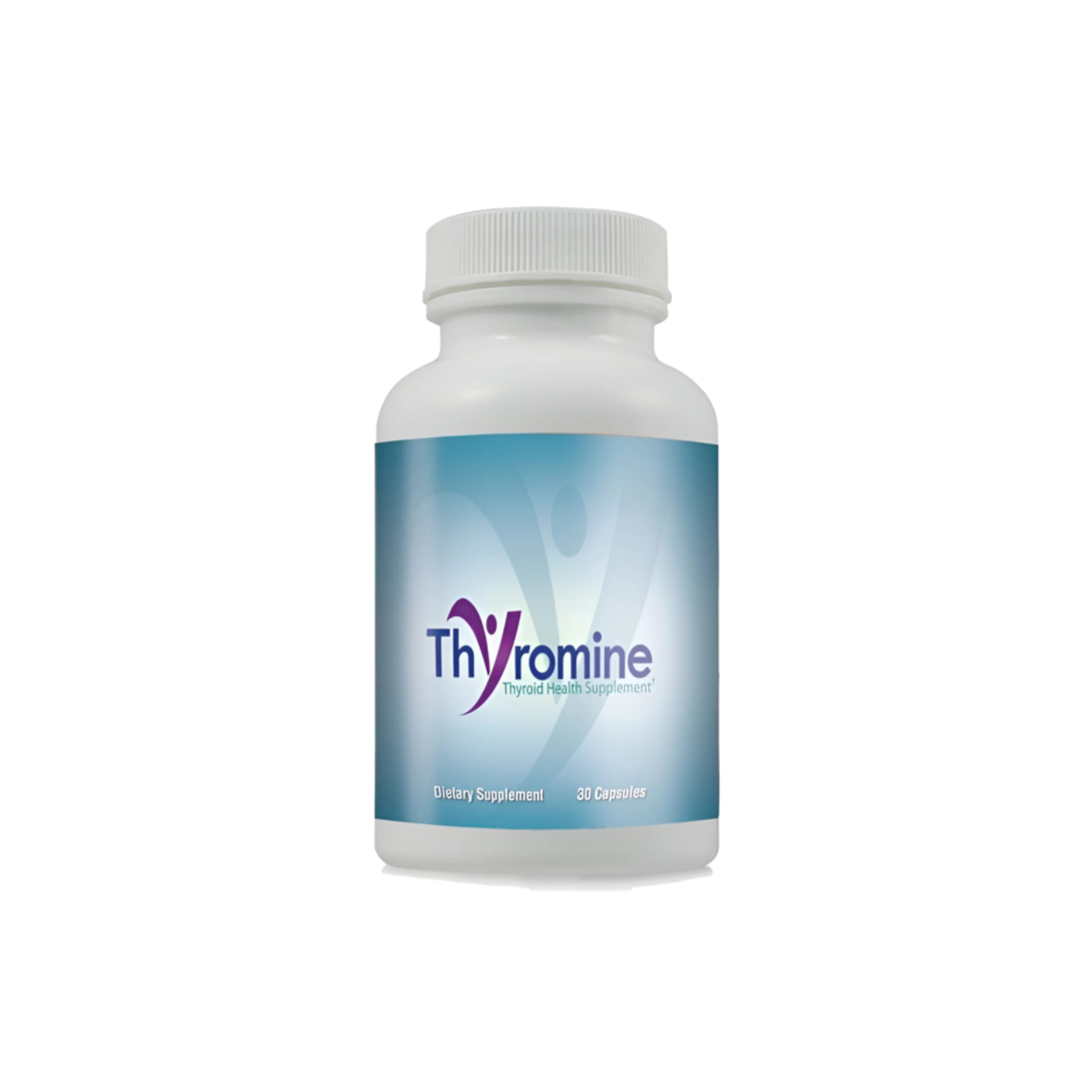
- Active ingredient(s): L-Tyrosine, iodine (from bladderwrack), selenium, zinc, ashwagandha extract, guggulsterones, piperine
- Format: Oral capsules
- Marketed claims: Supports healthy thyroid function, promotes metabolism, provides essential nutrients for thyroid health
- Quality info: Manufactured in the USA; specific third-party testing certifications not publicly listed
- Price: approx. £32 / $40.00 per bottle
Realistic Expectations
It is tempting to hope that a supplement can solve persistent fatigue, brain fog, or stubborn weight — particularly when your GP has told you that your thyroid blood tests are "normal" or "borderline." The reality is more nuanced. Thyromine may supply nutrients that are useful if your diet is lacking in iodine or selenium. Ashwagandha, at the right dose, may offer a modest nudge to thyroid hormone levels. But these are small, incremental effects — not a substitute for proper medical evaluation and treatment.
If your TSH is within the normal range (typically 0.4–4.0 mIU/L in adults), there is limited evidence that a supplement will move the needle meaningfully. If your TSH is elevated and you have been offered levothyroxine, a supplement is unlikely to replicate the effect of a properly dosed prescription medication. The honest answer is that thyroid support supplements occupy a grey zone: potentially useful as a nutritional adjunct, but nowhere near proven enough to rely on for diagnosed thyroid problems.
Frequently Asked Questions
Can a supplement like Thyromine replace my thyroid medication?
No. If you have been diagnosed with hypothyroidism, Hashimoto's thyroiditis, or another thyroid disorder and are taking levothyroxine or liothyronine, a dietary supplement cannot replicate the effect of your prescription. Stopping or reducing thyroid medication based on supplement use can lead to serious health consequences. Always consult your GP before making any changes to your treatment plan.
How long does Thyromine take to work?
The manufacturer does not provide a specific timeline. In clinical trials on individual ingredients — particularly ashwagandha — measurable changes in thyroid hormone levels appeared after 8 to 12 weeks of consistent daily use. However, these results were with standalone ingredients at defined doses. We would suggest allowing two to three months before assessing whether you notice subjective changes, and pairing this with follow-up blood tests where possible.
Is Thyromine safe to take alongside levothyroxine?
There is no specific safety data for this combination. The iodine content in Thyromine could theoretically interfere with thyroid hormone levels, and ashwagandha may affect TSH. Combining supplements with prescription thyroid medication should only be done under the guidance of your GP or endocrinologist. As a general rule, separate any iodine-containing supplement from levothyroxine by at least four hours.
What are the key active ingredients in Thyromine?
Thyromine contains L-tyrosine (an amino acid precursor to thyroid hormones), iodine (typically from bladderwrack or kelp), selenium, zinc, ashwagandha root extract, guggulsterones from Commiphora mukul, and piperine (black pepper extract) for enhanced absorption. Each ingredient has been studied independently in the context of thyroid health, though the exact doses in this product may differ from those used in published research.
Do I need a thyroid blood test before taking a thyroid support supplement?
Strongly recommended. Many symptoms attributed to thyroid dysfunction — fatigue, weight gain, brain fog, low mood — can have numerous other causes, including iron deficiency, vitamin D insufficiency, sleep disorders, and stress. A TSH blood test is quick, free on the NHS, and gives you and your doctor an objective baseline. Without it, you cannot know whether your thyroid is actually underperforming or whether a supplement is making any difference.
Is there clinical evidence for thyroid support supplements generally?
Individual ingredients have varying levels of evidence. Ashwagandha has shown promising results in small randomised controlled trials for subclinical hypothyroidism. Selenium has a reasonable evidence base in autoimmune thyroiditis. Iodine is essential but supplementation benefits mainly those who are deficient. However, no multi-ingredient "thyroid support" product has been evaluated in a large, independent clinical trial. The evidence is suggestive but not definitive — a common situation with dietary supplements.
✅ The verdict
Thyromine Thyroid Support brings together a thoughtful combination of ingredients that each have a biologically plausible role in thyroid health. Ashwagandha, selenium, and iodine in particular have published clinical research behind them — though always as standalone ingredients at defined doses, not as part of a proprietary blend. The honest position is this: the individual ingredients are promising, but the product as a whole has not been tested in independent clinical trials, and we do not know the exact doses involved. It may be a useful nutritional adjunct for people with mild, non-diagnosed symptoms who are looking to cover their nutritional bases, but it should never be positioned as a replacement for medical evaluation or prescription thyroid treatment.
If you have had a recent TSH blood test confirming normal thyroid function and are interested in nutritional support for general wellbeing, Thyromine is a reasonable option to explore. We would suggest starting with a conversation with your GP or pharmacist, especially if you are on any regular medication. If you would like to check current pricing for Thyromine, the link takes you directly to the retailer's product page.
You might also be interested in our reviews of NAD+ supplements for cellular energy, BPC-157 peptide review, or Provillus with minoxidil 5% for hair loss.
🛒 Reader-recommended option
Thyromine combines iodine, selenium, ashwagandha, and L-tyrosine in a single daily capsule — a convenient option for readers who want multi-nutrient thyroid support without managing several separate supplements.
View Thyromine Thyroid Support →
Affiliate link — see disclosure at the top of this article. Current price approx. £32 / $40.00 per bottle.
This article is informational and contains affiliate links. It does not replace personalised advice from your GP, pharmacist, or another qualified healthcare professional. Thyromine is a dietary supplement, not a licensed medicine, and has not been evaluated by the MHRA for the treatment of thyroid disorders. If you suspect you have a thyroid condition — including symptoms such as persistent fatigue, unexplained weight changes, hair loss, or sensitivity to cold — please consult your GP for appropriate blood tests and clinical assessment. Do not stop or adjust any prescribed thyroid medication without medical guidance. Not recommended for pregnant or breastfeeding women, or for individuals under 18 years of age.