Venorex Vericose Vein Treatment Review 2026: Can a Topical Cream Really Reduce the Appearance of Varicose Veins?
Venorex Vericose Vein Treatment Review 2026: Can a Topical Cream Really Reduce the Appearance of Varicose Veins?

⚡ Quick Answer
Venorex Vericose Vein Treatment is a topical cosmetic cream containing horse chestnut extract, vitamin K, and botanical ingredients marketed to reduce the appearance of varicose veins on the skin's surface. Some individual ingredients have modest supporting evidence for microcirculation and skin appearance, but there are no published clinical trials on the finished product itself. It may suit readers looking for a gentle topical cosmetic to complement — not replace — proper medical management of venous insufficiency.
🛒 Shop the product
Approx. £32 / $40.00 per bottle — affiliate link, see disclosure above.
Varicose veins are one of those health concerns that sit in an awkward middle ground. They are extremely common — the NHS estimates that up to three in ten adults will develop them at some point — yet many people feel quietly self-conscious about the swollen, twisted veins that appear on their legs. For some, the issue is purely cosmetic; for others, varicose veins bring aching, heaviness, and discomfort that can interfere with daily life. It is no surprise, then, that topical products promising to reduce their appearance find a willing audience.
Venorex Vericose Vein Treatment is one such product. Sold as a topical cream through online retailers, it combines horse chestnut extract, vitamin K, and several botanical ingredients in a formula the manufacturer says will "target and reduce the appearance of varicose veins." The product name carries a notable misspelling ("Vericose" rather than "Varicose"), which may give some readers pause — but let us look past branding and examine what is actually inside the bottle.
In this review, we will take a careful, evidence-first look at the key ingredients — particularly horse chestnut extract and vitamin K for vein appearance — assess what the published research actually shows, discuss safety considerations, and set realistic expectations for what a topical cosmetic cream can and cannot do for a condition that is fundamentally structural.
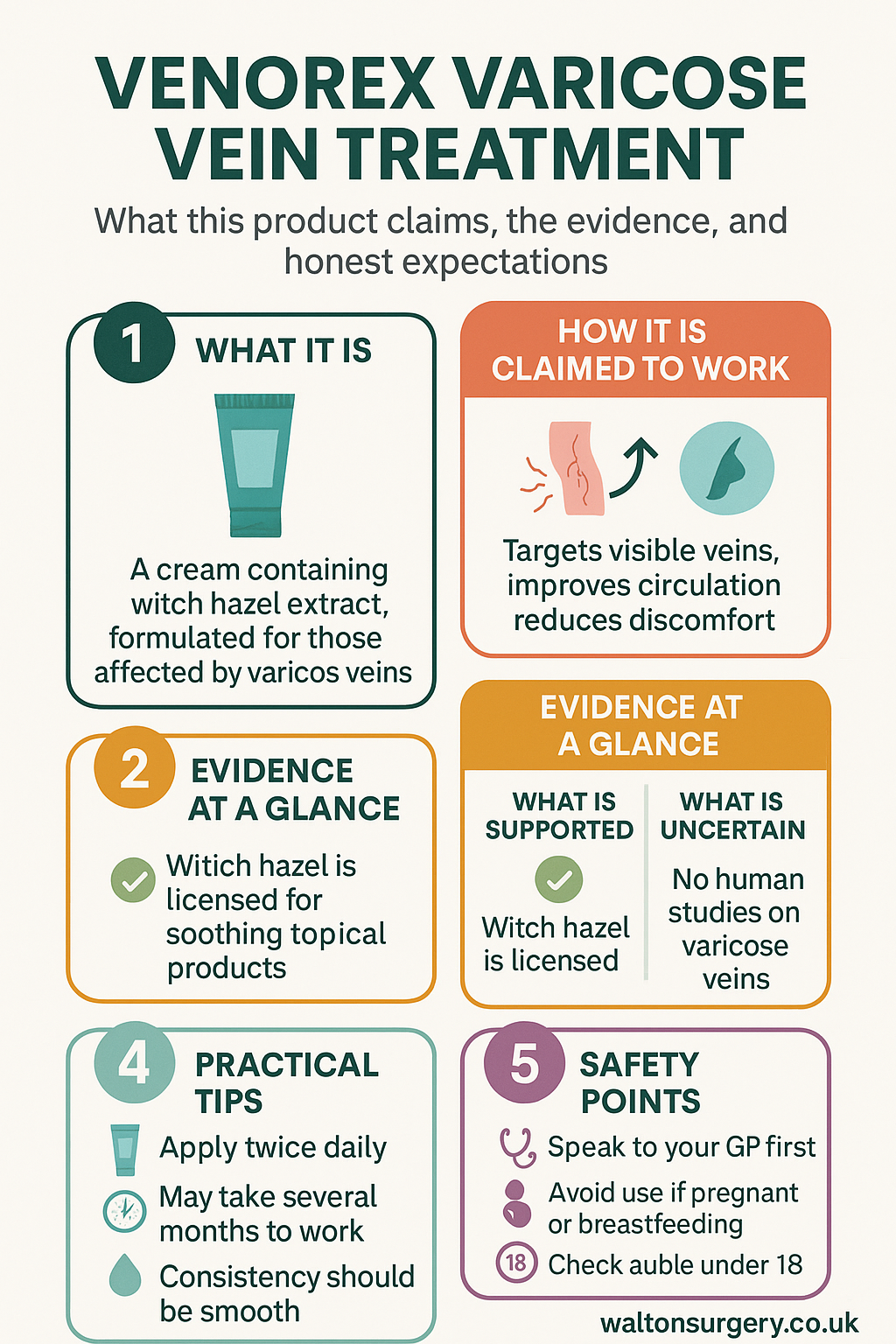
What Is Venorex, Exactly?
Venorex is a topical cosmetic cream sold in a pump bottle. According to its product listing, it is "scientifically formulated" to improve the appearance and health of legs affected by varicose veins. It is important to state at the outset: Venorex is not a licensed medicine. It has not been evaluated or approved by the MHRA (Medicines and Healthcare products Regulatory Agency) in the UK, and it has not undergone the kind of clinical testing that a pharmaceutical treatment for varicose veins would require.
That does not automatically mean it is useless — many cosmetic products contain genuinely useful ingredients — but it means we need to manage expectations carefully. A cream applied to the surface of the skin is working at a fundamentally different level from treatments like sclerotherapy (injecting a solution into the vein) or endovenous laser ablation (closing the vein with heat). Varicose veins result from faulty valves inside the veins that allow blood to pool and stretch the vessel wall. No topical cream can repair those valves.
What a cream might do is improve the look and feel of the surrounding skin, reduce mild swelling, or provide a temporary soothing sensation. Whether Venorex achieves even those modest goals depends on its ingredient profile and concentrations — which brings us to the formulation.
The Key Ingredients and How They Work
Venorex's formula draws on a handful of well-known botanical and vitamin-based ingredients. Let us look at each one in the context of what the broader research says.
Horse Chestnut Seed Extract (Aescin)
This is arguably the most interesting ingredient in the formula. Horse chestnut seed extract, standardised to aescin, has been studied in several clinical trials for chronic venous insufficiency (CVI). A Cochrane-style systematic review published in The Cochrane Database of Systematic Reviews concluded that horse chestnut seed extract was superior to placebo for reducing leg pain, swelling, and leg volume in short-term trials. Most of those studies used oral supplementation (typically 300 mg of extract twice daily, standardised to 50 mg aescin). Topical application delivers far less active compound to the deeper tissues, so the benefit seen in oral studies cannot be directly extrapolated to a cream — but the ingredient does have a genuine evidence base, which is more than many cosmetic products can claim.
Vitamin K1 (Phytonadione)
Vitamin K plays a role in blood coagulation, and topical vitamin K has been studied — with mixed results — for reducing bruising and improving the appearance of skin discolouration. Some dermatological studies have shown modest benefits when vitamin K cream is applied after laser procedures to reduce bruising. Its inclusion in a varicose vein cream is logical from a cosmetic standpoint: if the visible purple-blue colour of surface veins bothers you, vitamin K might, in theory, help the surrounding skin look more even-toned. However, the evidence is thin, and vitamin K applied topically does not reach the deeper saphenous veins where varicose changes occur.
Aloe Vera, Retinyl Palmitate, and Botanical Extracts
The remainder of the formula includes aloe vera (a well-known skin-soothing ingredient with anti-inflammatory properties), retinyl palmitate (a gentle form of vitamin A that supports skin cell turnover), and various plant extracts. These are standard cosmetic ingredients that can improve skin texture and hydration. They are pleasant to use but are unlikely to have any meaningful impact on varicose veins themselves.
🌿 Ingredient reality
What the evidence actually says about key ingredients
- Horse chestnut (oral): Multiple trials show benefit for CVI symptoms — but most used oral doses, not topical application.
- Vitamin K (topical): Modest evidence for post-procedure bruising; no robust evidence for varicose vein appearance.
- Aloe vera: Soothing and hydrating; no evidence for venous health specifically.
- Retinyl palmitate: Supports skin texture; cosmetic benefit only.
- No product-level trial exists for Venorex's finished formulation.
The Evidence: What Do We Actually Know?
This is where we need to be especially candid. A quick search of PubMed, the Cochrane Library, and clinical trial registries reveals no published clinical trials on Venorex as a finished product. The manufacturer's website does not cite any product-specific research. There are no before-and-after studies with controlled methodology, no peer-reviewed papers, and no data on how much of each ingredient is present in the formula.
What we can do — and what we have done above — is examine the evidence for individual ingredients in isolation. Horse chestnut extract has genuine support for venous symptoms when taken orally. Vitamin K has a plausible (if weak) rationale for cosmetic skin improvement. But "individual ingredients have some evidence" is not the same as "this product has been shown to work." The dose, concentration, delivery method, and combination of ingredients all matter enormously, and without product-level data we are largely in the dark.
⚠️ Reality check
The marketing language used for Venorex — including phrases like "get rid of unsightly varicose veins" — implies a treatment effect that goes beyond what a cosmetic cream can deliver. If a product could genuinely eliminate varicose veins, it would need to be licensed as a medicine. Always be cautious of cosmetic products that use medical-sounding language without the regulatory backing to match.
How to Use It (and What to Expect)
If you have read this far and still wish to try Venorex, the usage directions are straightforward: apply the cream to clean skin over the affected area, typically once or twice daily, and massage gently until absorbed. The manufacturer suggests continued use over several weeks before assessing results.
Realistically, you may notice that the skin feels softer and better hydrated — that is the aloe vera and moisturising base doing their job. You might see a subtle evening-out of skin tone if vitamin K has any topical effect. But you should not expect your varicose veins to disappear, shrink significantly, or stop causing discomfort if they are currently symptomatic. A cosmetic cream is, at best, a complement to proper management — not a substitute for it.
If you use compression stockings (often recommended by GPs for varicose veins), you can apply the cream underneath them, allowing it to absorb before putting the stockings on. Some readers find this a pleasant addition to their daily routine even if the clinical benefit is uncertain.
Side Effects and Who Should Think Twice
Topical cosmetic creams containing botanical extracts are generally well tolerated, and Venorex's ingredient list does not raise major red flags for most adults. That said, there are a few important considerations:
Blood-thinning medications: Vitamin K is involved in the clotting cascade. While topical absorption is likely to be small, if you take warfarin or other anticoagulants, speak to your GP or anticoagulation nurse before applying any product containing vitamin K to large areas of skin. Even small changes in vitamin K intake can affect INR readings.
Allergic reactions: Horse chestnut, aloe vera, and plant-derived extracts can cause contact dermatitis in sensitive individuals. Patch-test on a small area of skin first and wait 24 hours before applying more widely.
Pregnancy and breastfeeding: As a general precaution, avoid using cosmetic products with active botanical ingredients during pregnancy and breastfeeding unless cleared by your midwife or GP. Horse chestnut, in particular, has limited safety data in pregnancy.
Broken skin or ulcers: Varicose veins can sometimes lead to skin breakdown or venous ulcers. Do not apply this — or any cosmetic cream — to open wounds, inflamed skin, or areas with active ulceration. See your GP or practice nurse for proper wound management.
A Focused Look at This Product
Venorex is sold exclusively online through the manufacturer's website and affiliated retailers. It is not available on the high street at Boots or Superdrug, and your GP is unlikely to have heard of it. The product description makes bold claims about reducing the appearance of varicose veins, but — as we have discussed — these should be read in the context of a cosmetic product, not a medicine.
Here is a closer look at what you are getting:
🔬 Product snapshot — Venorex Vericose Vein Treatment
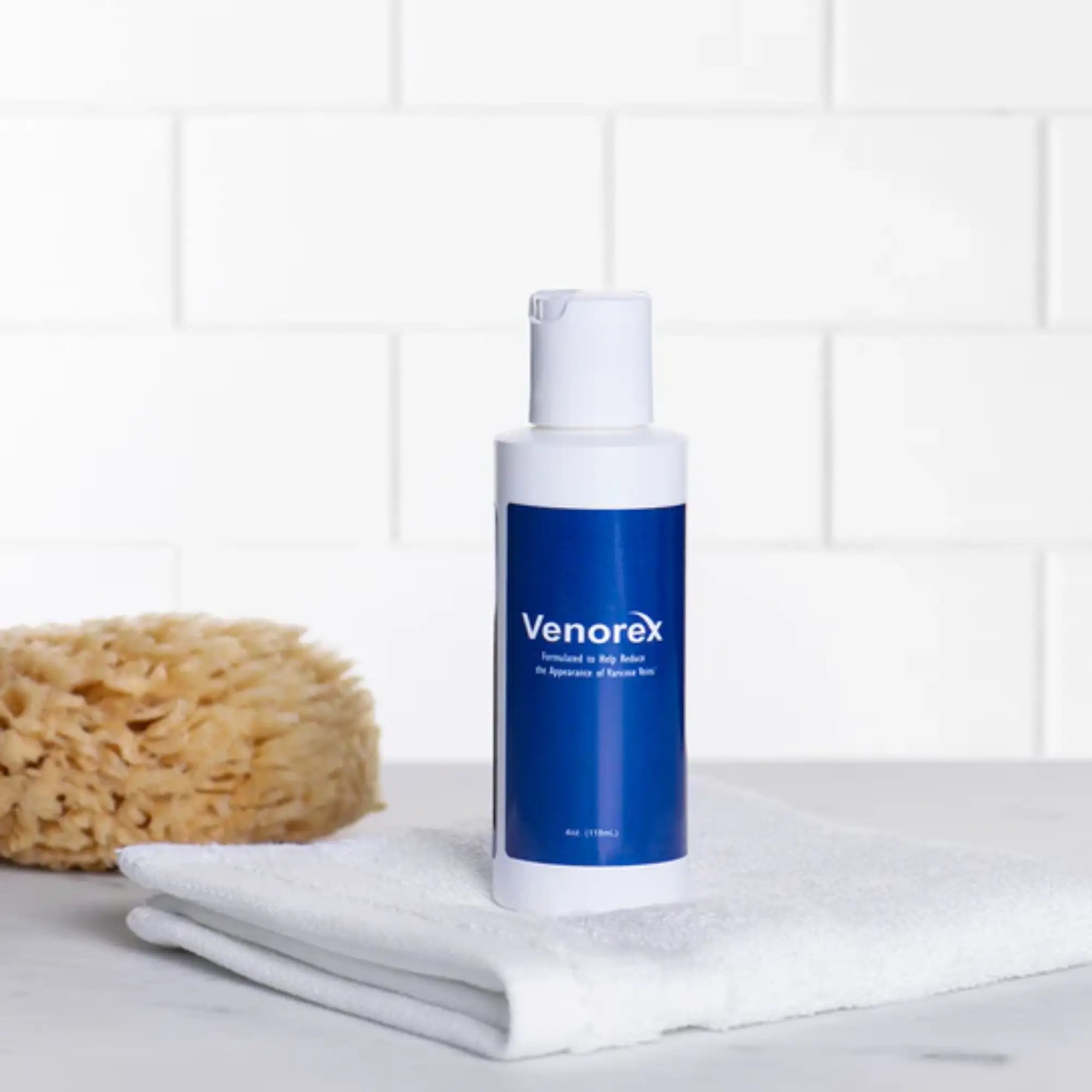
- Active ingredient(s): Horse chestnut seed extract (aescin), vitamin K1 (phytonadione), aloe vera, retinyl palmitate, botanical plant extracts
- Format: Topical cream in a pump bottle
- Marketed claims: "Targets and reduces the appearance of varicose veins," "improves the overall appearance and health of your legs"
- Quality info: No MHRA licence; no published product-level clinical trials; manufacturing standards not independently verified on the product page
- Price: Approx. £32 / $40.00 per bottle
Realistic Expectations
It is worth stepping back and thinking about what "realistic" means for a product like this. If your varicose veins are mild — a few visible blue veins on the surface of your legs with no significant pain — and you are looking for something to make your legs feel a little more pampered, Venorex may provide a pleasant, moisturising experience with a faint hope of cosmetic benefit. That is a perfectly reasonable reason to try it, provided you understand the limits.
If, on the other hand, your varicose veins are causing you genuine discomfort — aching that worsens throughout the day, swelling around the ankles, skin discolouration, or restless legs — you should be having that conversation with your GP rather than relying on a topical cream. The NHS offers a range of effective treatments, from compression stockings (available over the counter or on prescription) to minimally invasive procedures like foam sclerotherapy and radiofrequency ablation. These are evidence-based, regulated, and — in the case of compression stockings — often the first-line recommendation.
A cosmetic cream should never be the reason someone delays seeking proper medical advice for a condition that can, in some cases, lead to complications such as deep vein thrombosis, skin ulceration, or bleeding.
Frequently Asked Questions
Does Venorex actually work for varicose veins?
Venorex is a cosmetic topical cream, not a licensed medicine. Some of its individual ingredients — such as horse chestnut extract and vitamin K — have modest clinical evidence for supporting skin appearance and microcirculation. However, there are no published clinical trials on the finished Venorex product itself. It may temporarily improve the look of skin but will not treat the underlying venous insufficiency that causes varicose veins.
What are the active ingredients in Venorex?
Venorex contains a blend of botanical and vitamin-based ingredients including horse chestnut seed extract (aescin), vitamin K1 (phytonadione), aloe vera, retinyl palmitate (vitamin A), and several plant-derived extracts. These are common in cosmetic skincare formulations marketed for leg appearance.
Is Venorex a medicine or a cosmetic product?
Venorex is marketed as a cosmetic product. It is not licensed by the MHRA as a medicine in the UK and has not undergone the regulatory approval process that pharmaceutical treatments for varicose veins receive. This is an important distinction: cosmetic products can claim to improve appearance but cannot legally claim to treat, cure, or prevent a medical condition.
How long does it take to see results with Venorex?
The manufacturer suggests applying the cream consistently and that some users notice improved skin appearance within several weeks. However, because there are no controlled clinical trials on this specific product, there is no reliable timeframe. Individual results will vary, and any improvement is likely to be cosmetic — a smoothing or softening of the skin's appearance rather than a reduction in the veins themselves.
Can Venorex replace medical treatment for varicose veins?
No. Varicose veins are a medical condition involving faulty valves in the veins. If you experience pain, swelling, skin changes, or ulceration around varicose veins, you should see your GP. NHS options include compression stockings, sclerotherapy, laser treatment, and surgical procedures. A topical cosmetic cream cannot replace these evidence-based treatments.
Is Venorex safe to use alongside other medications?
Venorex's ingredients are generally considered low-risk when applied topically. However, vitamin K can interact with blood-thinning medications such as warfarin. If you take anticoagulants or any regular medication, speak to your GP or pharmacist before using this or any topical product containing vitamin K. Avoid use on broken skin and during pregnancy or breastfeeding without medical advice.
✅ The verdict
Venorex Vericose Vein Treatment is a cosmetic cream built around ingredients with some individual evidence — horse chestnut extract most notably — but it lacks any product-level clinical data to support its marketing claims. It is not a medicine, it is not MHRA-approved, and it cannot treat the structural venous insufficiency behind varicose veins. For what it is — a moisturising botanical cream with a pleasant formulation — it may leave your legs feeling softer and looking slightly more even-toned. Whether that is worth £32 per bottle is a personal decision, but it should be made with open eyes.
If your varicose veins are purely a cosmetic concern and you have already consulted your GP, this cream represents a low-risk option to explore alongside compression stockings and leg elevation. If you are experiencing pain, swelling, or skin changes, please prioritise a medical appointment. For readers who have decided this type of product suits their needs, you can check current pricing here.
You may also be interested in our reviews of NAD+ supplements for cellular health, BPC-157 for tissue recovery, or Provillus Minoxidil 5% for hair regrowth — all of which we have examined with the same evidence-first approach.
🛒 Reader-recommended option
A cosmetic cream with horse chestnut and vitamin K for readers looking to support the appearance of their legs — now available with discreet online delivery.
View Venorex Vericose Vein Treatment →
Affiliate link — see disclosure at the top of this article. Current price approx. £32 / $40.00 per bottle.
This article is informational and contains affiliate links. It does not replace personalised advice from your GP, pharmacist, or another qualified healthcare professional. Venorex is a cosmetic product, not a licensed medicine, and has not been evaluated by the MHRA. If you have varicose veins that cause pain, swelling, skin discolouration, or ulceration, please consult your GP before relying on any topical product. Do not apply to broken skin. If you take anticoagulant medication (e.g., warfarin), seek medical advice before use due to the vitamin K content. Not recommended during pregnancy or breastfeeding without prior medical guidance.