Curcumin 2000 Review 2026: Can Turmeric's Golden Compound Really Deliver on Its Promises?
Curcumin 2000 Review 2026: Can Turmeric's Golden Compound Really Deliver on Its Promises?

⚡ Quick Answer
Curcumin 2000 is a turmeric-root supplement centred on curcumin — a polyphenol with genuine anti-inflammatory and antioxidant properties supported by a growing, if imperfect, body of clinical research. There is moderate evidence for mild joint-pain relief in osteoarthritis, and preliminary signals for cognitive and cardiovascular support, though the latter are less robust. The main catch is bioavailability: curcumin is notoriously poorly absorbed without an enhancer such as piperine. This product may suit adults looking for a gentle, food-derived supplement to complement — not replace — conventional joint or inflammatory care, provided they have checked with a pharmacist or GP first.
🛒 Shop the product
Approx. £19 / $24.95 per bottle — affiliate link, see disclosure above.
If you have spent any time at all reading about natural health supplements, you will have encountered turmeric. The bright-orange root has been a staple of Ayurvedic and traditional Chinese medicine for centuries, and in recent years it has become one of the best-selling supplement ingredients in the Western world. Walk into any Boots or Holland & Barrett and you will find a shelf full of turmeric and curcumin capsules, all making broadly similar claims: reduce inflammation, ease stiff joints, protect your brain, support your heart. The question is not whether curcumin is popular — it clearly is — but whether the evidence lives up to the marketing.
Curcumin 2000 is one such product. Sold as a dietary supplement through HealthBuy, it promises the anti-inflammatory, antioxidant, and cognitive benefits of turmeric's most studied active compound. The branding is clean, the claims are broad, and the price point — around £19 per bottle — puts it in the mid-range of curcumin supplements. But price and promises are not the same as proof. In this review we will look at what curcumin actually does in the body, what the clinical trials say, where the evidence is strong, where it is thin, and how this particular product fits into the picture.
We should be clear from the outset: curcumin as a supplement ingredient is neither a miracle cure nor snake oil. It sits somewhere in between — a natural compound with real biological activity and a genuinely interesting research profile, but one that comes with significant caveats around absorption, dosing, and the gap between laboratory findings and real-world results. Let us walk through it all honestly.
What Is Curcumin, Exactly?
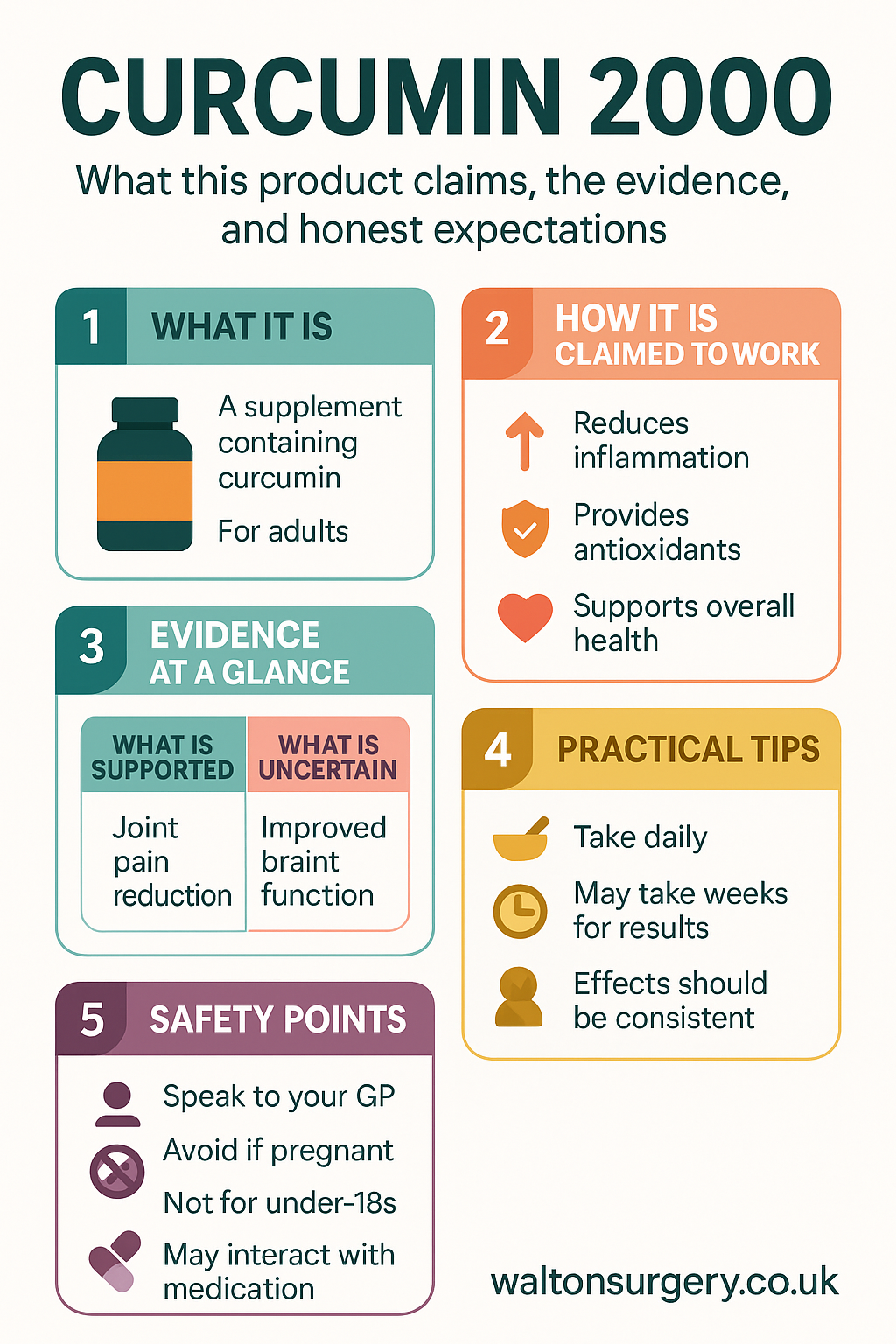
Turmeric (Curcuma longa) is a flowering plant in the ginger family, native to South and Southeast Asia. The yellow-orange powder you see in spice racks is ground from the plant's rhizome — its underground stem. Turmeric contains a group of compounds called curcuminoids, of which curcumin (diferuloylmethane) is the most abundant and the most studied. Curcumin typically makes up only about 2–5% of turmeric by weight, which means that sprinkling turmeric on your food, while pleasant, delivers very little curcumin in absolute terms.
Supplement manufacturers extract and concentrate curcumin to deliver doses that would be impractical from dietary turmeric alone. A typical curcumin supplement provides anywhere from 500 mg to 2,000 mg of curcumin per daily serving — quantities you would need kilograms of curry to match. The "2000" in Curcumin 2000's name appears to reference this equivalent-turmeric-root dosage, not the weight of pure curcumin in each capsule. This is an important distinction, and one that can confuse buyers if the label is not read carefully.
How Curcumin Works in the Body
Curcumin's claimed benefits rest on two well-established biological properties: anti-inflammatory activity and antioxidant activity. At the molecular level, curcumin has been shown in laboratory studies to inhibit NF-κB (nuclear factor kappa B), a protein complex that plays a central role in regulating the body's inflammatory response. NF-κB activation is linked to the production of pro-inflammatory cytokines — chemical messengers that drive swelling, pain, and tissue damage in chronic inflammatory conditions. By dampening this pathway, curcumin theoretically reduces the inflammatory cascade.
Curcumin is also a polyphenol antioxidant, meaning it can neutralise free radicals — unstable molecules that damage cells through oxidation. Additionally, some research suggests curcumin may boost the body's own antioxidant enzymes, offering a two-pronged protective effect. Other areas of investigation include curcumin's potential influence on brain-derived neurotrophic factor (BDNF), a protein involved in neuron growth and survival, and its effects on endothelial function (the health of blood-vessel linings). These are genuinely interesting biological mechanisms — but, as we will see, mechanism is not the same as clinical outcome.
The Bioavailability Problem
Why swallowing curcumin is not the same as absorbing it
- Poor water solubility: Curcumin is hydrophobic — it does not dissolve well in water, which limits its absorption in the gut.
- Rapid metabolism: Even what is absorbed is quickly broken down by the liver and intestinal wall into metabolites that may be less active.
- Fast clearance: Curcumin and its metabolites are eliminated from the body relatively quickly.
- Piperine as a booster: Adding piperine (from black pepper) can increase curcumin bioavailability by approximately 2,000% by slowing its liver metabolism.
- Other delivery systems: Some products use liposomal, nanoparticle, or phytosome formulations to improve absorption. Check whether the product you are considering addresses this issue.
What Does the Clinical Evidence Actually Show?
This is where we need to be most careful, because curcumin research is a landscape of genuine promise mixed with significant limitations. Let us break it down by condition.
Osteoarthritis and joint pain. This is curcumin's strongest clinical footing. A 2016 meta-analysis published in the Journal of Medicinal Food, pooling data from eight randomised controlled trials, concluded that curcumin extracts (typically 1,000 mg/day of curcuminoids) significantly reduced pain and improved function in knee osteoarthritis compared with placebo, and in some trials performed comparably to ibuprofen 1,200 mg/day. A 2021 systematic review in BMC Complementary Medicine and Therapies reached similar conclusions. That said, many of these trials are small, short-term (8–12 weeks), funded by supplement companies, and use different curcumin formulations, making direct comparisons difficult. The effect is real but modest — we are talking about a gentle reduction in discomfort, not a dramatic resolution of pain.
Cognitive function and brain health. Curcumin's potential neuroprotective effects are a hot topic in research, driven largely by the observation that India — where turmeric consumption is high — has historically reported lower rates of Alzheimer's disease. However, this ecological correlation does not prove causation, and confounding factors abound. A notable 2018 randomised trial (Small et al., American Journal of Geriatric Psychiatry) found that a bioavailable curcumin formulation improved memory and attention in non-demented adults over 18 months, and reduced amyloid and tau accumulation in brain scans. This is intriguing but is a single study with a specific proprietary formulation, and results have not yet been widely replicated.
Cardiovascular health. Some evidence suggests curcumin may improve endothelial function and reduce certain markers of cardiovascular risk (e.g. LDL cholesterol, triglycerides). A 2017 meta-analysis found modest improvements in lipid profiles with curcumin supplementation. However, these are surrogate markers — there is no strong evidence that curcumin reduces actual cardiovascular events such as heart attacks or strokes.
Mood and depression. Several small trials have tested curcumin as an adjunct to standard treatment for depression, with some showing modest improvements in symptoms. A 2016 meta-analysis in the Journal of the American Medical Directors Association found a significant antidepressant effect, but the quality of evidence was rated low to moderate, and curcumin should never be used as a substitute for prescribed antidepressant medication or talking therapy.
⚠️ Reality check
The phrase "scientifically proven" is doing a lot of heavy lifting in curcumin marketing. While there is genuine science behind curcumin, most evidence comes from small, short-duration trials with variable supplement formulations. Large, independent, long-term studies are still lacking. Curcumin is best understood as a promising supplement ingredient with moderate evidence for joint comfort — not a proven treatment for any medical condition. If a product claims curcumin can "aid in reducing joint pain, improving brain function, and supporting heart health" — as Curcumin 2000's marketing does — those claims range from partly supported (joint pain) to preliminary (brain, heart). That distinction matters.
How to Use Curcumin Supplements Safely
If, after reading the evidence, you decide a curcumin supplement is worth trying, a few practical points are worth keeping in mind. First, take it with food containing some fat. Curcumin is fat-soluble, meaning it absorbs better when consumed alongside dietary oils or fats — a meal with olive oil, avocado, or even a full-fat yoghurt can help. Second, look for a product that includes a bioavailability enhancer. The most common is piperine (BioPerine is a branded form), but liposomal and phytosome delivery systems also have supporting data. A curcumin supplement without any absorption strategy may leave you with expensive urine.
Third, be patient. Clinical trials typically assess curcumin's effects over 8–12 weeks, and you should not expect dramatic changes in the first few days. Fourth, check with your pharmacist or GP before starting, particularly if you take blood-thinning medication (warfarin, aspirin, clopidogrel), diabetes medication, or acid-reducing drugs. Curcumin can interact with all of these. It is also wise to stop curcumin supplements at least two weeks before any scheduled surgery, given its mild anticoagulant properties.
Side Effects and Who Should Think Twice
For most healthy adults, curcumin at typical supplement doses (500–2,000 mg/day of curcuminoids) is well tolerated. The most common side effects are gastrointestinal: mild nausea, stomach upset, diarrhoea, or bloating. These tend to be dose-related — higher doses are more likely to cause issues — and often settle after the first few days of use.
More serious concerns are rare but worth noting. There are case reports linking high-dose turmeric supplements to liver injury, though this appears to be uncommon and may involve idiosyncratic reactions or contaminated products. The European Food Safety Authority (EFSA) has set an acceptable daily intake for curcuminoids of 3 mg per kilogram of body weight. For a 70 kg adult, that works out to roughly 210 mg/day of curcuminoids — well below the doses used in most clinical trials, which is a point of ongoing regulatory discussion.
Avoid curcumin supplements if you are pregnant or breastfeeding, as safety data in these groups is insufficient. People with gallbladder disease or bile-duct obstruction should also avoid curcumin, as it stimulates bile production. If you are under 18, curcumin supplements are not intended for you. And if you are on any prescribed medication — especially anticoagulants, immunosuppressants, or chemotherapy drugs — speak to your doctor before adding curcumin to your routine.
A Focused Look at Curcumin 2000
With the general science covered, let us turn to the specific product. Curcumin 2000 is sold by HealthBuy, a Shopify-based supplement retailer. The marketing language is broad, citing anti-inflammatory and antioxidant properties alongside joint, brain, and heart health claims. The price of approximately £19 per bottle places it in a competitive mid-range bracket — not the cheapest option on the market, but far from the most expensive, especially when compared to premium phospholipid-complex formulations.
What we would want to know before recommending any curcumin supplement is the exact amount of curcuminoids per serving, the presence (or absence) of a bioavailability enhancer, and whether the product has undergone third-party testing for purity and heavy-metal contamination — turmeric root can accumulate lead and other contaminants from soil. Based on the publicly available product information, some of these details could be more transparent. We always encourage readers to check the full Supplement Facts label before purchasing.
🔬 Product snapshot — Curcumin 2000
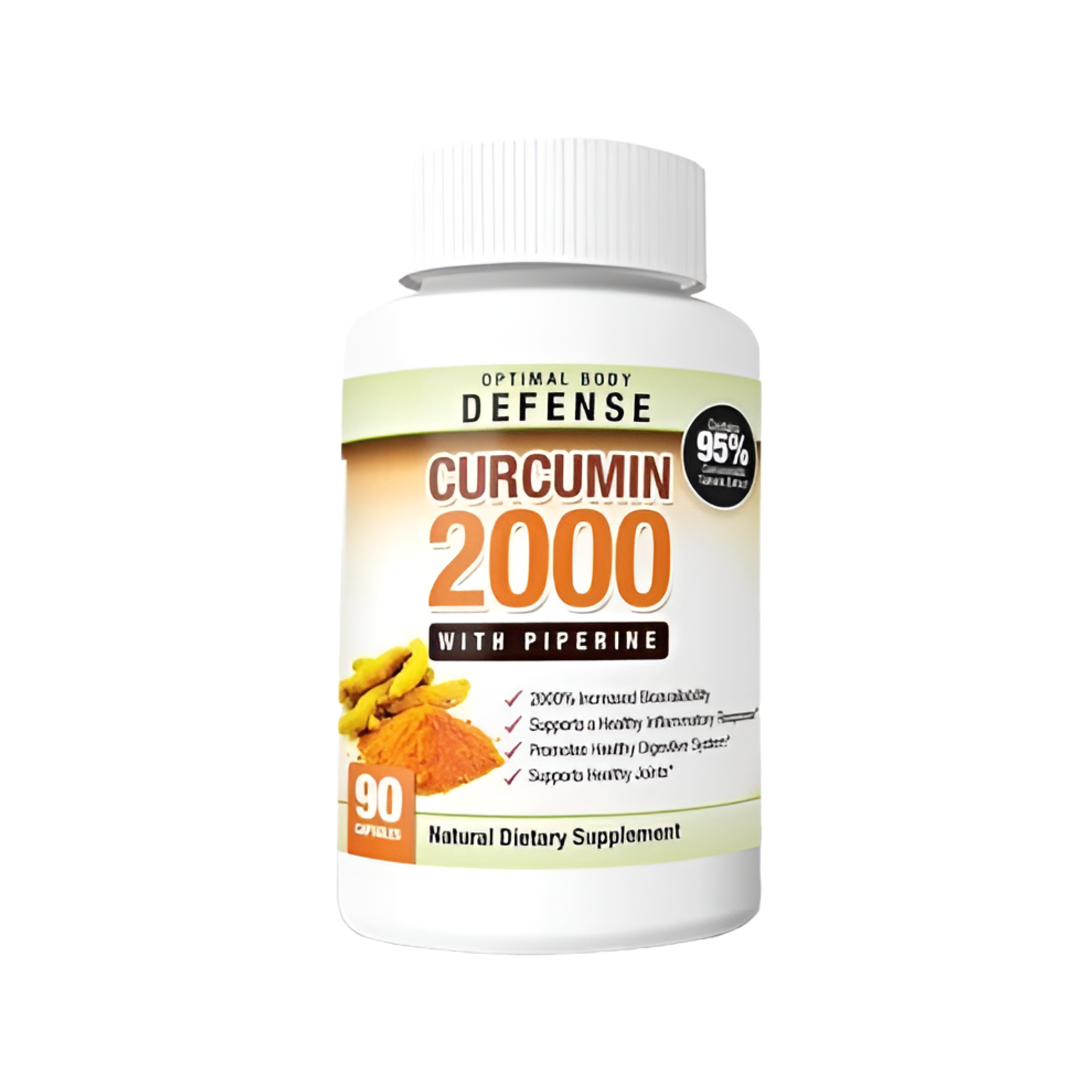
- Active ingredient(s): Curcumin (curcuminoids) derived from turmeric root (Curcuma longa); specific per-capsule curcuminoid content to be confirmed from label.
- Format: Oral capsule, taken daily with water (ideally with a meal containing fat for improved absorption).
- Marketed claims: Anti-inflammatory support, antioxidant protection, joint-pain relief, cognitive support, cardiovascular health.
- Quality info: Manufactured and sold via HealthBuy; third-party testing status and cGMP certification not clearly stated on the product page — worth confirming directly with the seller.
- Price: Approx. £19 / $24.95 per bottle.
Setting Realistic Expectations
If you are hoping curcumin will replace your prescribed anti-inflammatory medication, eliminate chronic joint pain entirely, or sharpen your memory overnight, you are likely to be disappointed. The honest reality is that curcumin is a gentle, supportive supplement — not a pharmaceutical drug. For some people, particularly those with mild to moderate osteoarthritis stiffness, it may offer a modest improvement in comfort when taken consistently over several weeks. For others, the effect may be too subtle to notice.
The best approach is to treat curcumin as one piece of a broader health puzzle — alongside regular physical activity, a balanced diet, adequate sleep, and the medical care your GP provides. It is also worth acknowledging that placebo effects are real and not something to be ashamed of: if a supplement helps you feel more proactive about your health, that has genuine value, so long as it is safe and you are not relying on it in place of evidence-based treatment.
Frequently Asked Questions
What is Curcumin 2000 and what does it contain?
Curcumin 2000 is a dietary supplement built around curcumin, the principal bioactive compound found in turmeric (Curcuma longa). It is marketed for joint comfort, antioxidant protection, cognitive support, and general anti-inflammatory benefits. The "2000" in its name typically refers to the equivalent turmeric root content per serving, not necessarily the weight of pure curcuminoids per capsule. Always check the Supplement Facts panel for exact figures.
Is curcumin actually well absorbed by the body?
No — and this is one of the biggest caveats in curcumin research. On its own, curcumin is poorly absorbed, rapidly metabolised, and quickly cleared from the body. Many supplements attempt to address this by adding piperine (black pepper extract), which can increase absorption by roughly 2,000%, or by using proprietary delivery systems such as liposomal or phytosome technology. Without a bioavailability enhancer, much of the curcumin you swallow may never reach your bloodstream in meaningful amounts.
Does curcumin really help with joint pain?
There is moderate-quality evidence suggesting curcumin may help with mild to moderate osteoarthritis pain. Several randomised controlled trials have shown curcumin extracts performing comparably to some over-the-counter NSAIDs like ibuprofen for knee osteoarthritis pain relief. However, study quality varies, dosing is inconsistent across trials, and the effect sizes are generally modest. Curcumin is not a replacement for prescribed anti-inflammatory medication.
Are there any side effects or drug interactions to worry about?
Curcumin is generally well tolerated at typical supplement doses. Mild digestive upset — nausea, diarrhoea, or bloating — is the most commonly reported side effect. More importantly, curcumin can interact with blood-thinning medications such as warfarin and aspirin, potentially increasing bleeding risk. It may also affect blood sugar levels and should be used cautiously by people with gallbladder disease. Always check with your GP or pharmacist before starting, especially if you take regular medication.
How long does it take for curcumin supplements to work?
Most clinical trials assessing curcumin for joint pain run for 8 to 12 weeks before reporting results, which gives a reasonable expectation for consumers. Some people report noticing subtle changes in comfort or stiffness within two to four weeks, but dramatic overnight results would be unusual. Consistency of daily use appears to matter more than the dose of any single serving. Take it with food containing fat for best absorption.
Is Curcumin 2000 an MHRA-approved medicine?
No. Curcumin 2000 is sold as a dietary supplement, not as a licensed medicine. It has not been evaluated or approved by the MHRA (Medicines and Healthcare products Regulatory Agency) for the treatment, prevention, or cure of any disease. Its marketing claims are limited to what is permissible for food supplements under applicable regulations. It should not be used as a substitute for prescribed medical treatment.
✅ The verdict
Curcumin is a genuinely interesting natural compound with real anti-inflammatory and antioxidant properties supported by a moderate body of clinical evidence — particularly for mild to moderate joint discomfort in osteoarthritis. The broader claims around cognitive function and cardiovascular health are intriguing but preliminary. Curcumin 2000, priced at around £19 per bottle, is a mid-range option in a crowded market. Its value to you will depend on what is in the capsule (exact curcuminoid content, bioavailability strategy, purity testing) — details we would encourage you to verify before purchasing.
If you have mild joint stiffness, are not on blood-thinning medication, have spoken with your pharmacist, and are looking for a gentle food-derived supplement to complement your broader health routine, curcumin is a reasonable ingredient to consider. You can check current pricing for Curcumin 2000 here. If you are on prescribed medication, pregnant, or dealing with a diagnosed medical condition, please consult your GP before starting any new supplement.
You may also be interested in our reviews of NAD+ supplements for cellular energy and BPC-157 for tissue repair, both of which cover emerging supplement ingredients with their own evidence profiles and caveats.
🛒 Reader-recommended option
Curcumin 2000 offers a mid-range curcumin supplement for adults interested in the anti-inflammatory potential of turmeric's most studied compound. Worth considering if you want to explore curcumin as part of a broader joint-health strategy.
Affiliate link — see disclosure at the top of this article. Current price approx. £19 / $24.95 per bottle.
This article is informational and contains affiliate links. It does not replace personalised advice from your GP, pharmacist, or another qualified healthcare professional. Curcumin supplements are not licensed medicines and have not been evaluated by the MHRA for the treatment or prevention of any disease. Do not use curcumin supplements if you are pregnant, breastfeeding, or scheduled for surgery without consulting your doctor. If you take blood-thinning medication, diabetes medication, or any other prescribed drug, speak to your pharmacist before adding curcumin to your routine. Not intended for persons under 18 years of age.