FloTrol Bladder Control Supplement Review 2026: Can Go Less Really Help Overactive Bladder?
FloTrol Bladder Control Supplement Review 2026: Can Go Less Really Help Overactive Bladder?

⚡ Quick Answer
FloTrol is a daily supplement built around the patented Go Less blend of pumpkin seed extract and soy germ isoflavones, targeting adults with overactive bladder symptoms. A handful of small clinical trials suggest this combination may modestly reduce urinary frequency after six to eight weeks of use, though the evidence base is limited and largely manufacturer-funded. It may suit adults looking for a gentle, non-prescription complement alongside medical advice — but it is not a substitute for seeing your GP about persistent bladder issues.
🛒 Shop the product
Approx. £19 / $24.95 per bottle — affiliate link, see disclosure above.
There is a particular kind of quiet frustration that comes with an overactive bladder. The constant mental tally of where the nearest loo is. The hesitation before accepting an invitation. The disrupted sleep from night-time trips that leave you staring at the ceiling at three in the morning. Millions of adults across the country live with these symptoms, many without ever raising the topic with their GP — and for those who have, the available prescription medications often come with side effects like dry mouth, constipation, or drowsiness that make some people reluctant to stay the course.
Against this backdrop, over-the-counter bladder support supplements have carved out a growing niche. FloTrol is one of the more established names in this space. It centres on a branded ingredient called Go Less — a patented blend of pumpkin seed extract and soy germ isoflavones that has been the subject of several clinical studies conducted primarily in Japan. The promise is straightforward: a natural, daily capsule that may help calm an overactive bladder without the side-effect burden of prescription drugs.
In this review we will take a measured, evidence-led look at what the Go Less bladder support formula actually contains, what the research does and does not show, how it compares with other approaches, and whether the price — roughly £19 a bottle — represents reasonable value for anyone considering it.
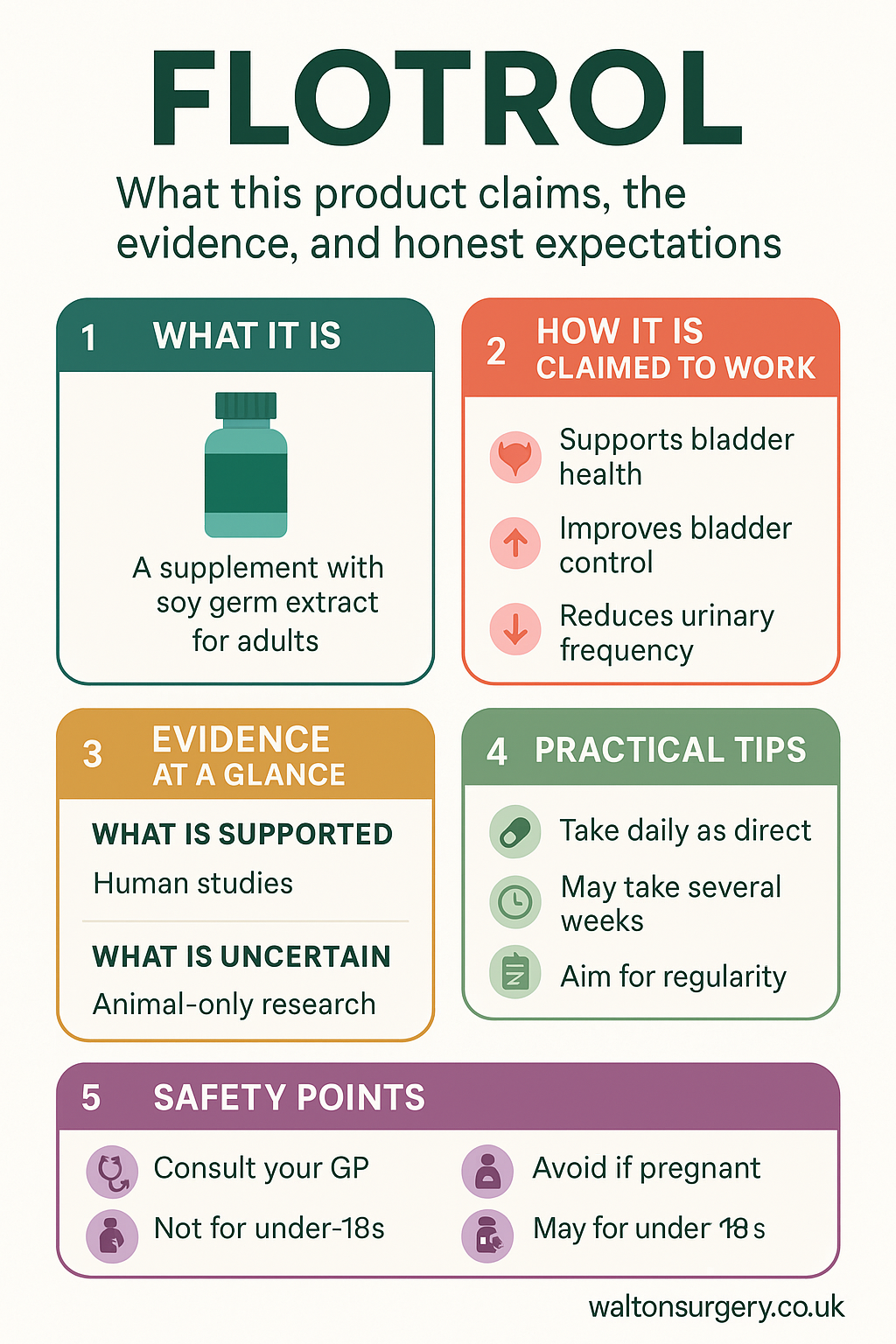
What FloTrol Actually Is
FloTrol is a daily dietary supplement manufactured for bladder health. It is not a medicine, has not been reviewed or licensed by the MHRA (the UK's Medicines and Healthcare products Regulatory Agency), and is not available on NHS prescription. In regulatory terms it sits firmly in the food-supplement category — similar to a multivitamin or fish-oil capsule — meaning the manufacturer is responsible for ensuring safety, but the product does not undergo the same pre-market testing that a licensed drug would.
The headline ingredient is Go Less, a patented combination developed by Frutarom (now part of International Flavors & Fragrances, or IFF). Go Less brings together two botanical extracts:
- Pumpkin seed extract (Cucurbita pepo) — long used in traditional European and Asian medicine for urinary tract health. Pumpkin seeds are rich in phytosterols, lignans, and essential fatty acids, and are thought to have a relaxing effect on the bladder's detrusor muscle.
- Soy germ isoflavones (Glycine max) — specifically the isoflavones genistein, daidzein, and glycitein. These phytoestrogens are believed to support the urethral sphincter and pelvic-floor tone, potentially improving the bladder's ability to hold urine for longer.
Together, the theory is that these two ingredients work on different parts of the bladder-urethral complex: the pumpkin seed to relax the overactive muscle wall, and the soy isoflavones to strengthen the sphincter mechanism. It is a reasonable hypothesis — but as we will see, the clinical evidence tells a more nuanced story.
How the Go Less Blend Is Supposed to Work
An overactive bladder (OAB) is characterised by urgency — a sudden, compelling need to urinate that is difficult to defer — often accompanied by increased frequency (more than eight trips to the loo in 24 hours) and nocturia (waking at night to urinate). The underlying problem usually involves involuntary contractions of the detrusor muscle that lines the bladder wall.
Prescription antimuscarinics (such as oxybutynin or tolterodine) work by blocking the nerve signals that trigger those contractions. Go Less takes a different, gentler approach. The pumpkin-seed component contains compounds that appear to modulate smooth-muscle contraction — essentially helping the bladder wall to relax rather than forcing it to through receptor blockade. Meanwhile, the soy isoflavones exert mild oestrogenic activity that may support the structural integrity of the urethral sphincter and surrounding pelvic tissues, which can weaken with age or hormonal changes, particularly after menopause.
How the two ingredients target different mechanisms
Pumpkin seed + soy isoflavones — a dual-action hypothesis
- Pumpkin seed extract: Rich in phytosterols and lignans; thought to relax the detrusor muscle and reduce involuntary bladder contractions.
- Soy germ isoflavones: Phytoestrogens (genistein, daidzein) believed to support urethral sphincter tone and pelvic-floor strength, potentially improving bladder capacity.
- Combined effect: Theoretically addresses both the "overactive squeeze" and the "weak gate" — but these are complementary hypotheses, not proven in every study.
It is worth noting that the pharmacology here is relatively gentle compared with antimuscarinic drugs. This is both the appeal and the limitation: fewer side effects, but also — likely — a subtler effect. If you are used to the potency of a prescription medication, a botanical supplement is unlikely to feel like a replacement.
The Evidence: What the Research Does and Does Not Show
This is the section where we need to be most careful — and most honest. The Go Less blend does have published clinical data behind it, which sets it apart from many bladder supplements that rely entirely on traditional use and anecdote. However, the body of evidence is small, and there are important caveats.
The most frequently cited study is a 2014 randomised, double-blind, placebo-controlled trial published in the Journal of Functional Foods. In this trial, 120 adults with overactive bladder symptoms were given either Go Less or a placebo for 12 weeks. The Go Less group experienced a statistically significant reduction in daytime urinary frequency compared with placebo, and reported improvements on quality-of-life questionnaires. A smaller earlier pilot study (2011, same research group) showed similar directional improvements over six weeks.
Additionally, a 2019 open-label study — meaning there was no placebo comparison — involving Japanese women with nocturia reported that the pumpkin seed and soy isoflavone combination reduced the number of nightly bathroom visits. Open-label studies are inherently weaker because the placebo effect is not controlled for, and participants know what they are taking.
⚠️ Reality check — evidence gaps to be aware of
The clinical trials for the Go Less blend are encouraging but limited in several ways. Sample sizes are small (typically 60–120 participants). The studies are short-term (6–12 weeks). Most have been conducted in Japanese populations, which may or may not translate directly to a UK demographic. Several studies were funded by the ingredient manufacturer, which introduces potential bias — not fraud, but a reason to await independent replication. There are no large, multi-centre, independently funded trials. And there is no head-to-head comparison with established bladder medications such as mirabegron or oxybutynin. We would characterise the evidence as "promising but preliminary."
In fairness, this level of evidence is actually ahead of many competing bladder supplements, which may contain similar raw ingredients but without a standardised, clinically tested blend. The fact that Go Less has any randomised controlled trial data at all is a positive. But it is a long way from the kind of robust evidence base that would make a GP confident in recommending it as a first-line approach.
How to Use FloTrol: Dosing, Timing, and Expectations
The manufacturer's instructions are straightforward: take the supplement daily with water, ideally with a meal. The clinical trials used a once-daily dosing regimen, and this appears to be what the product is designed around.
The critical point to understand is timing of results. The published studies showed meaningful improvements at the six-to-twelve-week mark, not in the first few days. If you are hoping for a quick fix before a long car journey, this is not it. FloTrol appears to need consistent daily use over at least six weeks before you can fairly judge whether it is helping. Patience is essential.
It is also worth keeping a bladder diary — a simple log of how often you urinate during the day and night, and any episodes of urgency. This gives you an objective baseline and lets you track whether things are actually improving, rather than relying on subjective feeling, which can be unreliable over time.
Side Effects and Who Should Think Twice
One of the genuine advantages of the Go Less blend is its tolerability profile. In the published trials, adverse event rates were comparable between the active group and the placebo group, and no serious side effects were reported. Pumpkin seed extract and soy isoflavones have long histories of dietary use and are generally considered safe for most adults.
That said, there are several groups who should exercise caution:
- Anyone with a soy allergy — soy germ isoflavones are derived from soya beans. If you have a diagnosed soy allergy, this product is not suitable.
- People with hormone-sensitive conditions — soy isoflavones are phytoestrogens with weak oestrogenic activity. If you have (or have had) oestrogen-receptor-positive breast cancer, uterine cancer, or endometriosis, discuss with your oncologist or specialist before use. The risk from dietary-level isoflavones is debated, but caution is sensible.
- Pregnant or breastfeeding women — there is no safety data for this population with the Go Less blend. Avoid unless your midwife or GP advises otherwise.
- Under-18s — the product is formulated for adults.
- Anyone on warfarin or other anticoagulants — pumpkin seed extract may have mild anticoagulant properties. If you take blood thinners, speak to your GP first.
As always, if you are on regular medication of any kind, it is worth mentioning any new supplement to your pharmacist. Interactions are unlikely but not impossible, and it is a simple conversation that takes thirty seconds.
A Focused Look at This Product
FloTrol is sold by HealthBuy, a supplement retailer operating through Shopify. The branding is clean, the ingredient disclosure is reasonably clear, and the product leans on the Go Less patent as its primary differentiator. It is one of the more accessible ways to get the Go Less blend in a standalone bladder-support formulation.
🔬 Product snapshot — FloTrol Bladder Control with Go Less
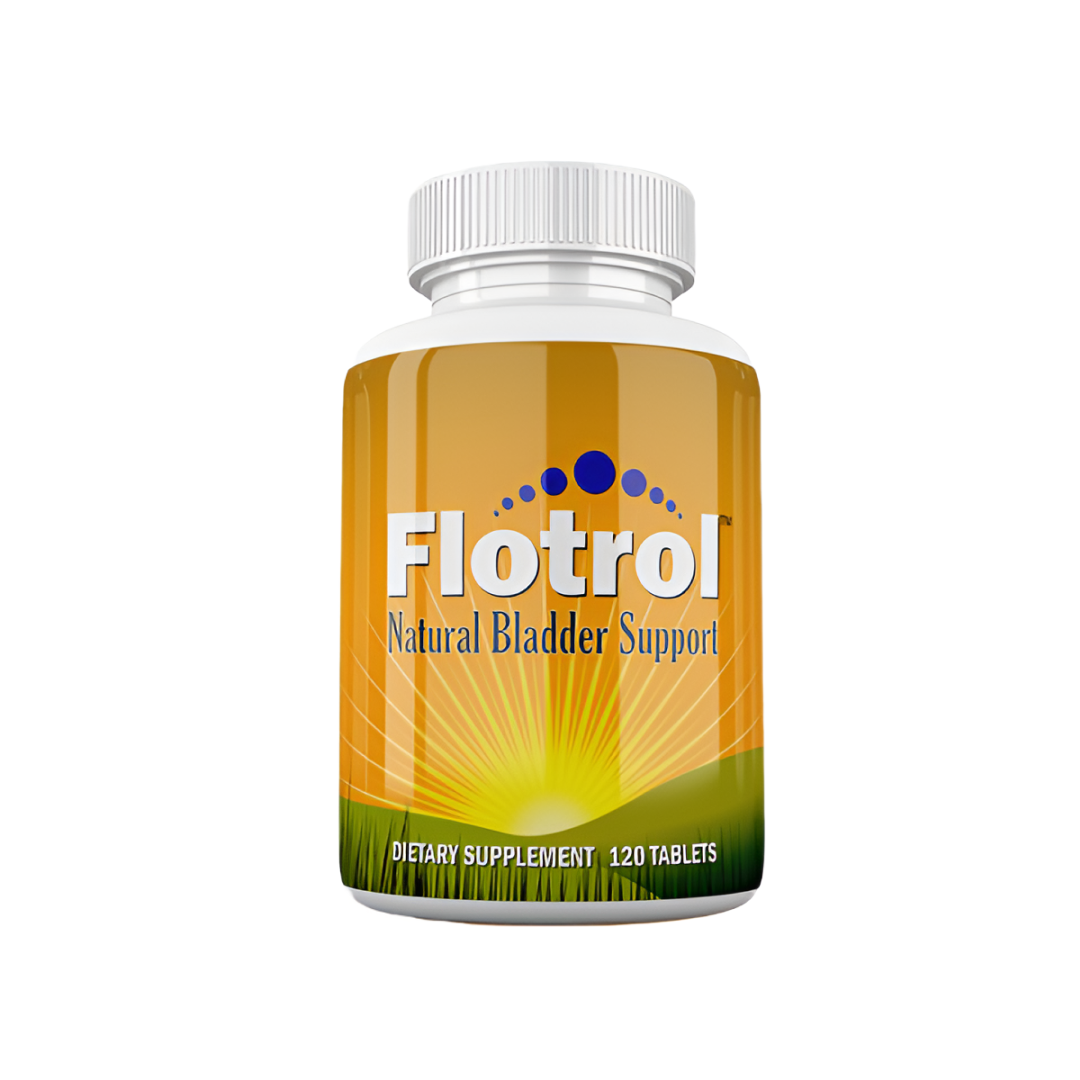
- Active ingredient(s): Go Less® blend — pumpkin seed extract (Cucurbita pepo) and soy germ isoflavones (Glycine max)
- Format: Oral capsule, taken once daily with water
- Marketed claims: Supports bladder health and urinary tract function; helps improve bladder control; reduces frequency of bathroom visits
- Quality info: Go Less is a patented, standardised ingredient. The product page does not specifically reference third-party testing, cGMP certification, or FDA registration — we have no reason to doubt quality but cannot independently verify manufacturing standards
- Price: Approx. £19 / $24.95 per bottle (one month's supply)
Realistic Expectations: What This Supplement Can and Cannot Do
Let us be plain about what FloTrol is not. It is not a treatment for urinary incontinence caused by stress (the kind triggered by coughing, sneezing, or lifting). It is not a treatment for urinary tract infections. It is not a prostate medication. And it is not a replacement for the bladder-retraining exercises, pelvic-floor physiotherapy, or prescription medications that your GP or continence specialist may recommend.
What it may offer — based on limited but real clinical data — is a modest reduction in urinary frequency for adults with overactive bladder symptoms, particularly those who prefer to avoid or supplement conventional treatment. Think of it as one tool in a broader toolkit, not the whole solution.
The honest answer is this: if you have mild-to-moderate OAB symptoms, have seen your GP to rule out underlying causes, and are looking for a gentle supplement to try alongside lifestyle changes (reducing caffeine and alcohol, timed voiding, pelvic-floor exercises), FloTrol is a reasonable candidate to consider. It has more clinical backing than most bladder supplements, it is well tolerated, and at roughly £19 a month it is considerably cheaper than many alternatives. But set your expectations at "possibly helpful" rather than "game-changing," and give it at least six to eight weeks before making a judgement.
Frequently Asked Questions
What is FloTrol and what does it contain?
FloTrol is a daily dietary supplement designed to support bladder health and urinary tract function. Its key active blend is called Go Less, which combines pumpkin seed extract (Cucurbita pepo) with soy germ isoflavones (Glycine max). It is sold as a food supplement, not a licensed medicine.
Is there clinical evidence that Go Less works for overactive bladder?
There are a small number of clinical studies — mostly conducted in Japan — showing that the pumpkin seed extract and soy germ isoflavone combination found in Go Less may help reduce urinary frequency and improve quality of life in adults with overactive bladder symptoms. However, the studies are generally small, short-term, and funded by ingredient manufacturers, so the evidence should be viewed with cautious optimism rather than certainty.
How long does FloTrol take to work?
Based on the available clinical data for the Go Less ingredient blend, participants typically noticed improvements in urinary frequency after approximately six to eight weeks of daily use. FloTrol should not be expected to produce immediate effects, and results will vary between individuals.
Are there any side effects or safety concerns with FloTrol?
The ingredients in FloTrol — pumpkin seed extract and soy germ isoflavones — are generally well tolerated. However, anyone with a soy allergy should avoid this product. Soy isoflavones may also be a concern for individuals with hormone-sensitive conditions such as oestrogen-receptor-positive breast cancer. As with any supplement, speak to your GP or pharmacist before starting, especially if you take regular medication or are pregnant or breastfeeding.
Is FloTrol a licensed medicine or a food supplement?
FloTrol is classified as a dietary supplement and is not licensed by the MHRA as a medicine. This means it has not undergone the same rigorous regulatory review as prescription or pharmacy-only bladder medications such as oxybutynin or mirabegron. It should be considered a complementary option, not a replacement for medical treatment.
Should I see a doctor about bladder control problems before trying FloTrol?
Yes — always. Urinary frequency, urgency, and incontinence can have many causes, including urinary tract infections, diabetes, prostate enlargement, neurological conditions, and more. These underlying causes need to be ruled out or managed before relying on a supplement. Your GP can help determine the right course of action.
✅ The verdict
FloTrol is built around one of the few bladder-support ingredient blends that actually has published, peer-reviewed clinical data — and that alone places it ahead of most of its competitors in a crowded supplement market. The Go Less combination of pumpkin seed extract and soy germ isoflavones showed statistically significant reductions in urinary frequency in randomised controlled trials, and the safety profile is reassuring for most adults. However, the studies are small, short-term, and largely manufacturer-funded, so we should temper enthusiasm with realism. This is not a proven treatment for overactive bladder in the way that mirabegron or oxybutynin are.
FloTrol may be worth trying if you have mild-to-moderate OAB symptoms, have already spoken to your GP to rule out underlying conditions, and are looking for a gentle supplement to use alongside bladder-training and pelvic-floor exercises. It is not suitable for anyone with a soy allergy or hormone-sensitive conditions, and it is not a substitute for medical assessment. If you are interested, you can check current pricing here.
For more supplement reviews from Walton Surgery, you may also be interested in our guides to NAD+ supplements for cellular health, BPC-157 peptide supplements, and Provillus minoxidil 5% for hair loss.
🛒 Reader-recommended option
FloTrol combines the clinically studied Go Less blend of pumpkin seed extract and soy germ isoflavones in a single daily capsule — a reasonable option for adults seeking a gentle, evidence-aware supplement for bladder support.
Affiliate link — see disclosure at the top of this article. Current price approx. £19 / $24.95 per bottle.
This article is informational and contains affiliate links. It does not replace personalised advice from your GP, pharmacist, or another qualified healthcare professional. FloTrol is a dietary supplement and is not licensed by the MHRA as a medicine. It has not been evaluated by the MHRA or the FDA for the treatment or prevention of any disease. Always consult your doctor before starting any new supplement — particularly if you have a soy allergy, a hormone-sensitive condition, are taking anticoagulant medication, are pregnant or breastfeeding, or are under 18 years of age. If you experience persistent or worsening urinary symptoms, seek medical attention promptly.