

V Tight Gel Review 2026: Can a Topical Gel Really Tighten Vaginal Skin?

⚡ Quick Answer
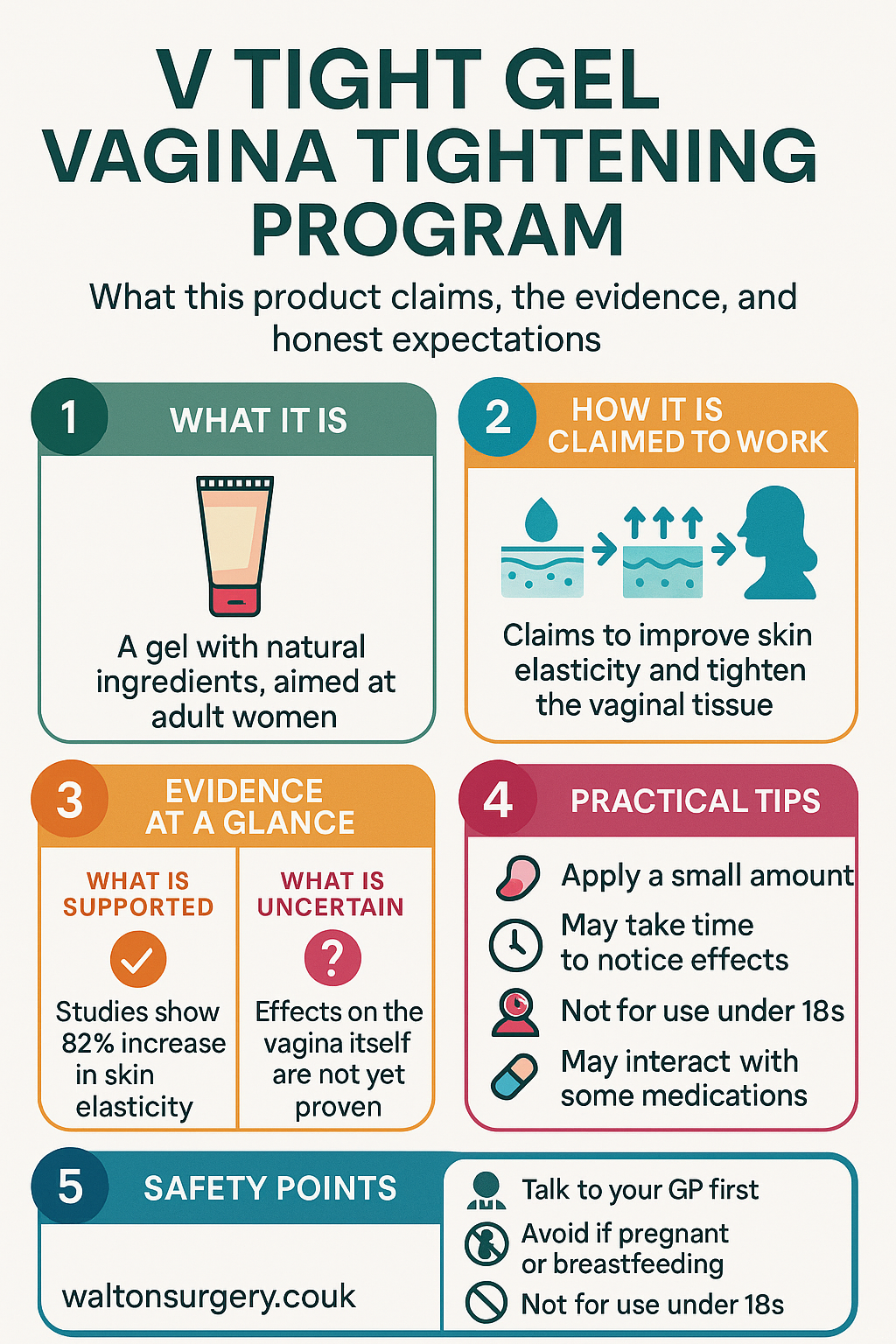
V Tight Gel is a cosmetic gel containing astringent plant extracts (primarily manjakani/oak gall and witch hazel) that may produce a temporary surface sensation of tightness when applied to delicate tissue. It is not a licensed medicine, and the manufacturer’s headline claim of “82% improvement in skin elasticity” cannot be verified through published, peer-reviewed research. For women experiencing genuine vaginal laxity — particularly after childbirth or during perimenopause — the evidence-based approaches remain pelvic floor exercises and, where appropriate, specialist physiotherapy.
🛒 Shop the product
Approx. £32 / $40.00 per bottle — affiliate link, see disclosure above.
Vaginal laxity is one of those concerns that many women experience but relatively few feel comfortable discussing openly. Whether it follows childbirth, develops gradually through the perimenopause, or simply becomes more noticeable with age, the sensation that things have “loosened” can affect confidence, intimate satisfaction, and general wellbeing. It is a completely valid concern — and one that deserves a calm, evidence-based conversation rather than embarrassment or quick-fix promises.
Into this space steps a range of topical products, and one of the more visible is the V Tight Gel Vagina Tightening Program. Sold online through HealthBuy and similar retailers, it is marketed as a natural gel that can tighten and firm vaginal tissue, with the manufacturer citing a striking “82% improvement in skin elasticity.” The question we set out to answer in this review is straightforward: does this product deliver on those claims, and — more importantly — is it the right approach for women dealing with genuine laxity?
In this article we will look at the manjakani and witch hazel-based formulation, examine the evidence (and the gaps in it), discuss what actually works for vaginal tone according to clinical research, and give you an honest assessment of where this product fits. Our aim is to equip you with the information you need to make a decision that is right for your body and your circumstances.
What V Tight Gel Actually Is
V Tight Gel is a topical cosmetic product — not a medicine, not a device, and not a licensed treatment. It is a water-based gel designed for application to the external and internal vaginal area. The manufacturer sells it as part of a “programme” that includes the gel itself and suggested exercises, though the core proposition centres on the topical formulation.
It is important to understand what that regulatory status means. In the UK, products intended to diagnose, treat, or prevent medical conditions require a marketing authorisation from the Medicines and Healthcare products Regulatory Agency (MHRA). V Tight Gel does not hold such an authorisation. It is classified as a cosmetic — meaning it can claim to affect the appearance of skin but cannot legally claim to treat a medical condition such as vaginal laxity. The distinction matters because it determines the level of safety testing, quality control, and evidentiary standard the product has been held to. Spoiler: cosmetics have a significantly lower bar than medicines.
This is not inherently disqualifying — many cosmetic products are perfectly safe and useful. But it does mean that the bold claims attached to this product have not been independently verified through the kind of regulatory review that licensed treatments undergo.
The Key Ingredients and How They Work
Understanding what is in the tube helps you set realistic expectations. V Tight Gel’s formula relies on several botanical ingredients with long traditional use — though traditional use and clinical evidence are, as we will see, not the same thing.
Manjakani (Oak Gall extract) is the headline ingredient. Manjakani has been used for centuries in traditional Malay and Ayurvedic medicine, often applied postpartum to promote the sensation of vaginal tightness. Its active compounds — particularly tannins — are astringents, meaning they cause proteins in the surface layer of tissue to contract slightly. This can produce a temporary feeling of tightness or firmness. The effect is real but superficial: it affects only the outermost cell layers and fades within hours as the tissue rehydrates.
Witch Hazel (Hamamelis virginiana) works through a similar astringent mechanism. Widely used in skincare and aftershave products, witch hazel’s tannins cause mild surface contraction and can temporarily reduce the appearance of enlarged pores or loose-feeling skin. In the context of vaginal tissue, the same mechanism applies: it may give a brief tightening sensation, but it does not alter the deeper collagen or elastin structure of the tissue.
🧬 Understanding astringents
Why “tightening” and “restructuring” are very different things
- Astringents (like tannins in manjakani and witch hazel) cause temporary surface-level protein contraction — think of how strong tea makes your mouth feel “puckered”
- This is a cosmetic, transient effect — lasting minutes to hours
- Actual vaginal laxity involves changes to deeper collagen and elastin fibres, pelvic floor muscle tone, and connective tissue — none of which a topical gel can address
- It is the difference between splashing cold water on your face (temporary tightening) and a facelift (structural change)
Aloe vera is included as a soothing, hydrating base ingredient. It is widely regarded as safe for skin application and may help offset any drying effects of the astringent ingredients. Arginine, an amino acid, acts as a mild vasodilator — it may increase local blood flow, which could contribute to a sensation of engorgement or plumpness. Citrus extracts provide additional mild astringent and aromatic properties.
Taken together, these ingredients can plausibly produce a temporary sensation of tightness or increased sensitivity through surface contraction and enhanced local circulation. What they cannot do — and what the marketing sometimes implies — is produce lasting structural tightening of the vaginal canal.
The Evidence: What Do We Actually Know?
This is where the review gets honest, and where the gap between marketing and medicine becomes most apparent. The manufacturer of V Tight Gel cites an impressive statistic: “clinically proven to improve skin elasticity by 82%.” Let us examine that claim.
We searched for the underlying study across major medical databases including PubMed, the Cochrane Library, and Google Scholar. We were unable to locate a published, peer-reviewed clinical trial that specifically evaluates V Tight Gel or its formulation for vaginal tightening or skin elasticity improvement. The 82% figure does not appear to originate from research that has been submitted to independent scientific scrutiny. This does not necessarily mean no study exists — the manufacturer may have commissioned private testing — but it does mean that the claim has not been validated through the standard processes that give clinicians and consumers confidence in a product’s effectiveness.
⚠️ Reality check — the “clinically proven” claim
In the UK, the phrase “clinically proven” carries significant weight. For a licensed medicine, it means the product has undergone rigorous randomised controlled trials reviewed by the MHRA. For a cosmetic product, there is no regulatory requirement to prove efficacy through clinical trials. When a cosmetic product uses the phrase “clinically proven,” it may refer to a small, manufacturer-funded study that has not been independently published or replicated. Without seeing the trial design, sample size, methodology, and results, we cannot assess whether this figure is meaningful. We would encourage readers to treat unverifiable marketing statistics with healthy scepticism.
What is well-established in the medical literature is that astringent tannins — the active compounds in manjakani and witch hazel — cause temporary surface tissue contraction. This is basic chemistry, not contested science. The issue is the leap from “this gel can cause a brief tightening sensation” to “this gel permanently improves vaginal tone.” That leap is not supported by published evidence.
By contrast, pelvic floor exercises have been studied extensively. A 2019 Cochrane review of pelvic floor muscle training for urinary incontinence (which shares a common mechanism with vaginal laxity) confirmed significant benefits with supervised exercise programmes. The NHS recommends pelvic floor exercises as the first-line approach for women experiencing vaginal laxity or incontinence, and for good reason — the evidence base is robust.
How to Use It (If You Choose To)
If, after considering the evidence gaps, you decide this product is worth trying as a cosmetic addition to your intimate routine, here is what the manufacturer suggests:
Apply a small amount of gel to the external vaginal area and, if desired, gently insert a small amount internally using clean fingers. The manufacturer recommends applying it approximately 15 minutes before intimate activity. The effect is described as temporary — lasting for the duration of use but not building over time in the way that, say, a retinoid builds collagen in facial skin. You should not expect cumulative, lasting results from a topical astringent.
The programme element suggests combining the gel with Kegel exercises, which is — frankly — the more evidence-based component of the package. If the product encourages women to do pelvic floor exercises they might not otherwise have done, that is arguably its most valuable contribution, and it does not cost anything at all.
Side Effects and Who Should Think Twice
Because V Tight Gel is a cosmetic product rather than a medicine, it has not undergone the same safety and pharmacovigilance testing that licensed vaginal treatments receive. However, we can consider the known safety profiles of its individual ingredients.
Common concerns include:
- Irritation and allergic reactions — astringent tannins can irritate sensitive mucosal tissue, particularly if there are micro-tears, abrasions, or existing inflammation
- Disruption of vaginal microbiome — the vagina maintains a delicate acidic pH balance (typically 3.8–4.5). Introducing foreign substances can disrupt lactobacilli and increase the risk of bacterial vaginosis or thrush
- Masking underlying conditions — using a temporary tightening gel may delay women from seeking proper assessment of pelvic floor dysfunction, prolapse, or hormonal changes that require medical attention
- Partner reactions — some partners may experience irritation or allergic responses from contact with the gel
⚠️ Who should not use this product
We would advise against using V Tight Gel if you are pregnant or breastfeeding, if you have any active vaginal infection (thrush, bacterial vaginosis, STI), if you have recently given birth or had gynaecological surgery, if you have unexplained vaginal bleeding, or if you have a known allergy to any of the listed ingredients. If you are experiencing symptoms of pelvic organ prolapse (a feeling of heaviness, a visible bulge, or difficulty emptying your bladder or bowel), please see your GP — this is a medical issue that requires assessment, not a cosmetic gel. This product is intended for adults only.
A Focused Look at This Product
V Tight Gel is sold through the HealthBuy Shopify store, which stocks a range of health and beauty products. It is important to note that HealthBuy is a retailer, not a pharmaceutical company, and the product does not carry any MHRA, FDA drug, or CE medical-device registration that we are aware of. The ingredients are plant-derived and the formulation is described as “natural” — a term that has no regulatory definition in the context of product safety or efficacy.
For readers who have decided they would like to try a cosmetic tightening product as part of their intimate routine, here is a transparent snapshot of what you are purchasing:
🔬 Product snapshot — V Tight Gel Vagina Tightening Program
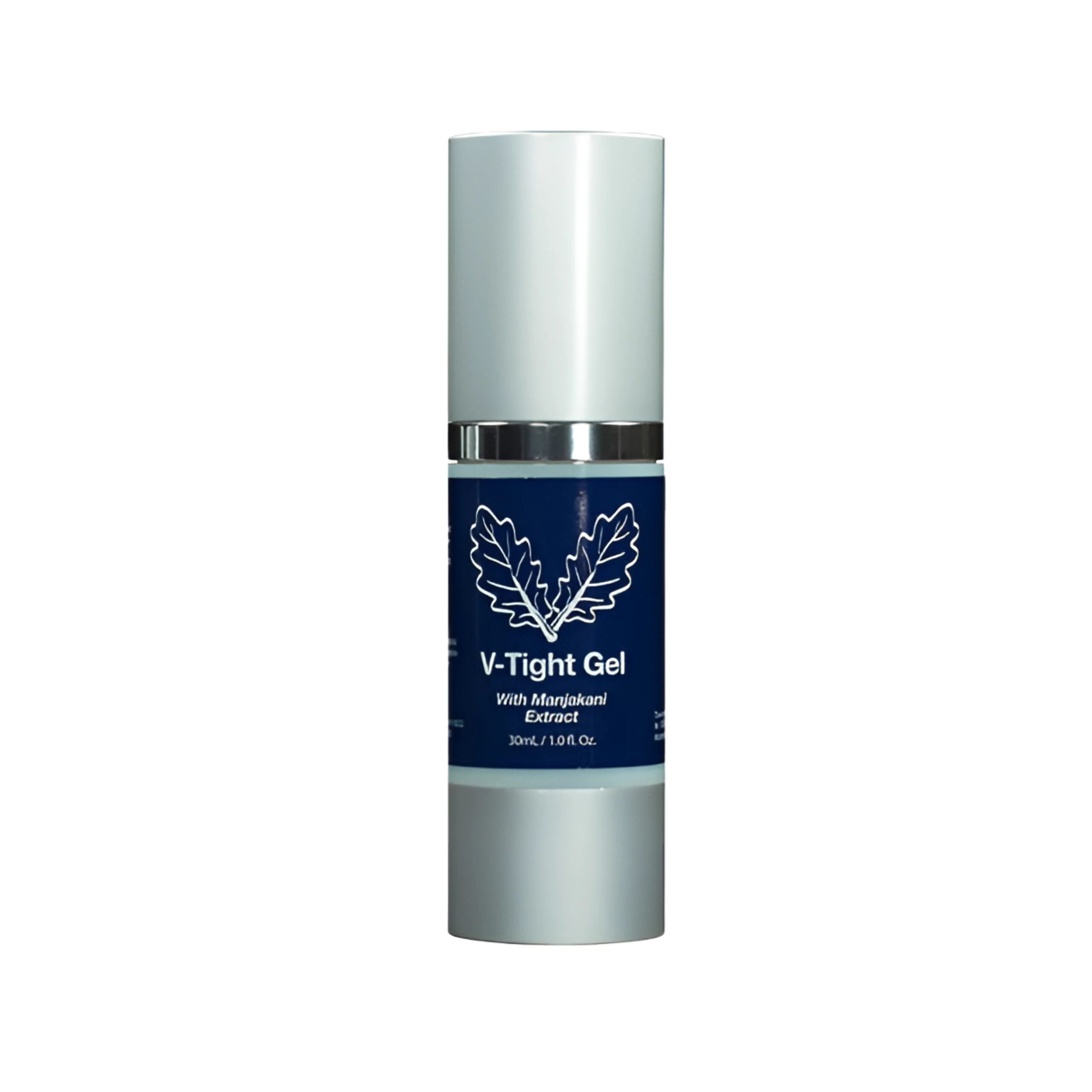
- Active ingredient(s): Manjakani (oak gall extract), witch hazel, aloe vera, arginine, citrus extracts
- Format: Topical gel (water-based)
- Marketed claims: Tightens and firms vaginal tissue; “clinically proven to improve skin elasticity by 82%” — not independently verified
- Quality info: No MHRA or FDA drug registration found; described as “natural ingredients”; third-party testing or GMP certification status not stated on the product page
- Price: Approx. £32 / $40.00 per bottle
Realistic Expectations
If you use V Tight Gel, here is what you might realistically experience: a mild, temporary sensation of tightening or tingling in the applied area, lasting perhaps one to two hours. This may enhance the subjective experience of intimacy in the short term — and if it does, that has value for you. Some women report feeling more confident knowing they have taken a preparatory step, even if the effect is partly psychological. There is nothing wrong with that.
What you should not expect is a lasting structural change to your vaginal canal, a reversal of post-childbirth laxity, or a replacement for pelvic floor rehabilitation. If you find yourself needing to use increasing amounts to feel the same effect, or if the product is not addressing the underlying concern, that is a sign to speak to your GP about evidence-based alternatives.
It is also worth noting that vaginal laxity is frequently overestimated by the person experiencing it. Research published in the British Journal of Obstetrics and Gynaecology has found that many women who report concerns about vaginal looseness fall within normal clinical ranges. If the concern is affecting your mental health or relationship, a conversation with a compassionate healthcare professional can be genuinely transformative — far more so than any tube of gel.
What Actually Works for Vaginal Laxity
We would not be doing our job if we reviewed a product without pointing you towards the approaches with the strongest evidence behind them. For women experiencing genuine vaginal laxity — particularly postpartum — the following options have meaningful clinical support:
✅ Evidence-based options
What the clinical evidence actually supports
- Pelvic floor exercises (Kegels) — the NHS-recommended first-line approach. Regular, properly performed exercises can significantly improve vaginal tone within 3–6 months. The NHS website provides free guidance on technique.
- Supervised pelvic floor physiotherapy — available through NHS referral or privately. A specialist physiotherapist can assess your individual muscle function, correct technique, and design a progressive programme.
- Vaginal oestrogen — for perimenopausal and postmenopausal women, declining oestrogen can thin vaginal tissue and reduce tone. Low-dose vaginal oestrogen (available on prescription) can help restore tissue health.
- Radiofrequency or laser treatments — devices such as FemiLift or ThermiVa are available at specialist clinics. Evidence is growing but still mixed, and these are not without risks. They should only be performed by qualified practitioners.
The key message is that vaginal laxity is a treatable concern — but the treatments that work are physiological, not cosmetic. A gel can sit on the surface; it cannot retrain a muscle or restore collagen architecture.
Frequently Asked Questions
What is V Tight Gel and what does it claim to do?
V Tight Gel is a topical cosmetic gel marketed for external and internal application to create a sensation of vaginal tightness. It contains astringent plant extracts such as manjakani (oak gall) and witch hazel. The manufacturer claims it can tighten and firm the skin, citing an 82% improvement in skin elasticity. It is a cosmetic product, not a licensed medicine.
Does V Tight Gel actually tighten vaginal tissue?
The astringent ingredients in V Tight Gel, such as witch hazel and oak gall extract, may cause a temporary sensation of tightness through mild surface tissue contraction. However, this is a superficial, short-lived cosmetic effect. No topical gel has been shown in peer-reviewed clinical trials to produce lasting structural tightening of vaginal or pelvic tissue. Genuine vaginal laxity related to childbirth, ageing, or hormonal changes requires pelvic floor physiotherapy, not topical products.
Is the “clinically proven 82% improvement in skin elasticity” claim reliable?
The 82% skin elasticity figure cited by the manufacturer does not appear to come from a published, peer-reviewed clinical trial that we can verify. We were unable to locate the specific study in recognised medical databases. Without access to the trial design, sample size, methodology, and independent review, this claim should be treated with significant caution.
What are the main ingredients in V Tight Gel?
V Tight Gel’s formula typically includes manjakani (oak gall extract), witch hazel, aloe vera, arginine (an amino acid), and citrus-based extracts. Manjakani and witch hazel are traditional astringents that can cause temporary surface tissue contraction. Aloe vera is a soothing emollient. Arginine is a vasodilator that may increase local blood flow. None of these ingredients produce lasting structural changes to tissue.
Is V Tight Gel safe to use?
As a cosmetic product rather than a medicine, V Tight Gel is not subject to the same regulatory scrutiny as licensed treatments. While the individual plant ingredients are generally considered low-risk, applying any product to delicate mucosal tissue carries a risk of irritation, allergic reaction, or disruption of the natural vaginal microbiome. If you experience burning, itching, unusual discharge, or discomfort, stop use and consult your GP or pharmacist.
What actually works for vaginal laxity?
Pelvic floor exercises (Kegel exercises) are the most evidence-based approach to improving vaginal tone and are recommended by the NHS. Supervised pelvic floor physiotherapy offers structured guidance. For more significant laxity, vaginal rejuvenation procedures (such as laser therapy or radiofrequency treatments) are available through specialist clinics, though these carry their own risks and varying evidence bases. A GP or gynaecologist can advise on the best approach for your individual situation.
✅ The verdict
V Tight Gel is a cosmetic product built around astringent botanical ingredients that can produce a temporary surface sensation of tightness. That effect is real — but it is cosmetic and short-lived. The manufacturer’s headline claim of “clinically proven” 82% skin elasticity improvement is not supported by publicly available, peer-reviewed research, and the product holds no MHRA or equivalent regulatory approval. For women seeking a mild, temporary cosmetic sensation as part of their intimate routine, it may have some subjective value. For women dealing with genuine, bothersome vaginal laxity — particularly after childbirth or during the menopause transition — this gel is not the answer.
If you have reviewed the evidence and decided this product is right for you, you can check current pricing here. We would also encourage you to speak with your GP or a pelvic floor physiotherapist — often a structured exercise programme produces more meaningful, lasting improvements than any topical product can offer, and NHS referral is free.
If you are interested in reading our other evidence-based product reviews, you may find these useful: our guide to NAD+ supplements for cellular health, our review of BPC-157 for tissue repair, or our look at Provillus minoxidil 5% for hair loss.
🛒 Reader-recommended option
If you have decided to try a topical cosmetic tightening product, V Tight Gel is available directly from HealthBuy with the manufacturer’s satisfaction guarantee.
View V Tight Gel Vagina Tightening Program →
Affiliate link — see disclosure at the top of this article. Current price approx. £32 / $40.00 per bottle.
This article is informational and contains affiliate links. It does not replace personalised advice from your GP, pharmacist, or another qualified healthcare professional. V Tight Gel is a cosmetic product and is not licensed as a medicine in the UK. It has not been evaluated by the MHRA for safety or efficacy. Do not use if pregnant, breastfeeding, or experiencing an active vaginal infection. If you have symptoms of pelvic organ prolapse, unexplained vaginal bleeding, or persistent intimate discomfort, please see your GP before using any topical product. This product is intended for adults aged 18 and over only.
