

Wartrol Wart Remover Review 2026: Does This Popular Treatment Actually Clear Warts?

⚡ Quick Answer
Wartrol contains salicylic acid, which is a genuinely evidence-backed OTC ingredient for common and plantar warts. However, the formula also includes homeopathic dilutions (Thuja occidentalis, Antimonium crudum, and others) that lack robust clinical evidence for wart removal. At roughly £19 per bottle, it costs two to three times more than comparable salicylic-acid-only products available at Boots or Superdrug, without clear evidence that the additional ingredients improve results.
🛒 Shop the product
Approx. £19 / $24.95 per bottle — affiliate link, see disclosure above.
Warts are one of those skin concerns that nobody really wants to talk about at the dinner table, yet they are remarkably common. Caused by the human papillomavirus (HPV), warts can appear on the hands, feet, knees, and elbows — sometimes persisting for months or years. The NHS estimates that warts affect around one in ten people in the general population, with rates considerably higher among school-age children. For many adults, a stubborn wart on a finger or the sole of the foot is more than a cosmetic nuisance; it can catch on clothing, cause discomfort when walking, or simply feel embarrassing.
Over-the-counter wart treatments are widely available, and most of them rely on a single well-known active ingredient: salicylic acid. Wartrol Wart Remover follows this tradition but adds several homeopathic ingredients to its formula, claiming a unique dual approach. The marketing suggests over ninety per cent user satisfaction and positions the product as a premium solution. But when you look beneath the promotional language, what does the evidence actually say?
In this review we will break down the ingredients, examine the clinical literature for each component, compare salicylic acid wart treatments against pharmacy alternatives, and give you a straightforward assessment of whether Wartrol deserves a place in your medicine cabinet. As always, our aim is to help you make an informed decision — not to sell you anything.
What Exactly Is Wartrol?
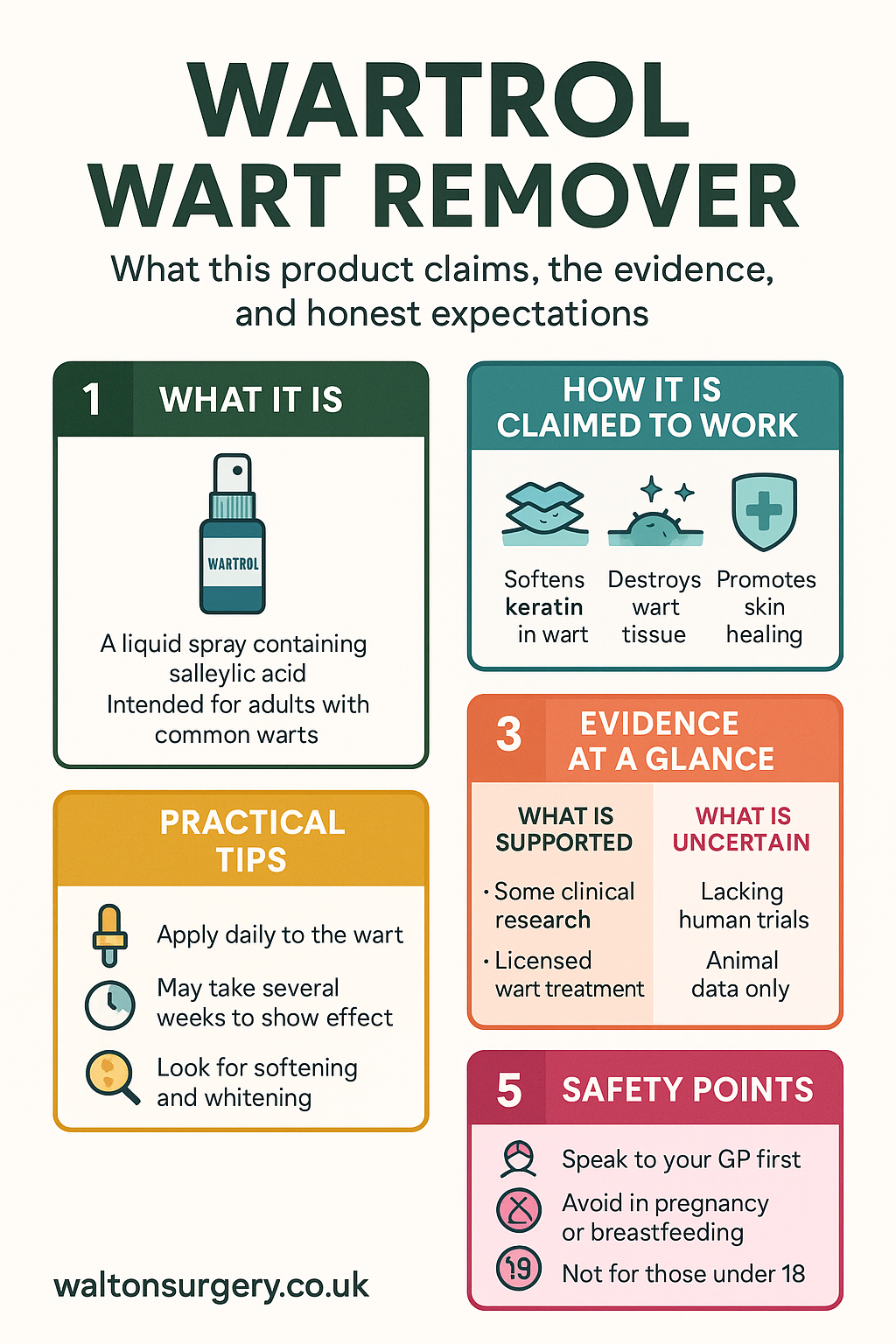
Wartrol is a topical liquid marketed as a wart removal solution. It is sold primarily through online retailers and the manufacturer’s own website rather than through traditional pharmacy shelves. The product is applied directly to the surface of common warts (verruca vulgaris) and plantar warts (verrucae on the soles of the feet) using a small brush applicator.
The formula is a blend of two types of ingredients. First, there is salicylic acid — a well-established keratolytic agent that softens and dissolves the tough outer layers of skin that form a wart. Second, there are several ingredients drawn from the homeopathic pharmacopoeia, including Thuja occidentalis, Antimonium crudum, Nitricum acidum, and Arsenicum album, typically at very high dilutions. The manufacturer presents these as working in harmony, but it is important to understand that the evidence base for each category of ingredient is very different.
The product is not licensed as a medicine by the MHRA in the same way that prescription treatments are. It occupies the same general category as other OTC wart products — a cosmetic or consumer health item — though the presence of salicylic acid gives it a genuinely active pharmacological component.
How Does Salicylic Acid Work on Warts?
Salicylic acid is the workhorse of OTC wart treatment, and for good reason. When applied to a wart, it acts as a keratolytic — meaning it breaks down keratin, the structural protein that makes up the hard, thickened surface of the wart. Over days and weeks of repeated application, the dead layers of wart tissue gradually soften, loosen, and can be gently filed or washed away, revealing healthier skin beneath.
The process also appears to provoke a mild local inflammatory response, which may help the immune system recognise and target the underlying HPV infection more effectively. Concentrations used in OTC products typically range from 12% to 40%, with most common wart treatments sitting in the 12–17% range for daily use.
What the research says
Salicylic acid: the best-evidenced OTC wart treatment available
- A Cochrane review of salicylic acid for common warts found cure rates of roughly 50–70% over several weeks — significantly better than placebo.
- NHS guidance recommends salicylic acid as a first-line treatment for common and plantar warts before considering cryotherapy or other options.
- Salicylic acid is the only non-prescription active with a strong evidence base for wart clearance.
- It is considered safe for most adults when used as directed, though care is needed to protect surrounding healthy skin.
So the core ingredient in Wartrol — salicylic acid — is genuinely supported by evidence. The question is whether the additional homeopathic components add measurable benefit.
The Homeopathic Ingredients: What Evidence Exists?
Wartrol’s formula includes several ingredients from the homeopathic tradition. Thuja occidentalis (often labelled simply as “Thuja”) is the most commonly cited homeopathic remedy for warts. Antimonium crudum, Nitricum acidum, and Arsenicum album are also present. In homeopathic practice, these are typically diluted to extremely high potencies — often to the point where statistically no molecules of the original substance remain in the solution.
The scientific literature on homeopathic treatments for warts is sparse. A small number of case reports and uncontrolled studies have been published over the years, but high-quality randomised controlled trials are essentially absent. A widely cited 2012 systematic review by Cochrane found no reliable evidence that homeopathic treatments are effective for warts beyond placebo.
⚠️ Reality check
It is worth being clear: the homeopathic ingredients in Wartrol (Thuja, Antimonium crudum, Nitricum acidum, Arsenicum album) have no robust clinical evidence supporting their efficacy for wart removal. This does not mean they are harmful — at the dilutions used they are essentially inert — but it does mean you are primarily paying for salicylic acid plus an additional “story.” Any wart clearance you experience from Wartrol is most likely attributable to the salicylic acid alone.
This is not unusual in the supplement and consumer health market. Manufacturers often combine a well-evidenced active ingredient with additional botanical or homeopathic components to create a sense of a proprietary, superior formula. Sometimes the extras are harmless but unnecessary; occasionally they add cost without any demonstrated benefit. In this case, the honest assessment is that you are getting an effective active ingredient (salicylic acid) wrapped in marketing language about a homeopathic blend that the evidence does not support.
How to Use Wartrol: Application and Expectations
Wartrol is applied topically with a small brush built into the bottle’s cap. The general instructions involve cleaning and drying the affected area, applying a thin layer of the liquid directly to the wart, allowing it to dry, and repeating once or twice daily. For plantar warts on the sole of the foot, soaking the area in warm water for a few minutes before application can help the salicylic acid penetrate more effectively.
Patience is essential. Salicylic acid treatments generally require consistent use over several weeks — often four to twelve weeks — before the wart is fully resolved. Picking, scratching, or aggressively scraping the wart between applications should be avoided, as this can cause minor bleeding, infection, or scarring. If the surrounding skin becomes sore or inflamed, pausing treatment for a few days is sensible.
It is important to protect healthy skin around the wart. Applying a thin layer of petroleum jelly to the surrounding area before treatment can act as a barrier. You should also avoid sharing towels, nail files, or other items that have touched the wart, to prevent spreading HPV to other body areas or to other people.
Side Effects and Who Should Think Twice
Salicylic acid is generally well tolerated, but it is not entirely free of side effects. The most common issues are localised irritation, stinging, redness, and peeling of the skin around the wart. These are usually mild and resolve when treatment is paused or stopped. In rare cases, people with sensitive skin may experience more significant inflammation.
There are several groups of people who should speak to a GP or pharmacist before using any salicylic acid wart product — including Wartrol:
⚠️ Who should take extra care
Diabetes or peripheral neuropathy: Reduced sensation in the feet can mean injuries go unnoticed, increasing the risk of ulceration. Always consult your GP before treating plantar warts if you have diabetes.
Circulatory problems: Conditions affecting blood flow to the extremities warrant medical advice before using keratolytic agents.
Pregnancy and breastfeeding: Salicylic acid can be absorbed through the skin. While topical use at low concentrations is generally considered low risk, it is wise to discuss it with your midwife or GP first.
Children under 12: Most OTC salicylic acid wart products are not recommended for very young children without medical guidance. Wartrol’s own labelling should be checked for age restrictions.
Warts on the face, genitals, or mucous membranes: Never use a salicylic acid treatment — or any home wart remedy — on these areas. Genital warts require assessment at a sexual health clinic, and facial warts need professional management to avoid scarring.
A Focused Look at This Product
With so many wart treatments available, it is helpful to see Wartrol laid out clearly. The product does contain an evidence-based active ingredient, but the rest of the formula and the price point deserve scrutiny. Here is a straightforward product snapshot:
🔬 Product snapshot — Wartrol Wart Remover
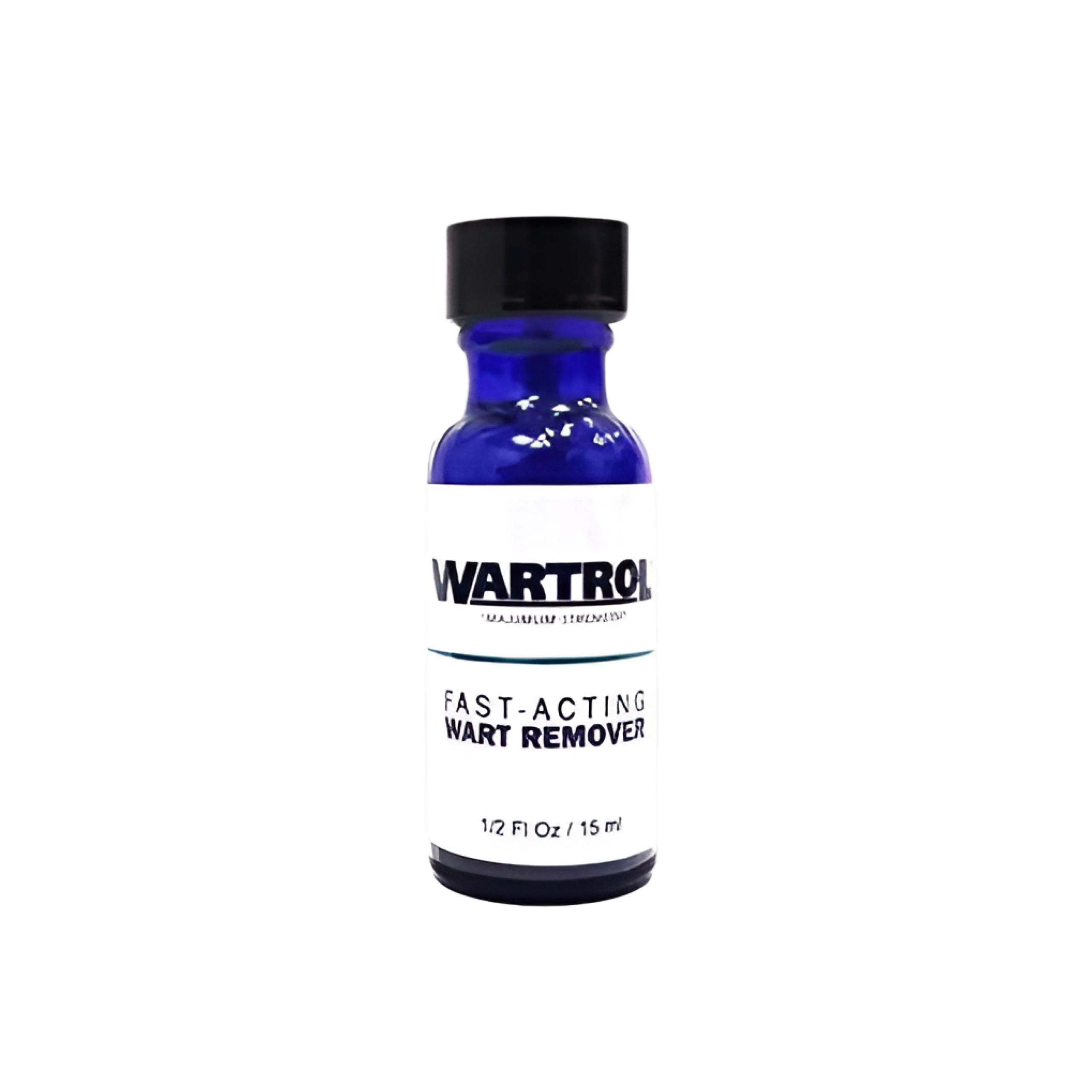
- Active ingredient(s): Salicylic acid (primary); plus homeopathic dilutions of Thuja occidentalis, Antimonium crudum, Nitricum acidum, Arsenicum album, and others.
- Format: Topical liquid with brush applicator.
- Marketed claims: “Over 90% user satisfaction”; targets and eliminates common and plantar warts; promotes healthy skin.
- Quality info: Sold through an online retailer. No specific mention of third-party testing, cGMP certification, or independent lab verification on the product page — we recommend contacting the seller directly for quality documentation.
- Price: Approx. £19 / $24.95 per bottle.
For context, a tube of Bazuka (12% salicylic acid) retails for around £5–£7 at Boots or Superdrug, and Scholl’s Verruca & Wart Removal Pen (also salicylic acid based) sits in a similar price range. Wartrol costs roughly three times as much. Whether the additional homeopathic ingredients justify that premium is a question the evidence does not support in the affirmative.
Realistic Expectations: What Will Happen When You Use It?
If you decide to try Wartrol, here is what a realistic timeline looks like. In the first one to two weeks, you will likely notice the surface of the wart becoming softer and lighter in colour. Dead skin may begin to peel away. Between weeks three and six, continued application should progressively reduce the size of the wart. For some people, complete clearance occurs within six to eight weeks; for others, particularly with stubborn plantar warts, it may take ten to twelve weeks or longer.
Some warts will not respond to salicylic acid at all. If you have used the product consistently for twelve weeks without meaningful improvement, it is reasonable to consult your GP. Prescription options — including stronger salicylic acid preparations, cryotherapy (freezing with liquid nitrogen), or, in persistent cases, minor surgical procedures — may be more appropriate.
It is also worth remembering that warts can recur even after successful treatment, because the underlying HPV infection may not be entirely eliminated from the skin. This is not a failure of the product — it is simply how the virus behaves. Maintaining good hand hygiene, not picking at existing warts, and keeping feet clean and dry can all help reduce the risk of recurrence or spreading.
Frequently Asked Questions
What is Wartrol Wart Remover?
Wartrol is an over-the-counter topical liquid marketed as a wart removal solution. Its formula combines salicylic acid — a well-known keratolytic agent — with several homeopathic ingredients. It is sold primarily online and applied directly to common warts and plantar warts using a built-in brush applicator.
Is Wartrol clinically proven to remove warts?
The active ingredient salicylic acid has decades of clinical evidence supporting its use in wart removal — Cochrane reviews report clearance rates of around 50–70%. However, the Wartrol product itself — as a proprietary blend — has not been tested in published, peer-reviewed clinical trials. The “clinically proven” marketing claim refers to the individual ingredient, not the complete Wartrol formula.
How does Wartrol compare to pharmacy wart treatments like Bazuka?
Pharmacy wart treatments such as Bazuka, Scholl, and Occlusal contain salicylic acid at similar or higher concentrations and are widely available across the UK for around £5–£10. Wartrol contains salicylic acid plus homeopathic ingredients but costs significantly more at roughly £19 per bottle, without evidence that the additional ingredients improve outcomes. The main active doing the heavy lifting in all of these products is salicylic acid.
Are there side effects from using Wartrol?
The salicylic acid in Wartrol can cause localised skin irritation, burning, peeling, and redness — especially if it comes into contact with healthy surrounding skin. These effects are generally mild and resolve when treatment is paused. People with diabetes, poor circulation, or those taking blood-thinning medication should consult a GP before using any salicylic acid wart treatment.
Can I use Wartrol on genital warts or facial warts?
No. Salicylic acid wart treatments — including Wartrol — should not be used on the face, genitals, mucous membranes, or broken skin. Genital warts require assessment by a sexual health clinic or GP. Facial warts should also be assessed by a healthcare professional to avoid scarring and to rule out other skin conditions that may mimic warts.
Do warts go away on their own without treatment?
Yes. Research shows that roughly 65% of common warts resolve spontaneously within two years, particularly in children and younger adults. Treatment is usually sought for cosmetic reasons, discomfort, or to reduce spreading. If a wart is changing in appearance, bleeding, or spreading rapidly, it is best to see your GP to confirm the diagnosis and discuss your options.
✅ The verdict
Wartrol is, at its core, a salicylic acid wart treatment — and salicylic acid is a genuinely effective, well-evidenced OTC remedy for common and plantar warts. The homeopathic components that differentiate Wartrol from cheaper pharmacy products do not have meaningful clinical evidence to support their inclusion. This means you are likely paying a premium for marketing rather than for measurable pharmacological benefit.
If you are looking for a salicylic acid treatment and prefer to order online, Wartrol is a legitimate option — the active ingredient is sound. However, if you are budget-conscious (and most of us are), a standard pharmacy salicylic acid product will deliver very similar results at a fraction of the price. If you would like to check current pricing on Wartrol here, the link is available. For everyone else, a trip to the Boots pharmacy counter is probably the smarter first move.
If you are interested in evidence-based product reviews, you may also find our recent articles on NAD+ supplements, BPC-157, and Provillus minoxidil for hair loss helpful.
🛒 Reader-recommended option
If you have decided a salicylic acid wart treatment is right for you and you prefer the convenience of ordering online, Wartrol is worth a look — just be aware that pharmacy alternatives exist at a lower price point.
Affiliate link — see disclosure at the top of this article. Current price approx. £19 / $24.95 per bottle.
This article is informational and contains affiliate links. It does not replace personalised advice from your GP, pharmacist, or another qualified healthcare professional. Salicylic acid wart treatments should not be used on the face, genitals, or mucous membranes. If you have diabetes, circulatory problems, or are pregnant or breastfeeding, consult your GP before use. Do not use on children under 12 without medical advice. If a wart is changing in appearance, bleeding, or not responding to treatment after twelve weeks, see your doctor. This product is not a medicine licensed by the MHRA; salicylic acid is the evidence-based active ingredient, while the homeopathic components lack robust clinical support.
