

Zetaclear Nail Fungus Treatment Review 2026: A Dual-Action Formula Under the Microscope

⚡ Quick Answer
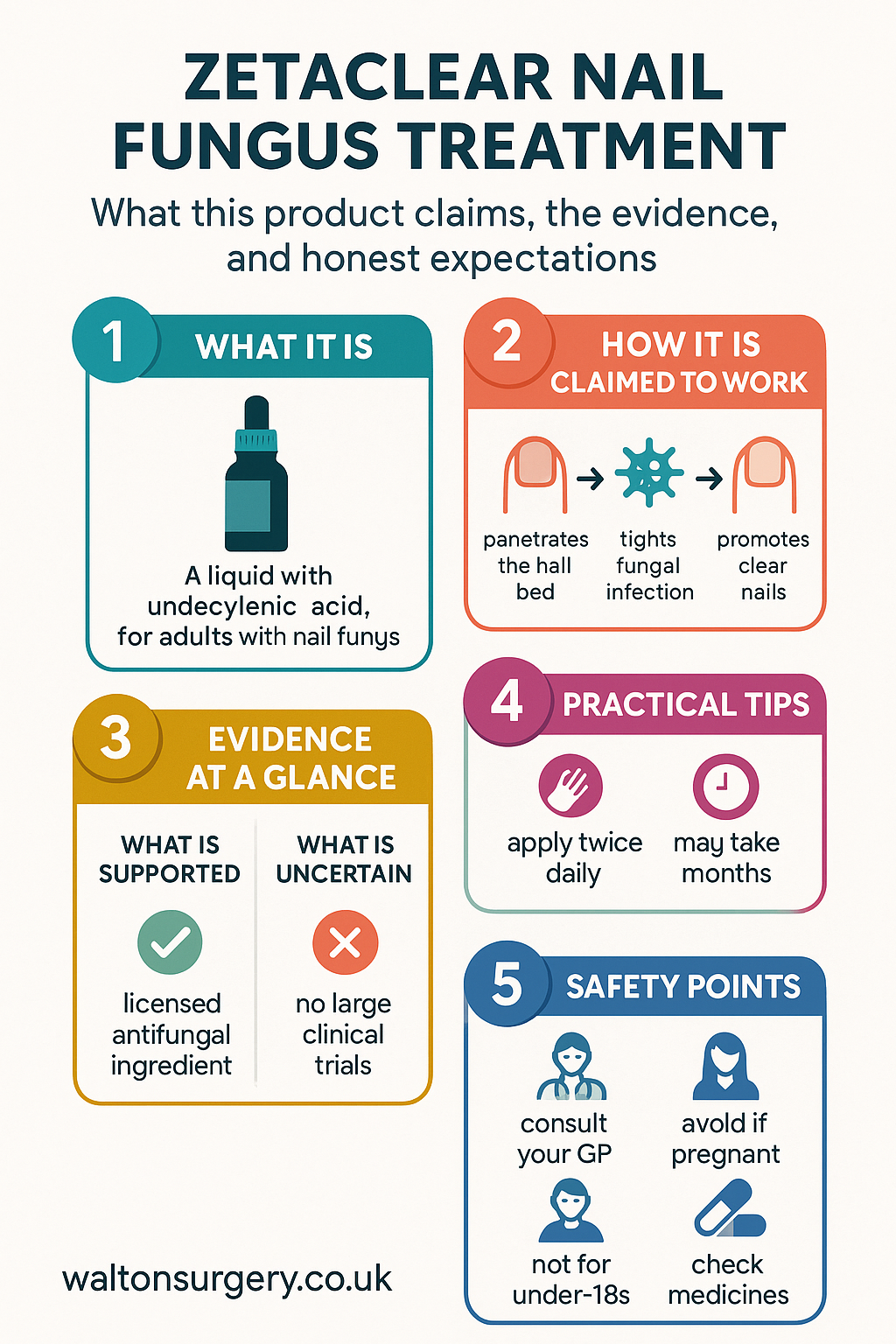
ZetaClear is a two-part nail fungus treatment combining a topical solution (with undecylenic acid and tea tree oil) and a homeopathic oral spray. Undecylenic acid has recognised antifungal properties and is an FDA OTC monograph ingredient, but ZetaClear as a complete formulation has not been the subject of published, peer-reviewed clinical trials. It may be worth considering for mild nail discolouration, though anyone with moderate-to-severe onychomycosis should see their GP first.
🛒 Shop the product
Approx. £19 / $24.95 per bottle — affiliate link, see disclosure above.
Nail fungus — medically known as onychomycosis — is one of those quietly persistent health concerns that can chip away at confidence without ever feeling urgent enough to book a GP appointment. A yellowing toenail, a slightly thickened edge, a nail that no longer looks quite right in open-toed shoes. It is remarkably common, affecting somewhere between 3% and 8% of adults, and yet many people live with it for years before seeking help. So when a product like ZetaClear appears, promising to “eliminate nail fungus for good” with a “clinically proven and FDA approved formula,” it understandably catches the eye.
ZetaClear is marketed as a dual-action system: a topical solution applied directly to the affected nail, combined with a homeopathic oral spray. The topical formulation includes undecylenic acid, a fatty acid with recognised antifungal properties, alongside tea tree oil and several other plant-derived ingredients. It is sold internationally through the HealthBuy / Shopify platform and is aimed at people looking for a non-prescription alternative.
In this review we will look at the individual antifungal ingredients in ZetaClear, what the scientific literature actually says about them, how the product compares with prescription options available from your GP, and whether the marketing claims hold up under scrutiny. Nail fungus treatment is a marathon, not a sprint — and choosing the right approach matters.
What Onychomycosis Actually Is (And Why It’s So Stubborn)
Before we discuss any product, it helps to understand what we are dealing with. Onychomycosis is a fungal infection of the nail plate, most commonly caused by dermatophyte fungi (particularly Trichophyton rubrum), though yeasts and non-dermatophyte moulds can also be responsible. The infection typically begins at the tip or side of the nail and works its way back toward the nail bed.
The reason nail fungus is so notoriously difficult to treat comes down to anatomy. The nail plate is a dense, keratinised structure — essentially a barrier designed to protect the nail bed beneath. Getting any active ingredient to penetrate through that plate, reach the fungal organisms residing at the nail bed, and maintain a therapeutic concentration long enough to be effective is a significant pharmaceutical challenge. This is why even prescription-strength treatments often require months of use.
Risk factors include advancing age, diabetes, peripheral vascular disease, immunosuppression, communal bathing or swimming, tight-fitting footwear, and a family history of the condition. Left untreated, onychomycosis can worsen, cause discomfort, and — in rare cases in people with diabetes or compromised immunity — lead to secondary bacterial infections.
What Is ZetaClear? Breaking Down the Two-Part System
ZetaClear is sold as a two-component system. The first is a topical solution designed for direct application to the affected nail and surrounding skin. The second is a homeopathic oral spray intended to be taken sublingually (under the tongue). The idea is that the topical solution addresses the infection locally while the oral spray purportedly supports the body’s systemic response.
The topical solution’s key listed ingredients include:
Key topical ingredients
Active & supporting components in the ZetaClear formula
- Undecylenic acid (25%) — a fatty acid derived from castor oil, listed in the US FDA’s OTC monograph as an accepted antifungal agent for topical use
- Tea tree oil (Melaleuca alternifolia) — a widely studied essential oil with demonstrated in-vitro antifungal and antiseptic properties
- Almond oil — used as a carrier oil; may aid skin conditioning but has no direct antifungal evidence
- Jojoba oil — another carrier oil; helps with product texture and skin feel
- Vitamin E oil — included for skin-nourishing properties; limited evidence for antifungal action
- Lemongrass oil & clove oil — essential oils with some in-vitro antimicrobial activity, though clinical evidence on nail fungus specifically is sparse
The homeopathic oral spray reportedly contains ingredients such as Sulphur, Antimonium crudum, Mancinella, Arsenicum album, and Thuja occidentalis, prepared in homeopathic dilutions. It is important to note that homeopathic remedies, by definition, are diluted to the point where, in many cases, no molecules of the original substance remain. The scientific consensus, including statements from the NHS and the House of Commons Science and Technology Committee, is that homeopathy performs no better than placebo in robust clinical trials.
How the Active Ingredients Work (The Biology)
Undecylenic acid is a C11 unsaturated fatty acid. Its mechanism of action against fungi involves disrupting the cell membrane integrity of fungal organisms, interfering with their ability to grow and reproduce. It has been used in over-the-counter antifungal preparations for decades and is generally considered effective for superficial fungal infections of the skin — conditions like athlete’s foot (tinea pedis) and fungal skin fold infections.
However, there is an important nuance. The evidence for undecylenic acid is considerably stronger for skin fungal infections than for nail fungal infections. The nail plate presents a fundamentally different barrier compared to skin. While undecylenic acid can sit on the nail surface and may penetrate partially, achieving the sustained therapeutic concentrations at the nail bed needed to eradicate a dermatophyte infection is a different proposition entirely. Studies on its efficacy for onychomycosis specifically are limited.
Tea tree oil has a reasonable body of evidence for antifungal activity in laboratory settings. A 1994 study by Buck et al. published in the Journal of Family Practice found that 100% tea tree oil applied twice daily for six months improved symptoms of toenail fungus compared to placebo, though the cure rate was modest. More recent reviews have highlighted its potential as a complementary approach but have noted that the evidence quality is generally low and study sizes are small.
⚠️ Reality check — evidence vs. marketing
ZetaClear’s marketing describes its formula as “clinically proven and FDA approved.” This phrasing warrants careful interpretation. Undecylenic acid is included in the US FDA’s OTC monograph for antifungal drugs, meaning products containing it can be legally sold over the counter. This is not the same as the ZetaClear product itself having undergone individual FDA clinical trials or received a specific FDA approval. The distinction between an OTC monograph ingredient and an FDA-approved product is significant. As for “clinically proven,” we could not locate any peer-reviewed clinical trials conducted on the specific ZetaClear formulation. The claim appears to rest on the known properties of individual ingredients rather than on direct product-level evidence.
What the Evidence Actually Shows
Let us be straightforward: there are no published, peer-reviewed clinical trials on ZetaClear as a complete product. The evidence available relates to its individual components, and here the picture is mixed.
Undecylenic acid: Has FDA OTC monograph status for topical antifungal use and has been used in foot-care products since the 1960s. It is considered effective for tinea pedis (athlete’s foot) and minor skin fungal infections. Evidence for onychomycosis specifically is much thinner. For nail fungus, prescription agents like terbinafine and itraconazole remain the evidence-based standard of care.
Tea tree oil: Has demonstrated in-vitro antifungal activity and showed modest clinical benefit in one small randomised trial for toenail fungus. It is generally well tolerated topically but can cause contact dermatitis in sensitive individuals.
Homeopathic oral spray: The NHS position is clear: there is no good-quality evidence that homeopathy is an effective treatment for any health condition. While the oral spray is unlikely to cause harm, its inclusion in the system adds no evidence-based therapeutic value to the product.
For comparison, prescription oral terbinafine achieves mycological cure rates of approximately 70–80% in clinical trials and is the most commonly prescribed treatment for onychomycosis in NHS general practice. Prescription topical treatments such as amorolfine 5% nail lacquer (Loceryl) or ciclopirox 8% nail lacquer (Penlac) also have clinical trial data supporting their use.
How to Use It — If You Decide To
For readers who have considered the evidence and wish to try ZetaClear as a non-prescription approach, the general usage instructions are as follows:
Topical solution: Apply a thin layer to the affected nail and surrounding skin twice daily — once in the morning and once in the evening. Ensure the nail is clean and dry before application. The product comes with a brush applicator for precision. Allow the solution to dry before putting on socks or shoes.
Oral spray: Spray under the tongue two to three times daily, holding for 20 seconds before swallowing. This is consistent with standard homeopathic administration, which relies on sublingual absorption.
Timeline expectations: This is critical. Healthy fingernails grow at approximately 3mm per month; toenails grow more slowly at around 1.5mm per month. A severely affected toenail may take 12–18 months to fully grow out. Any meaningful improvement from a topical treatment should be expected to follow this biological timeline. If anyone promises results in weeks, be sceptical. Consistent, twice-daily application over many months is what’s required — and even then, results are not guaranteed.
Side Effects and Who Should Think Twice
The topical ingredients in ZetaClear are generally well tolerated. Undecylenic acid has a long safety record in OTC products. However, the following considerations apply:
Allergic contact dermatitis is possible with any topical preparation, and essential oils (tea tree, clove, lemongrass) are known sensitizers in some individuals. If you notice redness, itching, swelling, or blistering after application, discontinue use immediately and consult your pharmacist or GP.
Do not apply to open wounds or broken skin around the nail. If the surrounding skin is cracked, inflamed, or showing signs of cellulitis, see your GP rather than self-treating.
People with diabetes should be especially cautious. Foot and nail problems in diabetic patients require professional assessment, as complications can escalate more quickly. Do not use ZetaClear as a substitute for diabetic foot care.
Pregnancy and breastfeeding: There is no safety data for ZetaClear’s specific formulation during pregnancy or breastfeeding. Essential oils should generally be used with caution during these periods. Consult your midwife or GP before use.
Children under 18: This product is marketed for adults. Onychomycosis in children is uncommon and warrants medical evaluation rather than self-treatment.
A Focused Look at This Product
ZetaClear occupies a particular niche in the nail fungus market: it is a non-prescription, topical-plus-homeopathic system sold directly to consumers online. It is not stocked by major high-street pharmacies such as Boots or Superdrug, nor is it available on the NHS. Its appeal lies in offering a non-invasive, at-home approach that avoids the potential liver-monitoring requirements of prescription oral antifungals.
However, as we have outlined, the evidence for the complete ZetaClear formulation is based on individual ingredient data rather than product-level clinical trials. The homeopathic component adds no evidence-based value according to mainstream medical consensus. What remains is essentially a topical solution with undecylenic acid and tea tree oil — ingredients with some antifungal activity, but without the robust clinical trial data that prescription nail treatments possess.
🔬 Product snapshot — ZetaClear
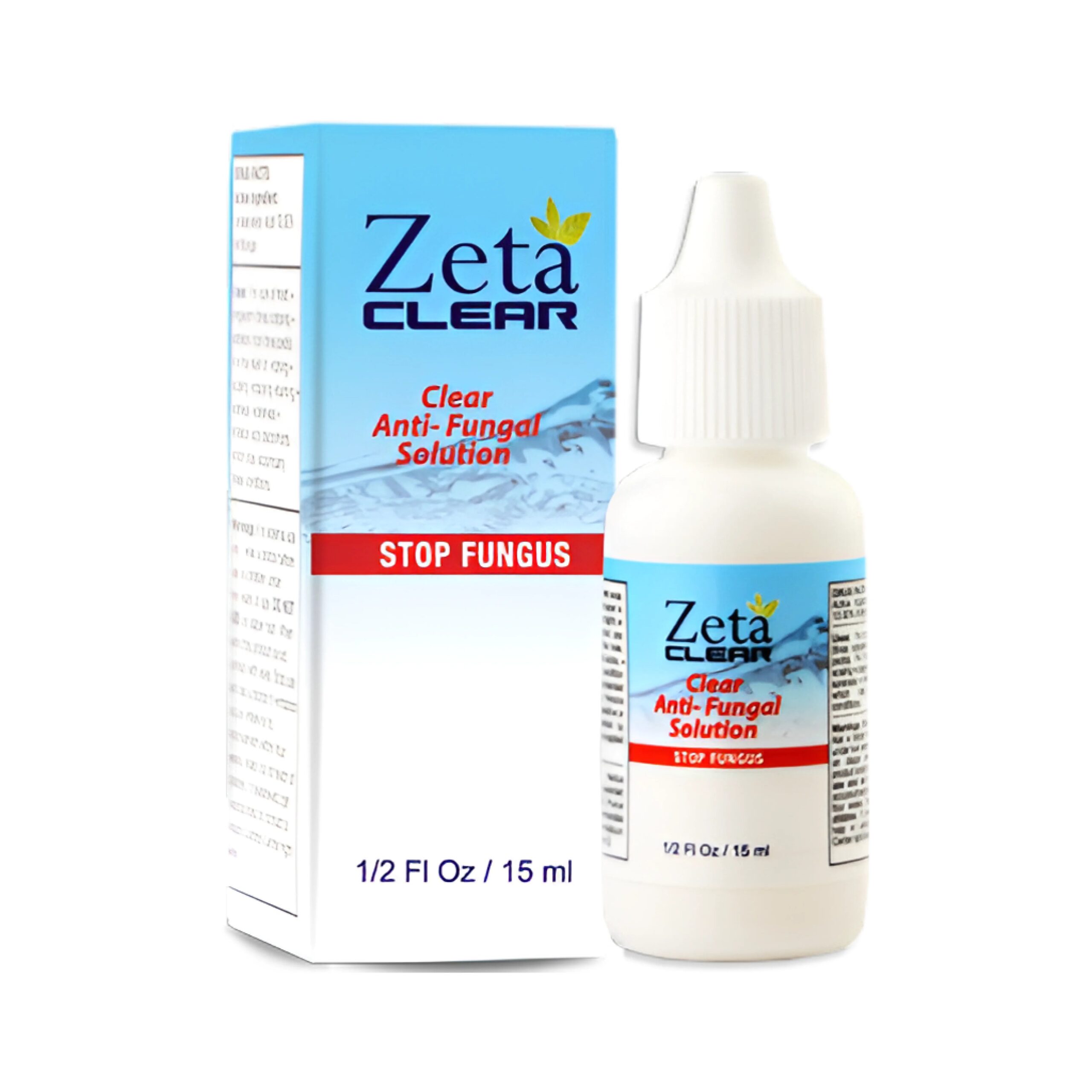
- Active ingredient(s): Undecylenic acid 25%, tea tree oil (topical); homeopathic ingredients including Sulphur, Antimonium crudum, Thuja (oral spray)
- Format: Two-part system — topical brush-on solution + sublingual oral spray
- Marketed claims: “Clinically proven and FDA approved formula” to treat nail fungus at the root with “visible results”
- Quality info: Manufactured in the USA; specific third-party testing certifications, cGMP status, or independent lab verification not stated on the product listing
- Price: Approx. £19 / $24.95 per bottle (two-part system)
Setting Realistic Expectations
Nail fungus treatment, regardless of the product or approach, demands patience. The fungal organisms are embedded within and beneath the nail plate, and the nail itself grows slowly. Even the most effective prescription treatments take three to six months (and sometimes longer) to produce visible improvement.
If you choose to try ZetaClear, a reasonable approach would be to commit to consistent twice-daily application for at least three months before evaluating whether you see any change. Photograph your nails in consistent lighting at the start and then monthly — this helps you track subtle improvements that might otherwise go unnoticed. If there is no change after three months of diligent use, it would be sensible to consult your GP about prescription options.
Equally important is foot hygiene. Keep nails trimmed short, dry feet thoroughly after bathing, change socks daily, avoid walking barefoot in communal areas, and do not share nail clippers or footwear. These measures reduce the risk of reinfection and support any treatment you are using.
Frequently Asked Questions
What is ZetaClear and how does it work?
ZetaClear is a two-part nail fungus treatment consisting of a topical solution (containing undecylenic acid and tea tree oil among other ingredients) and a homeopathic oral spray. The topical component aims to deliver antifungal agents directly to the affected nail, while the oral spray is intended to support the body’s response to fungal infection. However, the evidence supporting the homeopathic component is limited, and the overall product formulation has not been the subject of published clinical trials.
Is ZetaClear really FDA approved?
The claim requires careful interpretation. Undecylenic acid, one of ZetaClear’s active ingredients, is listed in the FDA’s OTC monograph as an acceptable antifungal ingredient — meaning products containing it can be sold over the counter without individual FDA approval. This is not the same as the ZetaClear product itself having received specific FDA approval as a drug. The distinction matters and is worth understanding before purchasing.
How long does ZetaClear take to show results?
Nail fungus is notoriously slow to treat because the affected nail must grow out fully to be replaced by healthier tissue. Fingernails typically take 4–6 months to grow out completely; toenails can take 12–18 months. Any topical treatment, including ZetaClear, will likely require several months of consistent, twice-daily application before meaningful visible improvement. Patience and realistic expectations are essential.
Can ZetaClear cure nail fungus permanently?
No topical treatment can guarantee a permanent cure for onychomycosis. Even prescription antifungal medications have recurrence rates of around 10–50% depending on the study. ZetaClear’s marketing language around “eliminating nail fungus for good” should be viewed cautiously. Reinfection is common, particularly for those who frequent communal swimming areas, share footwear, or have underlying conditions like diabetes.
Are there any side effects of ZetaClear?
Undecylenic acid and tea tree oil are generally well tolerated topically, but some people may experience skin irritation, redness, or allergic contact dermatitis. Those with sensitive skin should perform a patch test first. The homeopathic oral spray is unlikely to cause significant side effects given its highly diluted nature. If you are pregnant, breastfeeding, or taking regular medication, consult your GP or pharmacist before use.
How does ZetaClear compare to prescription nail fungus treatments?
Prescription treatments such as oral terbinafine (Lamisil tablets) have the strongest clinical evidence, with mycological cure rates of around 70–80%. Prescription topical options like amorolfine nail lacquer (Loceryl) or ciclopirox nail lacquer also have good evidence. ZetaClear, as a non-prescription product, does not have published peer-reviewed clinical trials specific to its complete formulation. It may suit mild cases or readers looking for a complementary approach, but for moderate-to-severe onychomycosis, a GP consultation is strongly recommended.
The Verdict
✅ The verdict
ZetaClear offers a straightforward, non-prescription approach to nail fungus using undecylenic acid and tea tree oil — ingredients with recognised antifungal activity, though primarily studied for skin infections rather than nail infections specifically. The homeopathic oral spray adds no evidence-based value according to the mainstream medical consensus. The product itself has no published clinical trial data, and the marketing claims around “FDA approved” and “clinically proven” require the kind of careful parsing we have attempted above. It is a product that may suit someone with mild nail discolouration who wants a gentle, at-home approach before escalating to prescription treatment — but it should not be viewed as a substitute for medical advice in moderate or severe cases.
If you have mild symptoms and wish to try a topical approach while waiting for a GP appointment, you can check current pricing for ZetaClear here. If you have diabetes, a compromised immune system, or signs of spreading infection, please see your GP first rather than self-treating.
For related reading, see our reviews of NAD+ supplements, BPC-157, and Provillus minoxidil 5%.
🛒 Reader-recommended option
If you have decided to try a non-prescription topical approach for mild nail fungus, ZetaClear’s undecylenic acid and tea tree oil formulation is one option worth considering.
View Zetaclear Nail Fungus Treatment →
Affiliate link — see disclosure at the top of this article. Current price approx. £19 / $24.95 per bottle.
This article is informational and contains affiliate links. It does not replace personalised advice from your GP, pharmacist, or another qualified healthcare professional. Onychomycosis in people with diabetes, peripheral vascular disease, or immunosuppression should always be managed under medical supervision. ZetaClear is not an MHRA-registered medicine. If you are pregnant, breastfeeding, or under 18, consult a healthcare professional before using any antifungal product. If you suspect a fungal nail infection, consider booking an appointment with your GP for a proper diagnosis — nail changes can have many causes, and treatment is most effective when the correct diagnosis is confirmed.
