Revitol Skin Brightener Cream Review 2026: Can It Really Even Out Dark Spots?
Revitol Skin Brightener Cream Review 2026: Can It Really Even Out Dark Spots?

⚡ Quick Answer
Revitol Skin Brightener Cream is a cosmetic brightening cream that relies on botanical ingredients such as arbutin and plant-based extracts to help reduce the appearance of dark spots and uneven skin tone. The active ingredients have modest supporting data in dermatological literature, but this specific product lacks published clinical trials. It may suit adults looking for a gentle, cosmetic-grade option — though those with significant hyperpigmentation should speak to a GP or dermatologist about evidence-based prescription treatments first.
🛒 Shop the product
Approx. £32 / $40.00 per bottle — affiliate link, see disclosure above.
Dark spots, uneven skin tone, and post-blemish marks are among the most common cosmetic concerns adults bring to their GP — and, increasingly, to the internet. Whether triggered by sun exposure, hormonal changes, pregnancy, or the slow accumulation of years, hyperpigmentation can feel stubbornly persistent. It is no surprise, then, that the market for topical "brightening" creams has grown enormously, with products promising to fade discolouration and restore an even, luminous complexion.
One product that appears frequently in online searches is Revitol Skin Brightener Cream. Sold as a cosmetic formulation rather than a licensed medicine, it combines botanical extracts and plant-derived brightening agents in a daily-use cream. The brand describes it as suitable for all skin types and suggests it can visibly improve skin tone with regular use.
In this review, we will take a measured look at what is actually inside the Revitol Skin Brightener Cream, examine the evidence behind its key ingredients, discuss what you can realistically expect, and flag the things worth considering before you buy. We will be honest about where the science is solid and where it is thin.
What Is Revitol Skin Brightener Cream, Exactly?
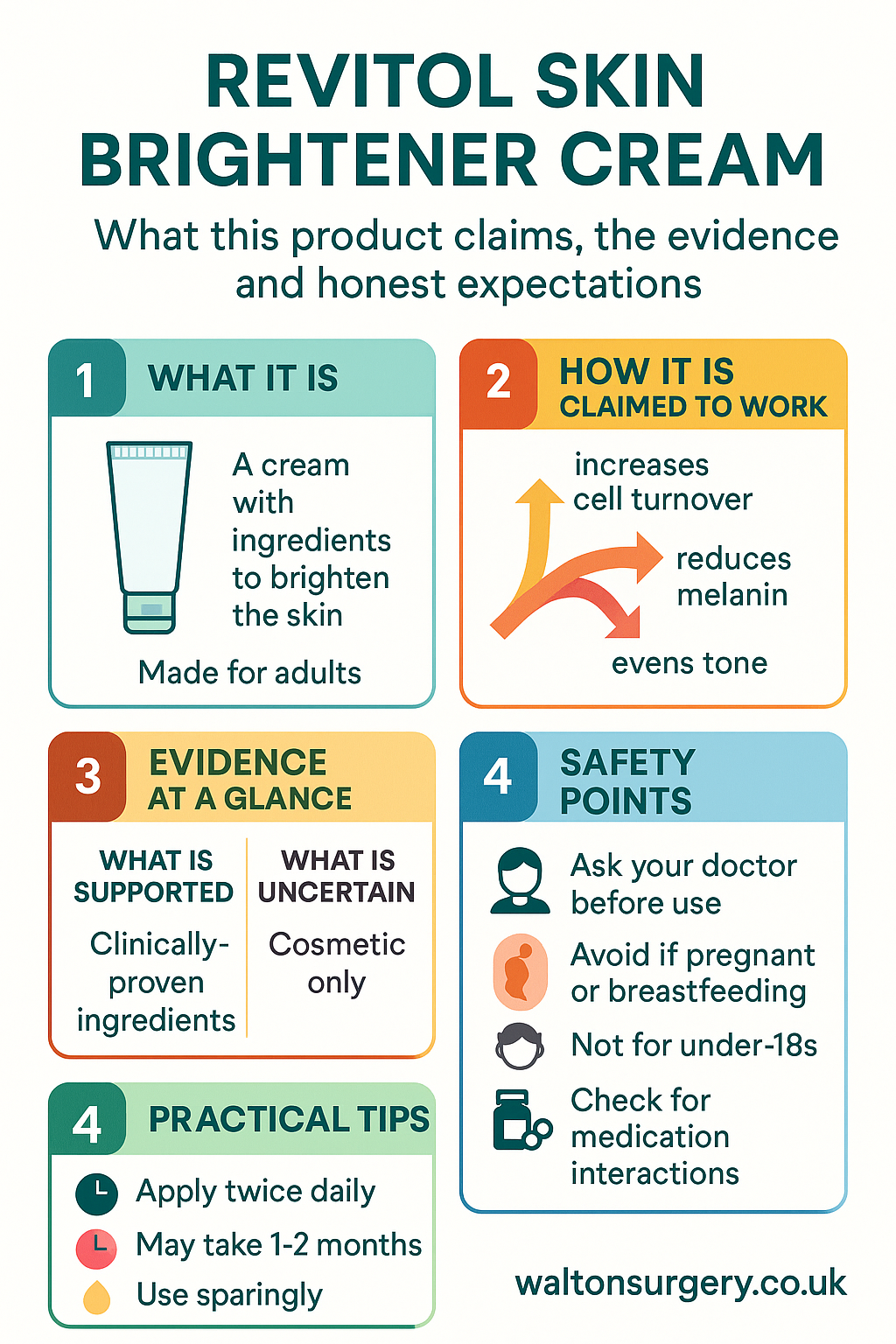
Revitol Skin Brightener Cream is a topical cosmetic product designed for daily application to the face and body. It is not a prescription treatment and it does not carry a licence from the MHRA (Medicines and Healthcare products Regulatory Agency). In regulatory terms, it sits in the same category as any over-the-counter skincare cream you might pick up on the high street — it is a cosmetic, not a medicine.
The cream is marketed towards adults who are concerned about dark spots, age spots, sun damage, melasma, and general unevenness of skin tone. It positions itself as an alternative to prescription brightening treatments (such as hydroquinone-based creams) by relying on botanical and plant-derived ingredients rather than pharmaceutical agents.
⚠️ Reality check
The sales page describes this cream's ingredients as "scientifically proven." It is worth noting that while some individual ingredients have research behind them, the term "clinically proven" carries specific meaning — and this particular product does not appear to have its own published clinical trial data. The evidence discussed below relates to the ingredients, not the finished formulation. This is an important distinction.
The Key Ingredients — And What the Evidence Says
Understanding what goes into a skin brightening cream matters far more than the marketing language on the box. Here are the primary active ingredients typically associated with Revitol Skin Brightener Cream, along with what the available research tells us about each one.
Key ingredient spotlight
Arbutin — the headline brightening agent
- What it is: A glycosylated hydroquinone derived from bearberry, mulberry, and other plants. Alpha-arbutin is the more stable, effective form.
- How it works: Inhibits tyrosinase, the enzyme responsible for melanin production in the skin — essentially slowing the process that creates dark pigment.
- Evidence level: Several in-vitro and small human studies suggest it can modestly reduce melanin synthesis. A 2013 study in the Journal of Cosmetic Dermatology found alpha-arbutin at 2% concentration had a measurable skin-lightening effect over 12 weeks.
- Important note: Arbutin is generally well-tolerated, but concentrations and formulation stability matter. Not all products deliver the same effective dose.
Shea butter and evening primrose oil are included as moisturising and skin-conditioning agents. These are well-established cosmetic ingredients that help keep the skin barrier hydrated and supple. While they do not have direct brightening effects, adequate skin hydration supports overall skin health and can improve the appearance of dull or tired-looking skin.
Lumiskin (diacetyl-boldine) is another ingredient sometimes included in Revitol formulations. It is a derivative of boldine, extracted from the bark of the boldo tree, and is marketed as a skin-brightening agent that works by stabilising tyrosinase in its inactive form. The research here is more limited — mostly in-vitro studies and manufacturer-sponsored data rather than independent peer-reviewed clinical trials.
Allantoin and various botanical extracts round out the formula. Allantoin is a well-known skin-soothing compound found in comfrey and widely used in dermatological products. The botanical extracts likely serve supporting roles — antioxidant protection, mild anti-inflammatory effects — but are unlikely to drive significant brightening on their own.
How Skin Brightening Actually Works
To understand whether a cream can genuinely help with dark spots, it helps to understand the biology of pigmentation. The colour of your skin is primarily determined by melanin, a pigment produced by specialised cells called melanocytes. When melanocytes become overactive — due to UV exposure, hormonal fluctuations (such as during pregnancy or while taking the contraceptive pill), inflammation, or ageing — they produce excess melanin in localised areas, creating visible dark spots or patches.
Effective brightening ingredients generally work through one of three mechanisms: inhibiting tyrosinase (the enzyme that catalyses melanin production), interrupting melanin transfer to surrounding skin cells, or increasing cell turnover to shed pigmented cells more quickly. Arbutin, the main active in Revitol, belongs to the first category. Prescription agents like tretinoin and azelaic acid work through the third.
The honest truth is that topical brightening — whether cosmetic or prescription — is a slow process. Melanin that has already been deposited in the skin must either be shed through natural cell turnover or gradually broken down. Even the most effective prescription treatments typically take 8–12 weeks of consistent daily use before visible results emerge. Cosmetic-grade products, which contain lower concentrations of active ingredients, may take longer or produce subtler changes.
How to Use It — Practical Guidance
If you decide to try Revitol Skin Brightener Cream, the general approach is straightforward: apply a thin layer to clean, dry skin once or twice daily, focusing on areas of discolouration. The brand recommends consistent use over several weeks for best results, which aligns with what dermatologists would expect from any topical brightening product.
Sun protection is essential. This cannot be overstated. UV exposure is the single biggest driver of pigmentation, and applying a brightening cream without daily broad-spectrum sunscreen (SPF 30 or above) is, frankly, counterproductive. The NHS and the British Association of Dermatologists both recommend daily SPF use for anyone concerned about dark spots — regardless of whether you are using a brightening product.
A sensible routine might look like this: cleanse, apply the brightening cream to target areas, allow it to absorb, then follow with a moisturiser and sunscreen in the morning. In the evening, apply after cleansing and before your night cream. If you notice any irritation, redness, or stinging, discontinue use and consult a pharmacist or GP.
Side Effects and Who Should Think Twice
Because Revitol Skin Brightener Cream uses botanical and cosmetic-grade ingredients rather than pharmaceutical agents, it is generally considered gentle on the skin. The most common side effect reported with any new skincare product is mild irritation, redness, or contact dermatitis — particularly in people with sensitive skin.
That said, there are groups who should exercise caution:
- Pregnant or breastfeeding women: While the ingredients are generally mild, it is always wise to check with your midwife or GP before using any new topical product during pregnancy or while breastfeeding.
- Those with active skin conditions: If you have eczema, rosacea, psoriasis, or open wounds on the areas you wish to treat, consult a dermatologist first.
- People on prescription skincare: If you are using retinoids, AHAs, BHAs, or prescription brightening agents, layering another active product could increase irritation. Ask your pharmacist.
- Anyone with a known allergy to botanical extracts: Patch-test on a small area of inner forearm 48 hours before facial use.
⚠️ Important regulatory note
This product is not licensed by the MHRA as a medicine. It should not be used as a substitute for medical treatment of conditions such as melasma, post-inflammatory hyperpigmentation, or any pigmentation disorder diagnosed by a doctor. If you have concerns about rapidly changing or unusual dark patches on your skin, see your GP — these can occasionally indicate underlying conditions that need proper assessment.
A Focused Look at This Product
Now that we have explored the broader context, let us zoom in on the specific product itself. Revitol is a brand that has been selling skincare products online for a number of years, primarily through its own website and affiliate-based retailers. It is not a brand you will find on the shelves of Boots or Superdrug, and it does not have a high-street presence in the UK.
The ingredient list is broadly reasonable for a cosmetic brightening cream — arbutin, shea butter, evening primrose oil, and supporting botanicals are all ingredients with a track record in skincare. However, the concentration of the active brightening agents is not disclosed on the product page, making it difficult to judge how the cream compares to formulations where the dose is clearly stated.
🔬 Product snapshot — Revitol Skin Brightener Cream
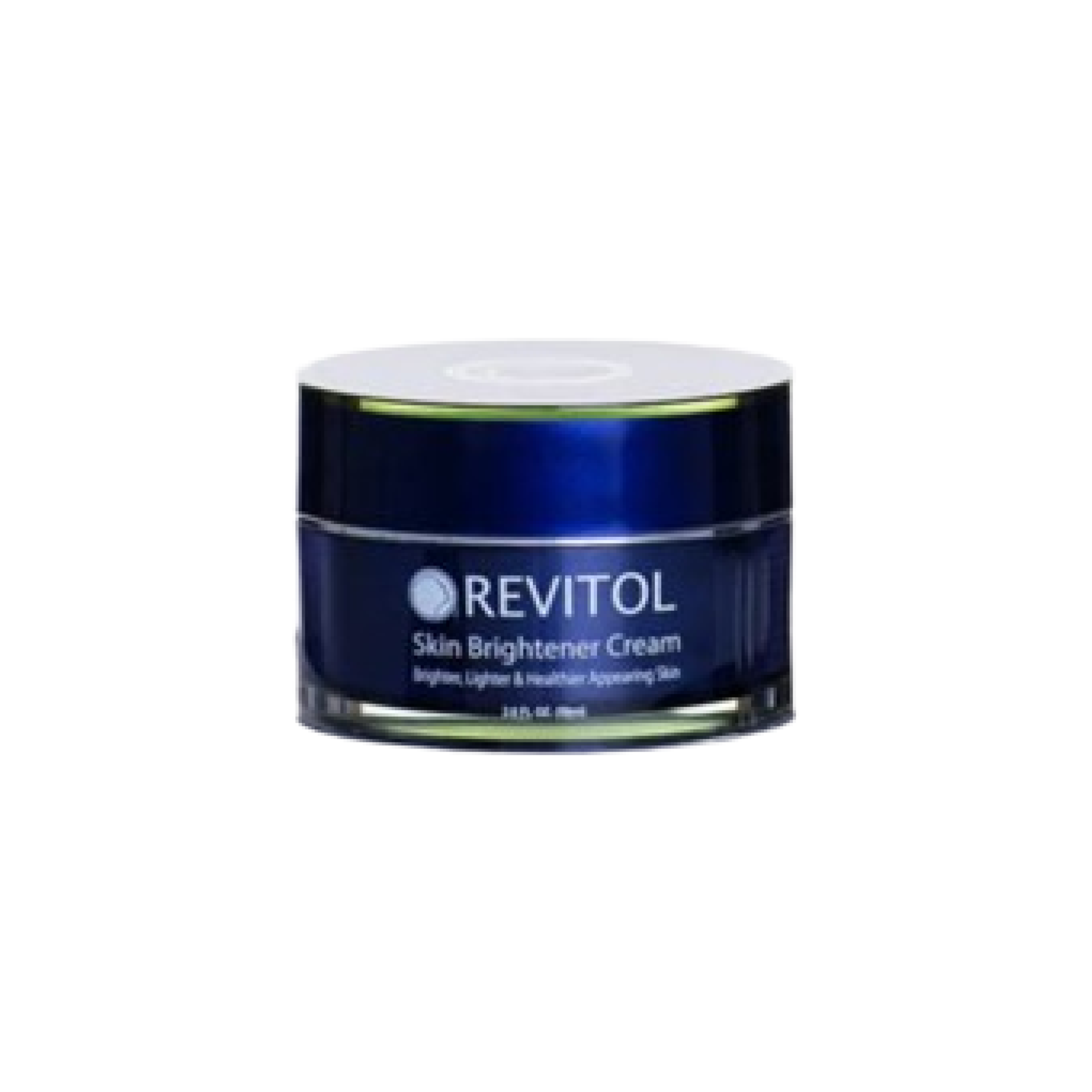
- Active ingredient(s): Arbutin (bearberry extract), Lumiskin (diacetyl-boldine), shea butter, evening primrose oil, allantoin
- Format: Topical cream for face and body
- Marketed claims: Reduces dark spots, evens skin tone, brightens complexion, suitable for all skin types
- Quality info: Manufactured by Revitol; no independently published clinical trials for the finished product; no specific third-party testing certifications listed on the product page
- Price: Approx. £32 / $40.00 per bottle
Realistic Expectations — What Can a Cosmetic Brightener Actually Do?
It is worth stepping back and asking a straightforward question: what can a cosmetic-grade cream realistically achieve? The answer depends on the type and depth of your pigmentation, your skin type, and your expectations.
For superficial sun spots and mild unevenness, a well-formulated brightening cream combined with diligent sun protection may produce a noticeable — if gradual — improvement over two to three months. The changes are likely to be subtle: a softening of contrast between pigmented and surrounding skin, rather than a dramatic transformation.
For deeper pigmentation — such as hormonal melasma, which involves melanin deposited in the deeper dermal layer — cosmetic-grade products are unlikely to be sufficient on their own. Dermatologists typically recommend prescription treatments (hydroquinone, tretinoin, azelaic acid, or in-office procedures like chemical peels) for these conditions. In such cases, seeing a specialist is a far better use of your time and money.
No topical cream — cosmetic or prescription — can permanently prevent pigmentation. Melanin production is an ongoing biological process, and without continued sun protection and maintenance, dark spots can return. Managing expectations honestly is one of the kindest things we can do for ourselves.
Frequently Asked Questions
What is Revitol Skin Brightener Cream and what does it do?
It is a cosmetic skincare cream designed to help reduce the appearance of dark spots, uneven skin tone, and general discolouration. It uses botanical ingredients including arbutin and plant-derived extracts. It is classified as a cosmetic product, not a medicine, and is not licensed by the MHRA for the treatment of any skin condition.
Does Revitol Skin Brightener Cream contain hydroquinone?
No — the product is marketed as using plant-derived arbutin rather than hydroquinone. Arbutin is a naturally occurring compound related to hydroquinone but present at much lower potency. If you have been prescribed hydroquinone by a dermatologist, this cream is not an equivalent replacement.
How long before I see results?
Most topical brightening products require at least 8 to 12 weeks of consistent daily use before you may notice visible changes. Results vary by individual. Using daily broad-spectrum sunscreen alongside the cream will significantly improve your chances of seeing a difference.
Is it safe for all skin types and tones?
The brand claims suitability for all skin types. The ingredients are generally gentle. However, if you have very sensitive skin or a diagnosed skin condition, a patch test and a conversation with your GP or pharmacist are sensible precautions before applying any new product to your face.
Can I use this alongside my prescription skincare or retinoid?
Potentially, but you should check first. Layering multiple active products — particularly retinoids, AHAs, or prescription brightening agents — can increase the risk of dryness, irritation, and a compromised skin barrier. Your pharmacist or GP can advise on whether it is appropriate for your specific routine.
Is this a medicine or a cosmetic product?
Revitol Skin Brightener Cream is a cosmetic product. It does not carry an MHRA licence and should not be used as a medical treatment. If you have a diagnosed pigmentation condition, your GP or dermatologist can recommend licensed treatments with stronger evidence behind them.
✅ The verdict
Revitol Skin Brightener Cream is a cosmetic-grade brightening cream with a broadly sensible ingredient list. Arbutin, its headline active, has modest supporting evidence for reducing melanin production — but at concentrations and in formulations that may differ from what this particular product delivers, since the exact percentages are not disclosed. The remaining ingredients (shea butter, evening primrose oil, allantoin) are well-established moisturisers and skin-conditioners. This is not a product with its own published clinical trials, and it should not be mistaken for a medical treatment for hyperpigmentation.
It may suit adults with mild, superficial dark spots or general dullness who are looking for a gentle, daily-use cream and are realistic about the pace and degree of improvement. It is probably not the right choice for deeper pigmentation conditions like hormonal melasma, where evidence-based prescription treatments are more appropriate. If you are interested in exploring it further, you can check current pricing here.
For readers interested in other evidence-based wellness reviews on Walton Surgery, you may also find our NAD+ supplement review, our BPC-157 supplement review, or our Provillus minoxidil review useful.
🛒 Reader-recommended option
A botanical brightening cream with arbutin and plant-based extracts for adults seeking a gentle, cosmetic approach to uneven skin tone and dark spots.
View Revitol Skin Brightener Cream →
Affiliate link — see disclosure at the top of this article. Current price approx. £32 / $40.00 per bottle.
This article is informational and contains affiliate links. It does not replace personalised advice from your GP, pharmacist, or another qualified healthcare professional. Revitol Skin Brightener Cream is a cosmetic product and is not licensed by the MHRA as a medicine. It is not intended to diagnose, treat, cure, or prevent any medical condition. If you are pregnant, breastfeeding, under 18, or have a diagnosed skin condition, please consult your doctor before use. Always apply daily broad-spectrum sunscreen (SPF 30+) alongside any brightening skincare product. If you notice unusual or rapidly changing pigmentation, see your GP for proper assessment.