

⚡ Quick Answer
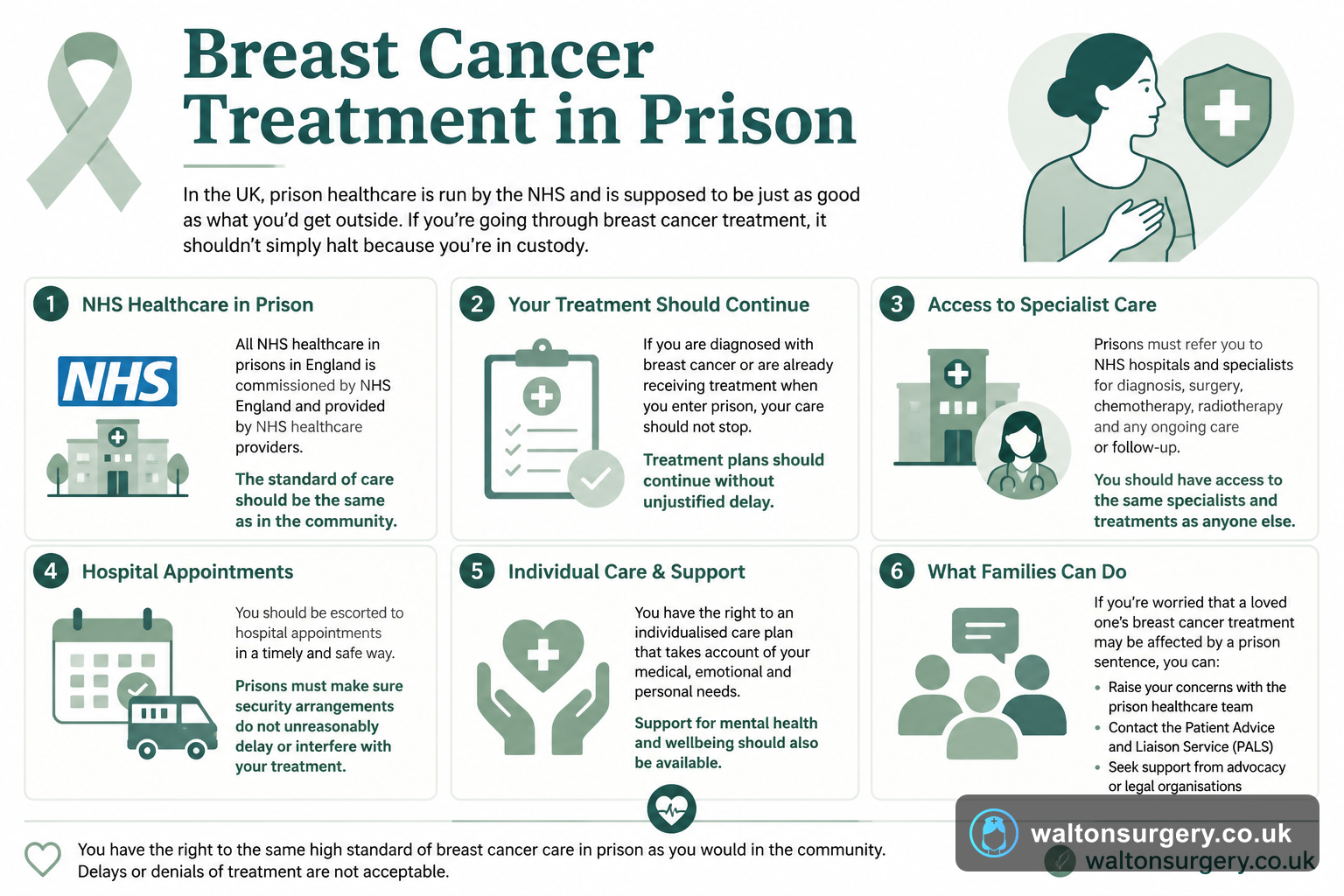
In the UK, prison healthcare is run by the NHS and is supposed to be just as good as what you’d get outside. If you’re going through breast cancer treatment, it shouldn’t simply halt because you’re in custody. This article looks at how the system actually works, what you’re entitled to, and what family members can do if they’re worried a prison sentence will interrupt someone’s cancer care.
So here’s the situation: healthcare inside UK prisons is delivered by the NHS. That’s not optional — the Royal College of General Practitioners (RCGP) and the NHS England Commissioning Framework both make clear that prisoners deserve the same standard of care as everybody else. For someone with breast cancer, that means chemotherapy, radiotherapy, hormone treatment, or ongoing monitoring shouldn’t grind to a halt just because they’ve been remanded or sentenced.
A case from the US brought this into sharper focus recently. Nadine Menendez reported to prison in July 2026 while she was still undergoing treatment for breast cancer, and it got families over here asking awkward questions about what would happen in the same scenario. This article sets out how things work in the UK, what your rights actually look like, and where to turn if continuity of cancer care during custody is keeping you up at night. Recent public discussions around breast cancer — from Kylie Minogue’s breast cancer awareness to the Jessie J cancer free breast cancer mastectomy update 2026 — have only heightened awareness of how critical uninterrupted treatment is.
How Is Healthcare Funded and Delivered in UK Prisons?
NHS England commissions prison healthcare across England and Wales. Inside each prison there’s a primary care team — most often run by a local GP practice or an NHS provider. You’ll find nurses, GPs, and in some places pharmacists on that team. Anything that needs a specialist, cancer treatment included, follows the same referral pathway you’d use on the outside. You get referred to a hospital.
The NHS Commissioning Framework for prison healthcare leaves no ambiguity: when someone moves from the community into custody, there must not be a gap in their care. Practically speaking, your prison GP ought to know about your treatment plan either before you arrive or very soon after. Continuity of care is a legal requirement here. It isn’t something that can be quietly dropped if staffing is tight.
What Happens to My Breast Cancer Treatment When I Enter Prison?
On arrival at the prison, you’ll get a health assessment — usually within the first 24 hours. Use it. This is the moment to spell out your diagnosis and whatever treatment you’re currently on. Bring whatever paperwork you’ve got: the name of your oncology team, which hospital you attend, what kind of treatment you’re receiving, and any appointments already in the diary.
From there, the prison healthcare team picks things up. They contact your hospital, request your records, and work to make sure treatment carries on. If you’re mid-chemo or radiotherapy cycle, they’ll sort out hospital appointments and you’ll be escorted there. For hormone therapy — tamoxifen, an aromatase inhibitor, that sort of thing — the prison pharmacy is meant to supply it directly.
Look, there can be hold-ups, particularly in that first week. The system is built to prevent gaps but it doesn’t always run like clockwork. If you’re concerned, tell your solicitor before sentencing so they can raise your medical needs with both the court and the prison beforehand. Anyone following public health stories, such as Colleen Hoover’s cancer treatment radiation diagnosis 2026, will appreciate how vital it is that no break occurs in a treatment schedule.
🔬 Key Facts
Your Rights on Arrival
- → Health assessment within 24 hours — use it to disclose your full diagnosis and current treatment plan.
- → Hospital appointments arranged by the prison — escorted visits for chemo, radiotherapy, and surgery.
- → Hormone therapy supplied directly — tamoxifen and aromatase inhibitors dispensed by the prison pharmacy.
- → No legal basis to halt treatment — the NHS Commissioning Framework mandates continuity regardless of custody status.
Can I Still See My Oncology Team?
You can. Prisoners retain the right to hospital-based specialist care. The NHS England Commissioning Framework is explicit that referrals to secondary and tertiary care should happen exactly as they would in the community. That covers oncology, surgery, and any other specialist service you happen to need.
Appointments at hospital will normally mean being escorted by prison officers. It’s a different experience from going on your own, obviously, but the actual clinical care your oncology team provides should be identical. If missing appointments worries you, mention it to your prison GP. They’re able to flag urgent cases to cut down on avoidable waiting.
What About Medication in Prison?
According to the Royal Pharmaceutical Society’s professional standards for prison healthcare — and they’re quite specific about this — medication management in custody has to follow the same clinical governance as it would in the community. Hormone therapy, supportive drugs, anything you’re taking: it should be prescribed and handed over without a break.
When you first arrive, be thorough with the healthcare team. Tell them everything you’re on, the dose, how often. The prison pharmacy will check this against your GP’s or oncologist’s records. Any gap in supply ought to be minimal. If you spot that you’re missing a dose, don’t sit on it — tell a nurse straight away. It’s not safe to just assume someone else is handling it behind the scenes.
Who Is Responsible for My Care?
There are a few layers to this, which can feel confusing at first:
- Your prison GP acts as your main point of contact. They handle day-to-day health and they’re the ones who make referrals.
- NHS England commissions the service and defines the standards prisons must meet.
- The prison itself carries a duty of care under the Prison Act 1952 and the Human Rights Act 1998.
- Your oncology team at the hospital stays responsible for your cancer treatment — that doesn’t change because you’ve been remanded.
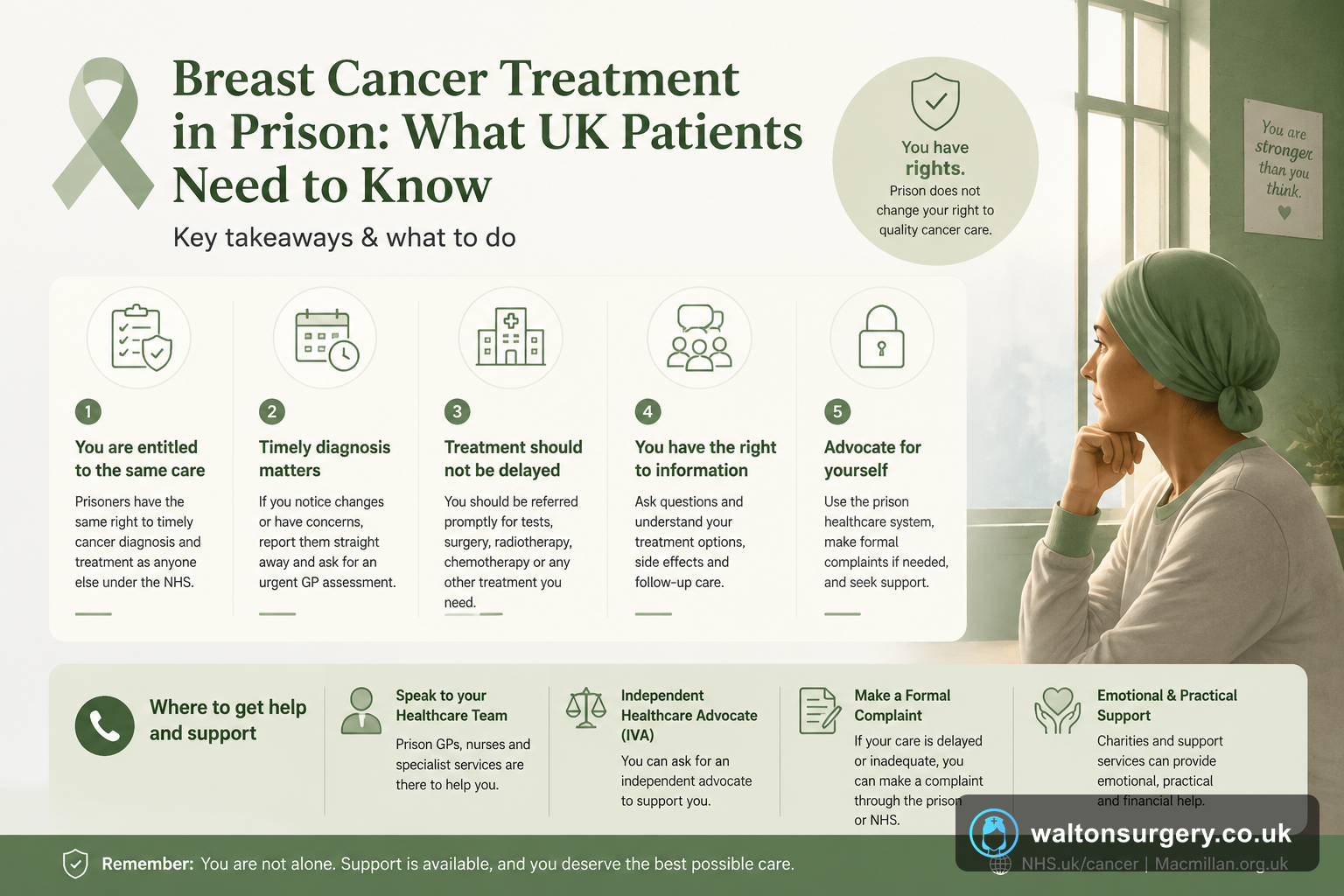
If things are falling short, you’ve got options. Use the prison’s internal complaints procedure first. You can also get in touch with the Prison and Probation Ombudsman, or if you prefer, the Parliamentary and Health Service Ombudsman.
How Can Family and Friends Help?
Family members and friends can make a real difference here, particularly in those early days. Encourage the person inside to be straightforward with the prison healthcare team about their diagnosis and what treatment they’re having. But you don’t have to leave it to them — you can write to the prison healthcare team yourself, giving details of their condition and the hospital they attend.
One other thing worth doing: contact the person’s oncology team and ask them to forward records to the prison. It helps close any information gap before it causes a real problem. If something specific is troubling you about someone’s care, the Prison and Probation Ombudsman is there to listen.
Frequently Asked Questions
⭐ The Bottom Line
What this means for you
Breast cancer treatment inside UK prisons falls to the NHS. The framework exists to keep care running, but realistically it depends on patients and families making noise when they need to. If you or someone close to you is facing a prison sentence while on cancer treatment, the solicitor, the court, and the prison healthcare team all need to hear about it as early as possible. The care should be there — but only if the right people know it’s needed.
This article is for information only and isn’t a substitute for medical advice. If you’re concerned about your health, speak to your GP or pharmacist.
Last updated: 2026-07-13 · Written by the Walton Surgery editorial team · Medical information is for educational purposes only and does not replace advice from a qualified healthcare professional.
