Cortisol Face: What It Really Is (and What the Science Says)
⚡ Quick Answer
'Cortisol face' is a TikTok trend blaming facial puffiness on the stress hormone cortisol. Dermatologists and endocrinologists say that for most people, everyday stress probably isn't the cause. Diet, sleep, and lifestyle are far more likely culprits. Real facial swelling from high cortisol typically only occurs with steroid medication or a medical condition like Cushing's syndrome, and it's accompanied by other serious symptoms.
You've probably spotted the term 'cortisol face' while scrolling social media, with posts linking a puffy, rounded face to chronic stress. But according to the NHS and endocrinology experts, everyday mental tension is almost certainly not inflating your face. The puffiness you notice in the mirror is far more likely tied to what you ate last night, how you slept, or that glass of wine with dinner. Cortisol can cause facial changes, but only in very specific medical circumstances.
This article examines the social-media claim against the medical evidence. We'll explain what cortisol actually does, identify the real reasons for a puffy face, and outline practical steps you can take to reduce swelling. We'll also cover the red flags that mean you should book an appointment with your GP instead of scrolling TikTok.
What Exactly Is 'Cortisol Face'?
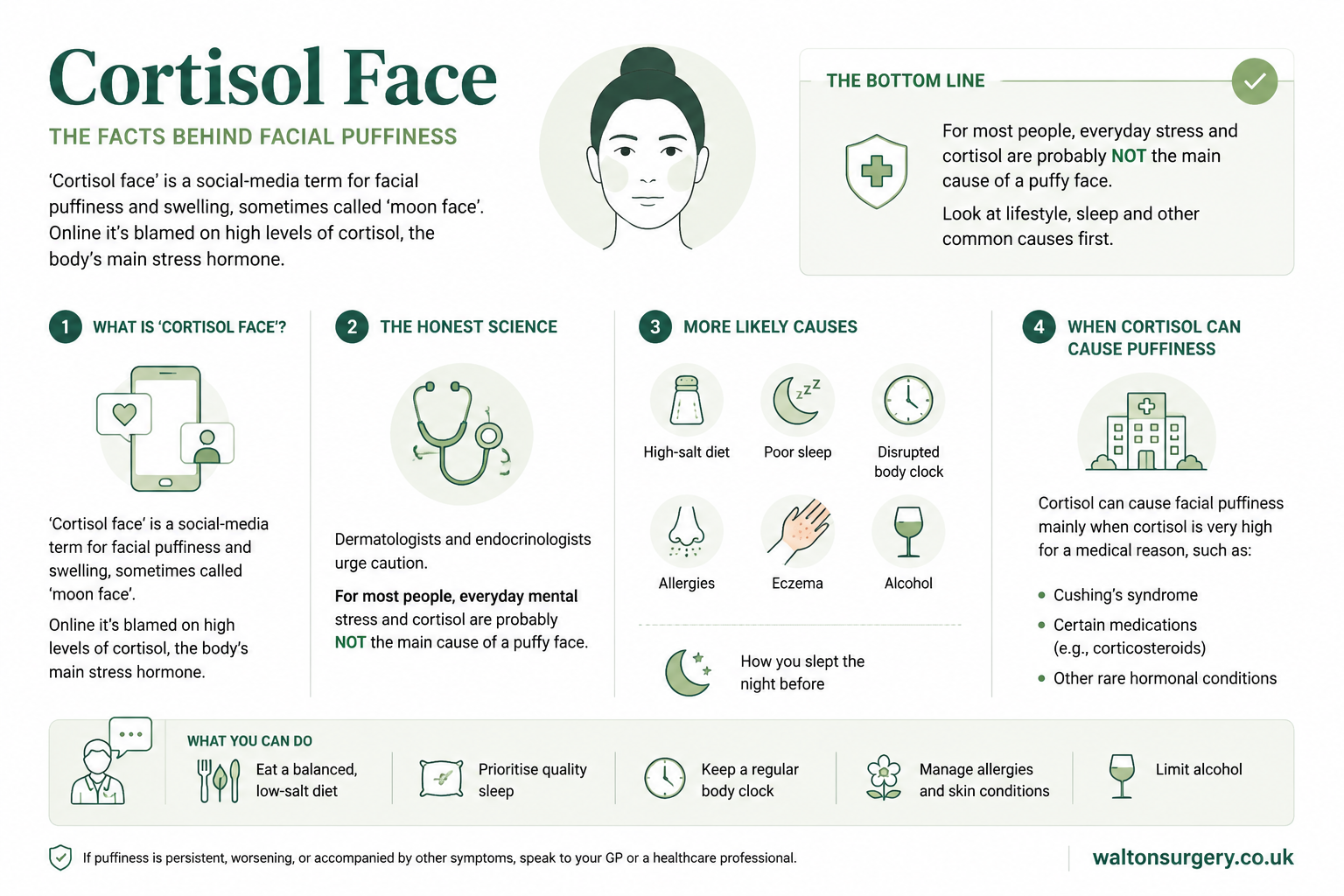
'Cortisol face' isn't a medical diagnosis; it's a social-media phrase. Online content creators describe it as facial puffiness, swelling, or a rounded appearance they attribute directly to high levels of cortisol, the body's primary stress hormone. This online narrative connects the modern experience of feeling constantly stressed with a visible, physical change in facial shape. It's often presented alongside before-and-after images, implying that managing stress alone can create a dramatic facial transformation. The term taps into a very real concern—how our internal state manifests outwardly—by offering a simple, if misleading, cause-and-effect story.
The Honest Science: Is Stress Really Making Your Face Puffy?
This is the core of the issue. While it's a compelling idea, the link between everyday psychological stress and facial puffiness isn't strongly supported by endocrinology and dermatology. Dermatologists and endocrinologists urge caution. The NHS doesn't list general anxiety or work stress as a primary cause of facial oedema (swelling). For cortisol to genuinely alter your facial shape, it needs to be elevated to a level far beyond what a busy week or a stressful commute produces. The cortisol released during everyday stress is part of a normal, adaptive response and is typically managed and cleared by your body's systems without causing lasting fluid retention in the face. The puffiness you're seeing is almost certainly coming from a different source.
The Real Causes of a Puffy Face
Before you blame your job, look at these more likely culprits. According to clinical guidance, the common reasons for facial puffiness are much more mundane than a stress-hormone imbalance.
- High-Salt Diet: Sodium causes your body to retain water. A salty meal—think takeaways, processed foods, or even a generous seasoning—can lead to generalised fluid retention, including in the tissues of your face. This is especially noticeable around the eyes, where skin is thin.
- Poor Sleep and Disrupted Body Clock: Your sleep position and quality matter. Sleeping face-down or on your side can cause fluid to pool in the lower parts of your face due to gravity. A restless night or a disrupted circadian rhythm (from shift work or jet lag) can also affect fluid balance.
- Alcohol Consumption: Alcohol is a diuretic, but it also causes inflammation and vasodilation (widening of blood vessels). This combination often leads to a puffy, flushed appearance the morning after drinking.
- Allergies and Skin Conditions: Seasonal allergies, dust mites, or pet dander can trigger histamine release, leading to swelling, particularly around the eyes. Skin conditions like eczema (atopic dermatitis) can also cause localised inflammation and puffiness.
- How You Slept the Night Before: Even a single night of poor-quality sleep can leave its mark on your face, making it look temporarily swollen or tired.
When Cortisol Genuinely Causes Facial Changes
So, when does cortisol actually deserve the blame? The medical community is clear: genuine cortisol-induced facial puffiness—often called 'moon face'—occurs only in specific, serious situations.
The most common scenario is taking corticosteroid medication (like prednisolone) at high doses for a prolonged period. These are powerful anti-inflammatory drugs used for conditions such as severe asthma, inflammatory bowel disease, or after an organ transplant. Prolonged high doses can disrupt fluid and fat metabolism, leading to characteristic changes.
The other scenario is a medical condition causing chronically elevated cortisol, most notably Cushing's syndrome. This is a rare endocrine disorder, often caused by a tumour on the pituitary or adrenal gland. It leads to a sustained, pathologically high level of cortisol in the blood.
In both cases, the puffiness is part of a broader set of symptoms. It doesn't occur in isolation.
🔬 Key Facts
When Cortisol Causes Facial Changes
- → Corticosteroid medication: High-dose, long-term use of drugs like prednisolone can disrupt fluid and fat metabolism.
- → Cushing's syndrome: A rare endocrine disorder caused by a tumour, leading to chronically elevated cortisol.
- → Not isolated: In these cases, puffiness is always accompanied by a cluster of other serious symptoms.
The Symptoms Beyond Puffiness: What to Look For
True 'moon face' from steroids or Cushing's syndrome rarely appears alone. If cortisol is the genuine cause, you'll almost certainly have other signs. The NHS and endocrinology specialists highlight a cluster of symptoms to watch for. These include:
- Rapid, unexplained weight gain, particularly around the trunk and face.
- A fatty deposit between the shoulders, sometimes called a 'buffalo hump'.
- Purple or pink stretch marks (striae) on the abdomen, thighs, or breasts.
- Thin skin that bruises very easily.
- Muscle weakness, especially in the upper arms and thighs.
- High blood pressure.
If your facial puffiness is accompanied by any of these symptoms, or if you're taking steroid medication and are concerned, this is a signal to see your GP, not to self-diagnose from online content.
What Actually Helps Everyday Puffiness
If you've ruled out the serious causes, what can you actually do about a puffy face? The solutions are practical and focus on the common culprits we've already discussed. General stress management is wonderful for your overall wellbeing—reducing anxiety, improving mood, and promoting better sleep—but it won't dramatically de-puff your face on its own if the root cause is dietary or lifestyle-related.
Focus on these evidence-based strategies:
- Reduce Salt Intake: Read food labels. Aim for less than 6g of salt per day as recommended by the NHS. Cook more meals at home where you control the seasoning.
- Hydrate Properly: It sounds counterintuitive, but drinking enough water (around 6-8 glasses a day) helps your kidneys flush out excess sodium and waste products, reducing water retention.
- Improve Sleep Hygiene: Aim for 7-9 hours of quality sleep. Try sleeping on your back with a slightly raised pillow to discourage fluid pooling.
- Limit Alcohol: Be mindful of your intake. If you notice puffiness after drinking, cutting back is the most direct solution.
- Manage Allergies: If you suspect allergies are a trigger, speak to a pharmacist about non-drowsy antihistamines. For skin conditions like eczema, follow your GP's or dermatologist's treatment plan.
Frequently Asked Questions
When to See Your GP Instead of Scrolling
Social media can't give you a diagnosis. If you're worried about changes in your face, or if your symptoms don't fit the common, benign causes, it's time to book an appointment with your GP. You should seek medical advice if:
- Your facial swelling is sudden, severe, or affects one side of your face (which could indicate an allergic reaction like angioedema or another acute issue).
- You have other symptoms alongside the puffiness, such as those listed above (rapid weight gain, purple stretch marks, muscle weakness, very high blood pressure).
- You're taking prescription steroid medication (corticosteroids) like prednisolone and are concerned about side effects.
- The puffiness is persistent, worsening, and not responding to dietary and lifestyle changes.
Your GP can assess your symptoms, take a full medical history, and, if needed, arrange blood tests to check your cortisol levels or refer you to an endocrinologist.
⭐ The Bottom Line
Real term, mostly misused online
'Cortisol face' is a viral trend that oversimplifies a complex issue. For most people, a puffy face isn't caused by stress hormones but by everyday factors like salt, sleep, and alcohol. True facial changes from high cortisol are a medical concern linked to steroid medication or conditions like Cushing's syndrome, and they come with other distinct symptoms. Focus on practical lifestyle adjustments, and consult your GP if you have worrying signs or persistent swelling.
Last updated: 2026-07-11 · Written by the Walton Surgery editorial team · Medical information is for educational purposes only and does not replace advice from a qualified healthcare professional.