

Joint Advance Support Review 2026: Glucosamine Sulfate for Everyday Joint Discomfort

⚡ Quick Answer
Joint Advance Support delivers 1,560 mg of glucosamine sulfate per daily serving in capsule form. Glucosamine sulfate has the strongest evidence base among the glucosamine family for knee osteoarthritis, though results are mixed — some large trials show modest benefit over placebo while others do not. It may suit adults with mild, everyday joint stiffness who want to try a well-known supplement alongside exercise and weight management, but it should not be mistaken for a medicine or a guaranteed fix.
🛒 Shop the product
Approx. £19 / $24.95 per bottle — affiliate link, see disclosure above.
If your knees creak on the stairs or your shoulders protest after a day at the desk, you are far from alone. Joint discomfort is one of the most common reasons people in their forties, fifties and beyond start looking for something beyond paracetamol and rest. Glucosamine — a compound naturally found in cartilage — has been a fixture of the supplement aisle for decades, and it remains one of the most searched-for joint health ingredients on the internet.
Joint Advance Support is one of many glucosamine products available online today. It combines Joint Advance Support’s glucosamine sulfate at 1,560 mg per serving with a proprietary blend of additional botanical and nutritional ingredients. The marketing promises reduced pain, improved flexibility, and better cartilage health — but what does the research actually show?
In this review we will walk through the science behind glucosamine sulfate supplements, what kind of results you might realistically expect, and where this particular product fits in. We want to give you the information to have a sensible conversation with your GP or pharmacist — not to sell you a miracle.
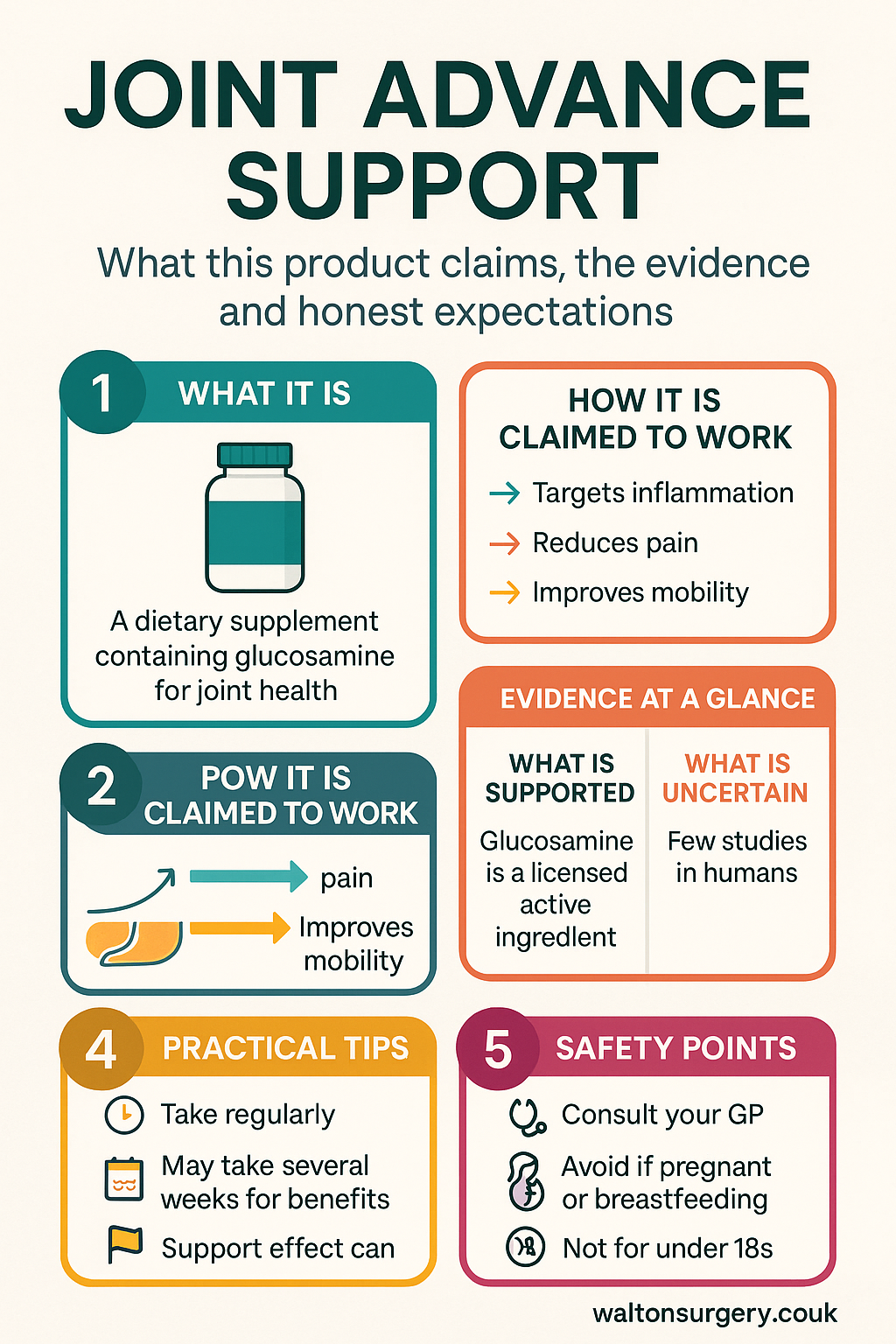
What Is Glucosamine — and What Is Joint Advance Support?
Glucosamine is an amino sugar that your body uses as a building block for cartilage — the smooth, rubbery tissue that cushions the ends of your bones at the joints. As we age, cartilage can gradually thin and wear, which is one of the hallmark changes in osteoarthritis. The theory behind glucosamine supplements is straightforward: if you supply your body with more of this raw material, perhaps it can repair or protect cartilage more effectively.
In practice, the biology is considerably more complex than that. Taking glucosamine by mouth does not simply “rebuild” cartilage — the compound has to survive the digestive system, enter the bloodstream, reach the joint, and then have a meaningful biological effect. Whether it does so in a clinically meaningful way is where the debate lies, and we will come to the evidence shortly.
There are two main forms you will see on the shelf: glucosamine sulfate and glucosamine hydrochloride. The sulfate form — used in Joint Advance Support — has been studied more extensively and appears to be the more promising of the two, though neither form has been conclusively proven to be a treatment for arthritis. The product is classified as a food supplement, not a medicine, and it has not been evaluated by the MHRA for therapeutic claims.
Key distinction
Glucosamine sulfate vs. glucosamine hydrochloride
- Glucosamine sulfate (GS): Used in most of the larger, more positive European trials. Some researchers believe the sulfate component itself may contribute to cartilage synthesis.
- Glucosamine hydrochloride (GH): Used in the large American GAIT trial. Found no significant benefit over placebo for the overall OA population.
- Bottom line: Not all glucosamine is equal. The form, dose, and quality of the raw material all matter — and “glucosamine” on a label does not tell you the whole story.
How Glucosamine Sulfate Is Thought to Work
At a biochemical level, glucosamine is involved in the synthesis of glycosaminoglycans and proteoglycans — large molecules that form the structural scaffold of cartilage. The hope is that providing exogenous glucosamine may stimulate the production of these molecules by chondrocytes (the cells within cartilage), slow their breakdown, and perhaps reduce some of the low-grade inflammation that accompanies osteoarthritis.
Some laboratory and animal studies have supported this idea, showing that glucosamine sulfate can influence cartilage metabolism at a cellular level. However, translating cell-culture findings into real-world clinical outcomes in humans is a big leap. The concentration of glucosamine that reaches your joint capsule after oral dosing is far lower than what is used in petri-dish experiments, and the question of bioavailability remains a genuine scientific concern.
This is why clinical trials — not just lab studies — are so important when evaluating a supplement like this one. Mechanism and plausibility are one thing; demonstrated benefit in real patients is another matter entirely.
What the Evidence Actually Shows
Glucosamine has been the subject of numerous clinical trials and several large systematic reviews. If you have seen headlines claiming it is both a miracle cure and a complete waste of money, you have probably encountered the genuine disagreement among researchers. Here is a fair summary of where things stand.
Trials supporting glucosamine sulfate: A number of European trials — including studies funded by Rottapharm using their proprietary crystalline glucosamine sulfate preparation — found that 1,500 mg daily improved pain and function scores in knee osteoarthritis compared with placebo over periods of three years. The GUIDE trial, conducted across several European countries, also reported benefits with glucosamine sulfate at this dose. These results led the European Society for Clinical and Economic Aspects of Osteoporosis and Osteoarthritis (ESCEO) to recommend pharmaceutical-grade crystalline glucosamine sulfate as a first-line symptomatic treatment for knee OA.
Trials that were less encouraging: The GAIT trial, funded by the US National Institutes of Health and one of the largest studies to date, used glucosamine hydrochloride (not sulfate) at 1,500 mg daily and found no significant difference from placebo for the overall population with knee OA. A subsequent follow-up study (the GAIT extension) similarly showed no clear structural benefit on X-ray. Other meta-analyses have reached mixed conclusions — some finding modest benefit, others concluding that the evidence is insufficient.
⚠️ Reality check
The most positive glucosamine results come from trials using pharmaceutical-grade crystalline glucosamine sulfate — a specific form manufactured to a strict standard. Many over-the-counter and online supplements, including products like Joint Advance Support, use glucosamine sourced from different manufacturers. This does not mean they are ineffective, but it does mean you cannot assume the trial results directly apply to any given supplement. The quality, purity, and bioavailability can vary substantially between products.
The honest summary: Glucosamine sulfate has a plausible mechanism, a track record in clinical research, and a modest body of evidence suggesting it may help some people with mild-to-moderate knee osteoarthritis — particularly when used consistently over 8 to 12 weeks or longer. It is not a guaranteed fix, the effect sizes are generally small, and the quality of the specific product matters. The NHS does not routinely recommend glucosamine, though some GPs and rheumatologists are happy for patients to try it.
How to Use Glucosamine Supplements
If, after considering the evidence, you decide to try a glucosamine supplement, here are some practical points worth knowing.
Dose: The most commonly studied dose is 1,500 mg of glucosamine sulfate taken once daily (or sometimes split into three 500 mg doses). Joint Advance Support provides 1,560 mg per serving, which is in line with the research dose — this is a positive feature.
Timing and consistency: Glucosamine is not a fast-acting painkiller. The trials that showed benefit used it daily for at least eight weeks, and often for several months. If you try it for two to three weeks and notice nothing, that does not necessarily mean it will not work — but equally, if you have taken it consistently for twelve weeks with no change, it may simply not be the right supplement for you.
With food: Taking glucosamine with a meal may reduce the mild stomach discomfort some people experience. It can be taken at any time of day.
Manage expectations: Think of glucosamine as one part of a broader joint-health strategy — not a replacement for exercise, weight management, or medical treatment if you have been diagnosed with arthritis. The best outcomes in clinical trials came alongside physiotherapy and lifestyle modifications.
Side Effects and Who Should Think Twice
Glucosamine is generally well tolerated by most adults, and the side-effect profile is mild compared with many medicines. However, there are some important considerations.
Common mild side effects: Nausea, heartburn, stomach discomfort, diarrhoea, and constipation have all been reported. These tend to be mild and often improve when the supplement is taken with food.
Shellfish allergy: Most glucosamine supplements are derived from the shells of shrimp, crab, and other shellfish. People with a shellfish allergy should exercise caution and look for products that clearly state their source. If you have a severe shellfish allergy, this is a conversation to have with your GP before trying any glucosamine product.
Blood-thinning medication: There have been reports — mainly case reports rather than large controlled studies — of glucosamine interacting with warfarin and potentially increasing INR (a measure of blood clotting time). If you take warfarin, heparin, or other anticoagulants, do not start glucosamine without discussing it with your prescriber.
Diabetes: Because glucosamine is a sugar-related compound, there have been theoretical concerns about its effect on blood glucose. Large trials have not consistently shown a clinically significant effect on blood sugar in people with type 2 diabetes, but it remains sensible to monitor blood glucose more closely if you start taking it.
Pregnancy and breastfeeding: There is insufficient safety data, so glucosamine supplements should be avoided during pregnancy and while breastfeeding.
Children: Glucosamine supplements are intended for adults and are not recommended for anyone under 18.
A Focused Look at Joint Advance Support
With so many glucosamine products on the market, it is worth taking a moment to look at this specific supplement and what it offers. The headline figure — 1,560 mg of glucosamine sulfate per serving — is well-dosed and matches the amount used in many clinical trials, which is a good starting point.
The product also includes a blend of additional ingredients described as “natural,” though the sales page does not provide a complete breakdown of what these are or in what quantities. This is a common frustration with joint supplements — the marketing highlights the main active ingredient while keeping the supporting cast vague. Transparency about all ingredients and their doses would strengthen consumer confidence.
🔬 Product snapshot — Joint Advance Support
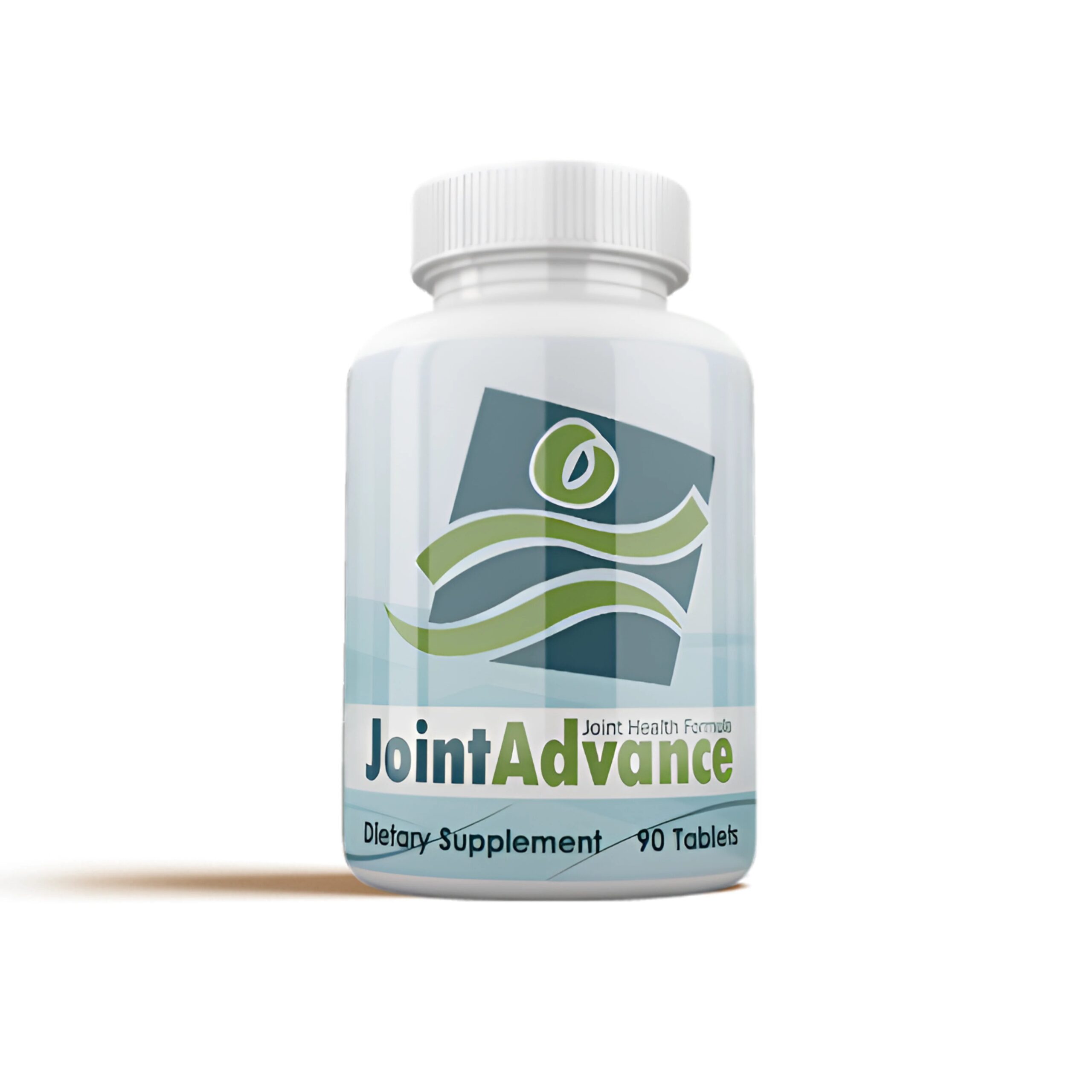
- Active ingredient(s): Glucosamine sulfate 1,560 mg per serving, plus a proprietary natural ingredient blend
- Format: Capsules (90 per bottle — approximately one month’s supply at the recommended dose)
- Marketed claims: Supports cartilage and joint health, reduces pain and stiffness, improves flexibility and mobility
- Quality info: No specific third-party testing, cGMP certification, or FDA-registered facility details stated on the sales page — check the label upon receipt for the most current information
- Price: Approx. £19 / $24.95 per bottle
The price point is competitive relative to many glucosamine supplements on the high street and online. At roughly £19 for a month’s supply, it is affordable enough that trying it for twelve weeks (the minimum period to judge effect) would cost around £57 — not negligible, but considerably less than some premium joint supplements on the market.
Realistic Expectations
It is worth being clear-eyed about what a glucosamine supplement can and cannot do. Even in the most positive trials, the improvements in pain and function scores were statistically significant but often modest — meaningful to some individuals, but not dramatic. Glucosamine will not reverse established arthritis, replace a hip or knee that needs surgical attention, or substitute for anti-inflammatory medication prescribed by your doctor.
What it may do, for some people, is take the edge off mild everyday stiffness and discomfort — especially in the knees — when taken consistently as part of a broader approach that includes regular movement, a healthy weight, and good sleep. If you approach it with that realistic framing, you are less likely to be disappointed.
If joint pain is severe, worsening, or accompanied by swelling, locking, or giving way, please see your GP rather than self-treating with supplements. These symptoms may indicate something that needs proper investigation and medical management.
Frequently Asked Questions
What is Joint Advance Support?
Joint Advance Support is a dietary supplement containing glucosamine sulfate at 1,560 mg per daily serving, alongside a blend of additional natural ingredients. It is marketed for cartilage support, joint flexibility, and everyday comfort. It is classified as a food supplement, not a licensed medicine, and has not been assessed by the MHRA for therapeutic claims.
Does glucosamine really help joint pain?
The evidence is genuinely mixed. Some large European trials using crystalline glucosamine sulfate found modest improvements in knee osteoarthritis pain and function over placebo, while the large NIH-funded GAIT trial (which used glucosamine hydrochloride) found no significant benefit for the general OA population. European expert guidelines recommend pharmaceutical-grade glucosamine sulfate as a first-line option, but NHS guidance does not routinely recommend it. It may help some individuals, but it is not guaranteed.
How long does glucosamine take to work?
In the trials that did show benefit, participants typically took glucosamine daily for 8 to 12 weeks before noticing improvements in pain or stiffness. It is not a fast-acting painkiller and should be viewed as a longer-term supplement rather than an acute remedy. If you have taken it consistently for 12 weeks with no noticeable change, it may simply not be the right approach for your particular situation.
Is glucosamine safe to take long-term?
Glucosamine is generally considered safe for most adults over periods of one to three years in clinical studies. Common mild side effects include stomach upset, heartburn, and diarrhoea. People with shellfish allergies should check the product’s source carefully, as many glucosamine supplements are derived from shellfish. Those on warfarin or other blood thinners should speak to their GP before starting, as interactions have been reported.
Can I take glucosamine with other medications?
Glucosamine may interact with warfarin (Coumadin), potentially increasing bleeding risk. There are also theoretical concerns about interactions with diabetes medications, as glucosamine could affect blood sugar levels. If you take any regular medication, it is wise to consult your GP or pharmacist before starting a glucosamine supplement. This is standard advice for any supplement, not specific cause for alarm.
Who should avoid glucosamine supplements?
Glucosamine supplements should be avoided by people with shellfish allergies unless the product clearly states a non-shellfish source. Pregnant and breastfeeding women should avoid glucosamine due to insufficient safety data. Those on blood-thinning medication should consult their GP first. Glucosamine is not recommended for children under 18. If you have moderate to severe arthritis, a proper medical assessment is more appropriate than self-supplementing.
✅ The verdict
Joint Advance Support is a straightforward glucosamine sulfate supplement at a dose that matches the research literature — and that is its strongest selling point. The evidence for glucosamine sulfate is imperfect but not absent: some well-designed trials support a modest benefit for knee osteoarthritis, while others have found no clear advantage over placebo. It is neither the miracle the marketing implies nor the scam that sceptics sometimes suggest. The main limitation is that we do not have details on the manufacturing standards or third-party testing for this specific product, which makes it harder to judge quality compared with pharmaceutical-grade preparations used in the best trials.
If you are an adult with mild, everyday joint stiffness — particularly in the knees — and you have spoken to your GP about it, trying a glucosamine sulfate supplement for 12 weeks is a reasonable, low-risk experiment. It is not a substitute for exercise, weight management, or proper medical care if your symptoms are more serious. If you are on blood-thinning medication, have a shellfish allergy, or are pregnant, this product is not for you without medical guidance. For those who wish to give it a try, you can check current pricing on Joint Advance Support here.
If you are interested in other supplement reviews on Walton Surgery, you may find our NAD+ supplement review, our BPC-157 review, or our look at Provillus minoxidil for hair loss helpful.
🛒 Reader-recommended option
If you have discussed glucosamine with your healthcare provider and would like to try a supplement at a clinically studied dose, Joint Advance Support offers 1,560 mg of glucosamine sulfate per daily serving at a competitive price.
Affiliate link — see disclosure at the top of this article. Current price approx. £19 / $24.95 per bottle.
This article is informational and contains affiliate links. It does not replace personalised advice from your GP, pharmacist, or another qualified healthcare professional. Joint Advance Support is a food supplement and is not a licensed medicine. It has not been evaluated by the MHRA for the diagnosis, treatment, or prevention of any disease. If you take warfarin or other anticoagulants, have a shellfish allergy, have diabetes, are pregnant or breastfeeding, or are under 18, do not use this product without first consulting a qualified healthcare professional. Always see your GP if you experience joint pain that is severe, worsening, or accompanied by swelling, redness, or systemic symptoms.
