Toxic Chemicals in Nappies: What California's Law Means for UK Parents
PART C — HTML Body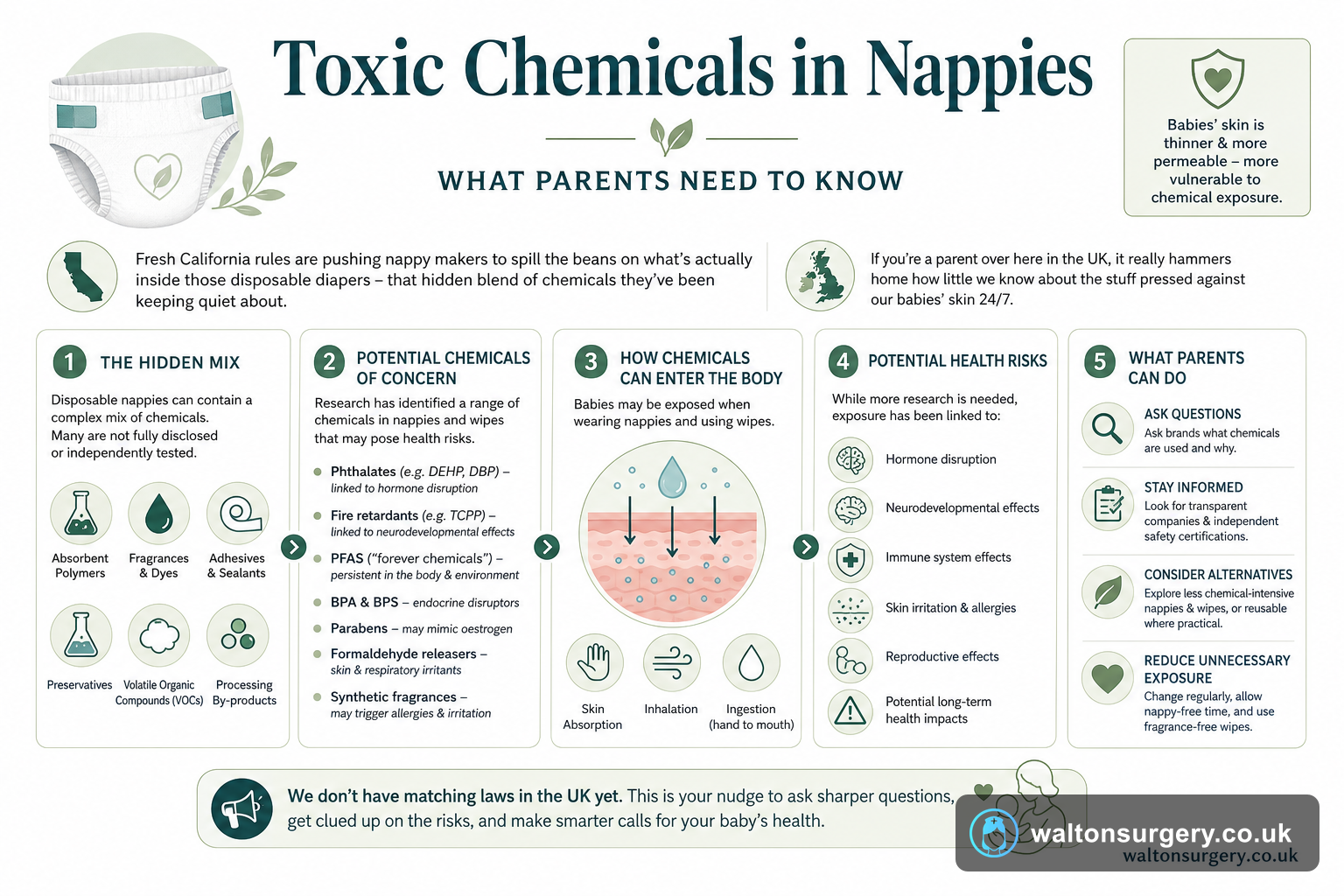
⚡ Quick Answer
Fresh California rules are pushing nappy makers to spill the beans on what's actually inside those disposable diapers – that hidden blend of chemicals they've been keeping quiet about. If you're a parent over here in the UK, it really hammers home how little we know about the stuff pressed against our babies' skin 24/7. We don't have matching laws yet, but this whole thing gives you the nudge to start asking sharper questions, get clued up on risks like absorption through delicate baby skin, and hopefully make smarter calls about nappies and wipes going forward.
So California's put forward a law that would basically force nappy companies to list every single ingredient in their disposable products. It's already cleared the state assembly, heading for a senate vote soon, and the whole point is dragging those hidden chemical mixes out into the open.
For us lot in the UK, this news hits a bit close to home. Babies' skin is thinner than ours, way more absorbent – that's just biology. When other countries start demanding answers about what's touching infant skin all day, you can't help but wonder what's lurking in the nappies you're buying. And what you can actually do about it.
What Exactly Does the California Nappy Law Propose?
California's new bit of legislation would make it compulsory for companies to reveal every chemical ingredient hiding in their disposable nappies. It goes further than any voluntary scheme we've got, aiming straight at what supporters are calling a "mystery cocktail" of unknown substances. The assembly already passed it, and a senate vote is coming up shortly.
The aim is dead simple, really – transparency. If regulators and parents can see exactly which chemicals are present, everyone's better placed to judge whether there's a health risk. It's part of a bigger push to make the personal care industry come clean about what goes into products, and frankly, that kind of openness just doesn't exist yet in the UK nappy market.
Why Should UK Parents Be Concerned About Nappy Chemicals?
Your baby's skin is their biggest organ, and dermatological research tells us it's substantially thinner and more permeable than an adult's. That physical difference means anything sitting against it for hours on end – like the chemicals in a nappy – has a much better chance of soaking through and getting absorbed into the body.
We don't have a specific UK study to point to here, the verified research doesn't throw one up. But the basic principle of dermal absorption isn't really up for debate. It's not about one scary incident, more the slow drip of repeated exposure to a chemical cocktail we can't even name, during a pretty critical window of development. California stepping in has really shone a light on this prolonged exposure question. When you think about the potential for long-term health effects, the concern feels similar to how we view other hidden risks, such as those associated with penis filler risks and effects which also involve substances injected beneath the skin.
What Kinds of Chemicals Might Be in Disposable Nappies?
Without any mandatory disclosure rules in the UK, the actual recipe for most shop-bought nappies stays under wraps. From independent testing though, and from what California's law is trying to uncover, the categories that tend to raise eyebrows include:
- Superabsorbent polymers (SAPs), most often sodium polyacrylate.
- Dyes and fragrances – these are known to cause allergic reactions in some babies.
- Volatile organic compounds, or VOCs.
- Chlorine bleaching agents.
- Plastics and adhesives.
That "mystery cocktail" tag stuck because the full list of ingredients and their concentrations? Companies just don't share that information with parents or regulators here.
🔬 Key Facts
Common Chemicals Found
- → SAPs (Sodium Polyacrylate): The main absorbent gel material.
- → Dyes & Fragrances: Known allergens for sensitive skin.
- → VOCs: Volatile Organic Compounds used in production.
- → Chlorine Byproducts: Result of bleaching processes.
How Does UK Regulation Compare to California's Approach?
Right now, the UK leans on general product safety regs – the UK General Product Safety Regulations 2005, which basically say products shouldn't be a health hazard. Doesn't actually require nappy makers to tell you what's inside though.
The EU's REACH regulation, that's Registration, Evaluation, Authorisation and Restriction of Chemicals, still applies in Northern Ireland and shapes UK thinking. It manages chemical risks at a high level. What it doesn't do is put an ingredient list on the back of a nappy packet for you to read. California's taking a harder line: putting the onus squarely on manufacturers to be upfront with the public. It highlights a gap in consumer knowledge that isn't limited to nappies, for instance, the public often lacks clear information on conditions affecting mental health care facilities, such as understanding what is a psychiatric ward and how they function. We haven't gone there yet.
What Can You Do to Minimise Exposure to Potentially Harmful Substances?
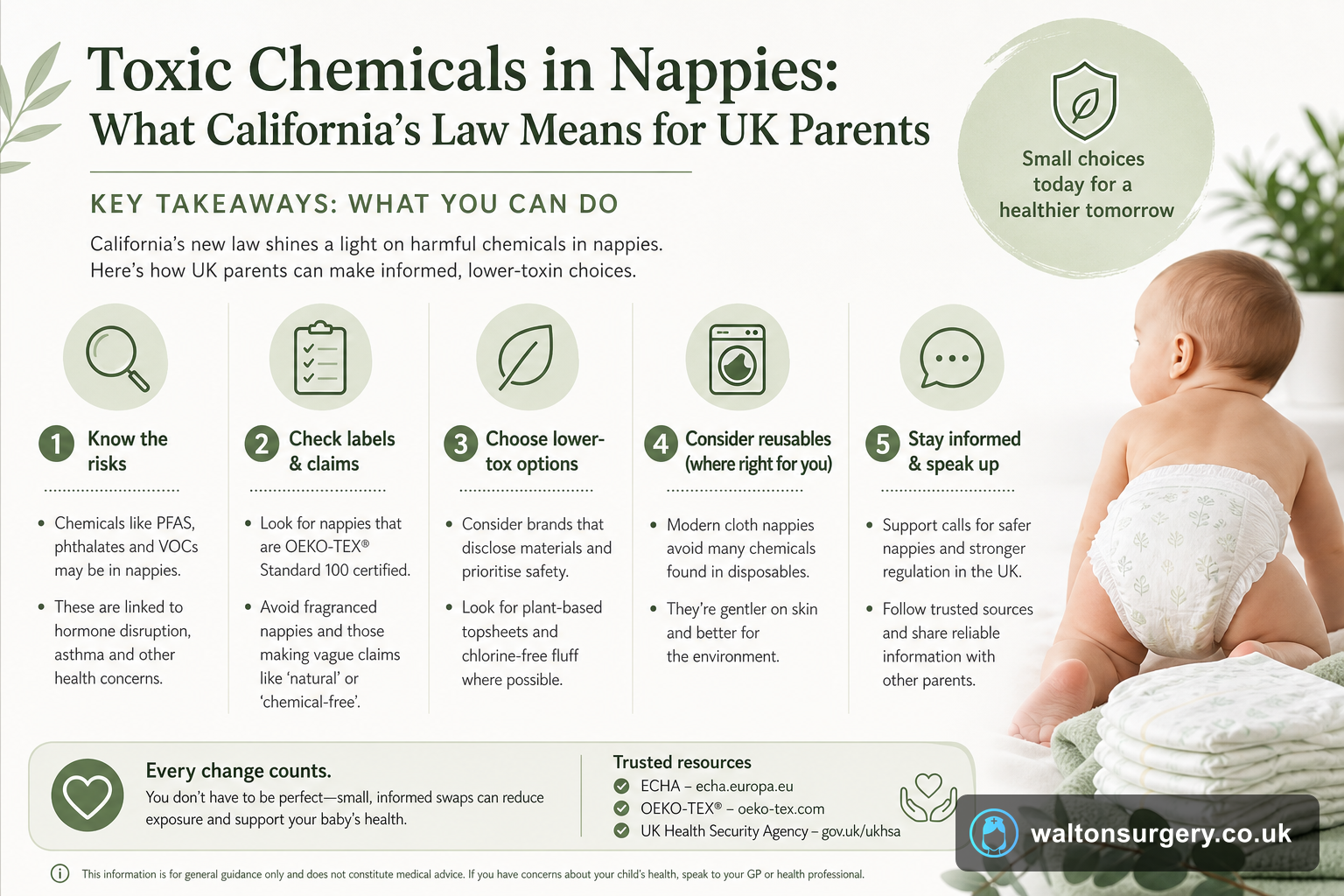
You really don't need to sit around waiting for UK law to catch up. Get proactive. Look into brands that voluntarily share their ingredient lists, or ones carrying proper eco-certifications – stuff like the EU Ecolabel or Nordic Swan mark. Pick up the phone or fire off an email to manufacturers and demand a full ingredient breakdown.
A few concrete steps worth taking:
- Choose nappies marked "fragrance-free" and "dye-free".
- Change nappies more often. Less time on the skin means less opportunity for anything to absorb.
- Have a think about reusable cloth nappies. You get total control over what touches your baby's skin and how it's washed, though they bring their own set of environmental considerations to weigh up.
- If you try a new brand, do a patch test first and keep an eye out for any skin reactions. If you notice any unexplained changes in your baby's health, always consult a professional; even seemingly unrelated symptoms like those associated with solar retinopathy symptoms after eclipse need expert attention.
Frequently Asked Questions
⭐ The Bottom Line
What this means for you
California's push for chemical transparency in nappies has thrown a global spotlight onto what's actually pressed against your baby's skin. UK regulation doesn't demand this kind of disclosure yet, but the principle behind it holds up – you deserve to know what's in the products you're using. Take this as your moment to put brands on the spot, do your homework on alternatives, and make choices grounded in the information you can actually get hold of. Your baby's comfort and health are worth that bit of extra effort.
Last updated: 2026-08-16 · Written by the Walton Surgery editorial team · Medical information is for educational purposes only and does not replace advice from a qualified healthcare professional.