What Is a Psychiatric Ward? Understanding Mental Health Hospital Stays
PART C — HTML Body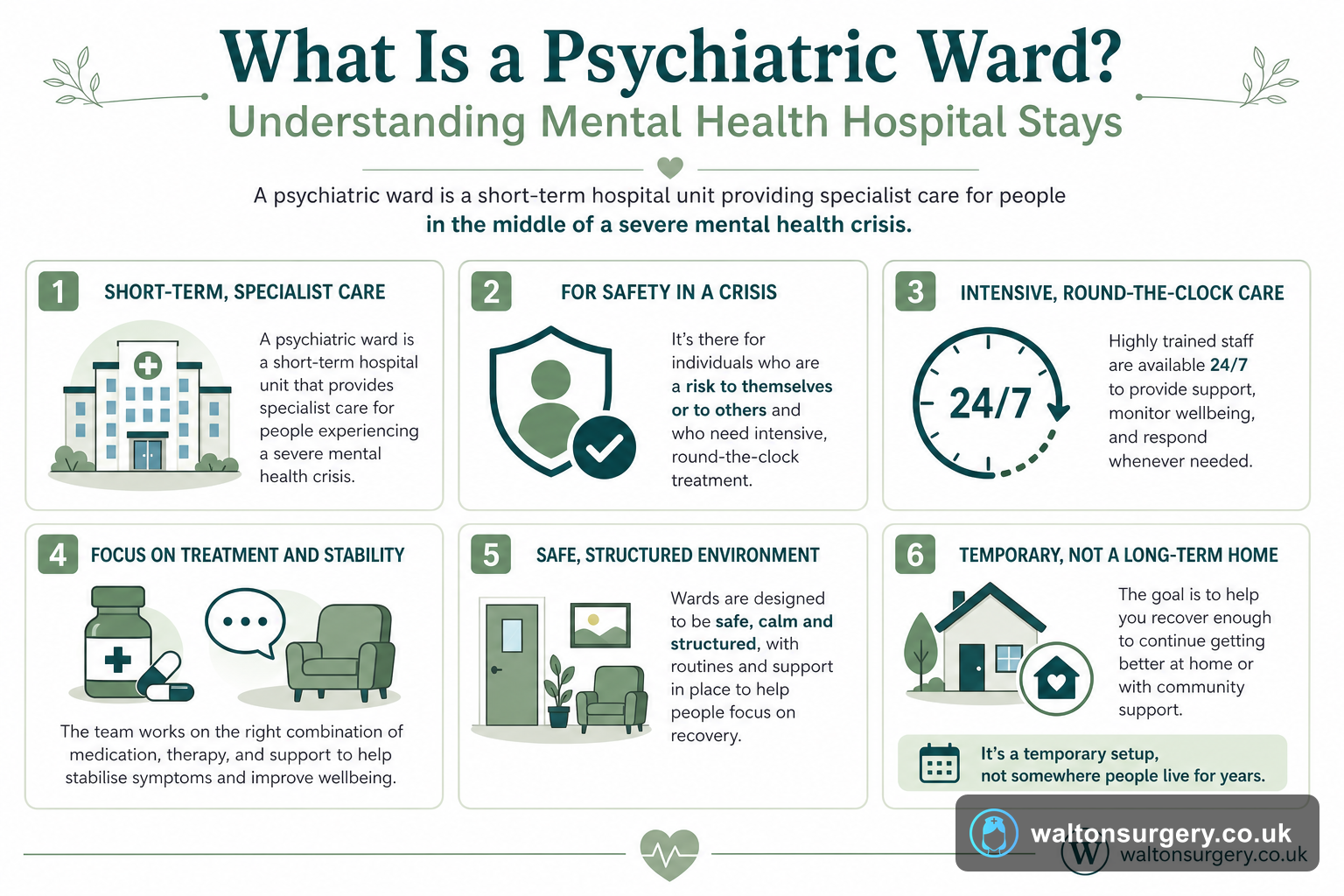
⚡ Quick Answer
A psychiatric ward is a short-term hospital unit providing specialist care for people in the middle of a severe mental health crisis. It's there for individuals who are a risk to themselves or to others and who need intensive, round-the-clock treatment. The staff work on medication, therapy, and keeping the environment safe and structured until the person is well enough to continue getting better at home. It's a temporary setup, not somewhere people live for years.
So, what actually is a psychiatric ward? In the UK, it's usually called an acute mental health ward – it's a specialist part of a hospital designed to give immediate, intensive care when someone's having a serious mental health crisis. People don't stay for long, typically a few weeks, while they get treatment and support until they're stable enough to go home. The main goal, really, is to keep you safe and start you on a proper treatment plan.
Headlines in August 2026 about a music star from the 2000s being "locked up in a psych ward" got a lot of people asking what these places are actually like. If those stories made you curious about what inpatient mental health care in the UK really involves, this article breaks down how it all works, what you can expect, and who looks after it all.
Who Needs to Be Admitted to a Psychiatric Ward?
You get admitted to a psychiatric ward when you're going through a severe mental health crisis that just can't be handled safely at home or by your local team. The NHS guidelines are pretty clear on this – it usually means there's a serious risk you might hurt yourself or someone else, or your mental state has got so bad you need constant supervision and specialist treatment. We're talking about things like a serious psychotic episode, a manic phase, or a crisis point where someone is actively suicidal.
It's not for everyday stress, or mild anxiety and depression your GP can manage. This is a specific intervention for really acute situations. A mental health professional – could be a psychiatrist or someone from the crisis team – will assess you to decide if being an inpatient is the right move. The call is made on clinical need, not because you'd prefer it that way.
How Do You Get Into a Psychiatric Ward?
There are basically two ways into a psychiatric ward in England: you go in voluntarily, which makes you an informal patient, or you're detained under the Mental Health Act 1983. Most people actually go in voluntarily. You agree to the stay because you see that you need that level of help, and the professionals involved think it's the safest place for you to be.
If you're unable to consent, or just won't, but the professionals believe your health or safety – or other people's – is in immediate danger, you can be detained. People often call this being "sectioned." The process, as the NHS explains it, involves an approved mental health professional (AMHP) and two doctors all agreeing that detention is necessary. It's a legal safeguard, making sure care happens when it's urgently needed.
What Happens on the Ward? A Typical Day
Life on the ward runs to a timetable, which is all about bringing some stability and routine back. Your day will have planned activities, therapy sessions, and regular check-ins with the clinical team. A fairly typical day could start with a morning group meeting, then some one-to-one time with a nurse or doctor, followed by group therapy, and then set times for meals, rest, and visits. There are usually rules on things like mobile phone use and leaving the ward.
The surroundings are meant to be safe and therapeutic, but it can feel quite clinical and strange at first. You'll work with the team to create a care plan that sets out your treatment goals. The ward staff – mental health nurses, healthcare assistants, psychiatrists, psychologists, and social workers – all work as a team to help you get better. The whole point is to get you stable enough to go home.
What Treatments Are Provided?
🔬 Key Facts
Treatment on the Ward
- → Medication management: A psychiatrist adjusts medication type and dosage based on your changing needs during the crisis.
- → Psychological therapy: One-to-one sessions with a psychologist or group therapy sessions are a core part of treatment.
- → NICE guidelines: Specific therapies are recommended for different conditions, such as cognitive behavioural therapy (CBT) for anxiety and depression.
- → Goal: To provide coping strategies and a better understanding of your condition.
The main treatments you'll get are around medication management and psychological therapy. A psychiatrist will look at any medication you're on – things like antidepressants or antipsychotics – and adjust the dose or type to find what works best. This is watched very closely because your needs can shift pretty fast during a crisis.
Psychological therapies form a big part of the treatment too. You might have one-to-one sessions with a psychologist, or you might join group therapy. NICE (the National Institute for Health and Care Excellence) recommends specific therapies for different conditions. For example, cognitive behavioural therapy (CBT) is often used for anxiety and depression, whereas family intervention is what's recommended for psychosis. The idea is to give you coping strategies and a better understanding of what's going on.
Can You Leave a Psychiatric Ward?
If you're an informal, voluntary patient, you have the right to leave whenever you want. That said, the clinical team will strongly advise against it if they think it's unsafe. Leaving against their advice can be risky and might slow down your recovery. They'll talk through your reasons for wanting to go and try to sort out your worries.
But if you're detained under the Mental Health Act, your right to leave is restricted. You can only go off the ward with permission from the responsible clinician, who is usually your consultant psychiatrist. Unauthorised absence is taken very seriously. Your nearest relative does have certain rights, including the power to ask for your discharge, though the responsible clinician can block that if they believe you still pose a significant risk.
How Long Does a Stay Last?
How long you stay varies a lot, depending on what you personally need. It could be just a few days, or it could be several months. The average stay in an NHS acute mental health ward is often cited as being around two to four weeks, but that's not a hard rule. The goal is always to get you discharged as soon as it's clinically safe to do so.
Your discharge will be planned with you and your community mental health team. Before you leave, they'll put together a discharge plan. This plan details your ongoing treatment – things like follow-up appointments with your psychiatrist, support from a community psychiatric nurse, or referrals to other services. It's all designed to stop another crisis happening and help you get back to your daily life. It's important to monitor your physical health too, as sometimes unexplained symptoms like sudden weight loss and excessive thirst can indicate other conditions that need attention, as discussed in our guide on what causes sudden weight loss and thirst.
Frequently Asked Questions
⭐ The Bottom Line
What this means for you
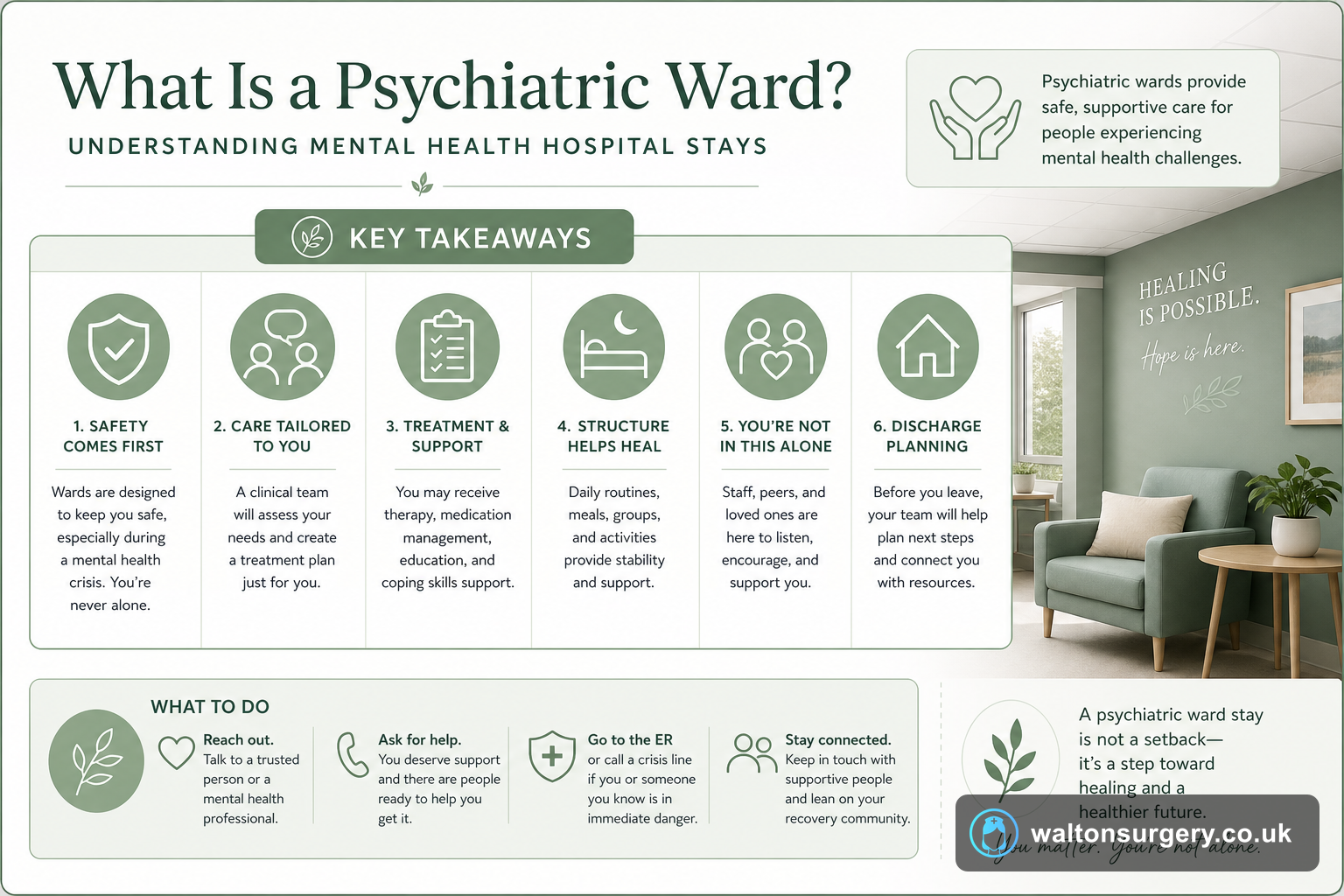
A psychiatric ward is a short-term, hospital-based unit for managing acute mental health crises. Its purpose is to provide a safe, structured environment where you can receive intensive treatment from a specialist team. Most admissions are voluntary, but legal detention is an option when risk is high. The stay is temporary, with a focus on stabilising your condition and planning a safe discharge back to the community with ongoing support.
Last updated: 2026-08-15 · Written by the Walton Surgery editorial team · Medical information is for educational purposes only and does not replace advice from a qualified healthcare professional.