Understanding UV Levels and How to Protect Your Skin from Sun Damage
⚡ Quick Answer
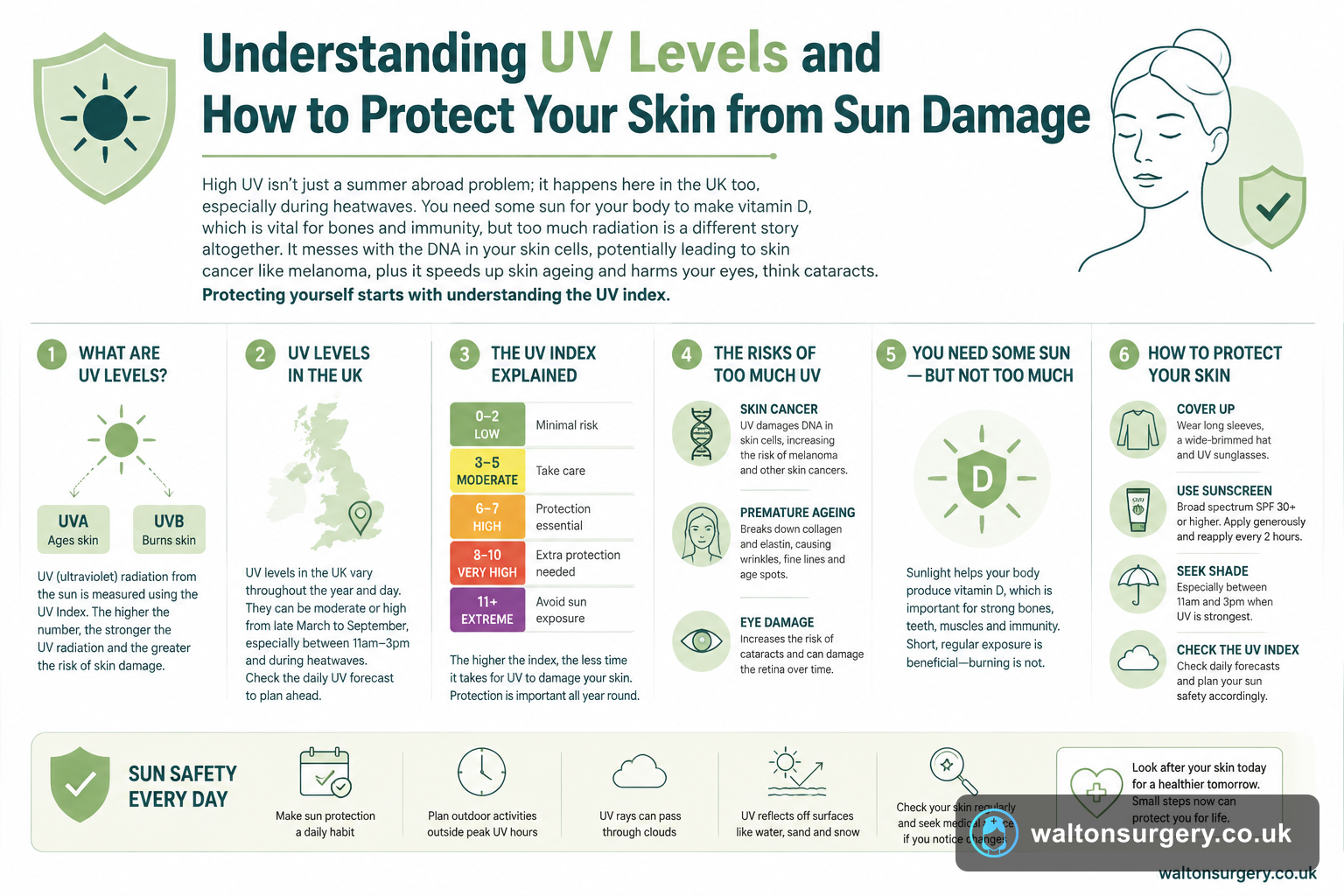
High UV isn't just a summer abroad problem; it happens here in the UK too, especially during heatwaves. You need some sun for your body to make vitamin D, which is vital for bones and immunity, but too much radiation is a different story altogether. It messes with the DNA in your skin cells, potentially leading to skin cancer like melanoma, plus it speeds up skin ageing and harms your eyes, think cataracts. Protecting yourself starts with understanding the UV index.
So you’ve looked at the forecast, seen it’s going to be a scorcher, and noticed the UV warning? That’s your cue to be careful. Radiation from the sun gets through the atmosphere and lands on our skin. We actually need a bit of it—our skin uses it to make vitamin D, which keeps our bones, blood cells and immune system working properly.
But during the sort of extreme heat the BBC has warned about for the UK, the UV levels are going to spike in a lot of places. That’s when you really can't skip the sun protection. Once you know what the numbers mean, you can make better choices about how long you stay outside and what you do to shield yourself.
What Exactly Is UV Radiation?
UV stands for ultraviolet radiation, which is basically energy from the sun that you can’t see. It’s the reason our skin makes that essential vitamin D, helping out our bones and immune defences, but it’s a type of radiation that can hurt us too. The atmosphere stops some of it, but plenty gets down to the ground to hit our skin, particularly when the sky is clear.
Why Is UV Exposure Dangerous for Your Health?
The main problem with UV is that it damages the DNA inside your skin cells. Prof Dorothy Bennett from St George's, University of London points out that every time you get exposed, and especially if you get sunburned, your odds of developing skin cancer go up. Melanoma is actually the fifth most common cancer we see in the UK now, and it’s the nastiest one.
On top of the cancer risk, UV is a huge factor in why skin ages. It causes wrinkles and those loose folds you get later on. The BBC has also linked it to eye issues, specifically cataracts. So looking after your skin isn't just about stopping a sunburn right now; it is about your long-term health for both your skin and your sight. If you have concerns about a diagnosis, it can be helpful to understand cancer misdiagnosis UK what to do.
How Is UV Measured and What Do the Levels Mean?
We use the UV Index, or UVI, to measure how strong the radiation is here. It’s a scale starting at 1, and the higher you go, the worse it is for damaging your skin. The Met Office puts out daily UV forecasts alongside the weather, which is handy. The calculation looks at where the sun is, if there are clouds, the altitude, and the ozone layer.
To make sense of the scale, here is how it breaks down. 1 or 2 is low; 3 to 5 is moderate; 6 to 7 is high; 8 to 10 is very high; and 11 or more is extreme. If the forecast shows a high or very high index, you need to ramp up your protection significantly.
🔬 Key Facts
Understanding the UV Index Scale
- → Low (1-2): Minimal danger; no protection needed for most.
- → Moderate (3-5): Stay in shade during midday; wear protective clothing.
- → High (6-7) to Very High (8-10): Protection essential; reduce time in sun.
- → Extreme (11+): Take all precautions; avoid sun exposure if possible.
When Are UV Levels in the UK at Their Highest?
The UV intensity doesn't stay the same all year. It gets strongest in the summer, usually May to September, because the sun is highest in the sky then. The worst time for radiation is around solar noon, generally between 11 am and 3 pm. That is when your shadow is at its shortest.
When we get heatwaves, the BBC article made clear, UV levels can get particularly nasty. People often think cloudy skies mean they are safe, but that is a mistake. Clouds do bring the intensity down, but a fair bit of UV still gets through the cover. You should still protect yourself on those bright but cloudy days.
Your Practical Guide to Sun Protection
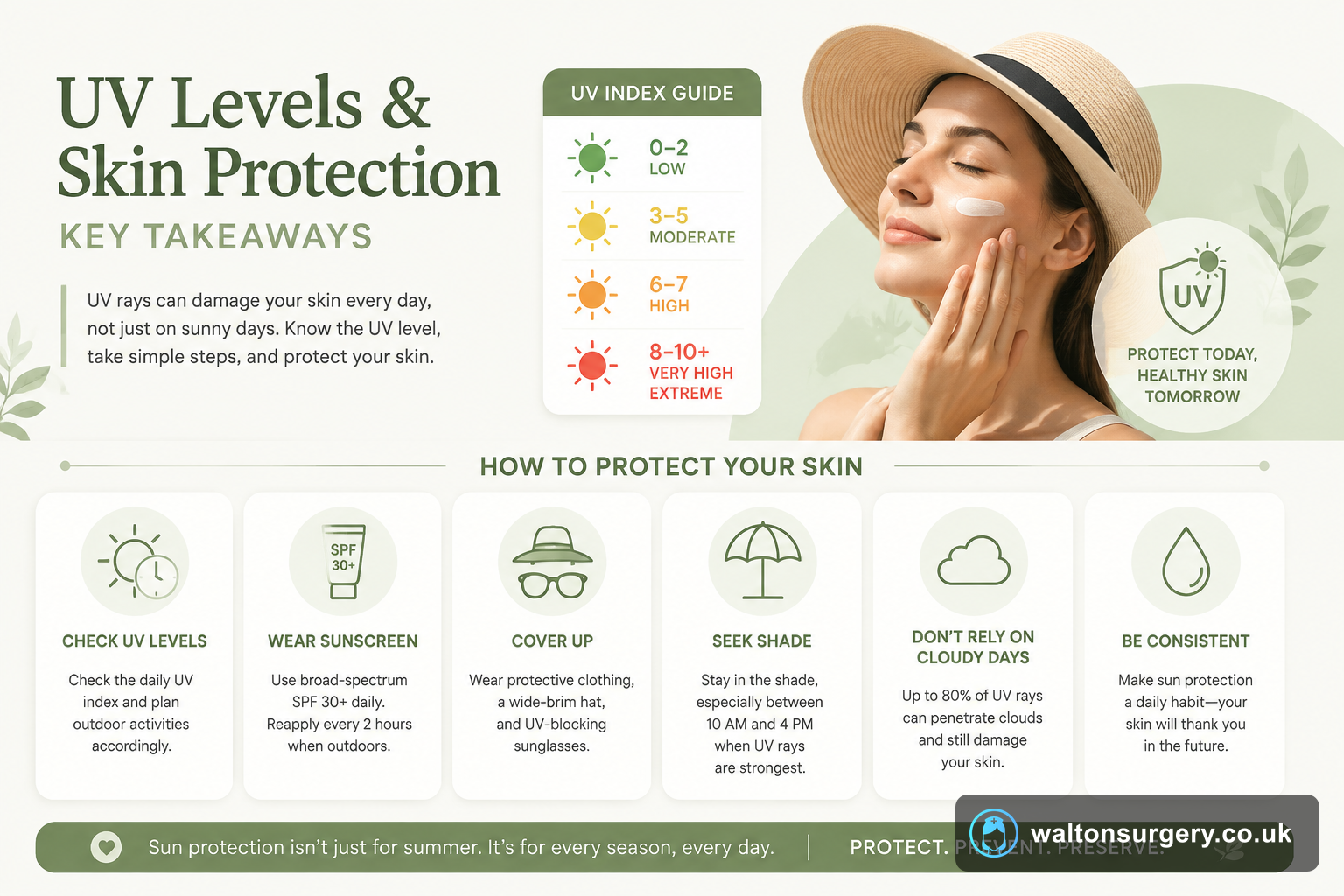
Shielding yourself comes down to changing a few behaviours. The NHS and cancer charities usually push a simple, memorable message for us. You need to seek shade, mainly between 11 am and 3 pm when the UV is strongest. Also, you should wear protective clothes, which means a wide-brimmed hat and sunglasses that block UV.
Smear on a broad-spectrum sunscreen that is at least SPF 30 on any skin that is showing. Make sure you put it on again every two hours, or more if you are swimming or sweating. Honestly, sunscreen is just one part of the defence; it has to work with clothes and shade.
The Role of Sunscreen in Your Routine
Sunscreen is a cream or lotion you put on your skin to block UV. You want to see "broad-spectrum" on the bottle, meaning it stops both UVA and UVB rays. The Sun Protection Factor, or SPF, mostly tells you how well it stops UVB, the type that actually burns you.
Rub it in generously around 15 to 30 minutes before you go out. Don't skip the easy-to-forget spots like your ears, the back of your neck, and the tops of your feet if you have sandals on. A big error people make is not using enough; you need roughly two tablespoons to cover an adult's whole body. It is worth remembering that sudden, unexpected symptoms like what causes sudden weight loss and thirst should also be checked by a doctor, as they can signal other health issues.
Frequently Asked Questions
The Bottom Line
⭐ The Bottom Line
What this means for you
Getting your head around UV levels in the UK is simple and it is vital for your health. The UV index tells you when to be cautious. High levels, common in summer and during heatwaves, mean you need to take action. Prof Dorothy Bennett has stated that every exposure raises your skin cancer risk. Your strategy is straightforward: seek shade when the sun is strongest, cover up, and apply your sunscreen right. These actions protect you now and for the future. This is general health info; if you are worried about a mole or something specific with your skin, always check with your GP. Understanding what happens after a diagnosis is also important, so you may wish to read about cancer diagnosis what happens next.
Last updated: 2026-08-14 · Written by the Walton Surgery editorial team · Medical information is for educational purposes only and does not replace advice from a qualified healthcare professional.