Penis Fillers: What to Know About the Risks and Results
⚡ Quick Answer
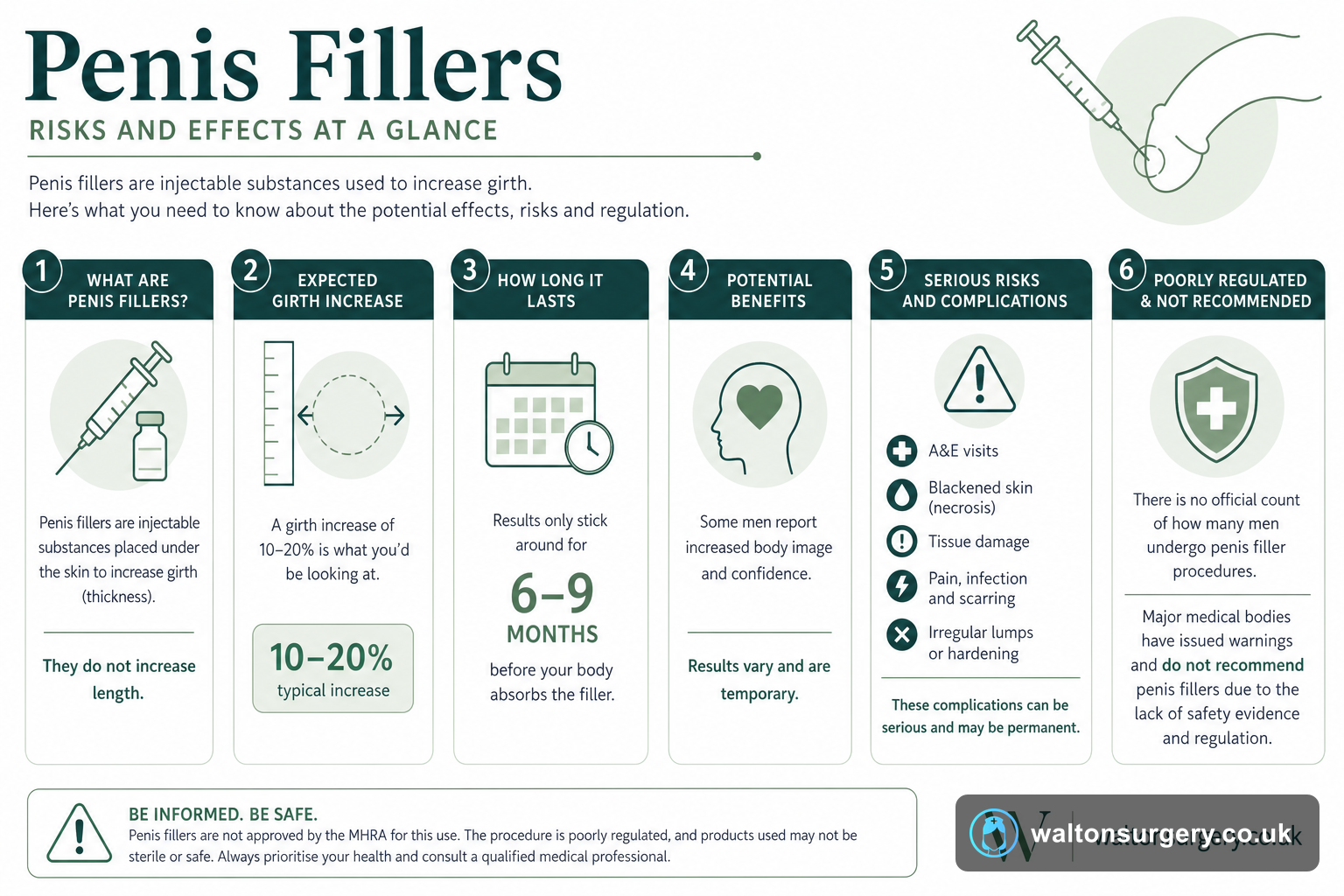
A girth increase of 10–20% is what you'd be looking at, though it only sticks around for six to nine months before your body just, well, absorbs it. Some fellas say it boosts their confidence, but the real story is that the whole thing's poorly regulated and can go badly wrong. We're talking A&E visits, blackened skin, tissue damage — the kind of stuff no one wants. There's no official count of how many men go through with it, and the big medical bodies have put out warnings for a reason.
Men are thinking about cosmetic work on their penis more than they used to, and that's their business. But it's not a decision to take lightly. Not when the risks are this serious. This piece gets into what actually happens during the procedure, what kind of results are realistic, and the dangers that frankly should make anyone stop and think twice — much like the well-documented hot weather health risks that catch people off guard every summer.
What Exactly Are Penis Fillers?
It's an injection, basically. A substance — usually hyaluronic acid, the same gel-like stuff used in face fillers — goes under the skin of the penile shaft. The aim is to bulk up the circumference, not the length. According to the BBC, men can expect something in the region of a 10–20% girth boost. Your body slowly breaks down the filler, which is why you're not looking at a permanent fix; more like six to nine months before things go back to how they were. Now, people hear "non-surgical" and think it's somehow low-risk. That's a mistake. The tissue and blood vessels in the penis aren't the same as your cheeks or lips. The whole context is different, and that matters more than most clinics seem to admit.
Why Are Men Getting Them?
Honestly, it's usually about how they feel about themselves rather than any medical problem. Take Jason, who spoke to the BBC about his own experience. He got a 16% increase in girth and said it gave him a real confidence lift. He wasn't after some over-the-top result — people sometimes call that the "Coke can" look — just a modest tweak that he and his partner were both comfortable with. For him, "everything still functions as normal... just with that extra little bit of width." That seems to be the draw for a lot of men: a perceived improvement that feels natural and doesn't mess with how things actually work — a motivation that experts warn can be easily exploited by those spreading celebrity health advice risks.
The Dangers: What Can Go Wrong?
This is where it gets serious. The British Association of Urological Surgeons has sounded the alarm, and the BBC's reporting shows why. Men have turned up at A&E with the penis going black and skin literally coming away after a procedure gone wrong. We're not talking minor swelling or bruising — this is tissue necrosis. The penile skin dies. That's a medical emergency, full stop, and it can leave lasting damage to both function and appearance. The problem is that because there's so little regulation, the person holding the needle might not have a clue about the anatomy they're dealing with. Blood vessels, nerves — hit one of those and you're in trouble.
🔬 Key Facts
Complications & Emergencies
- → Tissue Necrosis: Men have attended A&E with penile skin turning black and separating from the tissue.
- → Vascular Occlusion: Injecting filler into a blood vessel can block blood flow, causing severe damage.
- → Lasting Functional Damage: Severe cases can result in permanent erectile dysfunction or disfigurement.
How Is the Procedure Regulated in the UK?
Short answer: it isn't, really. The BBC put it bluntly — "anybody can start offering the procedure." That should set off alarm bells. There's no mandatory training, no official registry, nothing. So nobody actually knows how many men are having it done, and nobody's tracking how many end up with complications. You could be in the hands of someone who's never studied male urogenital anatomy in any depth, and you might not find out until something goes badly wrong. It's a bit of a gamble, and the stakes are your health. Without a regulatory body to ensure standards, men are left to assess risks that are often similar in nature to other complex factors affecting family well-being, such as cousin marriage health risks UK.
What Does a Realistic Result Look Like?
Keep your expectations grounded here. Jason's 16% bump is a decent benchmark for what's actually achievable. The idea isn't to create some dramatic transformation — it's a subtle, temporary thickening that wears off as your body absorbs the filler. A "Coke can" outcome isn't the goal, and pushing for that sort of result is asking for trouble. The change should be noticeable to you and maybe a partner, but not visually alarming. It won't make you longer. It won't change how things fundamentally work down there. Six to nine months, and then you'd need to go through the whole thing again if you want to keep the effect. Same risks, every single time.
Frequently Asked Questions
⭐ The Bottom Line
What this means for you
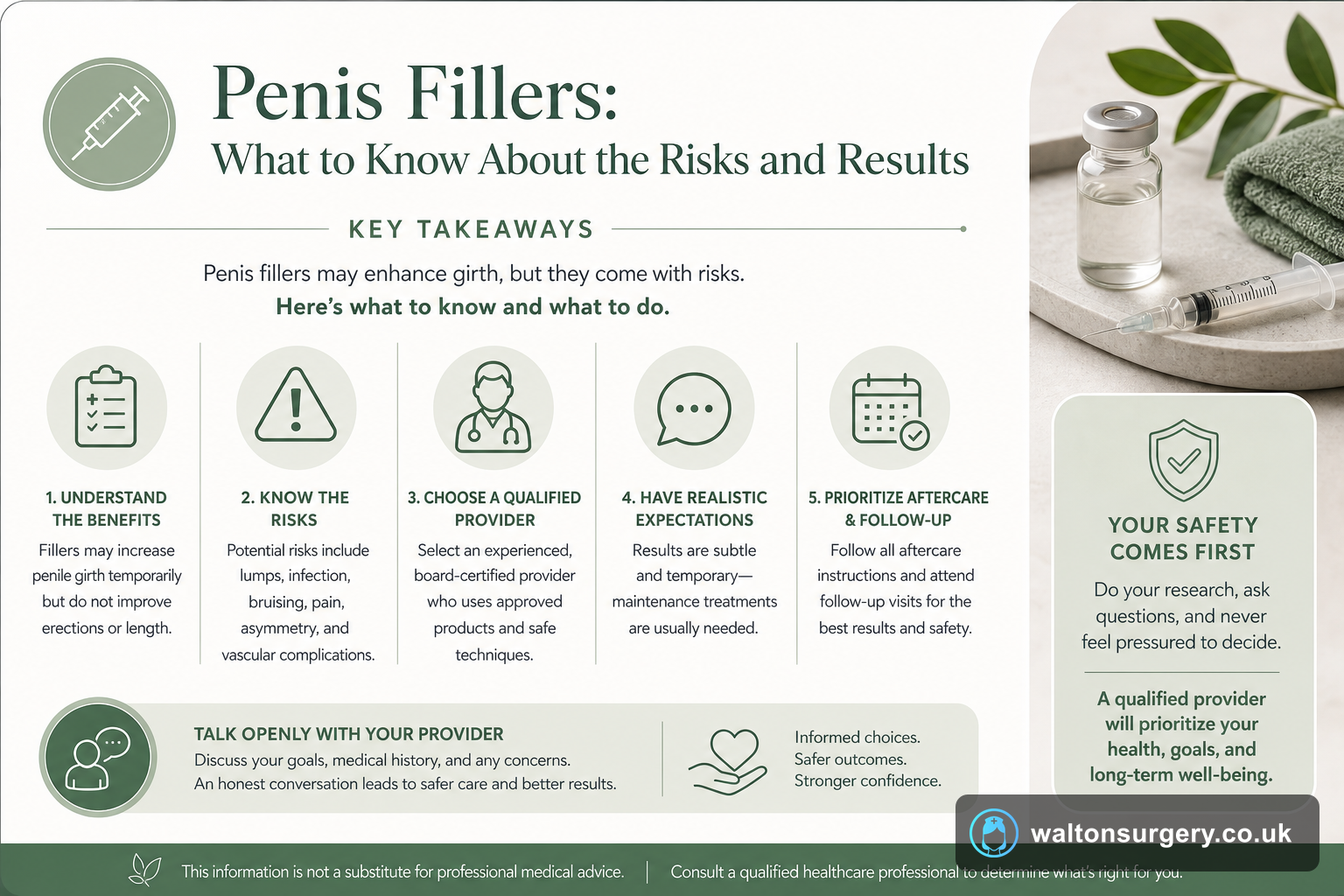
A temporary girth boost is what penis fillers deliver, but the risk profile isn't well understood and the UK's regulatory framework is essentially non-existent. Urological surgeons have documented cases of severe, life-altering complications — tissue death being the most frightening. If you're even thinking about this, your first conversation should be with your GP. Not a clinic you found on social media, not someone offering a discount deal. Your long-term health has to come before a change that's going to fade in a few months anyway.
Last updated: 2026-08-16 · Written by the Walton Surgery editorial team · Medical information is for educational purposes only and does not replace advice from a qualified healthcare professional.