Celebrity Health Confessions: How Misinformation Affects Us
⚡ Quick Answer
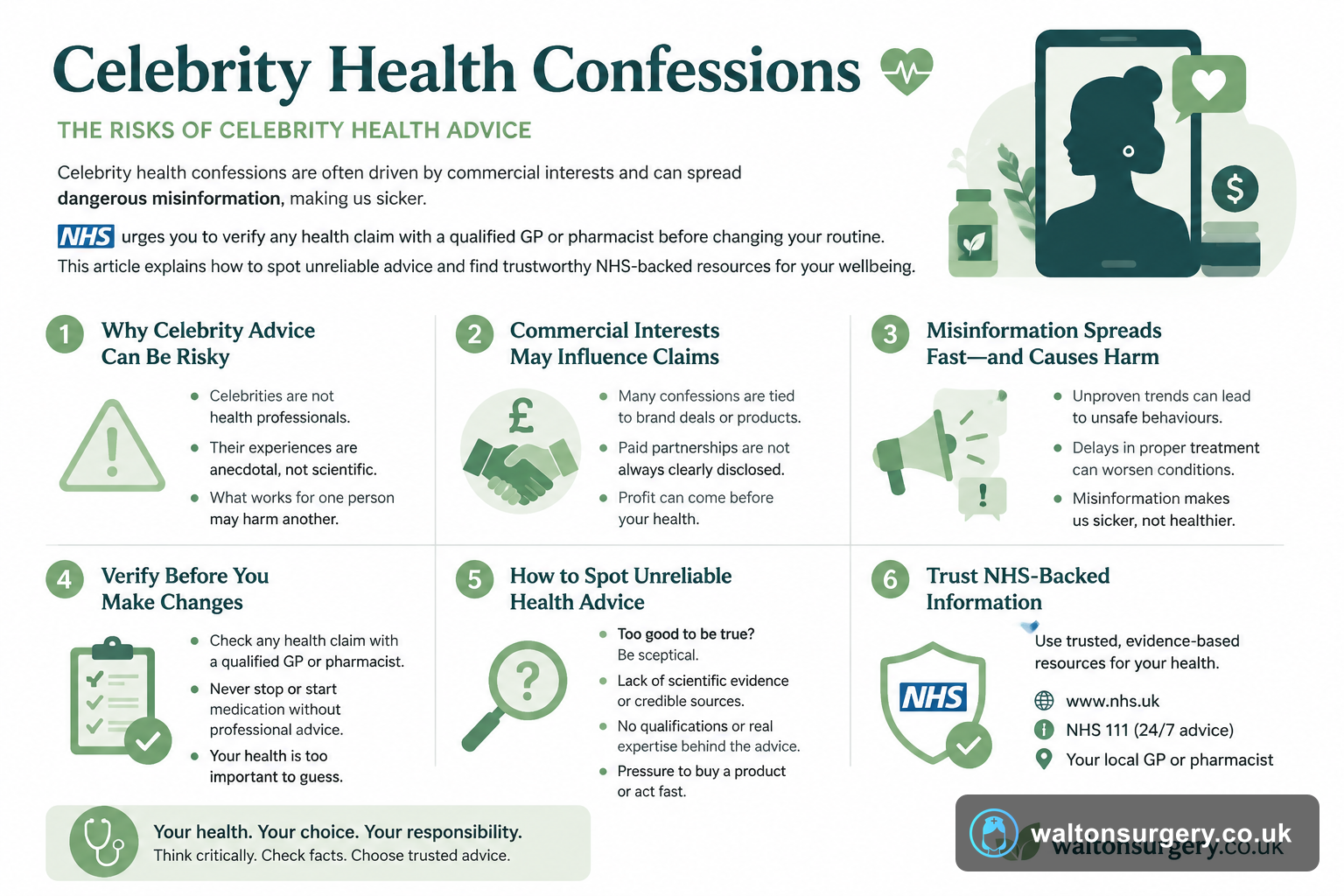
Celebrity health confessions are often driven by commercial interests and can spread dangerous misinformation, making us sicker. The NHS urges you to verify any health claim with a qualified GP or pharmacist before changing your routine. This article explains how to spot unreliable advice and find trustworthy NHS-backed resources for your wellbeing.
Celebrity health confessions are actively making us sicker by promoting unverified and often commercially motivated advice. The pressure to adopt the latest celebrity diet or supplement can lead to nutritional deficiencies, disordered eating, and a loss of trust in qualified medical professionals. The NHS consistently advises that you should never change your health routine based on an influencer's recommendation without first consulting your own GP.
The line between genuine wellness sharing and paid promotion is frequently blurred. A celebrity's endorsement of a detox tea, a restrictive eating plan, or a specific supplement is often a lucrative business deal, not a public health announcement. Your health decisions need to be based on your individual medical history, which is why professional guidance is non-negotiable.
Why Is Celebrity Health Advice So Misleading?
The core problem here is that personal anecdotes get treated like hard evidence. When a celebrity shares how a specific diet or treatment worked for them, that's all it is — one person's story. It doesn't factor in your own genetics, your medical background, or whatever medications you're currently on. And then there's the money side of things: a lot of these "confessions" are really just marketing in disguise, tied to products the celebrity has a financial interest in.
NHS.uk puts it plainly — and so does your GP surgery's own website, last time I checked — that health information needs to come from accredited sources, not random social media posts. What works for someone with a private chef, a personal trainer, and a nutritionist on speed dial isn't necessarily going to work for you, and in some cases it can do genuine harm. The pattern is clear when looking at the recent wave of celebrity health scares 2026 has brought to light.
The Commercial Drivers Behind the Confessions
There's a multi-billion-pound wellness industry lurking behind most of these celebrity health trends. When someone famous announces they're following a carnivore diet or popping a particular supplement, the first question you should be asking is: who's actually making money from this? Often enough, the celebrity is the face of a brand or holds some kind of financial stake in how well the product sells.
That's a pretty fundamental conflict of interest, if you think about it. Their aim is to shift product, not to keep you healthy. The NHS has put out multiple warnings about buying unregulated supplements and diet plans that get promoted online — they can contain dodgy ingredients, or throw your nutritional balance out of whack in ways that aren't immediately obvious. The rise of such stories has even prompted analyses of figures like ariana grande health condition explained by medical professionals.
What Does the NHS Actually Recommend?
If you want reliable health information, the NHS points you towards its own website — NHS.uk — where everything has been properly reviewed and is evidence-based, covering topics from diet and exercise right through to managing long-term conditions. Your GP and your pharmacist are the people to speak to for advice that's tailored to you personally.
The NHS Eatwell Guide is still the foundation for eating well, and it doesn't require you to cut out whole food groups or embark on some extreme fasting regime. As for exercise, the NHS recommends 150 minutes of moderate activity each week, or 75 minutes if you prefer something more vigorous, plus strength work on at least two days.
Spotting Red Flags in Health Claims
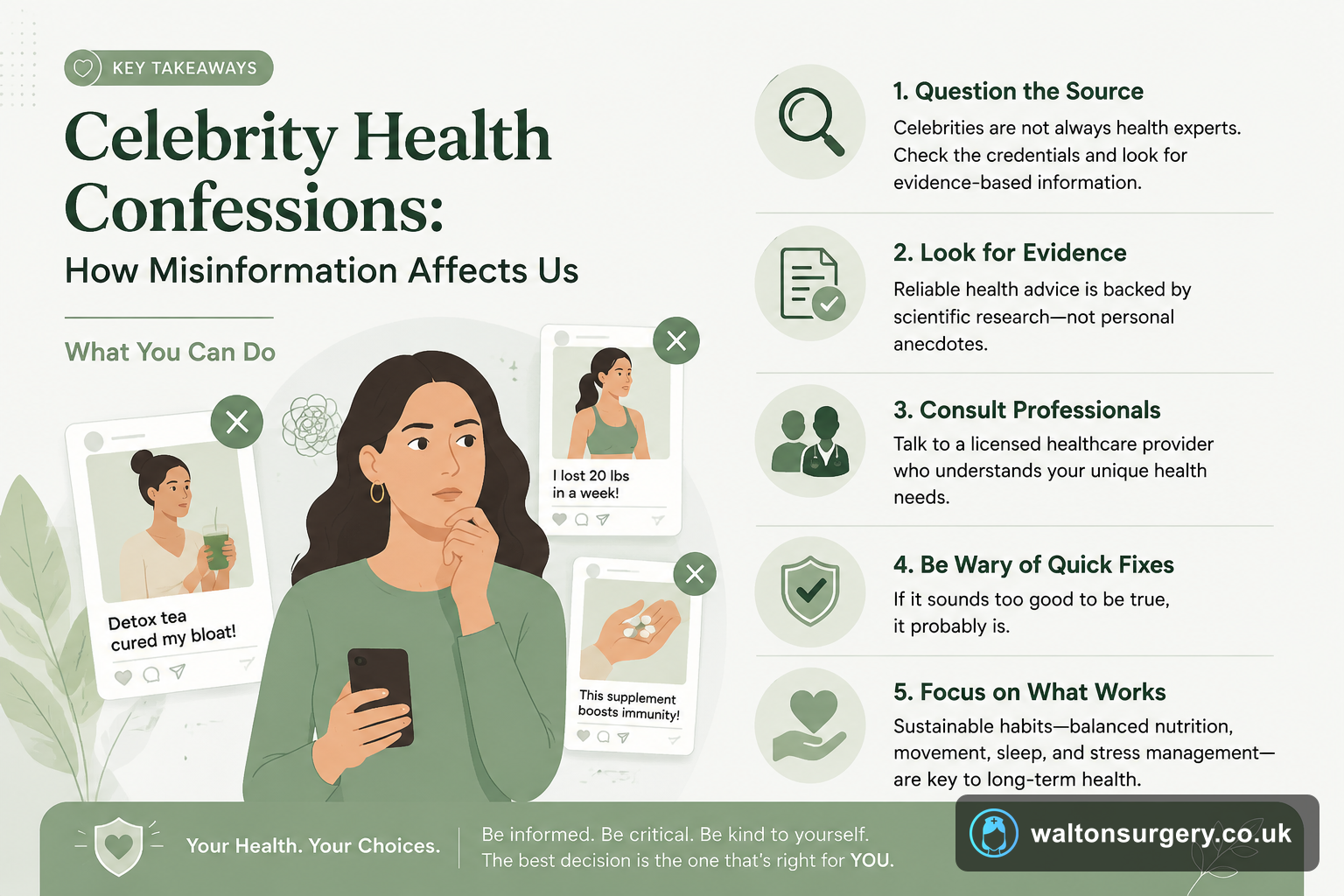
You can keep yourself safe by getting better at spotting the warning signs. Be deeply sceptical of anything that promises a "miracle" cure, dramatic weight loss in a short time, or a quick fix for a complicated health issue. Phrases like "this one trick doctors don't want you to know" — that's a textbook red flag.
Check where the advice is coming from. Is there a peer-reviewed study behind it, published somewhere reputable, or is it just someone's personal testimonial? The NHS and bodies like the British Dietetic Association (BDA) consistently back a balanced, sustainable way of doing things. If a celebrity diet sounds extreme or like something you couldn't keep up for more than a week, it almost certainly isn't supported by mainstream medical science. Understanding what genuine health journeys look like, such as those of celebrity cancer survivors uk, can help provide valuable perspective.
🔬 Key Facts
Why Celebrity Advice Fails
- → Anecdote vs Evidence: Celebrity stories are personal, not scientific, ignoring your unique medical history and genetics.
- → Commercial Conflicts: Many "confessions" are paid promotions for products the celebrity has a financial interest in selling.
- → NHS Guidance: Always consult your GP or pharmacist; trusted information is available on NHS.uk, not from social media influencers.
- → Health Risks: Unverified advice can lead to nutritional deficiencies, disordered eating, or dangerous interactions with existing conditions.
The Real-World Health Risks
Following celebrity advice that hasn't been verified can lead to actual, concrete health problems. Diets that are extremely low in carbohydrates or very high in fat have been known to cause fatigue, nausea, and bad breath, and they can make existing conditions like kidney disease worse. Detox products that haven't been properly regulated have been connected to liver damage too.
There's also the issue of disordered eating. When you're constantly being shown restrictive diets, it can warp your whole relationship with food — some people develop things like orthorexia, which is basically an obsession with eating "clean." If you're worried about your eating habits or how you're feeling mentally, your GP is the person to talk to. They can point you towards the right NHS services.
Frequently Asked Questions
⭐ The Bottom Line
What this means for you
Your health is far too important to be steered by celebrity headlines or whatever's trending on social media. The NHS offers a lot of free, reliable, and personalised advice through its website, your GP, and your local pharmacy. Always check any health claim against these trusted sources before you make changes. Real wellbeing comes from evidence, balance, and professional guidance — not from the latest influencer confession.
Last updated: 2026-08-03 · Written by the Walton Surgery editorial team · Medical information is for educational purposes only and does not replace advice from a qualified healthcare professional.