How Heat Affects Your Body: Risks and When to Act
PART C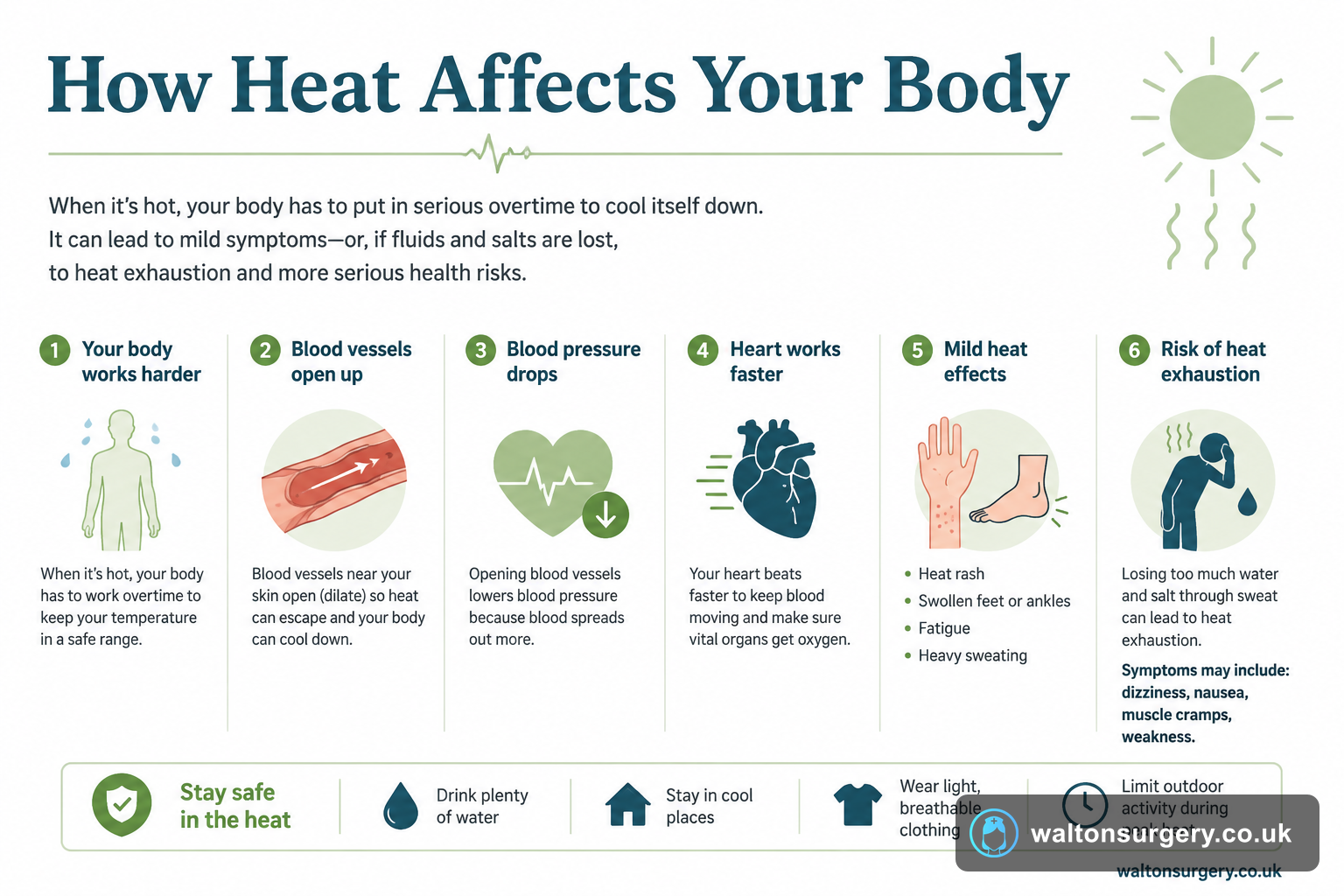
⚡ Quick Answer
When it's hot, your body has to put in serious overtime to cool itself down. It opens up blood vessels so you can lose heat, and that lowers your blood pressure, which means your heart has to beat quicker to keep everything moving. This whole process can bring on milder things like heat rash or your feet puffing up. But if you lose too much water and salt through sweat, you move into heat exhaustion territory — that's when you might feel dizzy, sick, or get muscle cramps.
Hot weather touches us all, but some people feel it more sharply. The BBC has reported that certain groups are at higher risk during a heatwave. Your body's cooling system works well, really it does, but there are limits. Once the mercury climbs, your heart and blood vessels start working overtime.
Your core temperature hovers around 37C and your body fights hard to keep it there. It kicks off a chain of reactions you barely notice. Getting your head around these is how you start to protect yourself when a heatwave arrives.
How Your Body Copes with Heat
Your body is programmed to keep your core temperature at roughly 37C, and it doesn't much care what the weather outside is doing. The first thing it does when it gets warm is widen the blood vessels that sit near your skin's surface — that's vasodilation. More blood flows close to the skin so heat can bleed off into the surrounding air.
This works, but there's a trade-off. With all those blood vessels open, your blood pressure drops overall. So your heart picks up the slack, beating faster to make sure your organs still get the blood they need. That extra load on your cardiovascular system is a big part of why hot days leave you feeling drained. The British Heart Foundation points this out too — heat isn't just uncomfortable, it's physically taxing.
What Happens When Cooling Fails?
Your body's other main trick for losing heat is sweating. As sweat dries off your skin it pulls warmth away with it. But sweat isn't just water — you're losing salt as well, and your body needs the right balance between the two to function properly.
Sweat heavily enough and that balance tips. Combine it with the low blood pressure from vasodilation and you can end up with heat exhaustion. According to the BBC, the symptoms are things like dizziness, feeling sick, fainting, confusion, muscle cramps, headaches, drenching sweat, and tiredness. Basically your body is telling you it's struggling. It needs you to cool it down and replace what you've lost.
Recognising the Warning Signs
Spotting early problems matters. Milder signs can include heat rash — itchy patches that show up when sweat ducts get blocked — and swelling in your feet or ankles. That swelling happens because fluid leaks out of dilated blood vessels into the surrounding tissues.
Then there are the more worrying symptoms. Dizziness, nausea, confusion, and muscle cramps all point to heat exhaustion kicking in. Heavy sweating alongside exhaustion is another one. These are signs your cooling systems are being overwhelmed and it's time to do something about it. Don't brush them off.
🔬 Key Facts
Heat Exhaustion Symptoms
- → Dizziness and fainting are primary indicators of a failing cooling system.
- → Confusion and nausea signal that the body is struggling to maintain core temperature.
- → Muscle cramps and headaches result from lost salt and fluid imbalance.
- → Drenching sweat indicates the body is in overdrive attempting to cool down.
When Does It Become a Medical Emergency?
Leave heat exhaustion untreated and things can get dangerous. If your blood pressure falls too far, your heart is under even more strain. The BBC has noted that this can raise your risk of having a heart attack.
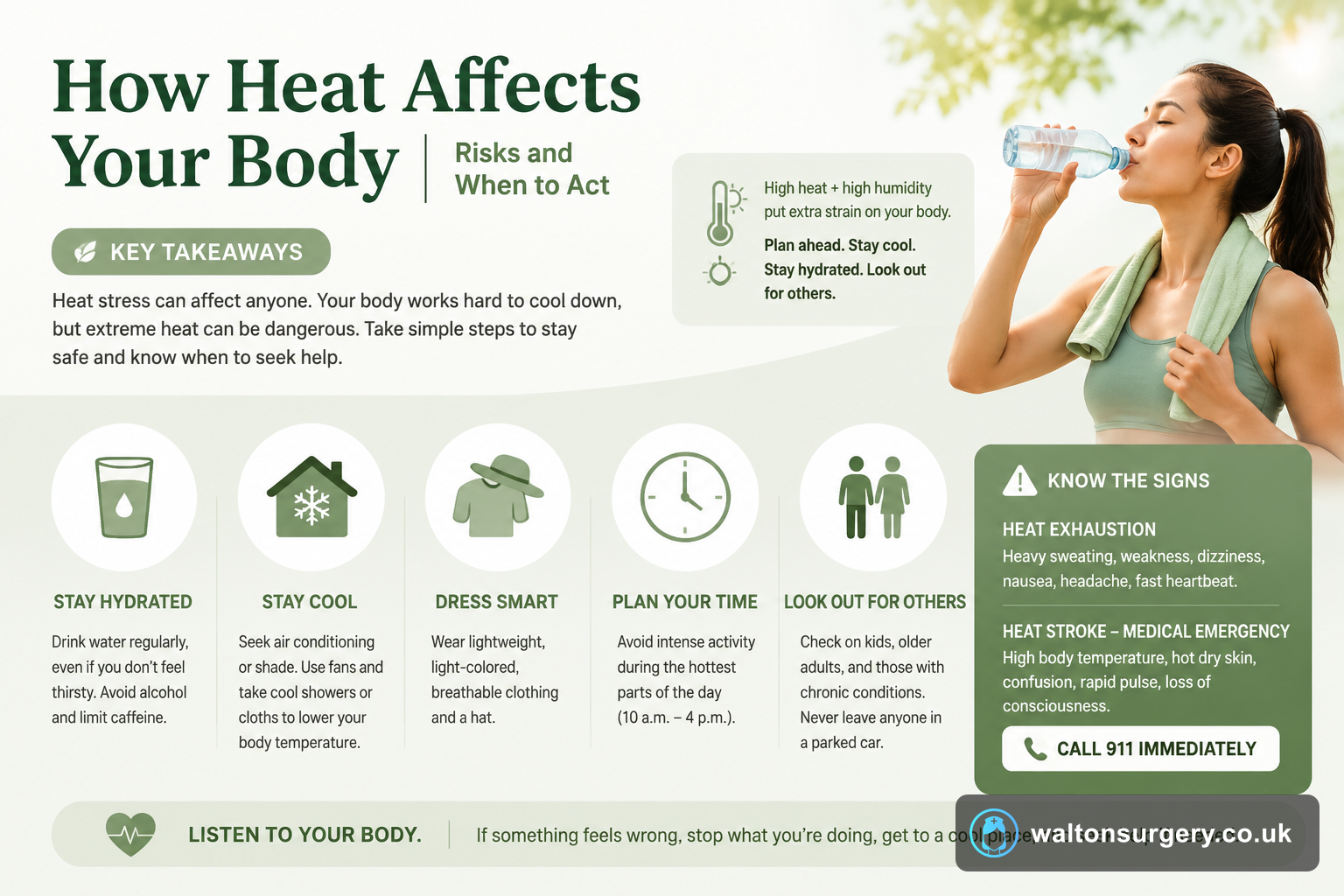
Heatstroke is the worst-case scenario — it's a medical emergency where your body flat-out loses the ability to control its temperature. Signs include confusion, passing out, and hot dry skin because the body may have stopped sweating entirely. You call 999 straight away. While you wait, move them somewhere cool and try to bring their temperature down with damp cloths or a fan.
Who Is Most at Risk?
Hot weather can floor anyone, but it floors some people faster. The BBC highlights older adults, babies, and young children as groups that need extra care during a heatwave.
Older people often have less efficient temperature regulation anyway, and they're more likely to be managing long-term conditions or taking medication that messes with how the body handles heat. Babies and children have a bigger surface area relative to their body mass — so they absorb heat quickly. Their sweating response isn't as developed either. Anyone with chronic heart or breathing problems also faces elevated risk.
Practical Steps to Stay Safe
When it's hot, there are straightforward things you can do to take the pressure off your body. The aim is to help it keep your core temperature steady without overloading itself.
Drink water regularly through the day, even when you aren't feeling thirsty. Alcohol and caffeine both dehydrate you, so go easy on those. Wear clothes that are light in colour and weight, nothing tight. Stay inside when the sun is fiercest, usually between 11am and 3pm. If you have to be out, find shade, put on a hat with a wide brim, and use sunscreen. A fan helps, and so do cool showers — both can nudge your temperature back down.
Frequently Asked Questions
The Bottom Line
⭐ The Bottom Line
What this means for you
Heat puts a real and direct burden on your heart and circulation while your body battles to stay cool. Spotting the early signs of heat exhaustion — dizziness, nausea, cramps — is the important bit. Once you understand what's happening inside you, sensible precautions get much easier to follow. Enjoy your summer, but if you've got health worries that are heat-related, your GP or a pharmacist can give advice tailored to you. We cover this in more depth in cousin marriage health risks UK. There's more on this in our celebrity health advice risks explainer. There's more on this in our celebrity health privacy boundaries explainer.
Last updated: 2026-08-13 · Written by the Walton Surgery editorial team · Medical information is for educational purposes only and does not replace advice from a qualified healthcare professional.