Solar Retinopathy: Key Signs You May Have Damaged Your Eyes
⚡ Quick Answer
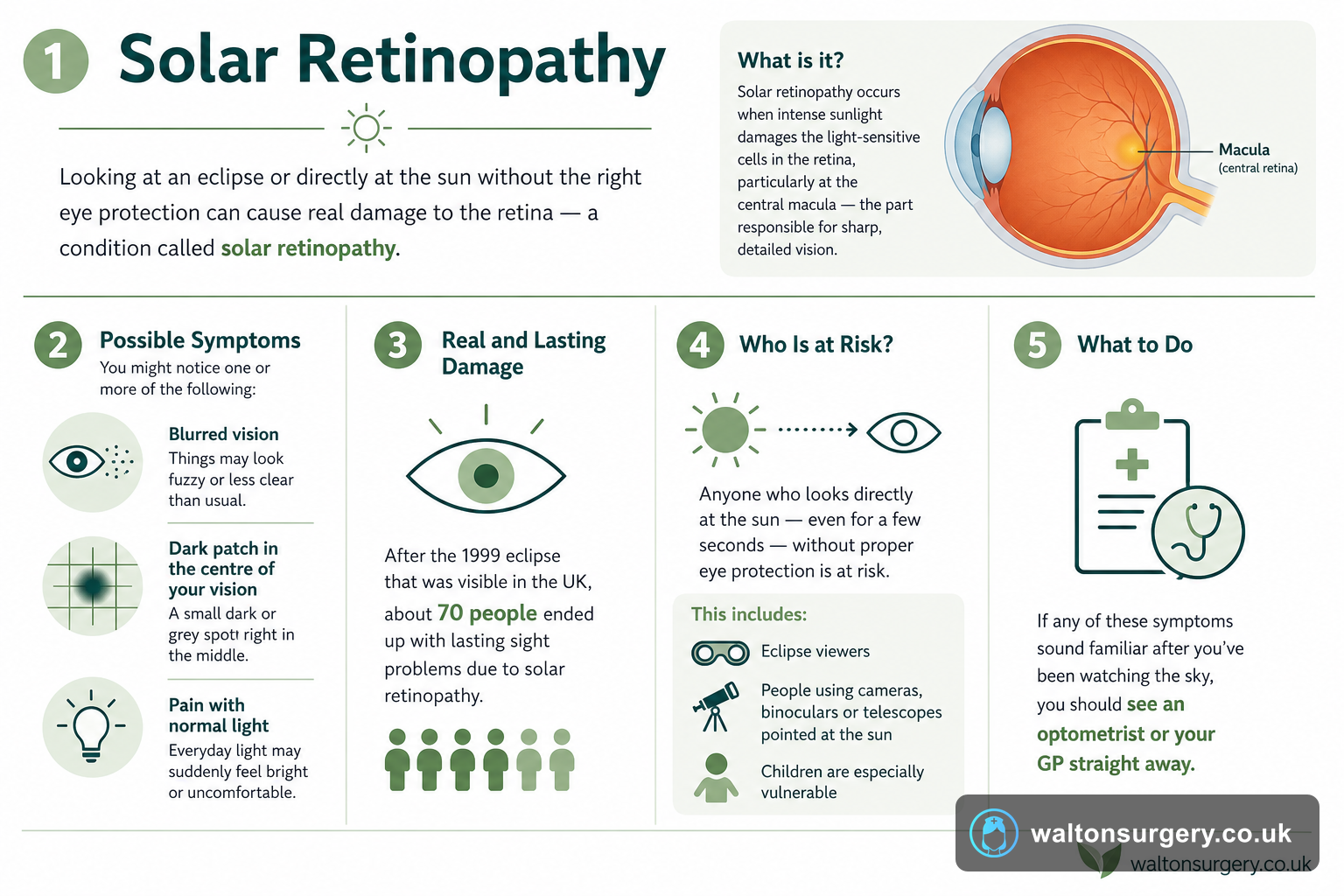
Looking at an eclipse or directly at the sun without the right eye protection can cause real damage to the retina — a condition called solar retinopathy. You might notice blurred vision, a dark patch right in the middle of what you can see, or find normal light suddenly painful. After the 1999 eclipse that was visible here in the UK, about 70 people ended up with lasting sight problems. If any of these things sound familiar after you've been watching the sky, you should see an optometrist or your GP straight away.
If you've glanced at an eclipse or the sun itself and are now worried about what you're seeing, that worry makes complete sense. The intense light and ultraviolet radiation the sun gives off can damage the retina — that's the light-sensitive layer right at the back of your eye. The thing is, this kind of injury can happen in just a few seconds of looking.
The risk jumps up considerably during an eclipse. On any ordinary day, staring at the sun makes you squint and look away almost immediately. But when the sky gets darker during an eclipse, that reflex doesn't always fire properly, even though damage is still happening inside your eye. Lots of the people who got hurt after the 1999 eclipse had actually looked at it for less than a minute — they genuinely didn't realise anything bad was going on at the time.
What exactly happens to your eyes when you look at an eclipse?
The problem comes down to concentrated light hitting the retina. The sun stays incredibly bright even when the moon is covering part of it. That focused light and UV radiation effectively burn the delicate retinal cells, particularly in an area called the macula. You rely on the macula for your sharp, central vision — the kind you need for reading, recognising someone's face across a room, or driving.
What makes this particularly sneaky is that the damage itself is usually painless when it happens. You might not notice anything at all in the moment. The cells get injured or destroyed, and what you're left with is a scotoma — basically a blind or dark spot sitting right in the middle of your visual field. The actual injury from solar retinopathy tends to be immediate, though it can take a few hours or even a full day before the effects on your vision become really obvious. For many people, keeping on top of their general health involves paying attention to hormonal cycles and luteal phase symptoms, which can provide context for other physical changes in the body.
🔬 Key Facts
The Science of Eye Damage
- → Concentrated solar radiation burns the delicate cells of the macula.
- → The injury is usually painless at the moment it happens.
- → Symptoms may take hours or even a full day to become obvious.
- → The result is often a 'scotoma' or dark spot in central vision.
Recognising solar retinopathy symptoms after eclipse viewing
How badly symptoms hit you can vary quite a bit. Based on what the NHS says and reports that came out around the 2026 eclipse warnings, these are the main things to keep an eye out for:
- Blurred or distorted vision. Straight lines might start looking wavy.
- A central blind or dark spot in your field of vision. This one tends to be the symptom people notice first.
- Increased sensitivity to light, sometimes called photophobia. Everyday lighting that was fine before might suddenly feel uncomfortably bright.
- Altered colour vision. Colours can look washed out or just... different, somehow.
- Headaches.
These can show up in one eye or both — it really depends on how you were looking at the sun. That combination of blurriness and a central spot is pretty characteristic of macula damage specifically. While we often talk about specific conditions like breast cancer signs and symptoms, it is just as vital to recognise the warning signs for less common issues like solar retinopathy.
How long do these symptoms last?
There's no single answer here — it hinges on how badly the retina got burned. For milder cases, things like slight blurring or a small spot might gradually get better over weeks or months. Your brain can sometimes compensate for minor defects, which helps.
With more serious damage, though, the symptoms could be permanent. That central blind spot might just stay there. The data from the 1999 eclipse is a sobering reminder of this: those 70 people with damaged sight experienced effects that lasted. There's genuinely no way to tell how your own injury will heal, which is exactly why getting it checked quickly matters so much. The recovery trajectory varies widely; just as patients might research the recovery process for a hysterectomy after cancer scare, understanding the permanence of eye damage is crucial.
What should you do if you have symptoms?
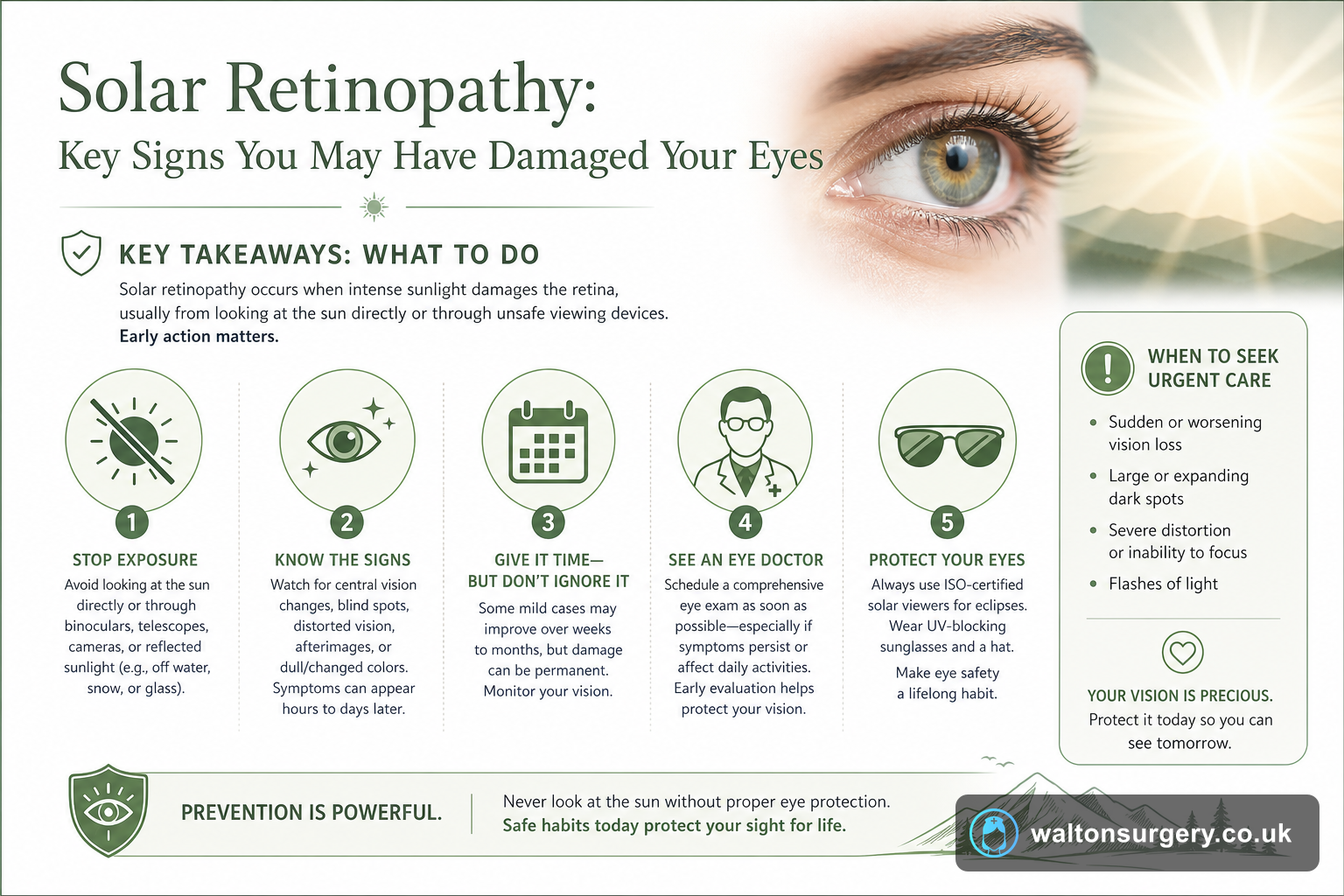
If any of the symptoms above show up after you've been looking at the sun or an eclipse, don't hang about waiting. The right move is to get in touch with an optometrist — that's an optician qualified to check eye health — or your GP as soon as you can. Trying to figure it out yourself or hoping it'll sort itself out is not a good plan.
Be specific with them about what happened. Tell them you looked at the sun or an eclipse, roughly how long for, and describe the symptoms you're dealing with now. A professional can do a thorough examination, often using special drops to widen your pupils so they can look directly at the retina for any sign of burns or damage.
Frequently Asked Questions
⭐ The Bottom Line
What this means for you
Solar retinopathy represents a genuine risk if you view an eclipse or the sun without proper protection for your eyes. The symptoms — blurred vision, a central blind spot, sensitivity to light — are signs that the retina may have sustained damage. After the 1999 eclipse, 70 people were left with damaged sight. If you've got any concerns about your vision following such an event, get an examination from an optometrist or GP without delay. This article is for information only and is not a substitute for professional medical advice.
Last updated: 2026-08-16 · Written by the Walton Surgery editorial team · Medical information is for educational purposes only and does not replace advice from a qualified healthcare professional.