Understanding the luteal phase: symptoms and what to expect
PART C — HTML Body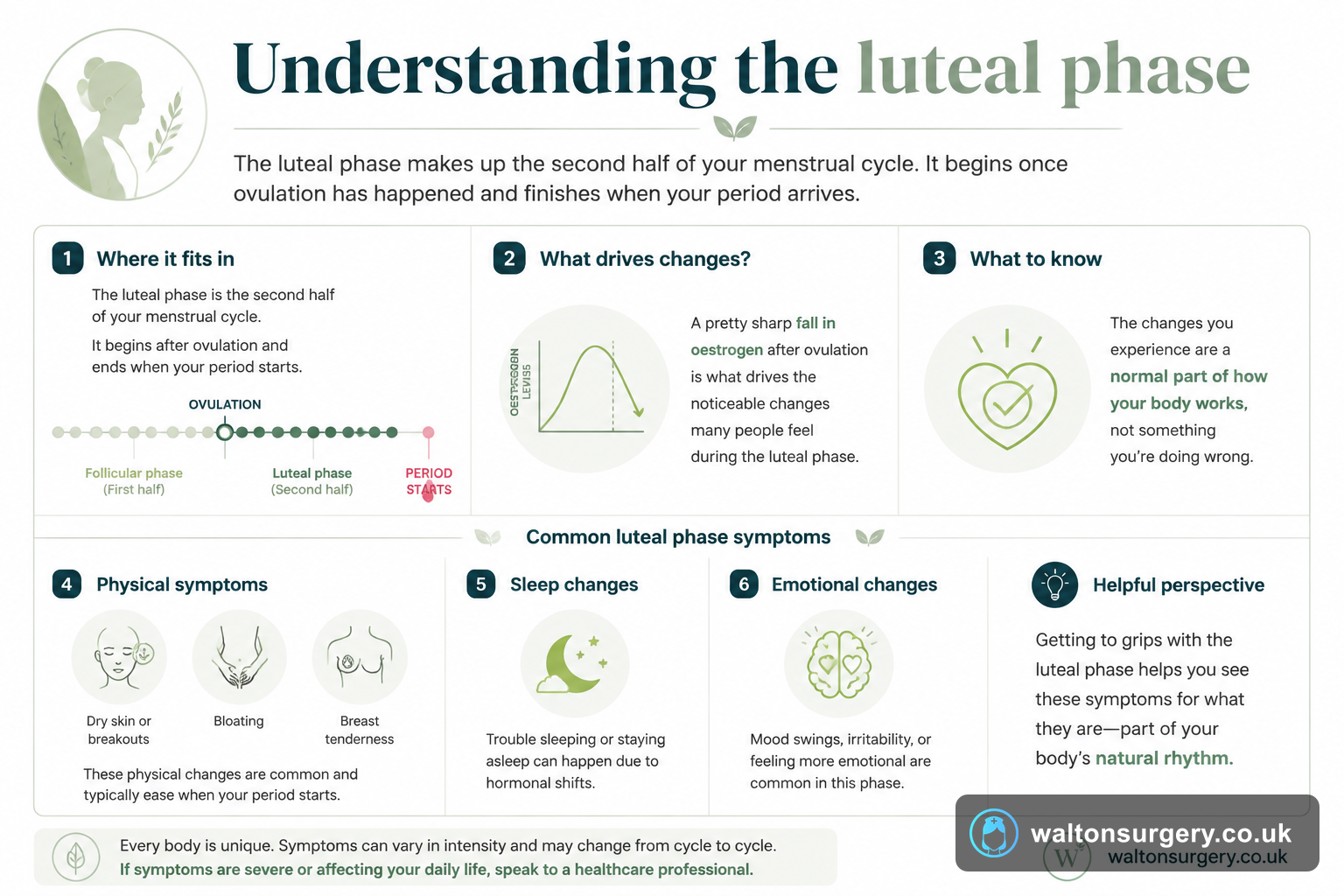
⚡ Quick Answer
The luteal phase makes up the second half of your menstrual cycle. It begins once ovulation has happened and finishes when your period arrives. What drives the noticeable changes you might feel is a pretty sharp fall in oestrogen, which can bring on various physical and emotional shifts — things like dry skin or breakouts, bloating, breast tenderness, trouble sleeping, and mood swings. Getting to grips with this phase helps you see these symptoms for what they are: a normal part of how your body works, not something you're doing wrong.
Once you've ovulated and before your period kicks in, your body enters the luteal phase. It's a standard bit of the menstrual cycle, really. Oestrogen levels take a noticeable dip during this window, and that drop is behind a whole host of physical and emotional symptoms. People online have taken to calling them the 'luteal uglies' — it's not a medical term, but it stuck.
Women have been sharing their experiences of this phase all over social media, with some videos clocking up millions of views as they describe changes to their appearance and how they feel. Dr Louise Newson, who's a GP and a specialist in women's hormones, says these hormone shifts have a direct effect on your skin, your sleep, and your general sense of wellbeing. She's pretty clear about it.
What exactly is the luteal phase?
So, the menstrual cycle splits into two main parts. First you've got the follicular phase, which runs from day one of your period right up until ovulation happens. Then the luteal phase takes over, starting straight after ovulation and carrying on until your next bleed begins.
Here's what's going on underneath. An egg gets released from the ovary during ovulation. The follicle that was holding onto that egg then turns into something called the corpus luteum. What does that do? It pumps out progesterone, getting the uterus ready just in case a pregnancy happens. If it doesn't, the corpus luteum gives up and breaks down. Progesterone and oestrogen both drop, and the lining of your uterus sheds — that's your period. Your brain and ovaries are constantly talking to each other through a feedback loop to keep this whole process ticking over.
Why does it cause so many symptoms?
Hormonal change is the main culprit here. After ovulation, oestrogen dips while progesterone climbs. Then in the days before your period, both of them fall off a cliff.
Dr Louise Newson puts it simply. "Our hormones affect our skin, they affect our collagen," she says. So it follows that women can see shifts in how they look, how they sleep, and how they feel overall. Your body is just responding to these chemical messengers as they go up and down — they control everything from how much fluid you retain to what's happening with the neurotransmitters in your brain. It's a predictable, cyclical thing that happens physiologically.
What are the common physical changes?
These are often the most obvious symptoms, and the ones people are talking about when they mention the 'luteal uglies'. That phrase isn't in any medical textbook, but it does describe something real — a collective experience of women noticing changes to how they look.
Dr Newson points to several changes that can happen: Skin changes like dry skin and dull complexion, bloating from fluid retention, breast changes such as swelling or tenderness, and sleep disruption from fluctuating hormones all leave you feeling tired.
These symptoms can mimic other conditions, so it is important to pay attention. Sudden lumps or persistent pain in the breast, for instance, should be checked to rule out breast cancer signs and symptoms. Someone on social media summed it up: "Is it just me or am I the ugliest person alive?" Millions of people in the comments clearly felt the same. This kind of physical discomfort comes directly from the hormonal ebb and flow happening inside you.
How does it affect your mood and brain function?
The emotional side of things is just as real as what's happening physically. Oestrogen has a role in regulating serotonin — that's the neurotransmitter connected to mood. So when oestrogen falls, serotonin activity can dip too, which might leave you feeling more anxious, snappy, or just low.
Progesterone, meanwhile, has a bit of a calming effect on the brain. Think of it as a mild sedative. Its rise after ovulation can feel quite nice for some people, but when it falls away later, that can contribute to mood swings. Plenty of women say it feels like their brain is running on treacle or that their emotional reactions get turned up to eleven.
Elena, who's 25, told the BBC: "I feel like my brain is working in slow motion." This kind of cognitive fog and emotional sensitivity — it's a really common thing to report, and it's tied directly to these hormonal shifts. It's got nothing to do with willpower or character.
🔬 Key Facts
The Menstrual Cycle Breakdown
- → Corpus Luteum Function: After ovulation, the empty follicle transforms to produce progesterone.
- → The Hormone Drop: If pregnancy doesn't occur, the corpus luteum breaks down, causing progesterone and oestrogen to plummet.
- → Physical Trigger: This sharp drop triggers the shedding of the uterus lining (your period).
- → Brain-Body Link: A constant feedback loop between your brain and ovaries regulates the entire cycle.
Is there a way to track your own cycle symptoms?
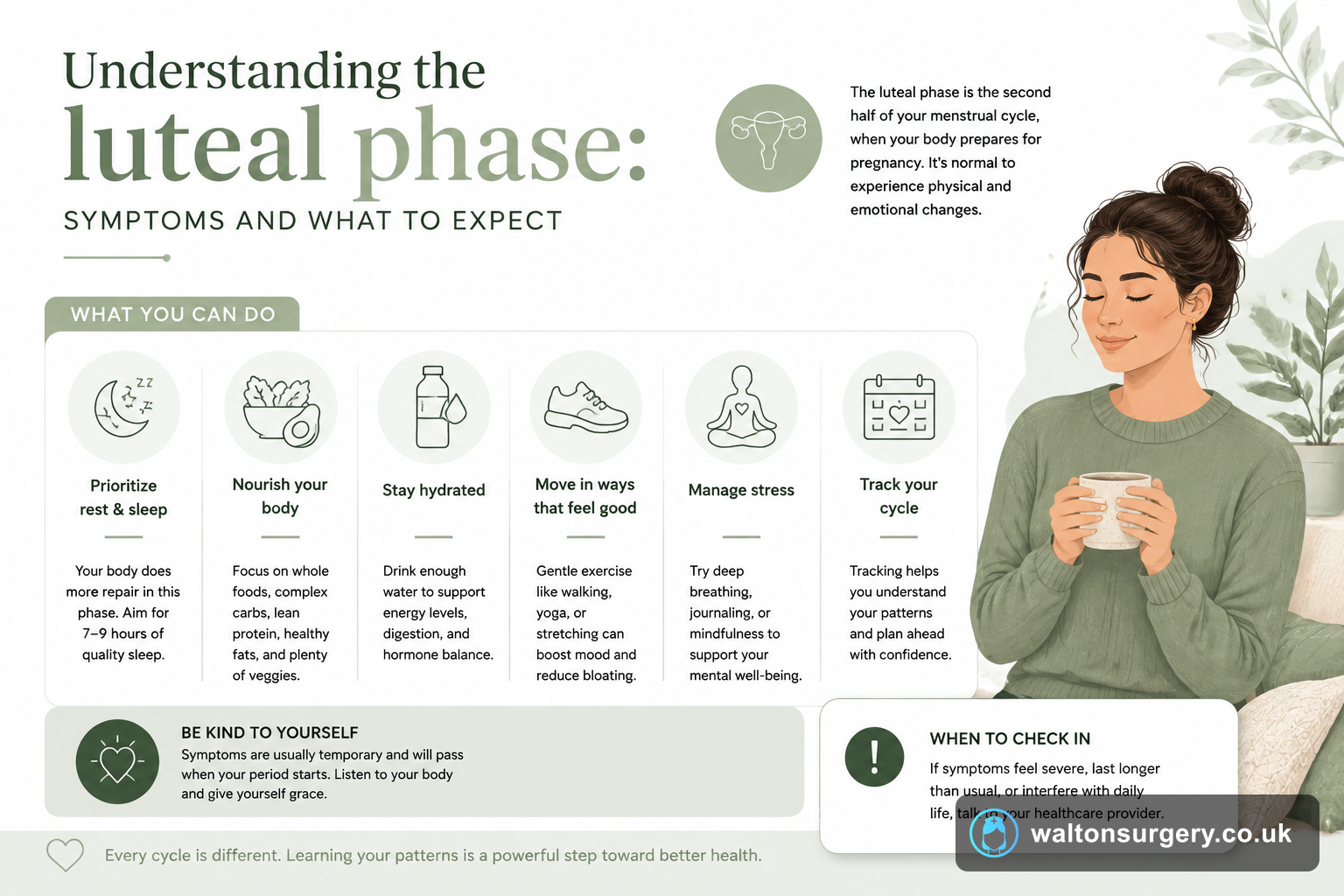
Keeping tabs on what you're feeling is the most useful thing you can do to understand your own pattern. It lets you tell the difference between random stuff and changes that actually line up with your luteal phase. You don't need anything fancy — a notebook or the notes app on your phone does the job.
Start with the basics: note down the first day of your period each month. Then, each day, give any symptoms you notice — bloating, mood, skin, sleep quality — a quick score from 1 to 5. After two or three cycles, you'll probably start seeing a pattern show up in the week or two before your period.
Knowing this stuff gives you a bit of power back. You can brace yourself for the tougher days and plan around them, whether that's easing up on work, making sure you get enough rest, or just being a bit more understanding with yourself.
When should you talk to a GP?
Most women will deal with some luteal phase symptoms. But it's worth booking an appointment with your GP if:
- Symptoms are bad enough to regularly mess with your work, relationships, or daily routine.
- You're getting extreme anxiety, depression, or mood swings that feel out of control.
- Physical things like pain or bloating are really intense.
- You reckon you might have premenstrual dysphoric disorder (PMDD), which is a severe form of PMS.
Your GP can look at what else might be going on and talk through your options. These could be lifestyle tweaks, talking therapies, or hormonal treatments — the combined contraceptive pill is one. The NHS is fairly straightforward on this: if PMS symptoms are genuinely getting in the way of your daily life, see a doctor. While focusing on your cycle, don't ignore other unexplained symptoms like sudden weight loss or persistent fatigue, as these could be signs of other conditions such as leukemia symptoms treatment uk.
Frequently Asked Questions
The Bottom Line
The luteal phase is simply a biological fact of the menstrual cycle. The symptoms it brings — from skin and breast changes to mood shifts — are a direct consequence of falling oestrogen and progesterone. Once you recognise the pattern, you can respond with self-care instead of blaming yourself. Tracking your cycle helps you get ahead of symptoms and manage them. If things are really affecting your quality of life, talk to a GP about options that actually work for you.
Remember that while hormonal shifts are normal, they shouldn't mask other neurological red flags; understanding early signs of conditions like parkinson's disease symptoms and treatment ensures you get the right support for your whole body, not just your cycle.
⭐ The Bottom Line
What this means for you
The luteal phase is simply a biological fact of the menstrual cycle. The symptoms it brings — from skin and breast changes to mood shifts — are a direct consequence of falling oestrogen and progesterone. Once you recognise the pattern, you can respond with self-care instead of blaming yourself. Tracking your cycle helps you get ahead of symptoms and manage them. If things are really affecting your quality of life, talk to a GP about options that actually work for you.
Last updated: 2026-08-12 · Written by the Walton Surgery editorial team · Medical information is for educational purposes only and does not replace advice from a qualified healthcare professional.