Understanding Parkinson's Disease: Symptoms, Diagnosis, and Support
⚡ Quick Answer
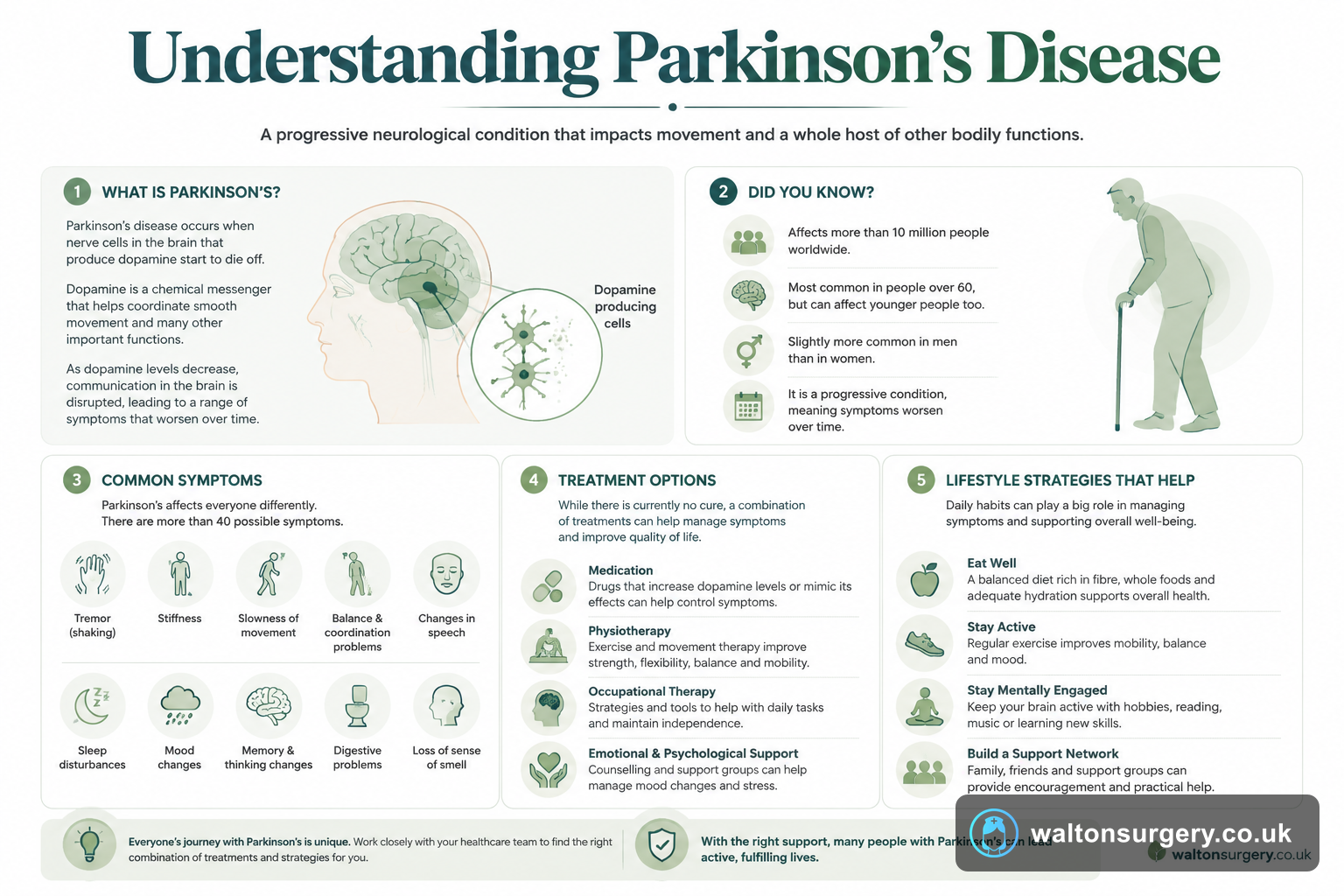
Parkinson's disease is a progressive neurological condition that impacts movement and a whole host of other bodily functions. It comes about when the nerve cells in your brain that make dopamine start to die off. With more than 40 symptoms—from the obvious tremor and stiffness to sleep disturbances and mood swings—the condition really does affect everyone in a different way. There's no cure at the moment, but treatments like medication, physiotherapy, and tweaking your lifestyle can help you manage symptoms and keep your quality of life up. Public figures have been more open about their diagnoses recently, which has really helped raise awareness.
Parkinson's disease is, according to the charity Parkinson's UK, the fastest-growing neurological condition in the entire world. What happens is that you lose nerve cells in the brain, the ones responsible for producing dopamine—a chemical messenger that's basically essential for smooth, coordinated movement. Right now it affects around 145,000 people here in the UK, and it develops slowly, often over many years, with things getting gradually worse as time goes on.
When singer-songwriter Carly Simon went public with her diagnosis in July 2026, it shone a fresh spotlight on a condition a lot of people still get wrong. So if you've caught the news and want to actually understand what Parkinson's involves—the symptoms, how doctors figure out you've got it, and what kind of support exists—this guide should give you the main facts. It's not a replacement for professional medical advice, obviously, but hopefully it'll help you make sense of it all.
What Exactly Is Parkinson's Disease?
Parkinson's disease is a progressive neurological disorder. "Progressive" meaning it gets worse over time, and "neurological" meaning it hits the brain and nervous system. The way it works is that certain nerve cells—neurons, technically—in a part of the brain known as the substantia nigra gradually break down and die. Those neurons are the ones pumping out dopamine, a neurotransmitter that helps keep your movement and coordination running smoothly.
As your dopamine levels fall, the brain starts to struggle with controlling smooth, purposeful movement. The speed at which this whole process unfolds differs wildly between people. Some folk live with mild symptoms for years and years; others find things get more difficult more quickly. Age is far and away the biggest risk factor—most diagnoses happen after 60—but younger people aren't immune. Around 1 in 20 get diagnosed before they're 50.
Recognising the Early Symptoms
Symptoms of Parkinson's tend to creep in slowly. Quite often, the early signs are subtle enough that you just brush them off. A slight tremor in one hand, a bit of stiffness, maybe just a vague feeling that something's not quite right—these are the things people tend to notice before any formal diagnosis lands.
Parkinson's UK has catalogued over 40 recognised symptoms, and the condition hits each person differently. Not everybody gets every symptom, and the order they show up in can vary loads. Some are movement-related; others mess with your mood, thinking, sleep, and even things like digestion and blood pressure. It matters to grasp the full range of symptoms because Parkinson's is so much more than just a tremor condition—it's really a whole-body disorder. Much like the range of symptoms seen in other complex health conditions, such as those explored in our guide on breast cancer diagnosis symptoms uk, understanding the full picture is key.
Motor Symptoms — What Happens to Movement?
Motor symptoms are the physical ones most people link with Parkinson's. The NHS breaks these down into four main types:
Tremor
Often the first thing anyone spots. It usually starts in one hand or arm, typically when you're resting. The tremor can look a bit like a "pill-rolling" movement between thumb and finger. Thing is, not everyone with Parkinson's actually gets tremor—roughly one in three people with the condition don't.
Rigidity
Your muscles go stiff and resist movement. Simple stuff like getting dressed, writing, or turning over in bed suddenly becomes a lot harder. This stiffness can also leave you with aches and pains in your muscles and joints.
Bradykinesia
This just means slowness of movement. Things that used to feel automatic—buttoning a shirt, cutting up food, standing up from a chair—take noticeably longer. Bradykinesia can also hit your facial expressions, leading to a reduced range of movement in the face that people sometimes call a "masked face."
Postural instability
Balance problems can crop up as the condition moves along, which raises the risk of falls. This is exactly why physiotherapy and balance-focused exercises are so often recommended.
Beyond these, people with Parkinson's can also develop a stooped posture, shuffling steps, or "freezing"—a sudden, temporary inability to move at all. These motor symptoms are manageable with treatment, especially in the earlier stages.
Non-Motor Symptoms — The Less Visible Effects
A lot of folk don't appreciate that Parkinson's causes a wide range of symptoms that have nothing to do with movement. These non-motor symptoms can, in some cases, actually be more bothersome than the physical ones—and they can turn up years before you ever get a diagnosis.
The NHS lists the following as common non-motor symptoms:
Sleep problems
Insomnia, vivid dreams, restless legs—these get reported all the time. Some people act out their dreams during sleep, a condition known as REM sleep behaviour disorder.
Mood changes
Depression and anxiety are noticeably more common in people with Parkinson's than in the general population. These aren't just a reaction to being diagnosed—they're partly driven by the same chemical shifts happening in the brain.
Cognitive changes
Memory issues, trouble concentrating, what people describe as "brain fog." In the later stages, a small proportion may go on to develop dementia.
Autonomic dysfunction
The condition can interfere with your body's automatic processes—constipation, urinary difficulties, excessive sweating, and orthostatic hypotension (a sudden drop in blood pressure when you stand up).
Pain
Musculoskeletal pain and nerve-related discomfort are things many people living with Parkinson's report.
Loss of smell
A reduced sense of smell, or anosmia, is one of the very earliest symptoms and can actually precede a diagnosis by years.
Spotting these symptoms matters because they're treatable. If you mention any new or changing symptom to your GP or Parkinson's specialist—even ones that seem completely unrelated—it can lead to much better overall management.
How Is Parkinson's Disease Diagnosed?
There isn't one single test you can take for Parkinson's. Diagnosis comes down to your medical history, a thorough physical examination, and an assessment of your symptoms. Usually your GP will refer you to a specialist—most often a neurologist, or sometimes a geriatrician who has experience with movement disorders.
What the specialist is looking for is evidence of the cardinal motor symptoms: tremor, rigidity, and slowness of movement. They might get you to perform specific movements during the consultation. In certain cases, a trial run of Parkinson's medication serves as a diagnostic tool—if your symptoms respond well to levodopa, that backs up the diagnosis.
Brain scans, such as a DaTSCAN (dopamine transporter scan), can help tell Parkinson's apart from other conditions that look similar, but they can't confirm it on their own. The diagnosis is still a clinical one, resting on the specialist's expert judgement. Getting a definitive answer can take a while, and it's not unusual for the process to involve several appointments spread out over time.
What Treatments Are Available?
There's no cure for Parkinson's at present, but a range of treatments exist that can help manage symptoms and maintain quality of life. Treatment is usually tailored to the individual—based on which symptoms are most prominent and how they're affecting your daily life.
Medication
Medication forms the main treatment for Parkinson's motor symptoms. The principal types are:
🔬 Key Facts
Main Parkinson's Medications
- → Levodopa: Often seen as the most effective Parkinson's medication, levodopa gets converted into dopamine in your brain. It's frequently combined with other drugs—such as benserazide or carbidopa—to cut side effects and boost its effectiveness. Over time, some people develop "wearing off" periods where the effects start to fade before the next dose kicks in.
- → Dopamine agonists: These mimic the effects of dopamine in the brain. They sometimes get used in younger patients or alongside levodopa. Examples are ropinirole, pramipexole, and rotigotine.
- → MAO-B inhibitors: Drugs like selegiline and rasagiline work by blocking an enzyme that breaks down dopamine, helping keep dopamine levels steadier in the brain.
- → Other medications: COMT inhibitors (entacapone, opicapone) extend levodopa's effect, anticholinergics can help with tremor, and amantadine assists with involuntary movements (dyskinesias) that sometimes develop as a side effect of long-term levodopa use.
Your neurologist or specialist nurse will work alongside you to find the right combination and dosage. Medication needs tend to shift over time, so regular reviews are really important.
Therapies and Supportive Treatments
Outside of medication, several therapies have an important part to play in managing Parkinson's:
Physiotherapy: Helps with movement, flexibility, balance, and lowering your risk of falls. A physiotherapist who knows Parkinson's can put together an exercise programme built around your specific needs.
Occupational therapy: This is about practical solutions for everyday challenges—home adaptations, assistive equipment, strategies for coping with daily tasks.
Speech and language therapy: Can help if you develop speech difficulties or swallowing problems as things progress.
Counselling and psychological support: Given that depression and anxiety rates are higher, having access to mental health support is a real and necessary part of Parkinson's care. Similar to how lifestyle factors like menopause symptoms and alcohol can interact and affect wellbeing, managing mental health is a crucial aspect of overall care.
Exercise: Staying physically active is strongly backed by research as beneficial for people with Parkinson's. Walking, swimming, dancing, boxing, yoga—all have shown real benefits for managing symptoms and keeping wellbeing up. Parkinson's UK has information on exercise programmes specifically designed for people living with the condition.
Surgical Options
For some people whose symptoms aren't well controlled by medication, surgery might be worth considering. Deep brain stimulation (DBS) involves implanting electrodes into specific areas of the brain. These electrodes deliver electrical impulses that can help regulate abnormal brain activity. DBS doesn't cure Parkinson's, but it can meaningfully reduce motor symptoms—tremor, stiffness, slowness—and it can allow you to cut back on medication. It's not right for everyone and requires careful assessment by a specialist team.
Focused ultrasound is a newer, less invasive procedure that's being used in some cases to treat tremor that doesn't respond well to medication. It uses ultrasound waves to target and destroy a small area of brain tissue responsible for the tremor. This treatment is available at selected centres across the UK and is still being evaluated in clinical trials.
Living Well with Parkinson's Disease
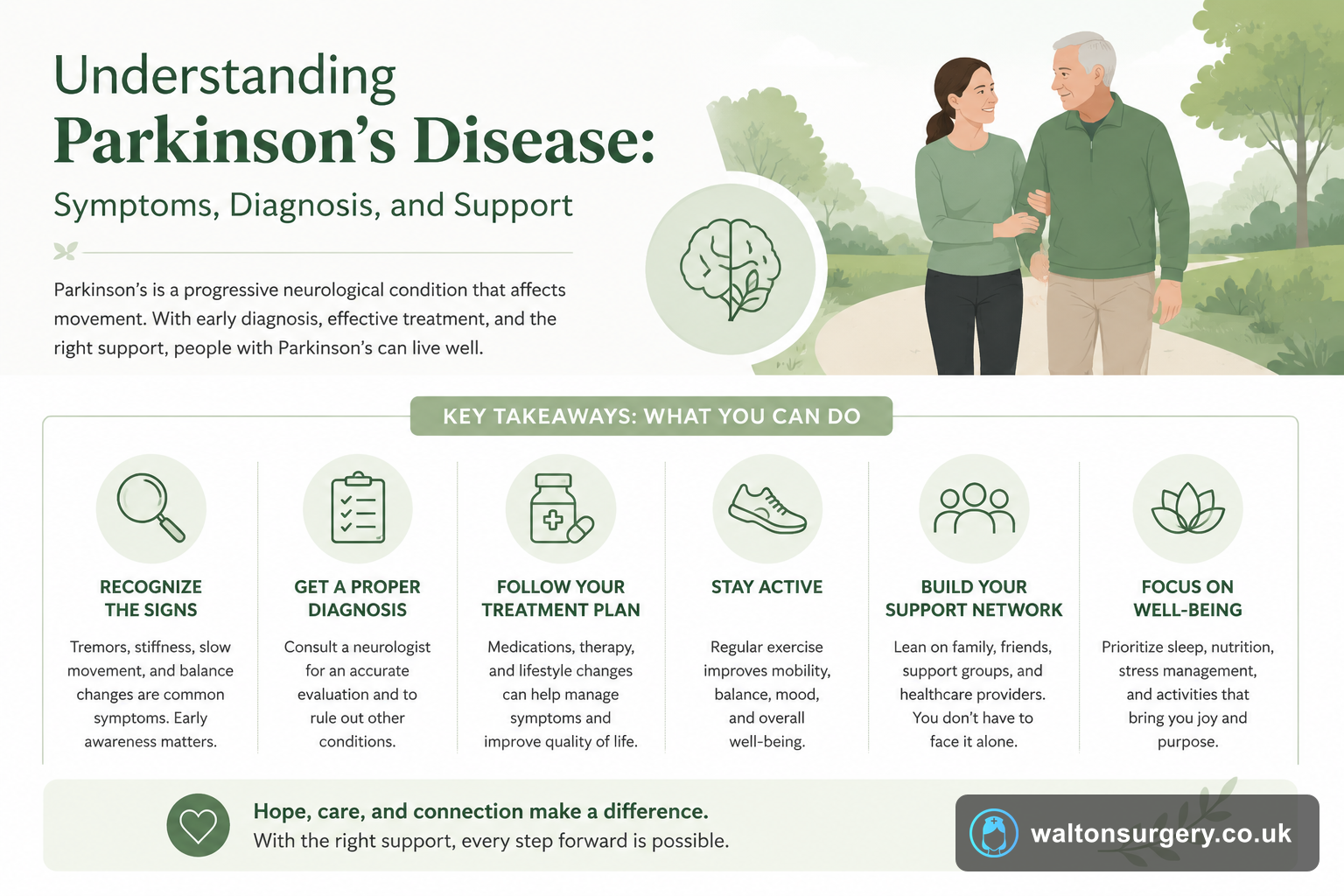
A Parkinson's diagnosis is life-changing, no doubt about it. But plenty of people go on living active, fulfilling lives for years. Managing it well means working closely with your healthcare team—your GP, neurologist, specialist nurse, and allied health professionals—and being proactive about your own health.
Practical steps that can make a real difference:
Staying physically active. Even moderate exercise has been shown to help with mobility, mood, and sleep.
Maintaining a balanced diet. Constipation is a common issue, so eating plenty of fibre and keeping hydrated matters. Some medications, particularly levodopa, work best when taken at consistent times relative to meals.
Building a support network. Parkinson's UK provides information, support groups, and a helpline (0800 800 0303) for people with Parkinson's and their families.
Planning ahead. Occupational therapy and social care assessments can help you adapt your home and routines as your needs change.
Keeping up to date with your medication schedule. Pill organisers, phone alarms, medication apps—whatever helps you stay on track.
Mental health matters too. If you're struggling with mood, anxiety, or sleep, tell your healthcare team. These symptoms are treatable and shouldn't just be dismissed as "part of the condition." Understanding symptoms across different health areas, such as those related to carol vorderman heart condition symptoms, highlights the importance of a holistic approach to health.
Frequently Asked Questions
The Bottom Line
⭐ The Bottom Line
What this means for you
Parkinson's disease is a complex condition with over 40 possible symptoms that affect people in very different ways. There's no cure, but treatments — from medication and physiotherapy to exercise and, in some cases, surgery — can make a meaningful difference to daily life. If you've been prompted to learn more after recent news stories, the most important step is understanding the facts. Talk to your GP if you have concerns, and reach out to Parkinson's UK for reliable information and support.
Last updated: 2026-07-27 · Written by the Walton Surgery editorial team · Medical information is for educational purposes only and does not replace advice from a qualified healthcare professional.