Menopause and alcohol: understanding symptoms and health risks
PART C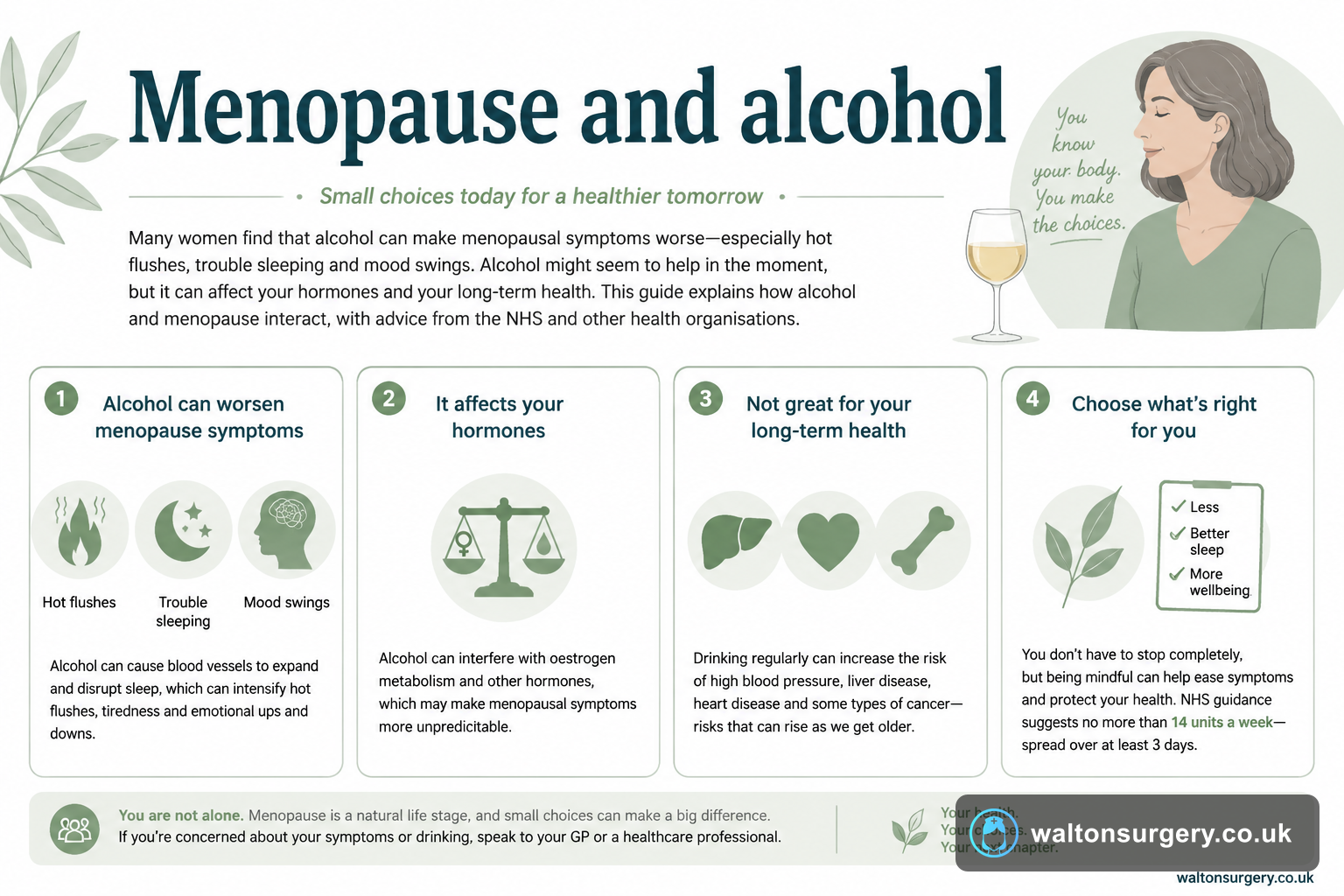
⚡ Quick Answer
Lots of women notice that drinking makes menopausal symptoms worse — think hot flushes, trouble sleeping, and mood swings. A glass of something might feel like it takes the edge off, but alcohol can actually mess with your hormonal balance and isn't great for long-term health either. This piece looks at how alcohol and menopause interact, drawing on guidance from the NHS and other health organisations, so you can figure out what makes sense for your own drinking during this stage of life.
If you're in the thick of menopause or perimenopause, you've probably thought about how the things you do day-to-day are affecting how you feel. Alcohol is one of those things that keeps coming up — in conversations with friends, in articles, in research. Most of us in the UK think of moderate drinking as fairly normal, but the rules kind of shift once your body starts going through menopause.
It's complicated, honestly. Some women say a glass of wine helps them wind down at the end of the day. Others find it sets off a cascade of uncomfortable stuff — night sweats, racing thoughts, that awful anxious feeling. According to the NHS, menopause symptoms are driven by dropping hormone levels, especially oestrogen. What's less well known is that alcohol can directly interfere with how your body handles those hormonal changes.
How alcohol affects your hormones during menopause
It helps to have a basic picture of what's going on inside. Menopause is when your periods stop because your hormone levels have fallen, typically between ages 45 and 55. The NHS describes perimenopause as the phase where you're getting symptoms but your periods haven't actually stopped yet — this bit can drag on for months, sometimes years.
Alcohol has a habit of upsetting this already-shaky hormonal balance. Your liver is responsible for breaking down hormones, and drinking puts extra strain on it. So when oestrogen and progesterone are already fluctuating wildly, alcohol can make those ups and downs feel even more dramatic. You might notice more intense hot flushes, or your mood swinging harder than usual after a couple of drinks. It's not that alcohol brings on the menopause — it doesn't — but it can turn the volume up on what you're already experiencing.
Common menopause symptoms that alcohol might worsen
The NHS lists a whole range of menopause symptoms, both physical and psychological. Hot flushes. Difficulty sleeping. Low mood or anxiety. Brain fog and trouble concentrating. You might also get vaginal dryness, a drop in sex drive, or stiff and achy joints.
A fair few of these can be directly worsened by alcohol. Take sleep, for example — yes, a drink might knock you out faster initially, but it plays havoc with your sleep quality later on. You end up waking more in the night, feeling groggy the next morning. If menopause has already given you insomnia, that nightcap is probably doing more harm than good. And then there's the mood side of things. Alcohol is a depressant at the end of the day, so if you're already prone to low mood or anxiety during perimenopause, it can make those feelings land harder than they otherwise would.
Hot flushes and night sweats: is there a direct link?
One thing women talk about a lot is how drinking seems to bring on hot flushes and night sweats. The exact science behind it is a bit tangled, but the thinking is that alcohol affects the hypothalamus — the bit of your brain that regulates temperature. We already know hot drinks and spicy food can trigger flushes for some people; alcohol works in a similar way by making your blood vessels expand.
If you're someone who gets these symptoms regularly, keeping a diary can actually be really useful. Jot down what you drank, how much, and whether a hot flush or sweat followed. Your own data ends up being more helpful than generic advice because triggers vary so much from person to person. You might discover that red wine is a bigger problem than gin, or that it's only an issue on certain days of your cycle.
Sleep disruption and anxiety
Sleep problems are, according to the NHS, one of the core symptoms of menopause. And alcohol creates a bit of a trap here. It can help you nod off quicker, sure, but it cuts into your REM sleep — the restorative kind. So you're more likely to surface in the middle of the night, and the next day you feel washed out and snappy.
This feeds into anxiety too. When you're sleeping badly, your capacity to handle stress drops. Alcohol also ramps up cortisol production, which is your main stress hormone. For a woman already dealing with the mood rollercoaster of perimenopause, that combination can feel pretty overwhelming. It's not a willpower thing — it's genuinely biological. Cutting back to a few alcohol-free days a week gives your nervous system room to recover.
What the guidelines say about alcohol and long-term health
The UK Chief Medical Officers' guidance is clear: to keep health risks from alcohol as low as possible, don't regularly drink more than 14 units a week. They also recommend spreading that intake across three or more days and having several drink-free days each week. For reference, a 175ml glass of wine at 12% ABV comes to roughly 2.1 units.
Once you're going through menopause and beyond, your body composition shifts. There's often more body fat and less water in the body, which means alcohol can hit you harder and faster. The NHS points out that sustained heavy drinking is connected to some serious conditions — liver disease, heart problems, and various cancers. For women specifically, the risk of breast cancer goes up in line with how much you drink, and our breast cancer symptoms NHS guide covers what to look out for. It's also worth noting that these same lifestyle factors interact with cardiovascular risk, which is why awareness of conditions highlighted in our article on carol vorderman heart condition symptoms matters for women navigating midlife health changes. We cover this in more depth in cancer signs symptoms nhs.
🔬 Key Facts
UK Alcohol Guidelines & Long-Term Risk
- → Maximum 14 units per week recommended by UK Chief Medical Officers
- → A 175ml glass of wine at 12% ABV equals approximately 2.1 units
- → Body composition shifts after menopause — more body fat and less water mean alcohol hits harder
- → Breast cancer risk increases in line with how much you drink
Practical steps: managing your intake
If you're worried that alcohol is making your menopause symptoms worse, getting a handle on how much you drink is a sensible place to start. You don't necessarily have to stop altogether — it's more about being intentional. Try swapping every other alcoholic drink for water or something soft. Go for a small wine instead of a large one, or a single measure of spirit rather than a double.
Think about why you're pouring that drink in the first place. Is it just habit? Stress relief after a rubbish day? Social pressure? Finding other ways to unwind can make a real difference. The NHS recommends regular physical activity for low mood and sleep issues — things like yoga, swimming, or just getting out for a brisk walk. These support your general wellbeing without the side effects that come with alcohol.
Hormone Replacement Therapy (HRT) and alcohol
A lot of women use Hormone Replacement Therapy — HRT — to get their menopause symptoms under control. The NHS has detailed information on how it works: essentially, it tops up the hormones your body is producing less of. If you're on HRT or thinking about starting it, it makes sense to have a conversation with your doctor or pharmacist about alcohol.
There isn't a blanket ban on drinking while you're taking HRT. But since both alcohol and HRT are processed through your liver, your doctor can give advice tailored to your specific prescription and overall health. Being honest about how much you drink means they can properly weigh up the benefits of HRT against any risks that alcohol might add into the picture.
Frequently Asked Questions
The Bottom Line
⭐ The Bottom Line
What this means for you
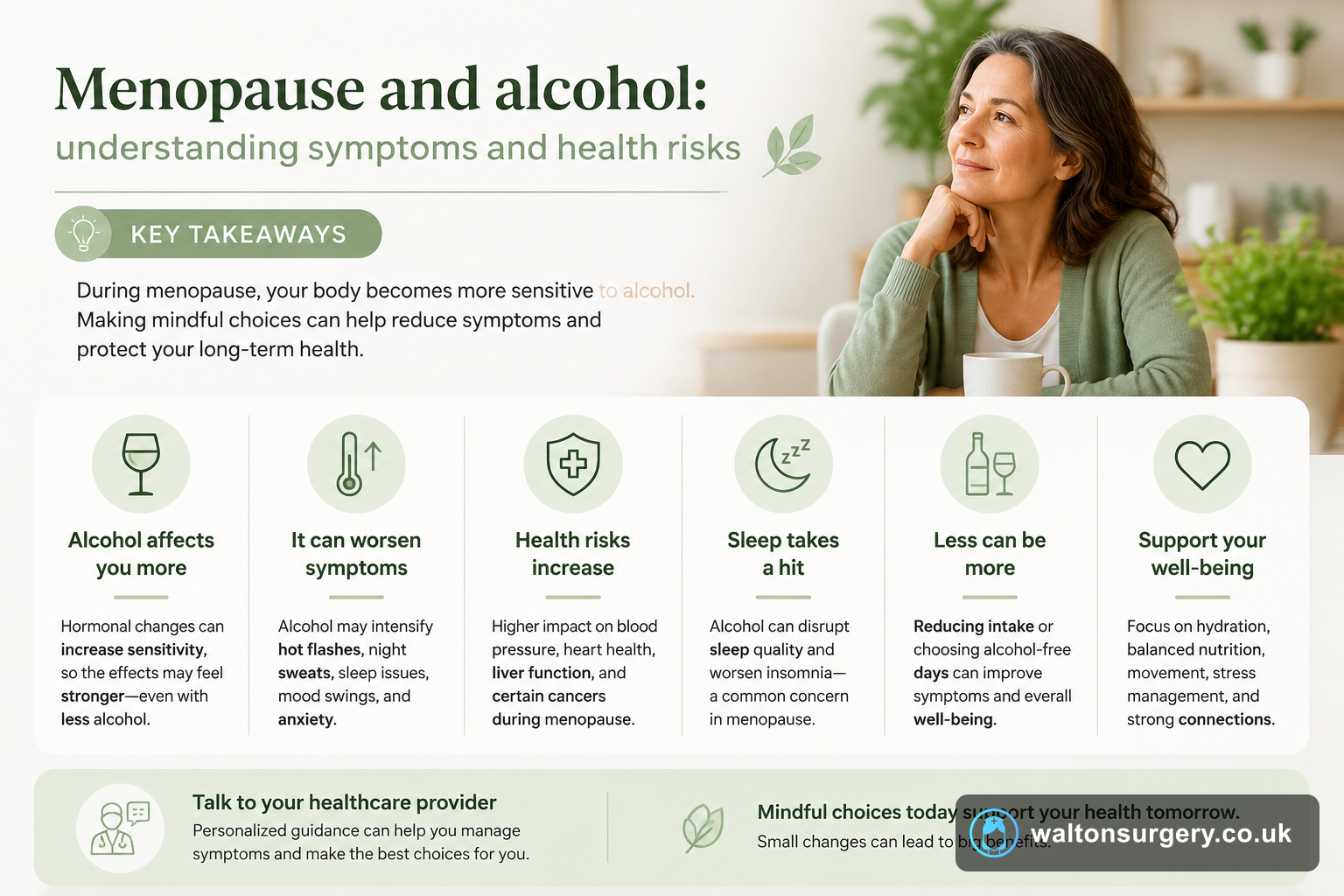
Every woman's experience of menopause is different, and alcohol's role in that experience is equally personal. It won't bring on your symptoms or cure them, but it can clearly make things like hot flushes, poor sleep, and low mood worse. The most practical thing you can do is pay attention to how your own body responds, stay within that 14-unit weekly limit, and put effort into other habits that support your wellbeing. And if symptoms are getting you down, your GP really is the best person to talk to — they can give advice that's specific to you.
Last updated: 2026-07-24 · Written by the Walton Surgery editorial team · Medical information is for educational purposes only and does not replace advice from a qualified healthcare professional.