Breast Cancer: Early Signs and Symptoms to Watch For
PART C — HTML Body
⚡ Quick Answer
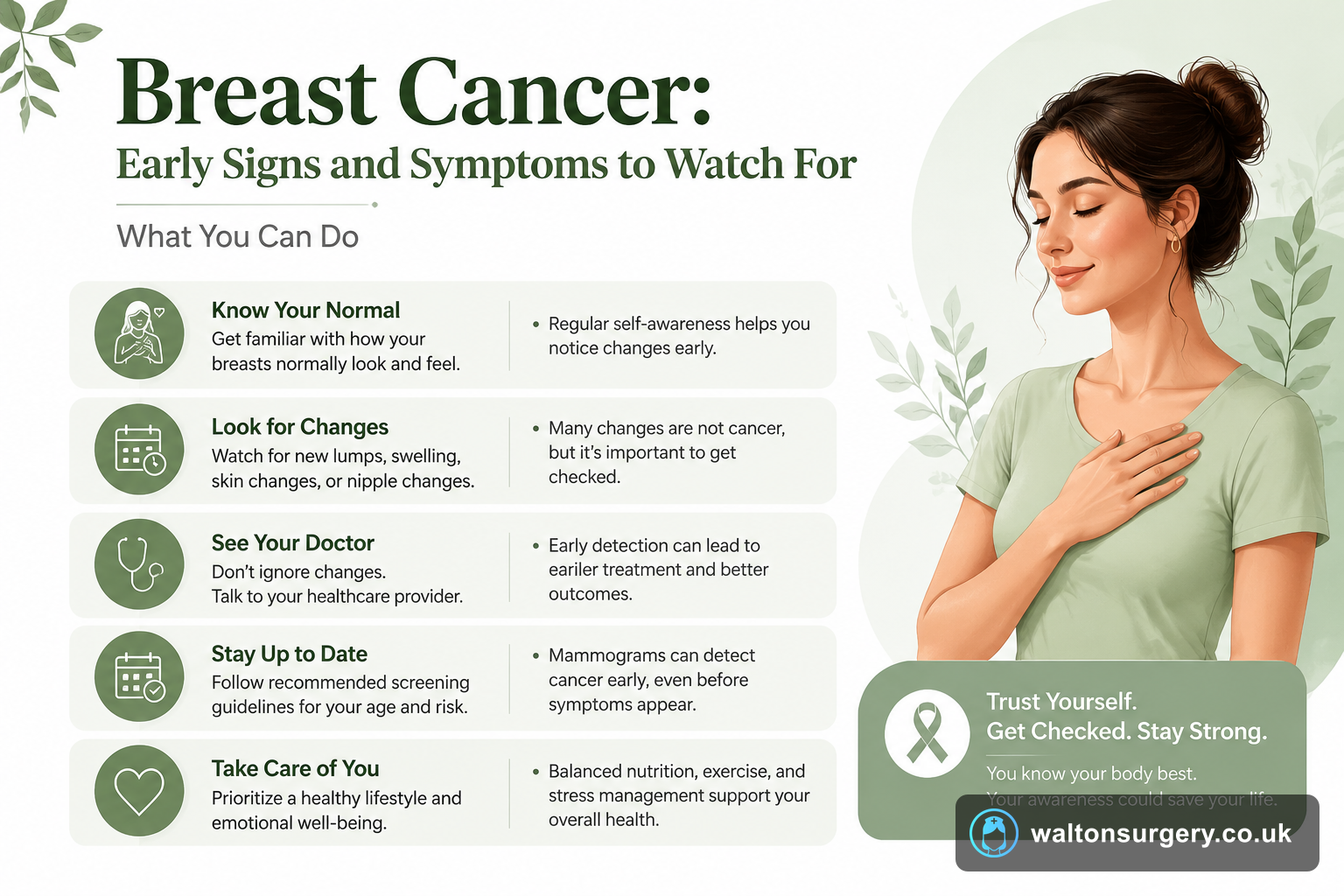
The most common sign of breast cancer is a new lump or thickening, but other changes matter too. Following recent news such as Amanda Peet sharing her diagnosis, many are checking their own health. You should know your normal, and see a GP promptly if you notice persistent changes like skin dimpling, nipple discharge, or a change in size or shape. Most changes are not cancer, but it’s always best to get checked.
It’s a lump, usually. A new thickening felt in the breast or the armpit, that’s the thing most people recognise as a breast cancer sign. But there are other reasons to pick up the phone to your GP — changes to the skin, alterations in how the nipple looks, or if one breast seems to have changed its shape or size. Following recent public disclosures, like Amanda Peet opening up about her breast cancer diagnosis in Swansea, a lot of people have been paying closer attention to what’s going on with their own bodies.
Most breast changes, you should know, are not caused by cancer. The NHS is pretty clear though, saying you should get in touch with your GP surgery if you notice something that’s new, that isn’t going away, or that you just can’t explain. For a comprehensive overview, see our breast cancer symptoms nhs guide. Just to be clear, this is for information purposes only and it isn’t personalised medical advice.
What are the main signs to look for?
There are a few different changes the NHS tells people to watch for. You might find a lump or just a general thickened area in the breast, often in the upper outer quadrant, but not always. Sometimes a lump doesn’t even hurt. Or maybe one breast has changed in its size or shape, which can happen quite suddenly or be a more gradual thing. Skin that dimples or puckers, looking a bit like an orange peel, is another sign worth knowing. Also worth a call to the GP: a rash that’s appeared on or around the nipple, a nipple that’s pulled in when it wasn’t before, or any discharge you haven’t had in the past.
The armpit area is important too. A new lump or swelling there can actually be the very first sign, because breast tissue extends up towards that area. Now, breast pain is really common and it’s usually down to benign things, but if you have a persistent, localised pain that doesn’t just come and go with your menstrual cycle, it’s worth getting it checked. The rule of thumb is, if a change is new, if it’s persistent, or if it’s getting worse, book that GP appointment. You don’t need to be sure it’s cancer; that’s what the doctor is there to figure out.
🔬 Key Facts
Recognising the Signs
- → Lumps often appear in the upper outer quadrant but can be anywhere.
- → Skin changes include dimpling, puckering, or an orange peel texture.
- → Nipple changes such as inversion, rashes, or new discharge are key indicators.
- → Armpit swelling can be a primary sign due to the extension of breast tissue.
What should you do if you notice a change?
First port of call: your GP surgery. The reception staff might ask a bit about your symptoms to help them figure out how soon you need to be seen. Usually a GP will have a look and feel, and may then refer you on to a one-stop breast clinic for more tests. At the clinic, it’s likely you’ll have a mammogram — that’s a breast X-ray — an ultrasound, and sometimes a biopsy, where they take a small piece of tissue to test. These procedures are all about working out if a lump is benign or if it’s something that needs treatment. Celebrities like Jessie J have highlighted the importance of early detection and treatment; read more about her jessie j cancer free breast cancer mastectomy update 2026.
Don’t just wait and hope a change goes away. The NHS is pretty clear that early assessment is important. Even if you’ve had a recent mammogram or ultrasound, you should still get checked if you notice something new. Imaging can miss things, and a new symptom needs a fresh look. If you’ve got a GP appointment, you could ask if it’s a good idea to bring someone with you for support. If you’re not sure if your symptom is urgent, just call your GP surgery for advice; they’re the ones who can guide you.
Can men get breast cancer?
They can, yes. It’s a lot less common in men, but it’s not impossible. Men do have a small amount of breast tissue right behind the nipple, and cancer can develop there. So if a man notices a lump behind the nipple, a nipple that’s retracted, any discharge, or changes in the skin, it should be assessed. The NHS is clear that men ought to see a GP if they notice a change in their breast. Just like with women, most lumps in men turn out to be benign, but you still need a professional to check it.
Does breast pain mean cancer?
Mostly, no. Breast pain, or mastalgia as it’s known, is really common and is often linked to hormonal shifts, a bra that doesn’t fit right, a muscle strain, or benign things like cysts. That said, pain by itself doesn’t completely rule out cancer out. If you’ve got a persistent area of pain that just won’t settle, particularly if it’s alongside a lump, skin changes, or nipple changes, you should go and see your GP. The NHS advice is to get any new, persistent symptom checked out.
How to check your breasts at home
Getting to know your own breasts by checking them regularly is how you learn what’s normal for you. The NHS suggests a method of looking and feeling. Stand in front of a mirror with your arms down by your sides, then raise them up, and just look for changes in the shape, the skin, or the nipple. Then use the flat of your fingers to feel all over the breast and up into the armpit. You can do this in the shower, lying down, or while you’re getting dressed; the idea is to make sure you cover the whole area each time.
There’s no single “correct” way to do this. Some people like to use circular motions, others prefer to check in vertical strips or a grid pattern. What really matters is that you do it consistently and that you cover the whole breast, including that upper outer area and the armpit. If you spot something new, don’t just wait for your next scheduled check. Contact your GP. Many women find their breasts feel different at different points in their cycle; if you’re not sure if a change is just hormonal, you could track it for one full cycle, but if it’s still there, seek advice sooner rather than later.
Breast screening in the UK
The NHS Breast Screening Programme sends out invitations for mammograms every three years to women and some trans men who are registered with a GP, between the ages of 50 and 71. The whole point of screening is to find cancers early, when they’re too small to actually feel. Getting an abnormal screening result doesn’t automatically mean you have cancer; it just means you need further tests to be sure. If you’re over 71 and still want to be screened, you can arrange it by getting in touch with your local breast screening unit.
Screening is no substitute for being breast-aware though. Between your appointments, you should still report any new symptoms to your GP. Some people who are at higher risk, maybe because of a strong family history of breast cancer, might be offered earlier or more frequent checks through specialist services. If you reckon you could be at higher risk, have a chat with your GP, who can refer you to a family history clinic if it’s appropriate. The NHS website is a good place to find clear information on how screening works and what to do with your invitation.
What happens at the breast clinic?
Your appointment might involve a clinical examination, some imaging, and if it’s needed, a biopsy. A mammogram is an X-ray of the breast; an ultrasound uses sound waves to create images; and a biopsy is where they take a small sample of tissue for a pathologist to look at under a microscope. You might get some results on the day, but biopsy results usually take a bit longer. The staff will explain what happens next and how they’ll be in touch. High-profile figures like Jane Fallon breast cancer diagnosis often bring attention to these clinical pathways.
If you’re called back after screening, try not to immediately assume the worst. A lot of people who are recalled for assessment don’t actually have cancer. The NHS points out that routine screening can sometimes pick up harmless things that just need a closer look. If you’re feeling anxious, tell the team; they’re used to helping people through the process and can explain what each test involves. If you need to take time off work, you can ask the clinic for an appointment letter to show your employer.
What causes breast cancer, and can you lower your risk?
The exact cause isn’t fully understood, but we do know some factors that raise the risk. Getting older is the biggest one; most breast cancers are diagnosed in people over 50. A family history of breast cancer can bump up your risk, especially if close relatives were diagnosed when they were younger. Certain inherited gene changes, like in BRCA1 or BRCA2, raise risk quite a lot. Exposure to oestrogen over a long time, for example through early periods, late menopause, or some types of HRT, can also play a part.
You can’t change some of these risks, but you can influence others. Keeping to a healthy weight, staying physically active, drinking less alcohol, and not smoking all support your general health and are linked to a lower breast cancer risk. Breastfeeding might reduce risk a little. If you’re worried about your own personal risk, have a word with your GP. They can talk through whether a referral to a family history clinic or genetic testing would be right for you. If you’re on HRT, it’s a good idea to discuss the benefits and risks with your doctor; for most people, the risk stays small, but it’s a conversation worth having.
Frequently Asked Questions
⭐ The Bottom Line
What this means for you
Breast cancer can show up as a new lump, a change in shape or skin, or a nipple change. If you notice something new, persistent, or that you can’t explain, get in touch with your GP surgery. Most breast changes are not cancer, but it’s important to get them assessed quickly. The NHS advises being breast-aware, going for screening when you’re invited, and seeking help fast if you’re worried. This article is for information only and doesn’t replace advice from a qualified healthcare professional.
Last updated: 2026-07-26 · Written by the Walton Surgery editorial team · Medical information is for educational purposes only and does not replace advice from a qualified healthcare professional.