Leukaemia: What It Is, Symptoms, and Treatment Options in the UK
--- PART C — HTML Body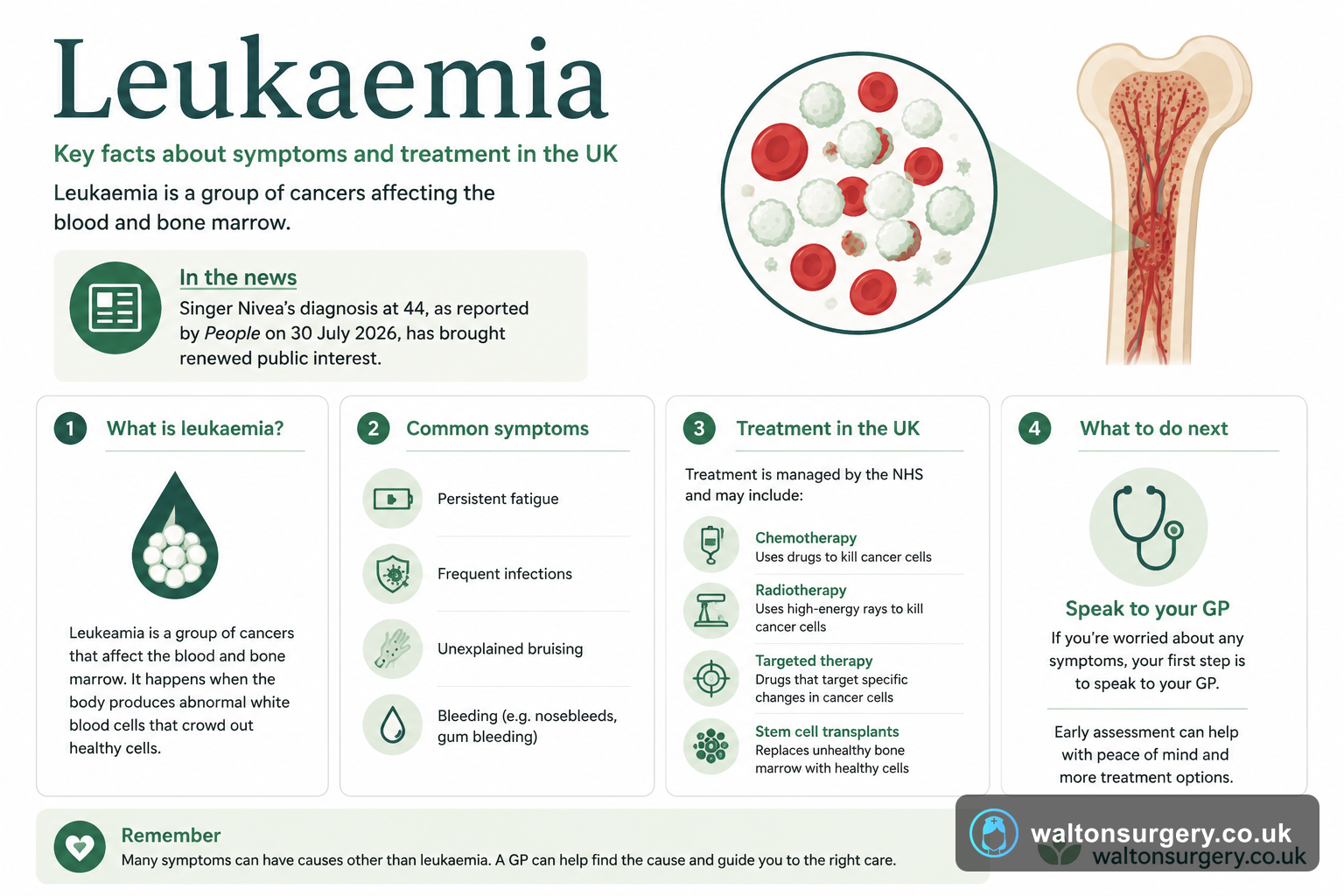
⚡ Quick Answer
Leukaemia is a group of cancers affecting the blood and bone marrow. News of singer Nivea's diagnosis at 44, as reported by People on 30 July 2026, has brought renewed public interest. Common symptoms include persistent fatigue, frequent infections, unexplained bruising, and bleeding. Treatment in the UK is managed by the NHS and can involve chemotherapy, radiotherapy, targeted therapy, and stem cell transplants. If you're worried about symptoms, your first step is to speak to your GP. There's more on this in our breast cancer diagnosis symptoms uk explainer. If you want the fuller picture, our guide to menopause symptoms and alcohol goes further.
You've probably heard by now that the singer Nivea has been diagnosed with leukaemia at 44. People magazine reported it on 30 July 2026, and it's no surprise that loads of people have started looking the condition up, wanting to understand what it actually means. Leukaemia isn't just one disease — it's an umbrella term for several different cancers that get going in the blood-forming tissues of your body, mainly the bone marrow.
Getting to grips with the basics of leukaemia, knowing what symptoms to look out for, and understanding how it's treated through the NHS can help make sense of headlines like these. What follows is a guide to what the condition involves, who tends to get it, and the medical routes available if you or someone close to you receives a diagnosis. This is informational only, mind, and isn't a replacement for proper medical advice from your own GP.
What Exactly Is Leukaemia?
Leukaemia is a cancer that targets your blood cells. It begins in the bone marrow, that spongy stuff inside your bones where all your blood cells are made. In a healthy person, the bone marrow churns out blood cells in a pretty orderly fashion. But with leukaemia, that whole process goes haywire. Too many abnormal white blood cells get produced, and they don't actually work the way they should.
Because these dodgy cells pile up, they start pushing out the healthy ones. What that means in practice is your body struggles to fight off infections, doesn't carry oxygen round properly, and has a harder time controlling bleeding. Leukaemia, being a cancer of the blood cells, can spread right through your body via the bloodstream — there's no getting away from that.
There are several main types, grouped by how fast they develop and which kind of white blood cell is affected. Acute leukaemias move very quickly. Chronic ones, on the other hand, build up more slowly, sometimes over months or even years. The two main cell types involved are myeloid cells and lymphoid cells. Put those together and you get the four most common categories: Acute Myeloid Leukaemia (AML), Acute Lymphoblastic Leukaemia (ALL), Chronic Myeloid Leukaemia (CML), and Chronic Lymphocytic Leukaemia (CLL). Each one behaves in its own way and needs its own specific treatment plan.
Who Gets Leukaemia and What Are the Risk Factors?
Anybody can get leukaemia — children, adults, anyone. The risk does shift depending on the type, though. Acute Lymphoblastic Leukaemia (ALL) is actually the most common cancer in children, although adults can get it too. Chronic Lymphocytic Leukaemia (CLL) is the type most often seen in adults in the UK, and it's pretty rare in anyone under 40.
For most leukaemias, nobody can point to a single clear cause. That said, research has turned up several risk factors that can bump up a person's chances of developing the disease. A risk factor just means something that increases your likelihood — it doesn't mean you're definitely going to get it.
Known risk factors include:
- Previous cancer treatment: Chemotherapy or radiotherapy for other cancers can increase your risk of developing leukaemia later in life.
- Exposure to high levels of radiation: This includes radiation from nuclear accidents or certain types of radiotherapy.
- Certain chemical exposures: Long-term exposure to high levels of benzene, an industrial chemical, is linked to some types of leukaemia.
- Some viral infections: The Human T-cell Lymphoma Virus-1 (HTLV-1) is linked to a rare type of adult leukaemia.
- Genetic conditions: People with certain genetic disorders, such as Down syndrome, have a higher risk.
- Family history: Having a close relative with leukaemia slightly increases your risk, but it's important to know that most people with leukaemia have no family history of the disease.
Honestly, for a lot of people there's no obvious reason at all. It tends to be a mix of things, some of which science still hasn't pinned down. Much like research into parkinson's disease symptoms and treatment, the causes of leukaemia are often multifactorial and still being investigated.
Recognising the Symptoms of Leukaemia
The tricky thing with leukaemia symptoms is they can be really vague, and they look a lot like symptoms of plenty of other, less serious stuff. That's what makes spotting it so difficult. The symptoms you actually get often depend on which type of leukaemia it is and how far along it's got.
With chronic leukaemias, you might feel completely fine in the early stages. The condition sometimes only comes to light because of a routine blood test done for an entirely different reason. Acute leukaemias tend to bring symptoms on faster, and they can be more severe.
Signs and symptoms worth knowing about:
- Persistent and unexplained fatigue: Feeling unusually tired or weak that doesn't improve with rest.
- Frequent infections: You may find you're catching colds, chest infections, or other illnesses more often than usual, and they may be harder to shake off.
- Unexplained bruising or bleeding: You might bruise very easily, get frequent nosebleeds, or have bleeding gums.
- Unexplained weight loss: Losing weight without trying.
- Swollen lymph nodes: You may notice painless lumps in your neck, armpits, or groin.
- Bone or joint pain: A dull ache or pain in your bones or joints.
- Night sweats: Drenching sweats, particularly at night.
- Feeling full quickly: An enlarged spleen can cause discomfort in your left side and make you feel full after eating only a small amount.
If any of these are going on for you, especially if they're hanging around and you can't think why, getting to your GP is the thing to do. Most of the time, these symptoms will be down to something else entirely. But it's always better to get them checked.
How Is Leukaemia Diagnosed in the UK?
Should your GP suspect leukaemia from your symptoms and a physical exam, they'll refer you to a specialist. That'll usually be a consultant haematologist — a doctor who specialises in blood disorders — at your local NHS hospital.
The diagnostic process kicks off with blood tests. A full blood count (FBC) checks the levels of different blood cells in your blood. If things come back looking abnormal, more tests will be needed to confirm what's going on and to work out exactly which type of leukaemia it is.
The main test for confirming a diagnosis is a bone marrow biopsy. A doctor or nurse takes a small sample of bone marrow, usually from the back of your hip bone, using a needle. You'll have a local anaesthetic for it. The sample then goes off to a lab to be looked at under a microscope.
Other tests you might need, depending on what they find initially:
- Cytogenetic testing: Examining the chromosomes in your blood cells to look for specific genetic changes that can help identify the type of leukaemia.
- Lumbar puncture: If doctors need to check whether leukaemia cells have spread to your brain and spinal cord fluid, they may take a sample of this fluid from your lower back.
The NHS operates clear pathways for diagnosing suspected cancer. The whole point is to get these tests done as quickly as they can so treatment can start without any unnecessary hold-ups.
Understanding Leukaemia Treatment Options in the UK
How leukaemia gets treated depends on quite a few things: the type, how far it's progressed, your age, and your general health. A team of specialists, known as a multidisciplinary team (MDT), will decide on your treatment plan. This team usually includes a haematologist, a specialist nurse, and other healthcare professionals.
Below are the main treatments available through the NHS for leukaemia. You might have one of these, or you might end up having a combination.
🔬 Key Facts
NHS Treatment Pathways for Leukaemia
- → Chemotherapy: The most common treatment, using anti-cancer drugs given intravenously, as tablets, or injections, often in cycles.
- → Targeted Therapy & Immunotherapy: Newer approaches that target specific features of cancer cells or help your immune system attack them.
- → Stem Cell Transplant: Replaces damaged bone marrow with healthy stem cells from a donor or your own body, used in high-risk cases.
- → Watch and Wait: For slow-growing types with no symptoms, regular monitoring without immediate treatment may be recommended.
Chemotherapy remains the most common treatment for leukaemia. It uses anti-cancer drugs to destroy the leukaemia cells. Those drugs can be given in different ways — straight into a vein (intravenously), as tablets, or as injections. Treatment often happens in cycles, with periods of treatment followed by periods of rest so your body can recover.
Targeted therapy and immunotherapy are newer approaches that work differently from traditional chemotherapy. Targeted therapy drugs home in on specific features of cancer cells to stop them growing. Immunotherapy helps your own immune system recognise and attack cancer cells. These are used for certain types of leukaemia and might be given alongside chemotherapy or instead of it.
Radiotherapy uses high-energy rays to destroy cancer cells. It isn't the go-to treatment for most leukaemias, but it can be used in particular situations — before a stem cell transplant, for instance, or to treat leukaemia that has spread to the brain.
A stem cell transplant, sometimes called a bone marrow transplant, could be an option for some people with certain types of leukaemia, especially if other treatments haven't done the job or there's a high risk of the leukaemia coming back. The aim is to replace your damaged bone marrow with healthy stem cells. Those stem cells might come from a donor (an allogeneic transplant) or, in some cases, from your own body after treatment (an autologous transplant). This is a pretty intensive treatment that means a long stay in hospital.
Some slow-growing leukaemias — certain types of Chronic Lymphocytic Leukaemia (CLL), for example — might not need treating straight away. If you've got no symptoms and the disease isn't going anywhere fast, your doctor may suggest a "watch and wait" approach. That means regular check-ups and blood tests to keep an eye on things. It's not about ignoring the disease. It's about holding off on treatment and its side effects until they're actually needed.
Living With Leukaemia: Support and Management
A leukaemia diagnosis hits hard, and not just physically — the emotional and practical toll is real. The NHS and various charities are there to help you manage the condition and everything that comes with it.
Your specialist nurse, sometimes called a Clinical Nurse Specialist (CNS), is a main point of contact. They can provide information, support, and practical advice throughout your diagnosis and treatment. They can also help you understand your treatment plan and manage side effects.
Side effects of treatment vary depending on the type of treatment you have. Chemotherapy, for example, commonly causes side effects like fatigue, nausea, hair loss, and an increased risk of infection. Your medical team will give you medication and advice to help manage these. It's important to report any side effects you experience so they can be treated.
Emotional support is also very important. A cancer diagnosis can cause anxiety, depression, and stress. NHS talking therapies services, counsellors, and psychologists are available to help. Charities like Macmillan Cancer Support, Cancer Research UK, and specific leukaemia charities like Leukaemia Care offer helplines, online communities, and support services for patients and their families.
Financial and practical support may also be needed. You might be eligible for benefits like Employment and Support Allowance (ESA) or Personal Independence Payment (PIP). Your hospital's social work team or a Macmillan benefits adviser can help you understand what you're entitled to.
Frequently Asked Questions
⭐ The Bottom Line
What this means for you
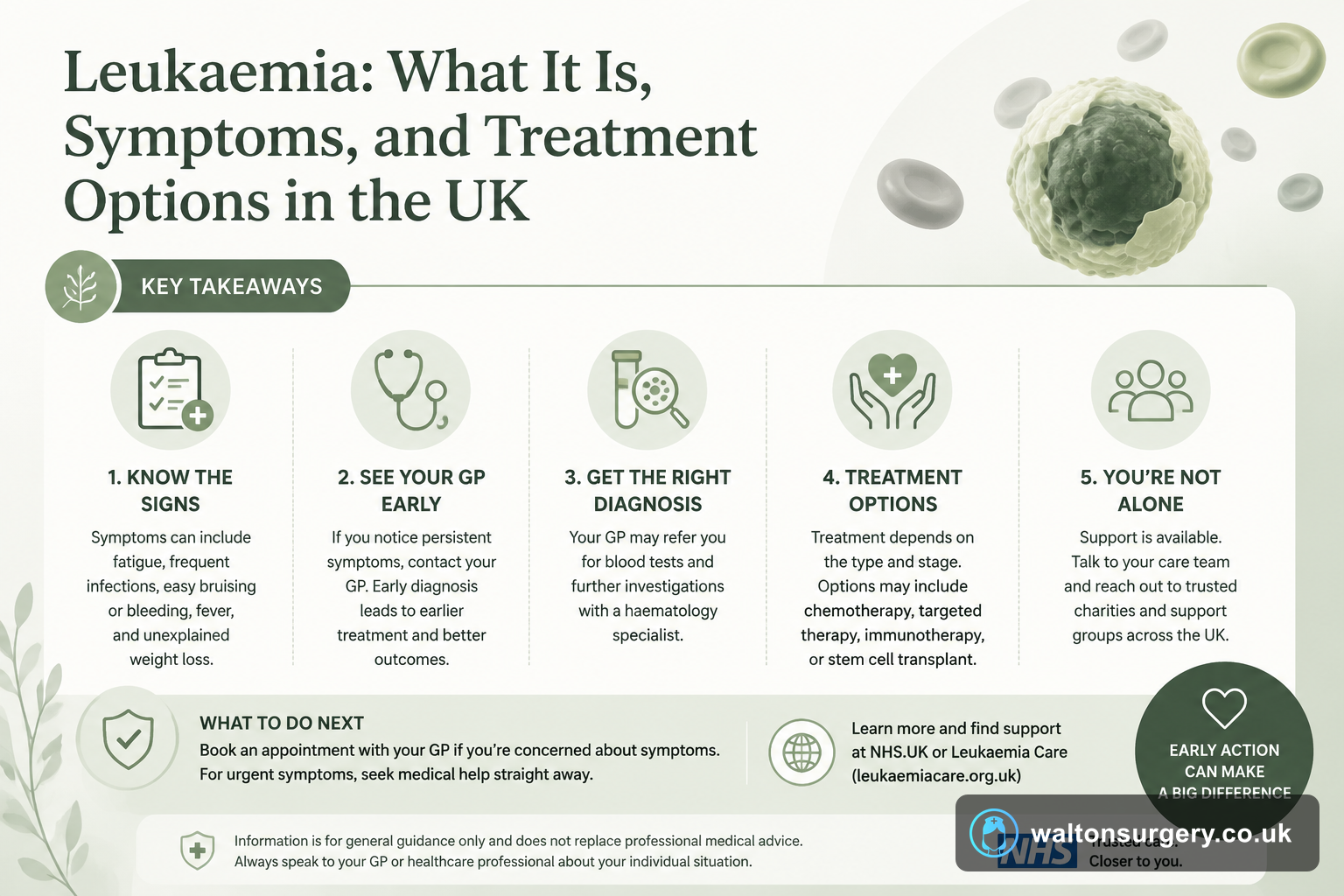
Leukaemia is a serious condition, there's no sugar-coating that. But treatment has come a long way, and many people now live well with the disease or are cured of it. If symptoms are worrying you, the single most important thing is to go and see your GP. The NHS has clear and effective pathways for diagnosis and treatment, backed up by specialist teams and charities. When public figures like Nivea share their diagnoses, it does help raise awareness. Just make sure you're relying on your doctor and trusted sources like the NHS for the medical information that actually matters.
Last updated: 2026-07-30 · Written by the Walton Surgery editorial team · Medical information is for educational purposes only and does not replace advice from a qualified healthcare professional.