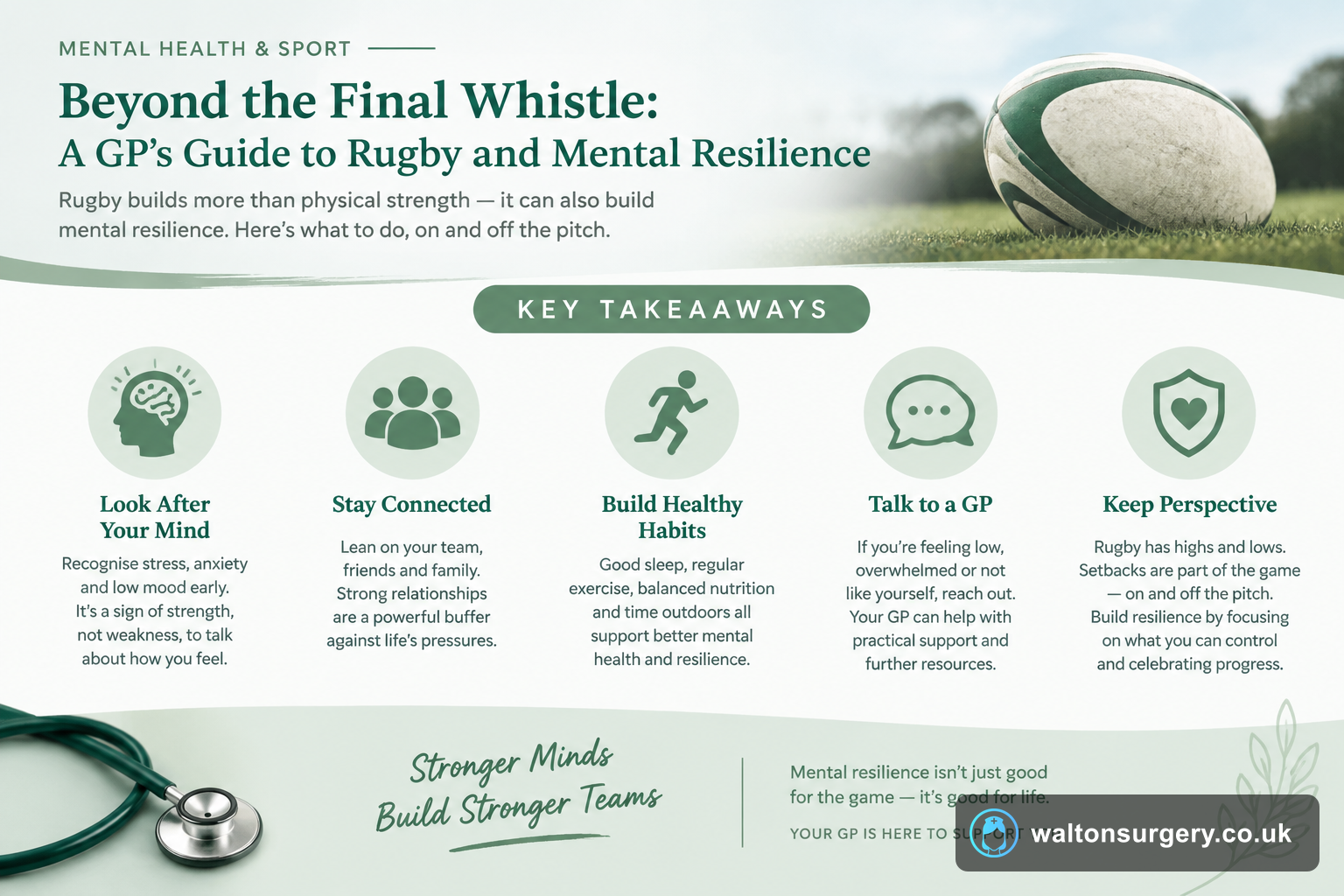
Beyond the Final Whistle: A GP's Guide to Rugby and Mental Resilience
PART C — HTML Body Components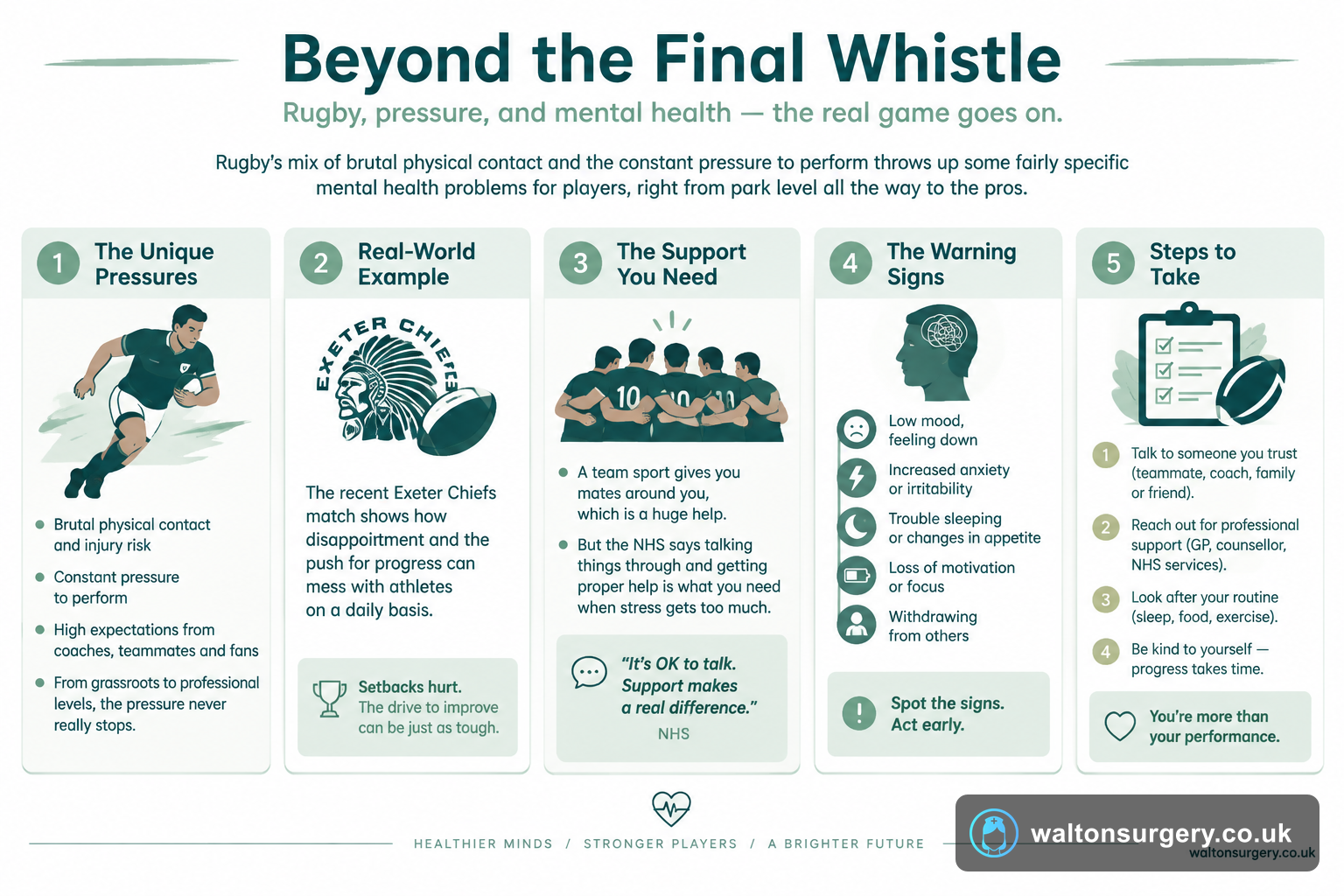
⚡ Quick Answer
Rugby's mix of brutal physical contact and the constant pressure to perform throws up some fairly specific mental health problems for players, right from park level all the way to the pros. The recent Exeter Chiefs match shows how disappointment and the push for progress mess with athletes on a daily basis. A team sport does give you mates around you, which is a help, but the NHS says talking things through and getting proper help is what you need when stress gets too much. This guide sets out the pressures you'll face, the warning signs, and some actual steps you can take to look after your head while still playing the game.
Rugby isn't just about being physically tough; it asks a lot more of you than that. The 2026-10-06 Exeter Chiefs match, where the team called it a 'massive step forward' even after losing to Bath, shows exactly the kind of mental whiplash players deal with. One minute you're buzzing about how you played, the next you're trying to process a loss while everyone watches. That push-and-pull is constant. For amateurs, the strain comes from juggling a job, family, and training, plus that nagging worry about letting the lads down. Professionals get it worse — media dissecting every move, contracts on the line, fans with long memories. Rugby's culture has always prized the stiff upper lip, which honestly just makes it harder to admit when things are getting on top of you.
Understanding the Pressures of the Modern Game
The game is repetitive, it's high-impact, and that means your nervous system spends a lot of time switched on. Training blocks are built to test your physical limits, but all that stress bleeds into your head as well. The ISSN (International Society of Sports Nutrition) points out that overtraining syndrome isn't just sore legs — it's tied up with mood swings, getting snappy with people, and struggling to concentrate. If you're in 'fight or flight' mode every time you train or play, learning to actually switch off afterwards becomes a genuine skill. This isn't weakness, it's biology, and your body needs some help to manage it. Much like air pollution and mental health, these are environmental pressures that build up over time.
Why Rugby Brains are Wired for Stress
You might think keeping your chin up is just part of the sport. But the NHS Mental Health Team have noticed that bottling up how you feel after a missed tackle or a lost final can build into longer-term anxiety or proper low mood. It's not about going soft; it's about recovering properly. A team environment can actually protect you, the camaraderie matters, but only if lads feel they can be honest. A changing room where everyone just says "I'm fine" isn't support. It's a pressure cooker.
Recognising the Signs in Yourself and Teammates
Changes tend to be quiet at first. Watch for shifts in behaviour — the player who always stayed for a post-match pint now vanishes straight after. The bloke who was always loud in meetings goes silent. You might spot more irritability during sessions, or someone just stops enjoying the game. Sleep goes haywire and it's not down to late travel. Aches that won't heal properly, constant tiredness — sometimes that's your mental health showing up in your body. If you notice it in a mate, a quiet word, no judgement, can make all the difference. Even small actions can help, a concept well known from studies on alison hammond tea cup mental health and gratitude.
Where to Find Practical Support
Start with your GP. They'll check you over, rule out anything physical, and talk through your options — talking therapies like CBT work well for performance anxiety, and sometimes medication is part of the picture. The NHS Improving Access to Psychological Therapies (IAPT) programme lets you self-refer for common stuff like depression and anxiety, which is handy. Outside the NHS, the Rugby Players' Association (RPA) and Rugby Football Union (RFU) both run player-welfare teams who deal with exactly these situations. Don't sit on it until things fall apart. Getting help early makes a real difference.
🔬 Key Facts
Overtraining and Biology
- → ISSN highlights mood swings and lack of focus.
- → High-impact sports keep the nervous system switched on.
- → Inability to switch off is biology, not weakness.
Building Resilience Without Burning Out
Resilience doesn't mean never feeling overwhelmed. It means having tools to deal with it when you do. Evidence-based strategies you can actually use include:
- Sleep Hygiene: Aim for 7-9 hours a night. The ISSN links poor sleep directly to worse decision-making and a higher chance of picking up injuries.
- Mindfulness & Breathing: Even ten minutes of focused breathing after training can bring cortisol down. Headspace or Calm both do guided sessions if you want structure.
- Compartmentalisation: Work out how to switch off. Could be a post-match routine that tells your brain 'player mode is done' — a certain playlist, or a structured chat with your coach.
- Identity Outside Rugby: Get hobbies, keep friendships going that have nothing to do with rugby, maybe even a bit of work or study. This protects you from the identity crash that often comes with injury or hanging up your boots.
It's worth noting that these strategies apply across the spectrum of stressors, whether they stem from the pitch or wider societal issues that affect mental health, such as racist abuse mental health effects children.
Frequently Asked Questions
⭐ The Bottom Line
What this means for you
The mental pressures in rugby are real, from the quiet gloom of a changing room after a Bath-style defeat to the low-level anxiety of a training week. Looking after your mind isn't a luxury. It's as basic as strapping your boots before a match. Use the NHS, use the RPA, and talk to people you trust. Book that GP appointment you've been putting off. The strongest players aren't the ones who hide the cracks. They're the ones who get them fixed before they spread.
Last updated: 2026-10-06 · Written by the Walton Surgery editorial team · Medical information is for educational purposes only and does not replace advice from a qualified healthcare professional.