How Racist Bullying Affects Children's Mental Health
PART C — HTML Body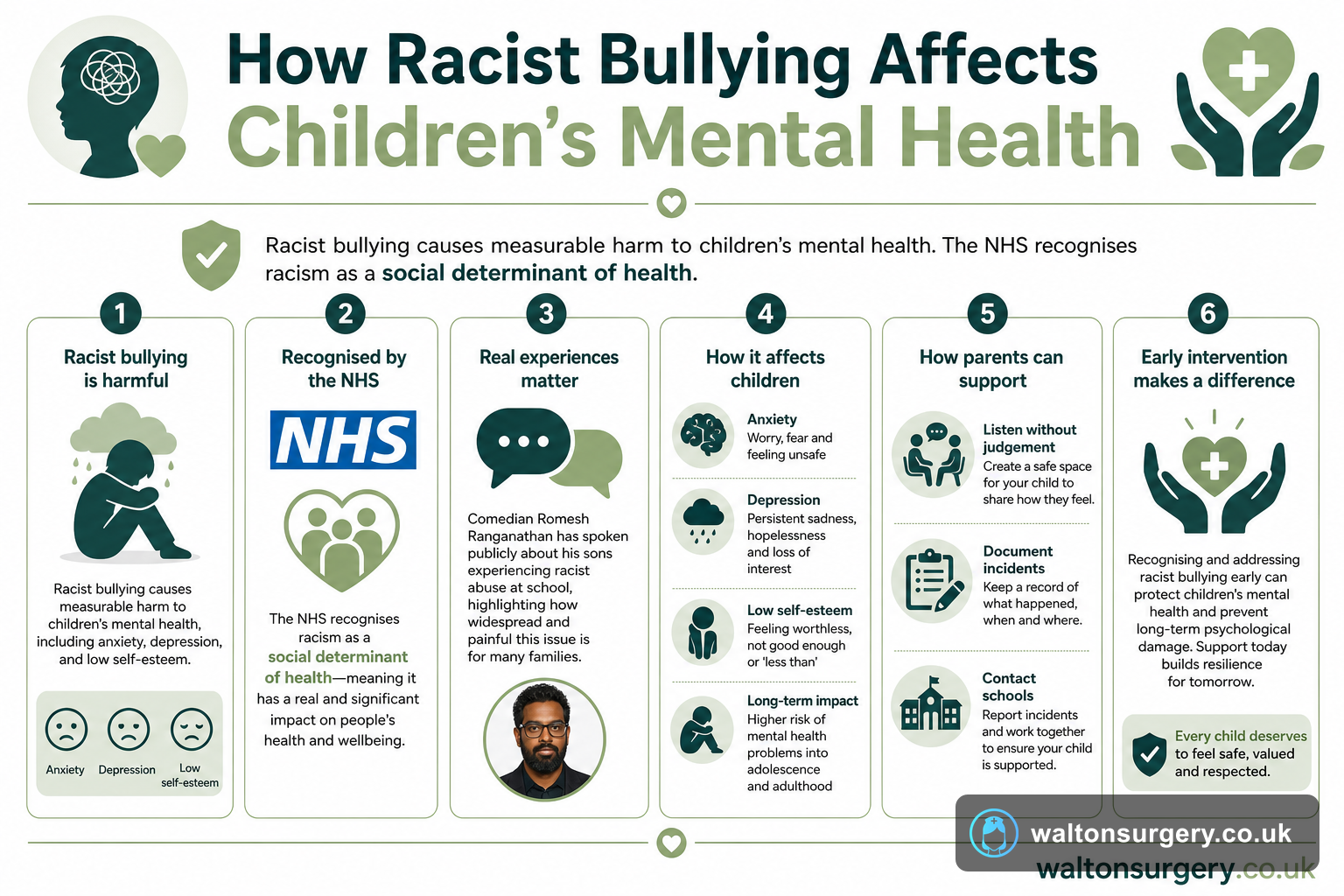
⚡ Quick Answer
Racist bullying causes measurable harm to children's mental health, including anxiety, depression, and low self-esteem. The NHS recognises racism as a social determinant of health. Comedian Romesh Ranganathan has spoken publicly about his sons experiencing racist abuse at school. Parents can support children by listening without judgement, documenting incidents, and contacting schools. Early intervention helps prevent long-term psychological damage.
There's solid evidence that racist bullying does serious damage to a child's mental wellbeing. The NHS classifies racism as a social determinant of health — which basically means it has a direct knock-on effect on both psychological and physical health. Kids on the receiving end of racial abuse are more likely to develop anxiety, struggle with depression, have trouble sleeping, and find it harder to cope at school.
Back in September 2026, the comedian Romesh Ranganathan spoke publicly about his sons being subjected to racist abuse while at school. His honesty brought attention to something plenty of UK families already know too well. If your child is going through something similar, getting a grip on what it does to them and how you can respond really does matter.
What Does Racist Bullying Look Like?
It's not always straightforward to spot. Verbal abuse covers racial slurs, name-calling, and those so-called "jokes" aimed at someone's ethnicity, skin colour, or where their family comes from. There's the physical side too — shoving, hitting, or wrecking someone's things. And then there's social exclusion, where a child gets frozen out purely because of their race.
Online racist bullying is becoming more and more of a problem, showing up across social media, messaging apps, and even gaming platforms. Kids might get hateful direct messages, find racist memes made about them, or get targeted in group chats. Some children deal with microaggressions — those repeated, low-level comments that chip away at their sense of belonging or poke fun at their culture. They're trickier to pin down, but the harm they cause is just as real.
How Does Racist Bullying Affect a Child's Mental Health?
The psychological fallout from racist bullying is broad. Persistent anxiety can set in, especially around going to school or being in social settings. Depression shows up fairly often too — you might notice a child pulling away from things they used to enjoy, their appetite changing, or a general sadness that just won't lift.
Self-esteem takes a hit. Children can start absorbing the negative messages thrown at them, which sometimes leads to shame about who they are or where their family's from. Sleep problems, nightmares, and difficulty focusing are all commonly reported. The NHS has acknowledged that experiences of racism contribute to worse mental health outcomes over a person's whole life, not just in childhood.
Some children develop physical complaints tied to stress — things like headaches, stomach aches, and feeling constantly worn out. Others might become more irritable, act aggressively, or refuse to leave the house. These are normal responses to a situation that shouldn't be happening. They're not signs of weakness.
🔬 Key Facts
The Mental Health Impact of Racist Bullying
- → Persistent anxiety around school and social settings is a common outcome.
- → Depression and withdrawal from activities a child previously enjoyed.
- → Damaged self-esteem leading to shame about identity or heritage.
- → Physical symptoms such as headaches, stomach aches, and chronic fatigue.
Why Early Recognition Matters
Catching racist bullying early gives you a chance to step in before it causes lasting damage. Children don't always come out and tell you what's going on. They might feel embarrassed, or ashamed, or worry that speaking up will make things worse.
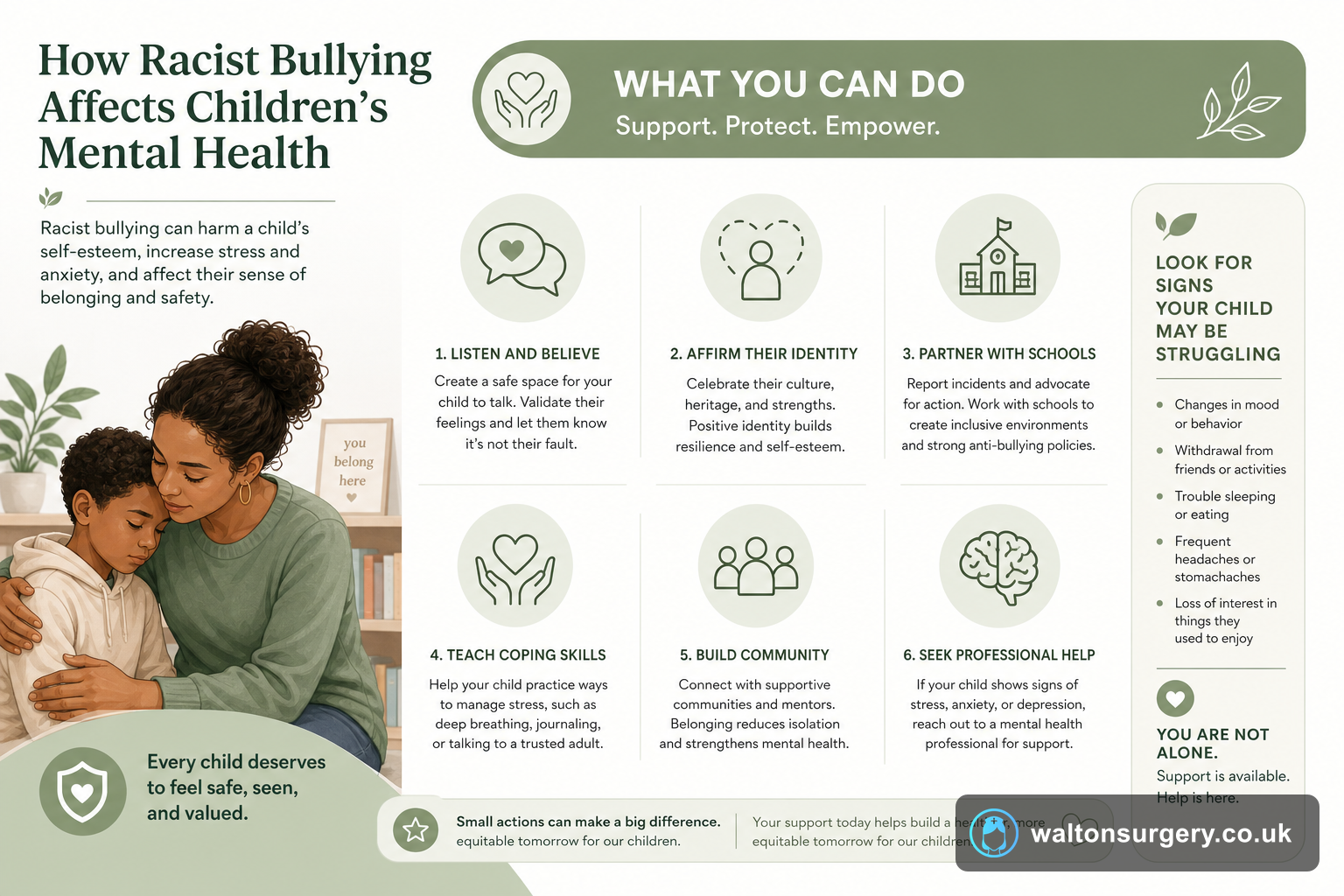
Keep an eye out for shifts in behaviour. A child who suddenly doesn't want to go to school, has gone off their friendships, or become unusually quiet could be struggling. Slipping grades, regular complaints of feeling ill on school mornings, and belongings that come home damaged or don't come home at all — these can all be warning signs.
Try asking open questions rather than ones that just need a yes or no. So instead of "Are you being bullied?" you could say "How are things going with your friends at school?" or "Has anyone said anything lately that upset you?" Getting that honest conversation going is where it starts.
What Can Parents Do to Support Their Child?
When your child tells you they're dealing with racist bullying, how you react in that moment carries weight. Stay calm and listen. Let them know their feelings are valid. Don't brush it off or rush to fix everything straight away. Something like "That sounds really upsetting — I'm glad you told me" goes a long way in helping them feel believed.
Write everything down. Dates, what was said or done, who was there, whether anyone else saw it happen. If the abuse is online, take screenshots. Having this kind of record becomes really important when you take it up with the school.
Get in touch with the school as soon as you can. Every school in the UK is supposed to have an anti-bullying policy in place. Ask for a meeting with the head of year or the safeguarding lead. Bring your documentation and find out exactly what steps they plan to take. It's worth following up in writing too, so there's a clear paper trail.
When Should You Seek Professional Help?
Some children need more support than parents and schools alone can offer. If your child is showing persistent low mood, anxiety that's getting in the way of everyday life, any sign of self-harm, or is talking about not wanting to be alive — get in touch with your GP without delay.
A GP can make a referral to Child and Adolescent Mental Health Services, known as CAMHS, for specialist assessment and support. How long the wait takes depends on where you live, but your GP should be able to tell you what's available in your area. We cover this in more depth in rapid relief team uk mental health crisis service explained 2026.
There are charities that help too. Young Minds and Childline both offer free support. Childline's number is 0800 1111, and they provide confidential counselling for children and young people. These services work well alongside professional treatment and give your child extra people they can talk to.
Building Your Child's Resilience
It's schools and institutions that carry the responsibility for stopping racist bullying, but there are things you can do at home to help your child cope. Affirming who they are — through family stories, community ties, and celebrating their heritage — helps push back against the negative messages they're picking up elsewhere.
Help your child think about which adults at school they trust. A favourite teacher, a pastoral support worker, someone they feel comfortable going to. If your child is up for it, you could practise assertive responses together. Running through role-play scenarios can make them feel more prepared if something happens.
Peer support matters too. Linking your child up with others who've been through similar things — through community groups or youth organisations — can ease that feeling of being alone. Knowing other people get it is genuinely powerful.
Frequently Asked Questions
⭐ The Bottom Line
What this means for you
Racist bullying inflicts genuine psychological harm on children — anxiety, depression, damaged self-esteem, and real struggles with identity. Romesh Ranganathan choosing to speak openly about what his sons went through shows this isn't some rare, isolated thing. As a parent, your job is to listen, keep records, and push for your child's school to act. If you spot lasting changes in your child's mood or behaviour, don't wait around — get your GP involved. Help is out there, and reaching out early makes a real difference.
Last updated: 2026-09-03 · Written by the Walton Surgery editorial team · Medical information is for educational purposes only and does not replace advice from a qualified healthcare professional.