How Divorce Affects Your Health: What the Evidence Says
PART C — HTML Body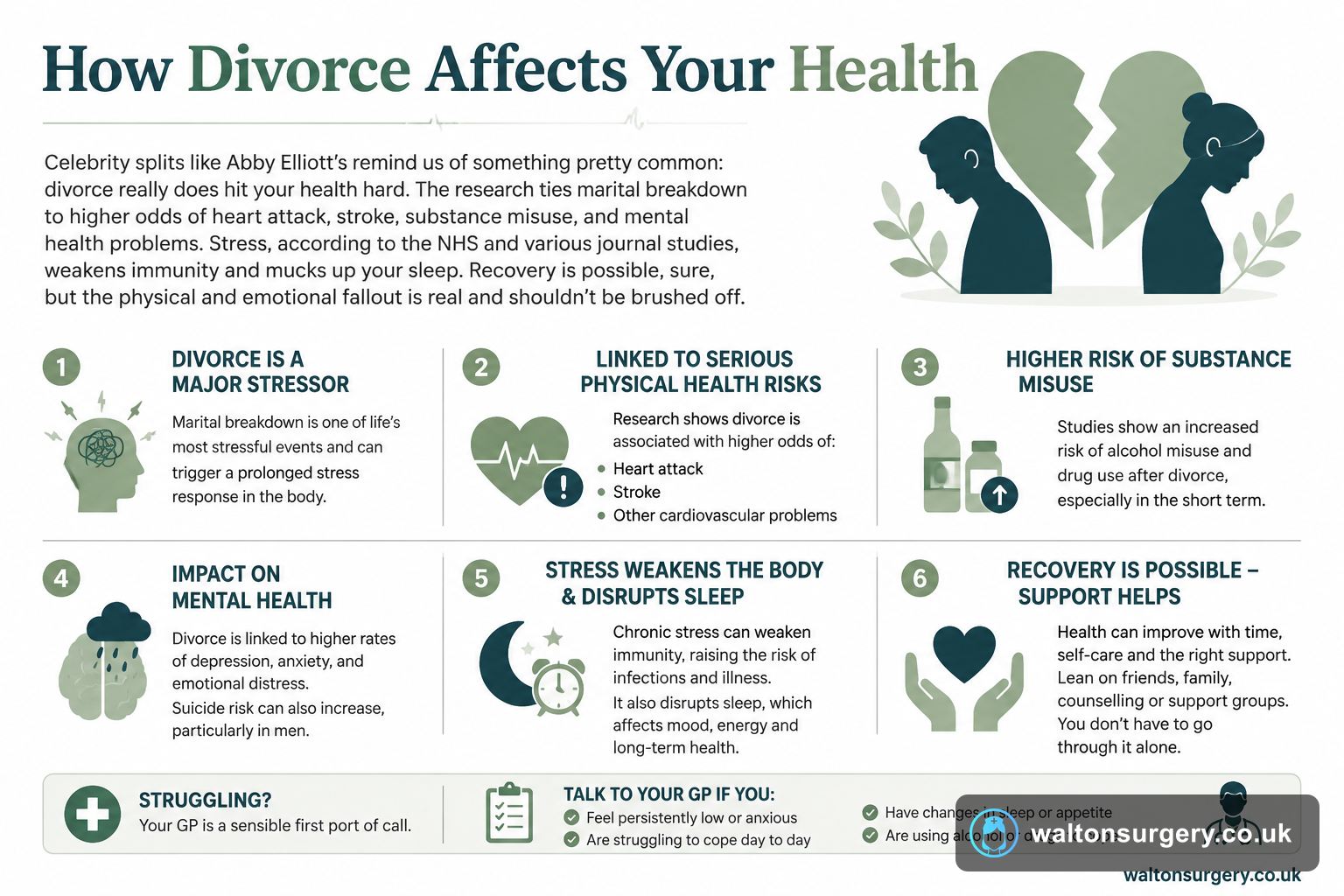
⚡ Quick Answer
Celebrity splits like Abby Elliott’s remind us of something pretty common: divorce really does hit your health hard. The research ties marital breakdown to higher odds of heart attack, stroke, substance misuse, and mental health problems. Stress, according to the NHS and various journal studies, weakens immunity and mucks up your sleep. Recovery is possible, sure, but the physical and emotional fallout is real and shouldn't be brushed off. Struggling? Your GP is a sensible first port of call.
Marriage breakdown consistently ranks among the most stressful things a person can go through. When 'The Bear' star Abby Elliott's divorce made the news in 2026, it was a reminder that this stuff hits everyone, no matter how famous they are, though respecting celebrity health privacy boundaries matters too. The emotional pain is obvious enough, but people tend to overlook the physical side of things entirely.
The evidence here is actually pretty convincing. Divorce leaves measurable marks on your body. Cardiovascular risk goes up, immunity gets knocked, and the stress of it all can show itself in ways you wouldn't necessarily predict. Looking at these links isn't meant to frighten you — it's about helping you spot when you might need to reach out for help.
What actually happens to your body during a divorce?
When stress gets severe, your body kicks into a kind of emergency mode. Cortisol and adrenaline start flooding out from the adrenal glands — the classic fight-or-flight response. Useful in short bursts, no question. The trouble is that a divorce drags on for months, sometimes years, and those hormone levels don't get the memo to stand down.
A 2015 study in Psychoneuroendocrinology followed women going through marital separation and found something worth paying attention to. Those who'd recently split up had notably higher inflammatory markers in their blood than those who hadn't. Chronic inflammation, the NHS links it to a whole list of long-term conditions — heart disease, diabetes, certain cancers. Not a short list either.
Can divorce actually increase your risk of a heart attack?
This is one of the more unsettling findings in the research, honestly. The short answer appears to be yes, especially if you've been through more than one divorce.
🔬 Key Facts
Cardiovascular Risk in the Research
- → Circulation: Cardiovascular Quality and Outcomes tracked nearly 16,000 adults over age 50.
- → Women with one divorce had a 24% higher heart attack risk vs. continuously married peers.
- → Men with multiple divorces faced a 30% elevated risk.
- → Adjusted for age, smoking status, and income — suggesting the split's stress itself is a factor.
How does divorce affect mental health?
The emotional toll is usually the thing people notice first. The NHS recognises relationship breakdown as a recognised trigger for both depression and anxiety.
You might find yourself wrestling with feelings of failure, a deep loneliness, real uncertainty about what comes next. Sleep tends to go haywire — your brain won't switch off, and then the lack of decent rest makes the stress worse, which makes sleep harder still. A vicious cycle, basically. For some people this spirals into proper clinical depression: persistent low mood, losing interest in things you used to enjoy, appetite changes that go on for weeks. If that sounds like you, please talk to your GP.
Does divorce change your behaviour?
Stress has a habit of pushing people towards coping strategies that aren't exactly healthy. There's a well-documented connection between marital disruption and drinking more alcohol, yet people often underestimate these risks compared to, say, following celebrity health advice risks they might spot online.
Research in the Journal of Health and Social Behaviour found that divorced or separated people were more likely to binge drink than those still married. It often starts as a way of numbing emotional pain — self-medicating, essentially. The problem is it can creep into dependency before you've really noticed, and from there you're looking at liver disease, high blood pressure, a whole new set of problems. Worth keeping an eye on, because this pattern tends to start quite subtly.
What about your immune system?
Your immune system doesn't just do its own thing in isolation — it's deeply connected to your mental state. Ongoing divorce stress can actually suppress how well it works, leaving you more open to picking up infections.
A piece of research in Psychosomatic Medicine looked at people going through marital separation and found their immune function was measurably worse, particularly cell-mediated immunity, which is your body's main defence against viruses. Small wounds took longer to heal. Colds and flu hit harder and hung around longer. Your body is, in a very literal sense, showing you that emotional strain has a physical cost attached.
Who is most at risk from divorce-related health effects?
Not everyone responds to divorce in the same way, and certain things can make the health impact significantly worse.
The research points to a few patterns. People who didn't want the divorce, who didn't initiate it, tend to experience more distress. If you already have a history of depression or anxiety, you're more vulnerable too. Social isolation is another big risk factor — if your social world was mostly built around the marriage, losing that partner can leave you properly alone, and loneliness makes stress worse, a pattern we've also seen in reporting on celebrity deaths july 2026 health conditions. On the flip side, a solid network of friends and family acts as a genuine protective buffer.
Frequently Asked Questions
⭐ The Bottom Line
What this means for you
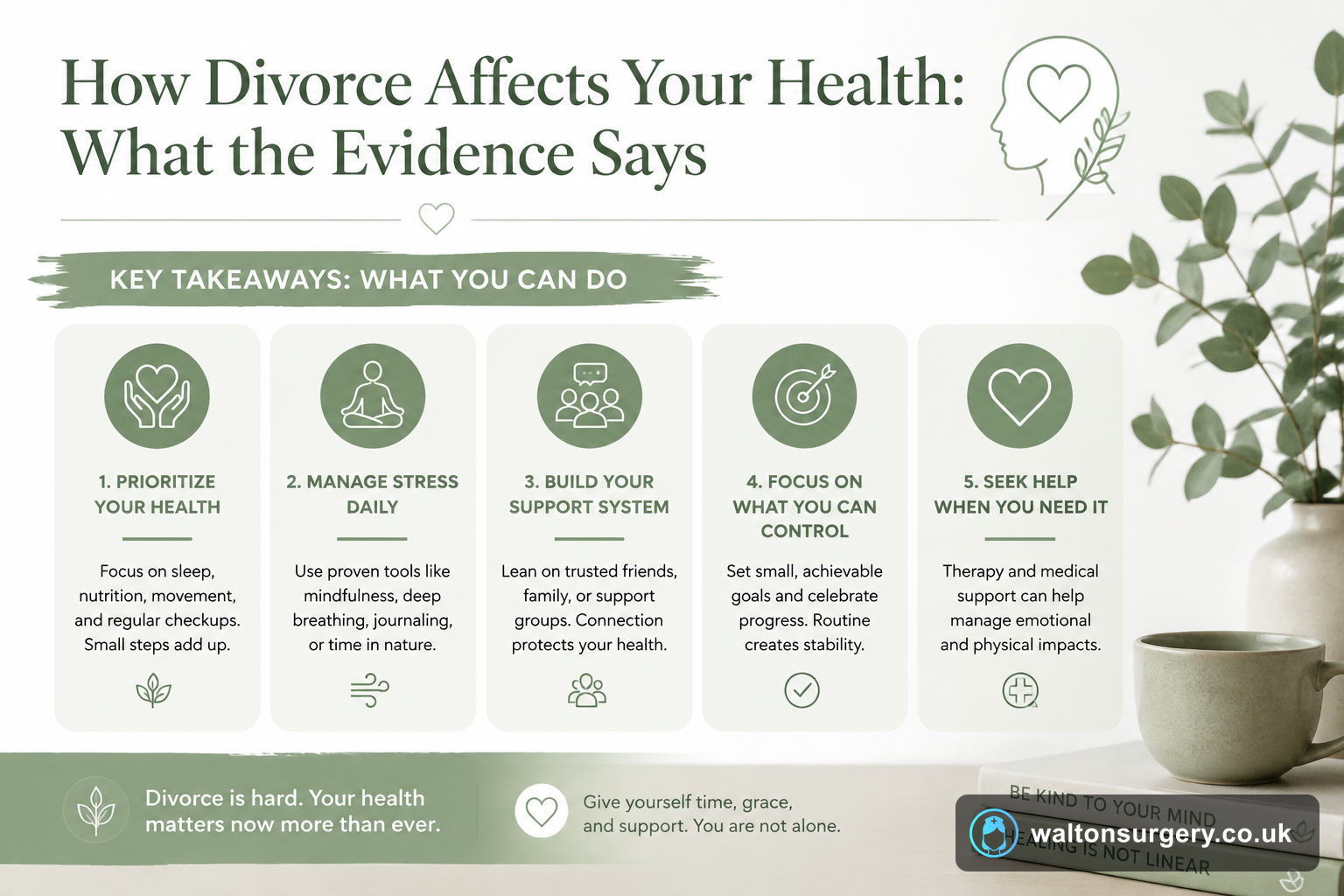
Divorce is a major life event, and the research consistently shows real consequences for both body and mind. The studies in journals like Circulation and Psychosomatic Medicine aren't theoretical exercises — they point to elevated cardiac risk, compromised immunity, and genuine mental health challenges. Going through a split? Be gentle with yourself and keep an eye out for these warning signs. Get your sleep sorted, lean on people around you, and don't put off contacting your GP. Recognising what's happening to you is genuinely the first step towards managing it properly.
Last updated: 2026-08-18 · Written by the Walton Surgery editorial team · Medical information is for educational purposes only and does not replace advice from a qualified healthcare professional.