Hair Dye Allergies: What You Need to Know About PPD Risks
PART C — HTML Body Components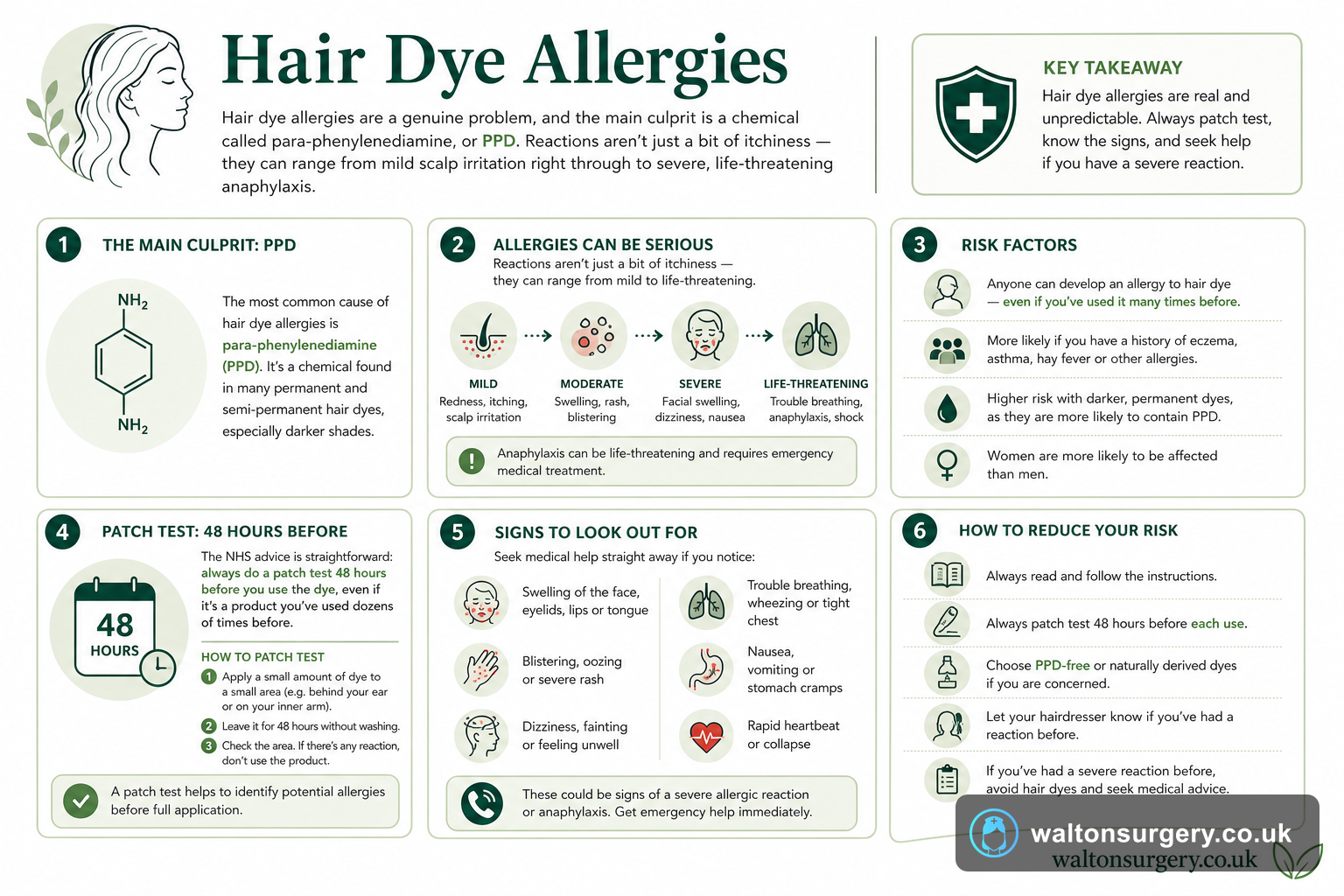
⚡ Quick Answer
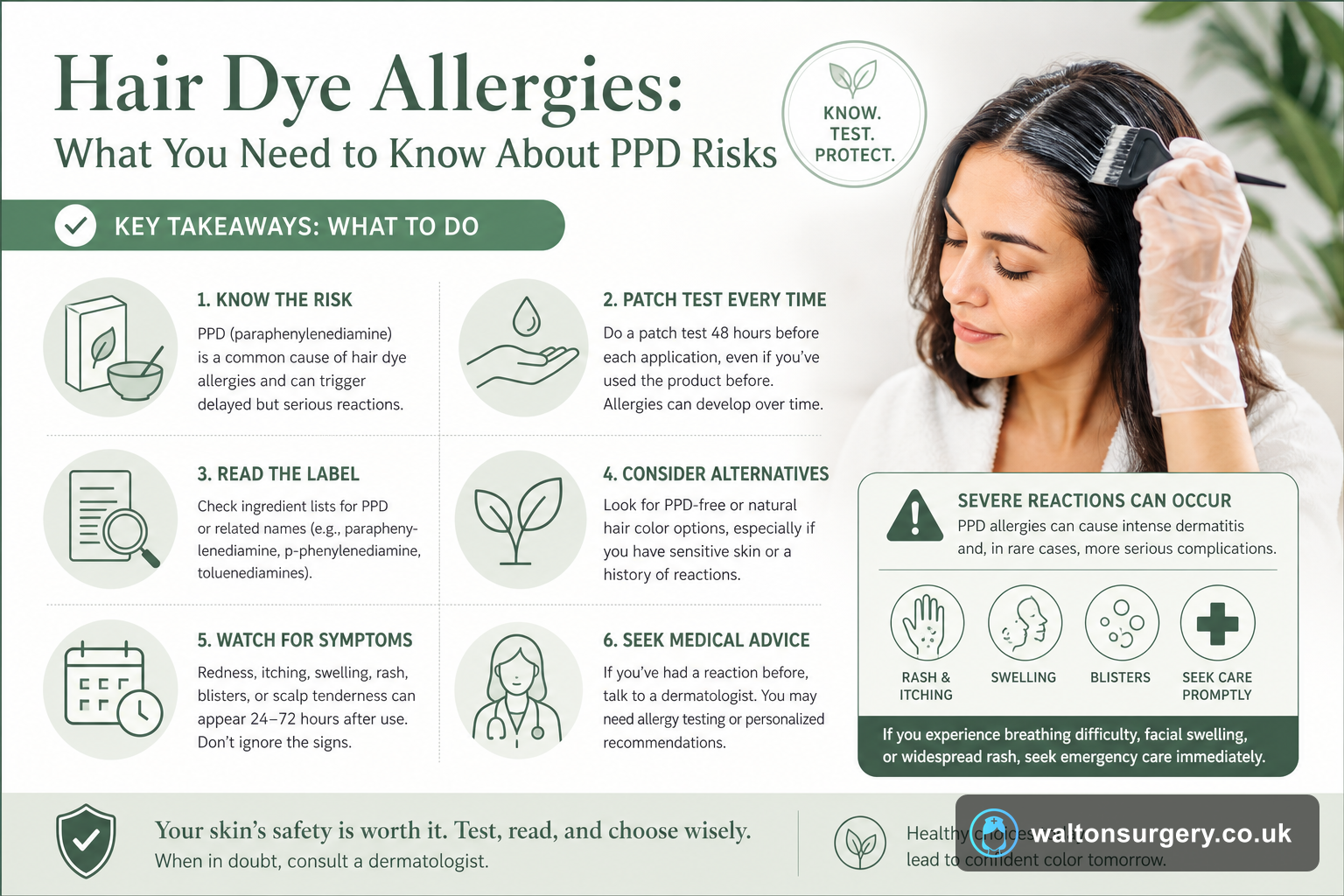
Hair dye allergies are a genuine problem, and the main culprit is a chemical called para-phenylenediamine, or PPD. Reactions aren't just a bit of itchiness — they can range from mild scalp irritation right through to severe, life-threatening anaphylaxis. The NHS advice is straightforward: always do a patch test 48 hours before you use the dye, even if it's a product you've used dozens of times before. If you notice swelling, blistering, or any trouble breathing after dyeing, get medical help straight away. This article covers the risks, what to look out for, and what steps to take. If you want the fuller picture, our guide to penis filler risks and effects goes further.
Para-phenylenediamine, or PPD as it's usually called, is the most common cause of allergic reactions to hair dye. You'll find it in the majority of permanent dyes — particularly the darker shades — because it helps the colour stick around. Reactions to PPD can be genuinely serious, which is exactly why the NHS recommends doing a patch test before every single application. Yes, even if you've used that exact same product before without any bother.
There was a recent piece paying tribute to the colourist Brad Johns, which got me thinking about the craft behind hair colour. But it also serves as a reminder that we should understand what we're actually putting on our bodies. Recognising the signs of an allergic reaction, and knowing how to stop one happening in the first place, matters for anyone who colours their hair. It's a topic that sits alongside other health considerations, such as understanding hot weather health risks, where being informed is the first step to staying safe.
What Exactly is a PPD Allergy?
PPD is a chemical that, once it's been applied and has oxidised, bonds to the hair shaft. For most people, it causes no trouble at all. But in some individuals, the immune system gets confused and treats PPD as if it were a threat. That's what triggers the allergic reaction — contact dermatitis, technically a type IV hypersensitivity reaction. The thing about type IV is that it's delayed. You might not notice anything for 12 to 48 hours after you've been exposed. And that delay is precisely why a patch test done half an hour before you dye your hair won't actually catch a potential allergy.
Recognising the Symptoms: From Mild to Severe
Symptoms can vary quite a lot. On the milder end, you might get an itchy, red, or flaky scalp, or notice irritation on your ears or neck. The skin along your hairline could puff up or break out in a rash. With more severe reactions, blisters can appear, along with oozing or crusting. The reaction sometimes spreads well beyond where the dye actually touched.
Then there's anaphylaxis, which is the most dangerous reaction of all. This is a proper medical emergency. Symptoms include swelling of the face, lips, tongue, or throat, difficulty breathing, wheezing, dizziness, and collapse. If any of these happen after you've used hair dye, call 999 without hesitation.
How to Perform a Patch Test Properly
A patch test is your best line of defence. The NHS lays out the process pretty clearly. You mix a small amount of the dye following the instructions on the packet. Then you dab a bit of that mixture onto a small, discreet patch of skin — behind your ear or the inside of your elbow works well. Leave it uncovered for at least 48 hours. Don't wash it off. After those 48 hours are up, check the area for any redness, swelling, itching, or blistering. If there's any reaction at all, don't use the product.
Why You Must Patch Test Every Time
It's tempting to think, "I've been using this dye for years, I know I'm fine." But allergies don't work like that. They can develop at any point. Every time you're exposed to PPD, there's a chance your immune system is becoming more sensitised. A product that's been perfectly fine for a decade could provoke a severe reaction the next time around. The NHS is unambiguous on this: patch test before each application, regardless of how familiar the brand is. It's a simple step that can spare you a painful and potentially dangerous experience.
🔬 Key Facts
Understanding PPD Allergy Development
- → Delayed Reaction: Type IV hypersensitivity means symptoms can take 12-48 hours to appear.
- → Sensitisation Risk: Repeated exposure increases the chance of your immune system reacting.
- → No Prior History Needed: A severe reaction can occur even after years of safe use.
- → NHS Mandate: A 48-hour patch test is required before every single application.
What to Do If You Have a Reaction
For a mild reaction after dyeing, start by rinsing your scalp and hair thoroughly with a gentle shampoo. An over-the-counter antihistamine can help with the itching and swelling — your pharmacist can point you towards a suitable one. Holding a cool, damp cloth against the irritated area may also bring some relief.
If it's more than just mild, localised itching, get in touch with your GP. They might prescribe a topical steroid cream or something else to help. And if you notice any signs of a severe reaction — facial swelling, breathing difficulties, anything like that — go to A&E or ring 999 straight away. Don't wait to see if it gets better on its own.
Are There Safer Alternatives to PPD Dyes?
If you've got a confirmed PPD allergy, you need to steer clear of it entirely. Look for products that say "PPD-free" on the label. Some alternatives rely on para-toluenediamine, or PTD, but it's worth knowing that people who react to PPD very often react to PTD as well. Semi-permanent and temporary dyes usually don't have PPD in them, but you should still patch test those too.
Henna is another option — it's a natural, plant-based dye. Pure, body-art quality henna is generally considered safe. The problem is that some products sold as "black henna" actually contain PPD, which makes them dangerous. Always check the ingredients list and buy from somewhere you trust. It's a reminder that understanding health risks, whether from cosmetic products or broader lifestyle factors like cousin marriage health risks UK, requires careful attention to detail.
Frequently Asked Questions
⭐ The Bottom Line
What this means for you
Hair dye allergies, mostly to PPD, are a real and serious health risk. The only reliable way to check for a reaction is a patch test done 48 hours before each use. Know the symptoms — from an itchy scalp all the way to life-threatening anaphylaxis. If you think you might have an allergy, stop using the product and speak to a pharmacist or your GP. Your safety matters more than any colour.
Last updated: 2026-09-03 · Written by the Walton Surgery editorial team · Medical information is for educational purposes only and does not replace advice from a qualified healthcare professional.