Understanding Blepharoplasty (Eyelid Surgery) Risks and Complications
⚡ Quick Answer
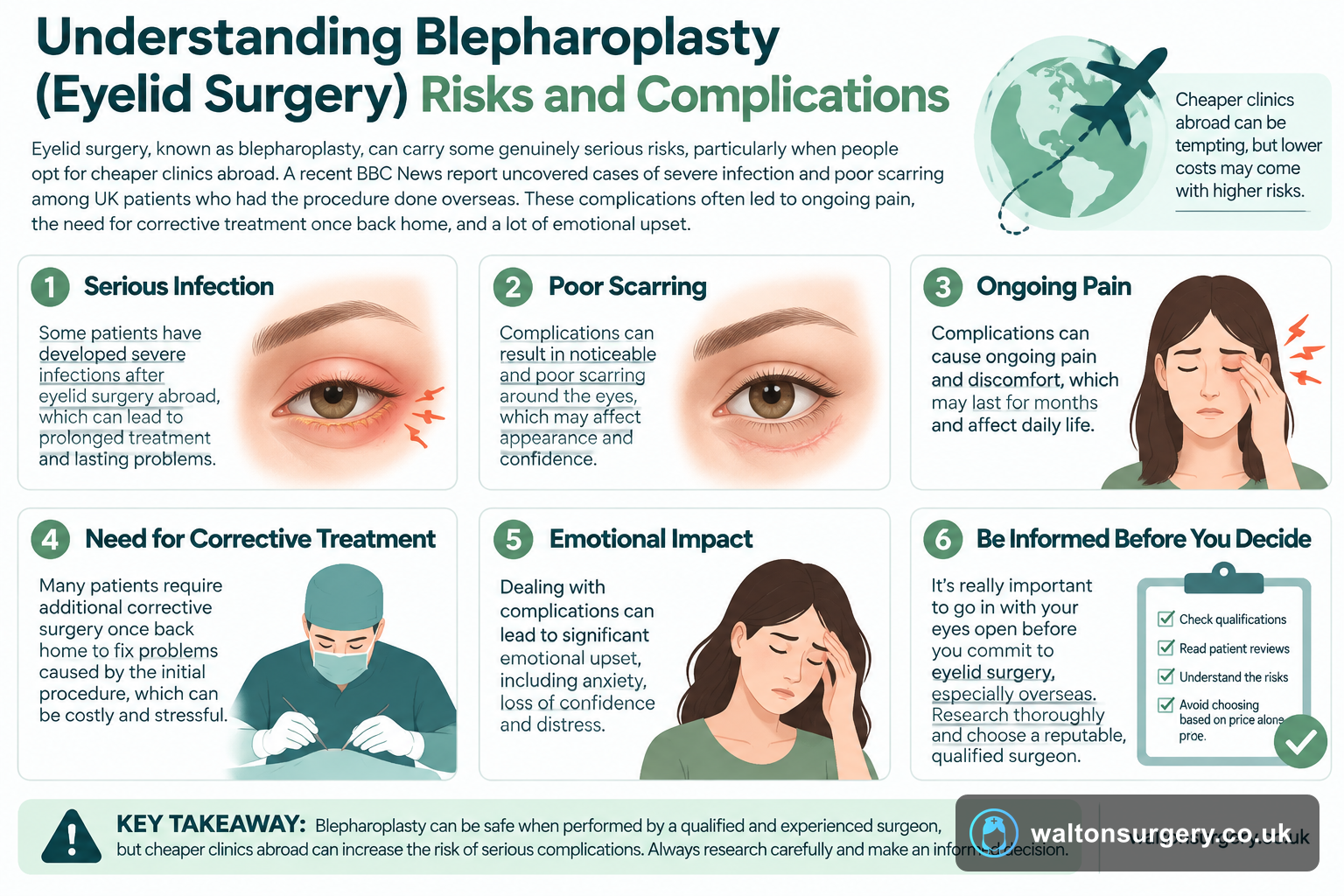
Eyelid surgery, known as blepharoplasty, can carry some genuinely serious risks, particularly when people opt for cheaper clinics abroad. A recent BBC News report uncovered cases of severe infection and poor scarring among UK patients who had the procedure done overseas. These complications often led to ongoing pain, the need for corrective treatment once back home, and a lot of emotional upset. It’s really important to go in with your eyes open, so to speak, before you commit to this kind of surgery.
Blepharoplasty — you might hear it called an eyelid lift or just a "bleph" — is an operation to get rid of excess skin or fat from the eyelids. Lots of people have it done for a more refreshed look, but it is a proper surgical procedure, and things can go wrong. A BBC News report from September 2026 really brought this home, documenting the experiences of several UK women who ended up with infected eyelids and lasting pain after choosing cut-price surgery in another country.
If this is something you're weighing up, understanding the potential downsides isn't optional — it's essential. This article lays out the specific risks that have come to light recently and gives you the information to make a decision that’s safe for you.
What the BBC Investigation Found
A BBC News investigation, published on 23 September 2026, followed the stories of three women who went abroad for their blepharoplasty. What they found was a pattern of serious problems after the operations. UK-based surgeons who specialise in the area around the eyes told the BBC they’re dealing with a worrying number of patients coming to them with issues from these cheaper overseas procedures.
The women in the report had infected eyelids that just wouldn’t heal properly, leaving them in a lot of pain. One said she was "scared to sleep" because the infection was so bad. All of them had to get medical help once they were back in the United Kingdom to deal with the scarring and manage symptoms that just wouldn’t go away, which meant more cost and more distress on top of everything else.
The Main Risks of Blepharoplasty
Every operation has risks, and blepharoplasty is no different. These can be as mild and temporary as swelling or bruising, or as serious as long-term complications. Dry eyes are a common side effect. More severe issues, the kind the BBC report flagged as happening abroad, include:
- Infection: If the surgical environment isn't kept properly sterile, bacteria can get in. This leads to intense pain, redness, discharge, and healing that gets seriously delayed.
- Scarring: Bad surgical technique can leave you with scars that are visible, raised, or uneven. An infection or poor aftercare afterwards makes the healing even worse.
- Eye Damage: In rare instances, the procedure can harm the muscles around the eye or even affect your vision, potentially causing double vision or making it hard to close your eyes completely.
- Anaesthetic Risks: Reactions to the anaesthesia, whether it's local or general, are always a possibility with any surgery.
🔬 Key Facts
Blepharoplasty Complications
- → Infection risk increases if sterile conditions are not maintained
- → Scarring can be worsened by poor technique or infection
- → Eye damage in rare cases affects vision or muscle function
- → Anaesthetic reactions remain a possibility with all surgery
Why Risks Are Amplified When Surgery Is Performed Abroad
The BBC report specifically flags problems with what it calls "cheap so-called bleph surgery" carried out overseas. A lower price tag can sometimes mean that safety and standards of care have been compromised. You might find different standards for hospital hygiene, practitioners whose qualifications aren’t as rigorously checked, or the use of cheaper materials that aren’t up to scratch. This pattern of cutting corners on safety isn’t limited to eyelid work either; similar concerns have been raised around penis filler risks and effects when performed in unregulated settings.
There’s also a very practical problem: what happens afterwards. If you develop an infection after you’ve flown home, you can’t just pop back to see the surgeon who did the work. You’re left trying to find help from a new doctor — either through the NHS or by paying privately — who then has to figure out what was done in an unfamiliar situation. That can really slow down getting the right treatment.
What to Do If You Experience Complications
Had blepharoplasty and now you’re seeing symptoms like pain that’s getting worse, redness, swelling, any pus or discharge, a fever, or changes in your sight? You need to get medical help straight away. Go to your GP as soon as you can. They’ll be able to assess things, might start you on antibiotics if there’s an infection, and can refer you to the right specialist — that could be an ophthalmologist or a plastic surgeon.
Don’t just wait and hope it gets better. An infection so close to your eye needs proper professional treatment to stop it from getting worse. Be open with your GP about where you had the surgery and when, because that information is going to be important for working out your treatment.
How to Make a Safer Choice
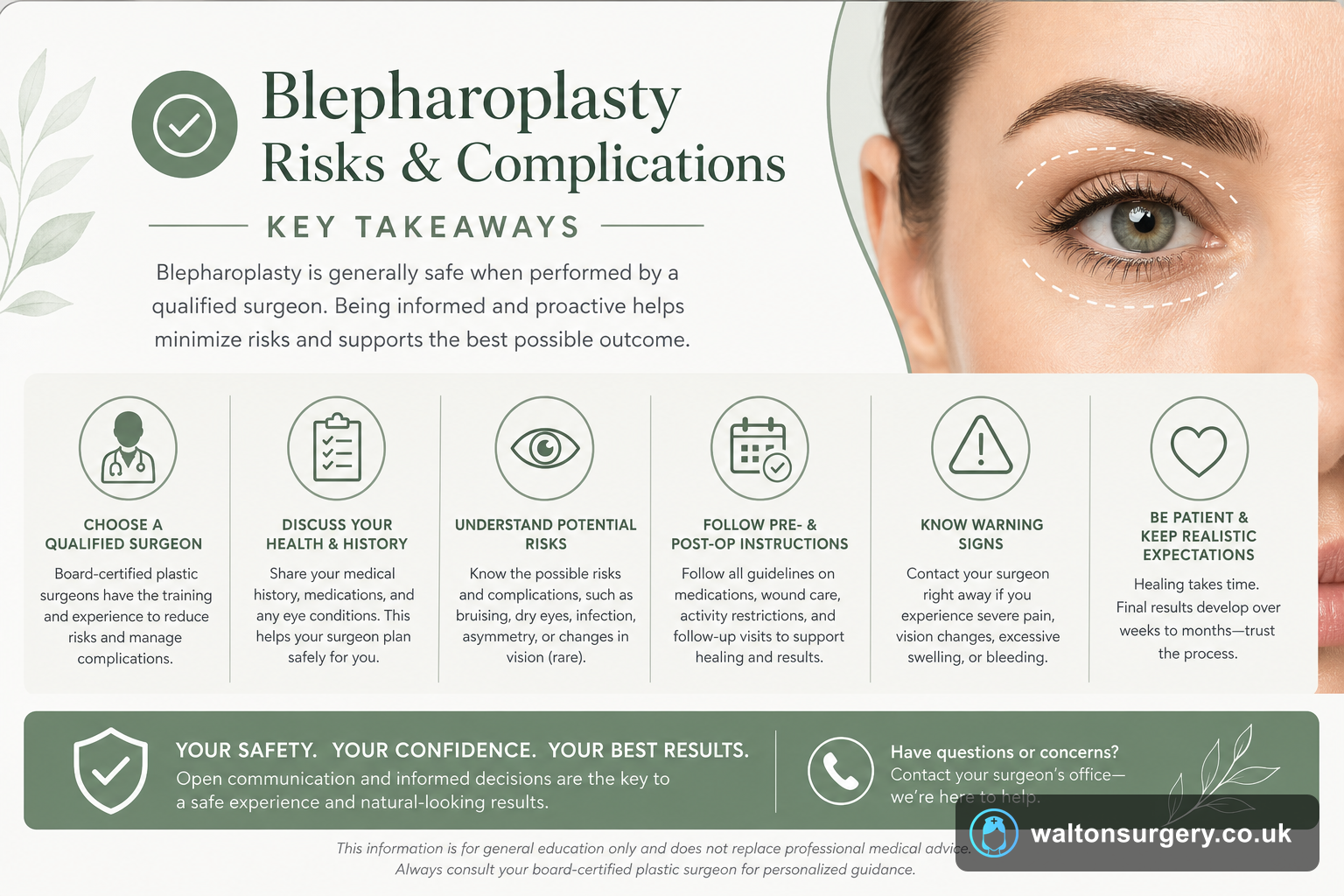
Thinking about blepharoplasty, whether at home or abroad? Your best defence is doing your homework thoroughly. First thing, check the qualifications and experience of any surgeon you’re considering. If they’re in the UK, you can look them up on the specialist register of the General Medical Council (GMC).
Ask to see photos of their previous patients’ results, before and after, and look for independent reviews. When you go for a consultation, you should feel you can ask about the clinic’s infection rates, the exact type of anaesthetic they’ll use, and what the full aftercare plan looks like. Any surgeon worth their salt will be happy to answer these questions. Being thorough about risks applies to other cosmetic procedures too, whether it’s understanding hair dye allergy risks or the effects of different treatments, and it’s always worth considering how external factors like hot weather health risks might affect your recovery.
Frequently Asked Questions
⭐ The Bottom Line
What this means for you
That BBC News report is a pretty stark warning about what can happen when you chase cheap blepharoplasty abroad. Not every overseas clinic is going to be a problem, of course — but the risks of infection, poor scarring, and not having proper aftercare are real, and they’re documented. Your eyes are delicate bits of kit. Surgery on them needs to be done to the highest standard you can find. Put safety, verified credentials, and the ability to get post-op support if you need it above saving money. And always have a chat with your GP here in the UK before you go ahead.
Last updated: 2026-09-23 · Written by the Walton Surgery editorial team · Medical information is for educational purposes only and does not replace advice from a qualified healthcare professional.