Symptoms of Norovirus: What to Look For and When to Seek Help
PART C — HTML BODY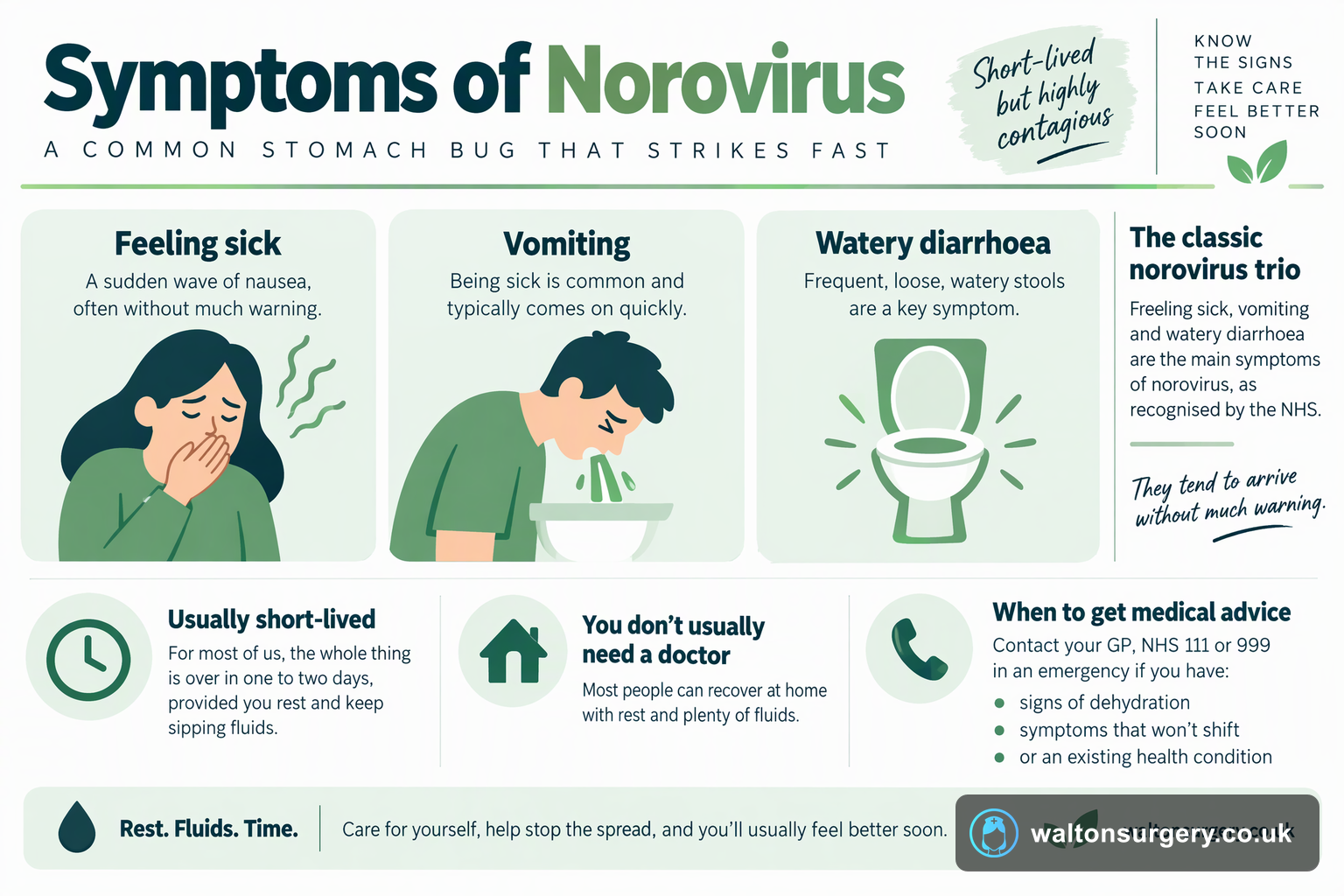
⚡ Quick Answer
Feeling sick, vomiting and watery diarrhoea are the three big ones, and the NHS treats these as the classic norovirus trio. They tend to arrive without much warning. For most of us the whole thing is over in one to two days provided you rest and keep sipping fluids. You don't usually need a doctor, though dehydration, symptoms that won't shift, or an existing health condition are all good reasons to ring your GP, NHS 111 or 999 in an emergency.
A norovirus infection lands fast and hard — it's one of the viruses behind acute gastroenteritis, which in plain terms means sudden vomiting, diarrhoea and cramping stomach pain. The NHS points to feeling sick (nausea), diarrhoea and being sick (vomiting) as the headline symptoms. Stomach pain, headaches and aching muscles turn up in a fair number of cases too. If you've been hit with sickness and diarrhoea, getting a rough idea of what's going on helps you work out the self-care side and spot the point at which you ought to get help.
Here's what the piece will run through: the complete symptom list as laid out by the NHS and other named UK sources, the way the illness tends to unfold, what you can do for yourself at home, and the specific red flags that should have you phoning a pharmacist, your GP practice, NHS 111 or 999. Treat this as general health information only, not advice tailored to you.
What are the symptoms of norovirus?
Vomiting, diarrhoea, nausea and fever are the ones people mention most often, and on top of that the virus can bring on stomach pain, headaches and body aches. Per the NHS, feeling sick (nausea), being sick (vomiting) and diarrhoea are the three core symptoms. These are what usually hit you first and dominate how the illness feels.
What does the diarrhoea look like? Generally watery rather than bloody. Vomiting tends to be forceful — one UK source paints the picture as a sudden wave of feeling sick, then hard vomiting along with watery diarrhoea. Stomach cramps frequently tag along as well.
A high temperature (over 38 degrees Celsius) has been noted in connection with norovirus, although that same source is careful to say a raised temperature isn't common at every stage. Headaches and body aches get reported as well, but they stay in the background compared with the gut symptoms.
Symptom patterns aren't uniform. You might be sick with barely any diarrhoea, or the opposite. The common thread is a fairly quick onset, and everything centring on the gut.
🔬 Key Facts
The classic norovirus symptom picture
- → Nausea, vomiting and watery diarrhoea are the three core NHS symptoms and usually arrive first.
- → Diarrhoea is generally watery rather than bloody, and vomiting tends to be forceful.
- → Stomach cramps, headaches and body aches frequently accompany the gut symptoms.
- → A high temperature over 38°C has been noted but isn't common at every stage.
How do symptoms of norovirus start?
Sudden. That's the word most sources reach for. A UK health description puts it as suddenly feeling sick first, then forceful vomiting and watery diarrhoea following close behind. There's no slow build over days — one moment you feel normal, the next nausea and vomiting arrive out of nowhere.
A doctor quoted in UK press coverage said vomiting and diarrhoea together are the primary indicators of a norovirus infection. Those two are so dominant that people often assume food poisoning. The line between the two is blurry at the start, and given the short incubation period, symptoms tend to appear fairly soon after you've been exposed.
Many people find the abruptness of it genuinely alarming. Fine one minute, doubled over the next. If the way yours started lines up with that, norovirus is worth putting on the list, though only a healthcare professional can say for certain in your specific case.
One more thing that's useful to know: the virus passes easily from person to person, so if several people in a household go down within a day or two of each other, a shared infection like norovirus is more likely than something food-related.
Recognising the difference: norovirus or something else?
Sorting out the cause of sickness and diarrhoea at home isn't straightforward — plenty of bugs and conditions overlap. Norovirus earned its nickname, the "winter vomiting bug", because of how it pairs sudden vomiting with watery diarrhoea. Other infections and conditions can look similar on the surface.
With norovirus, the combination of vomiting and diarrhoea is what doctors treat as the main pointer, and the stools tend to be watery. Cramps, headache and body aches might come with it. As for a high temperature (over 38 degrees Celsius), it can happen but isn't universally described as typical.
Food poisoning also brings on vomiting and diarrhoea, and what people usually fix on is the timing after eating. Thing is, norovirus is so contagious it spreads person to person, so you can see it hit a group at once even if everyone ate something different. Plenty of other conditions can cause overlapping symptoms too, from symptoms of pots to symptoms of kidney stones, so reading up on the wider picture can be useful.
Still not sure what you're dealing with? A pharmacist can talk you through symptom relief and hydration. If symptoms drag on or you've got an underlying condition, ring your GP practice. Worried but not in an emergency? NHS 111. And if it is an emergency, 999. This article can't tell you what you've got — that needs a professional.
How long do symptoms of norovirus last?
For the vast majority of people, one to two days is the rough timeline for the acute bit. The vomiting and diarrhoea can be pretty brutal while they last, so even a short spell feels like a big deal.
Norovirus is classified as highly contagious and a cause of acute gastroenteritis. Acute, in this context, means it starts fast and doesn't drag out for weeks in typical cases. Once your body gets on top of the infection, things usually turn round quickly.
Worth bearing in mind though — the moment the vomiting and diarrhoea stop isn't always the moment you feel 100% again. Tiredness tends to outstay its welcome, and plenty of people need to ease back into eating properly. Everyone's recovery looks a bit different.
If things go past the expected window, worsen instead of easing, or you simply cannot keep fluids down, that's your cue to contact your GP practice or NHS 111. Pregnant, managing another health condition, or looking after a very young or elderly person? Don't hang around waiting. Get advice sooner rather than later.
Managing norovirus symptoms at home
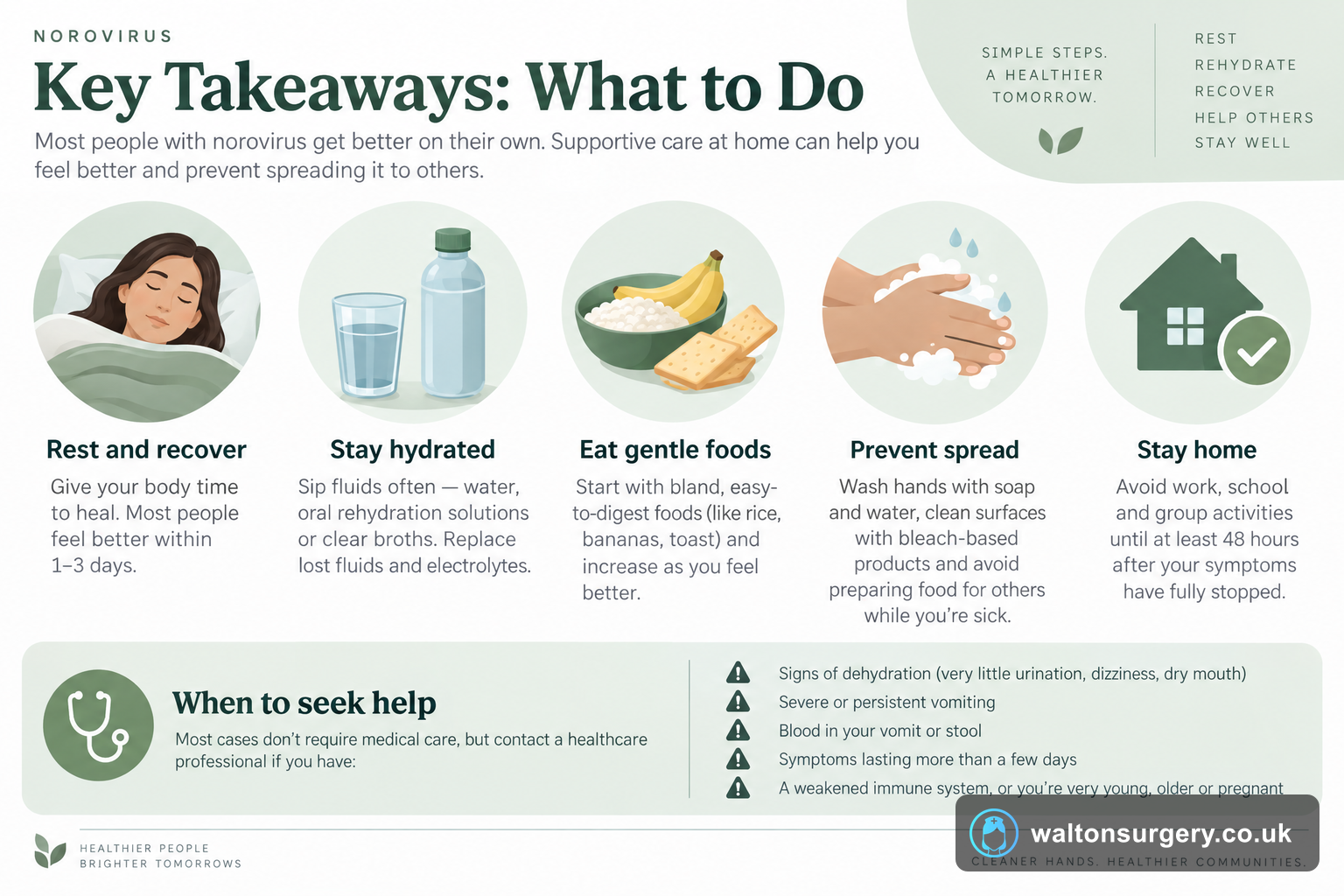
Antibiotics won't touch norovirus — it's a virus, not a bacterial infection. What you're really doing is managing the symptoms while the infection burns itself out. Hydration is the top priority here, because vomiting and diarrhoea drain your body of fluid at speed. Small, frequent sips beat gulping down a big glass all at once.
Rest matters just as much. Norovirus is self-limiting in most people, which is a medical way of saying the body sorts it out on its own without much help. Letting yourself stop and do nothing is probably the quickest route back on your feet.
A pharmacist is worth a visit, or at least a phone call, for things like rehydration sachets and other bits that might ease symptoms. They'll also know what's appropriate for you if you're on other medicines or managing a condition. Don't expect a pharmacist to diagnose you — that isn't part of their remit — but for symptom relief and over-the-counter stuff they're a solid bet.
Eating tends to fall apart while you're at your worst. Appetite disappears for a day or so in many cases. When it comes back, plain food that's gentle on the stomach sits best. And if not a single sip of fluid is staying down, contact your GP practice or NHS 111.
Stopping the spread at home and outside the house
Contagious is putting it mildly. Norovirus hops between people with ease, which is exactly why outbreaks sweep through households, schools, care homes and workplaces in one go. Once one person in your home is ill, everyone else is genuinely at risk.
Hands and surfaces deserve real attention. Wash your hands properly, soap and water, not a quick splash. Hard surfaces — bathroom bits, door handles, that kind of thing — need regular cleaning both during the illness and after it's passed, since the virus can hang about. Towels, bedding and used laundry want handling with care and a hot wash where possible.
For anyone working with food or in close contact with vulnerable people — a care home, hospital or nursery, say — have a word with your employer and stick to their rules about staying off. The NHS and UK press coverage have, more than once, asked people with symptoms to stay home and skip work or school.
Will it get everyone in the house? That's the question people ask. Norovirus is contagious, no question, but it isn't a foregone conclusion. Practical hygiene — soap and water on your hands, cleaning surfaces, separate towels, careful laundry — trims the odds down considerably. If someone else does fall ill, the same self-care playbook applies.
When to see your GP, call NHS 111 or call 999
Recovery at home is the norm and most people never need a doctor. There are, however, definite moments where picking up the phone is the right call.
Contact your GP practice
Ring your GP practice if symptoms refuse to budge after a couple of days, or if you can't keep any fluid down whatsoever. Other reasons: a health condition that makes you more vulnerable, pregnancy, or worries about a baby, young child or older adult who's ill. Your GP will look at the specific situation and work out what's needed.
Call NHS 111
Where you need urgent advice but nothing is life-threatening, NHS 111 is the number. Dehydration worries, symptoms that are severe or getting worse, an inability to keep fluids down, or simply not knowing what to do next and not being able to wait for a routine GP slot — all fit the bill. NHS 111 will point you to the right service.
Call 999
Severe dehydration or collapse, in you or someone near you, is a 999 job. So is anything that feels like a genuine emergency. Look out for passing little or no urine, extreme dizziness, confusion. If someone looks to be in immediate danger, call 999.
Just to be clear about the limits here: this is general information, not personalised medical advice. Any doubt at all, speak to your own GP, a pharmacist or NHS 111.
Frequently Asked Questions
⭐ The Bottom Line
What this means for you
Keep an eye out for nausea, vomiting and watery diarrhoea — stomach cramps, headaches and body aches often ride along with them. They show up out of the blue and clear up in one to two days for most people, as long as you're resting and drinking. Stay off work or school while you're ill, wash your hands with soap and water, keep surfaces clean. If fluids won't stay down or the symptoms won't shift, contact your GP practice or NHS 111 — and 999 in an emergency.
Last updated: 2026-11-25 · Written by the Walton Editorial Team · Walton Health News is an independent health information site, not a GP practice. Information is for educational purposes only and does not replace advice from your own GP, pharmacist or NHS 111.