Symptoms of Kidney Stones: Signs to Watch For
PART C — HTML BODY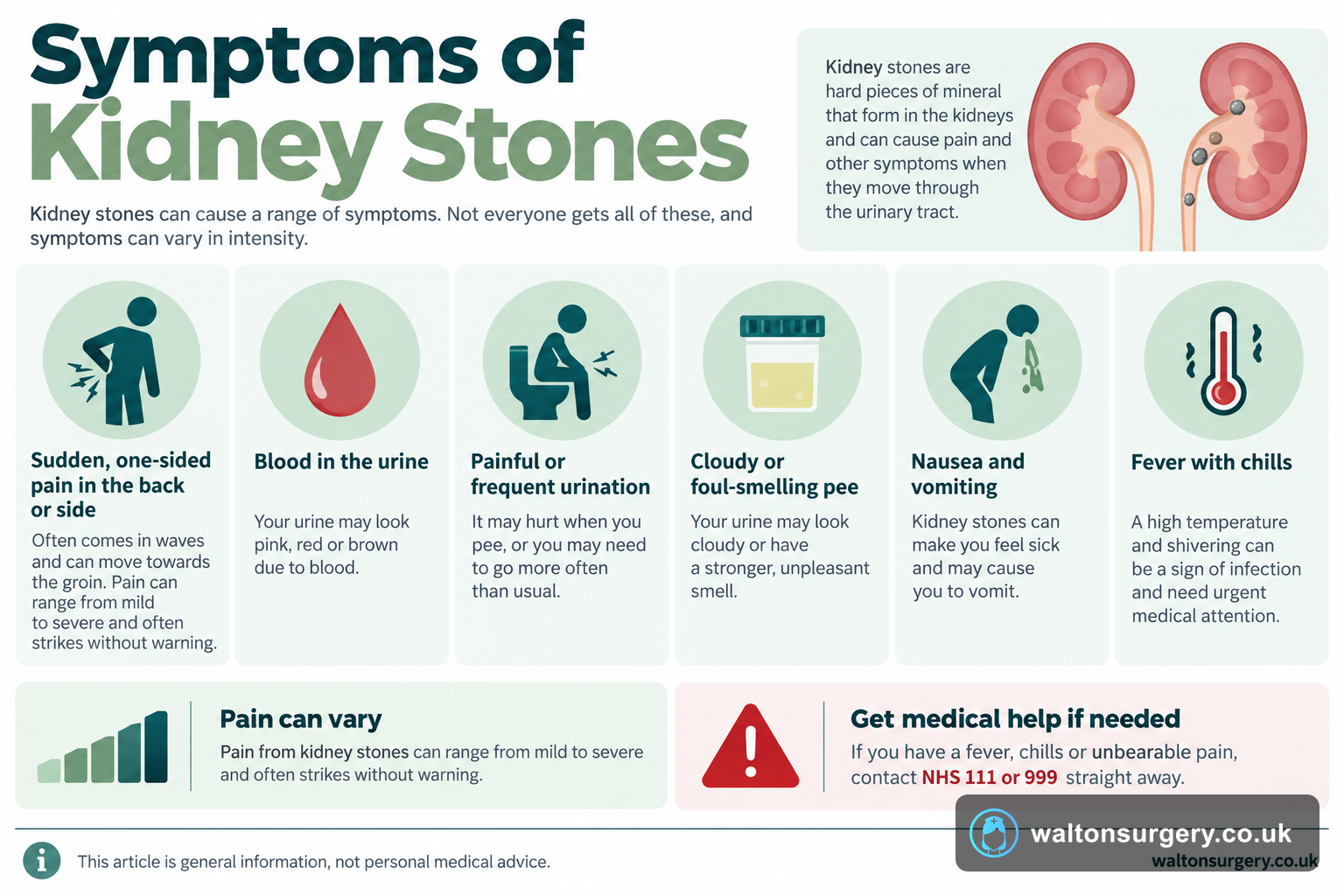
⚡ Quick Answer
The symptoms of kidney stones include sudden, one-sided pain in the back or side that comes in waves and can move toward the groin, plus blood in the urine, painful or frequent urination, cloudy or foul-smelling pee, nausea and vomiting, and fever with chills. Pain can range from mild to severe and often strikes without warning. If you have fever, chills or unbearable pain, contact NHS 111 or 999 straight away. This article is general information, not personal medical advice.
Back or abdominal pain that appears out of nowhere can be unsettling, and it's natural to wonder whether a kidney stone is behind it. The symptoms of kidney stones tend to be difficult to miss: sudden pain in the side and back under the ribs, which often travels down to the lower abdomen and groin, along with changes to your urine and sometimes sickness or a fever.
Plenty of people get kidney stones and many pass them without any intervention, though the pain is no joke and complications do occur. Being clear on the warning signs means you can work out whether it's something to manage at home, whether a pharmacist or your own GP should be involved, or whether you need NHS 111 or 999.
What the symptoms of kidney stones actually feel like
Once kidney stone symptoms get going, they're usually hard to mistake for anything else. The summaries currently ranking on Google.com under "Kidney stones" and "Do You Have Kidney Stones? Your Guide to Symptoms" describe a pattern that's fairly recognisable.
Pain that comes in waves
Severe pain in the side and back, below the ribs, spreading down to the lower abdomen and groin — that's how doctors describe pain linked to kidney stones. The term for it is renal colic. The intensity varies from mild through to severe, and it tends to arrive in waves rather than staying at one flat level, which is one of the things that separates it from an ordinary bit of backache.
How the pain moves matters too. Usually it starts as a sudden one-sided ache in the back or side, comes in waves, and shifts downward toward the groin. Pain that's one-sided, moving and fluctuating is the kind of pattern a healthcare professional will want to hear about.
Changes to your pee
Of all the signs listed, urine changes come up repeatedly. Bad-smelling and/or cloudy pee feature in the Google.com summary "What You Should Know About Kidney Stones: 6 Signs", along with blood in the urine. Painful urination, needing to go more often, and passing tiny stones you can spot in the toilet are added by other ranked sources.
Whole-body symptoms
Feeling sick, vomiting, plus fever and chills all show up across the ranking pages as signs that might go alongside a kidney stone. Fever and chills in particular deserve proper attention, since they can indicate an infection has developed alongside the stone and that needs looking at promptly.
What are the first signs of kidney stones?
One of the most searched questions about this condition, and the ranked material from Google.com gives a consistent answer. Sharp pain in the back, side, lower abdomen or groin, blood in the urine, and urinary urgency or frequency — those are the usual early signs.
How it plays out in real life often goes like this. Everything's fine, then a pain begins low in the back or flank on one side. It ramps up, eases off a bit, comes back again. Around the same time you may find yourself needing to pee more, stinging when you do, or noticing your urine has turned pink, red or brown.
That pairing of one-sided back or side pain with a change in urination is the classic early picture. Notice it and you should contact your own GP for advice, or ring NHS 111 if the pain is urgent and a routine appointment feels too far away.
A full checklist of symptoms to watch for
Read this bit carefully, because kidney stone symptoms overlap with quite a few other conditions and having the full list in mind helps you describe accurately what's going on.
Pain-related symptoms
- Severe pain in the side and back, below the ribs.
- Pain that spreads to the lower abdomen and groin.
- Pain that occurs in waves, mild to severe.
- Sudden, one-sided onset in the back or side.
- Sharp flank pain, as described by the Google.com summary "Kidney Stone Symptoms: Understanding the Signs".
Urine-related symptoms
- Blood in the urine (urine may look pink, red or brown).
- Painful urination or a burning sensation.
- Cloudy urine.
- Foul-smelling urine.
- Increased need to urinate, including urinary urgency and frequency.
- Passing small stones in the urine.
Whole-body and general symptoms
- Nausea and vomiting.
- Fever.
- Chills.
- Feeling generally unwell alongside the pain.
What the different sources highlight
Pain comes first and gets the most emphasis on the Google.com page "8 Signs You May Have Kidney Stones", followed by peeing more frequently, pain and burning when urinating, blood in the urine, cloudy or foul smelling urine, nausea and vomiting, and fever and chills. A separate page — "What are the symptoms of kidney stones?" from 22 July 2022 — lists painful urination, blood in your urine, changes in urine such as foul odour and an increased need to urinate, kidney stones visible in the urine, fever and chills.
🔬 Key Facts
The full symptom checklist
- → Pain first: severe side and back pain below the ribs, spreading to the lower abdomen and groin, in waves, mild to severe, sudden and one-sided
- → Urine changes: blood in the urine, painful urination or burning, cloudy or foul-smelling urine, urgency and frequency, passing small stones
- → Whole-body: nausea and vomiting, fever, chills, and feeling generally unwell alongside the pain
- → The pattern is identical across sources every time: pain, urine changes, whole-body symptoms
Put the two side by side and the shape is identical every time: pain, urine changes, whole-body symptoms. Any of these appearing means a word with your own GP, or a pharmacist if general advice about pain relief and hydration is what you're after.
Kidney stones symptoms in women
People search for kidney stones symptoms in women a lot, and honestly the core symptom list barely shifts between sexes. Side and back pain, blood in the urine, painful or frequent urination, nausea, fever — the sources in this research pack describe them the same way whether the page is aimed at men or women.
What does shift is what a kidney stone gets confused with. In women, lower abdominal pain and urinary symptoms overlap with other causes of pelvic pain and urinary trouble, and unexplained pelvic symptoms can point to quite different conditions entirely, which is why our guides to pectus excavatum symptoms and treatment and endometriosis symptoms and treatment sit alongside this one for readers trying to make sense of overlapping aches and pains. Which actually makes self-diagnosing harder, not easier. Flank or abdominal pain with unexplained urinary changes and you're a woman? Your own GP is where to start. NHS 111 is there if the pain is urgent and waiting isn't realistic.
Kidney stones symptoms in men
"What are the signs and symptoms of kidney stones in men?" sits in the People Also Ask queries for this topic and warrants a straightforward answer. Severe side and back pain spreading to the lower abdomen and groin, blood in the urine, painful urination, urgency and frequency, nausea and vomiting, fever and chills — the ranking sources list all of these and they apply to men exactly as they do to women.
Groin pain is the one that crops up specifically for men. The typical kidney stone pain pattern travels downward toward the groin as the stone shifts, and men often describe this as a deep ache in the testicle or the surrounding area. That spreading pattern forms part of the renal colic picture laid out in the Google.com summary "Kidney stones". Persistent or severe pain there needs a healthcare professional looking at it either way, so get in touch with your own GP or NHS 111.
Do kidney stones make you pee a lot at night?
Short answer: they can. Frequent urination comes up again and again in the research pack as a symptom of kidney stones, whether that's the urinary urgency and frequency noted on the Google.com page "What Are the First Signs of Kidney Stones" or the "peeing more frequently" mentioned in "8 Signs You May Have Kidney Stones".
Needing to pee often can happen day or night, especially once a stone moves lower down the urinary tract and starts irritating the bladder. It can leave you feeling like you have to go constantly even though there's barely anything there to pass.
Kidney stone frequent urination no pain
A question that turns up repeatedly in related searches: can frequent urination happen on its own, without any pain at all? It's unusual, is the short answer. The symptom lists in this research pack consistently pair pain with urinary changes.
Pain thresholds aren't the same for everyone though, and some stones cause only mild or intermittent symptoms. Unexplained changes to how often you pass urine — painful or not — are worth raising with your own GP rather than brushing off. A pharmacist can weigh in too on whether urinary symptoms need looking at further.
How to stop the urge to pee with kidney stones
Needling, constant urgency is one of the more wearing parts of going through a kidney stone episode. As for how to actually suppress that urge, the ranking sources don't give specific techniques and this article isn't going to make any up. What they do emphasise is that the stone itself, the underlying cause, is the thing that needs sorting.
Persistent or unbearable urge to urinate? Ring your own GP, or NHS 111 when it's urgent and you can't wait. Being unable to pass urine at all is a medical emergency — 999 or A&E, straight away.
What causes kidney stones and how to prevent them
These two questions constantly arrive together in searches. The research pack for this article is focused on symptoms rather than causes, so we can only speak in general terms here without inventing figures.
What causes kidney stones
Substances in the urine concentrate and crystallise instead of remaining dissolved — that's how kidney stones form. The ranked sources in the material available here don't list specific causes or risk factors, so this article won't put numbers or causes on the list beyond what's verified. Family history, diet, medication, a previous stone — if you want to understand your own risk factors, your own GP is who to ask.
How to prevent kidney stones
Different people form stones for different reasons, so prevention depends on why they form in the first place. General advice about fluid intake and diet is all over the place, but the research pack behind this article doesn't include verified prevention figures or recommendations and we're not going to present specific advice as fact. If you've had a kidney stone before, though — that much we can say with confidence — your own GP can help figure out what might cut the risk of another one.
Can kidney stones kill you?
It shows up in related searches and it deserves a straight answer rather than reflexive reassurance. Most kidney stones are treatable and many pass on their own. But complications happen, particularly when a stone blocks the flow of urine or an infection develops alongside it.
The ones to take most seriously are fever and chills, which the ranking sources list as kidney stone symptoms. Fever along with back or side pain can mean infection, and infection needs urgent treatment.
When to call 999
Call 999 or go to A&E if:
- You have severe pain that is unbearable and not settling.
- You have a fever with back or flank pain and feel very unwell.
- You cannot pass urine at all.
- You have symptoms of a serious infection, such as confusion, a very fast heart rate, or feeling like you might collapse.
When to call NHS 111
Call NHS 111 if:
- You have severe pain but are not in immediate danger.
- You have a fever with urinary symptoms.
- You need advice out of hours and cannot wait for your own GP.
- You have blood in your urine and pain that is getting worse.
How is a kidney stone diagnosed and treated?
Symptoms, not treatment pathways, are what the sources in this research pack cover, so this bit stays general and points you toward the right professional.
Getting a diagnosis
Usually it starts with a chat about what you've been experiencing, followed by tests arranged by a healthcare professional. Symptoms that could be a kidney stone? Contact your own GP and they can line up the right assessment. NHS 111 helps when your symptoms are urgent and you need advice fast.
Can shockwave therapy be used to treat kidney stones?
A People Also Ask question for this topic. Shockwave therapy is a recognised treatment used for some kidney stones in NHS and private practice, but the research pack for this article doesn't include verified detail about when it's used, how it works, or who it suits. Those details are not going to be invented here.
Whether shockwave therapy is an option in your case is something the urologist or specialist assessing you can tell you. Your own GP can refer you for that assessment if it turns out to be needed.
Frequently Asked Questions
⭐ The Bottom Line
What this means for you
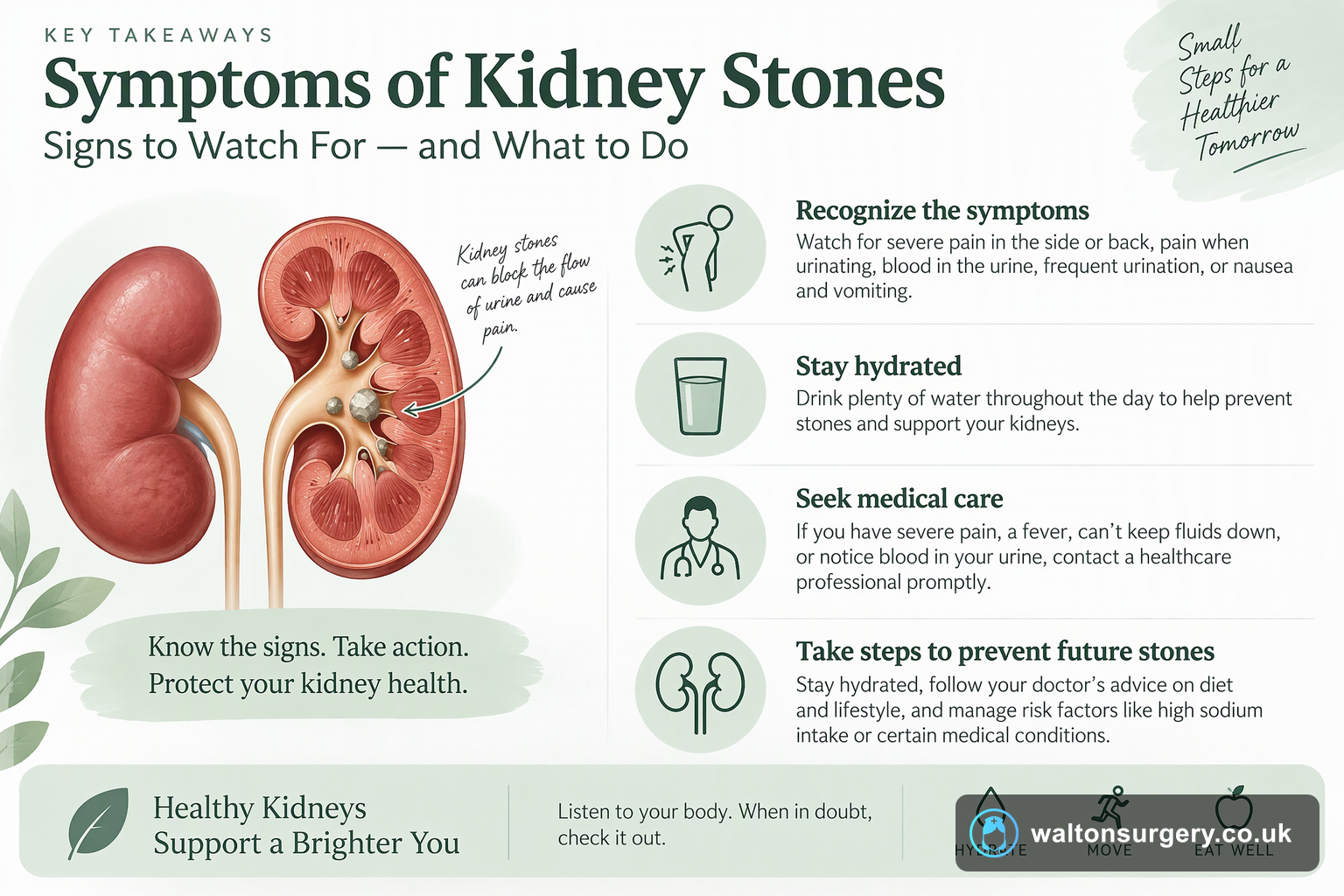
Once they start, the symptoms of kidney stones are usually easy to recognise: sudden, one-sided pain in the side or back below the ribs that often spreads to the groin, along with blood in the urine, painful or frequent urination, and sometimes fever and chills. Fever, unbearable pain, or being unable to pass urine at all — call 999 in any of those situations. Urgent advice? Call NHS 111. Anything less urgent, speak to your own GP or a pharmacist. This article is general information, not personal medical advice.
If you are weighing up different causes of ongoing pain or unexplained symptoms across the body, our newsroom keeps a growing library of plain-English explainers, including a parent-focused guide to childhood cancer symptoms and signs parents shouldn't ignore, alongside the condition guides linked above.
Last updated: 2026-11-22 · Written by the Walton Editorial Team · Walton Health News is an independent health information site, not a GP practice. Information is for educational purposes only and does not replace advice from your own GP, pharmacist or NHS 111.