

⚡ Quick Answer
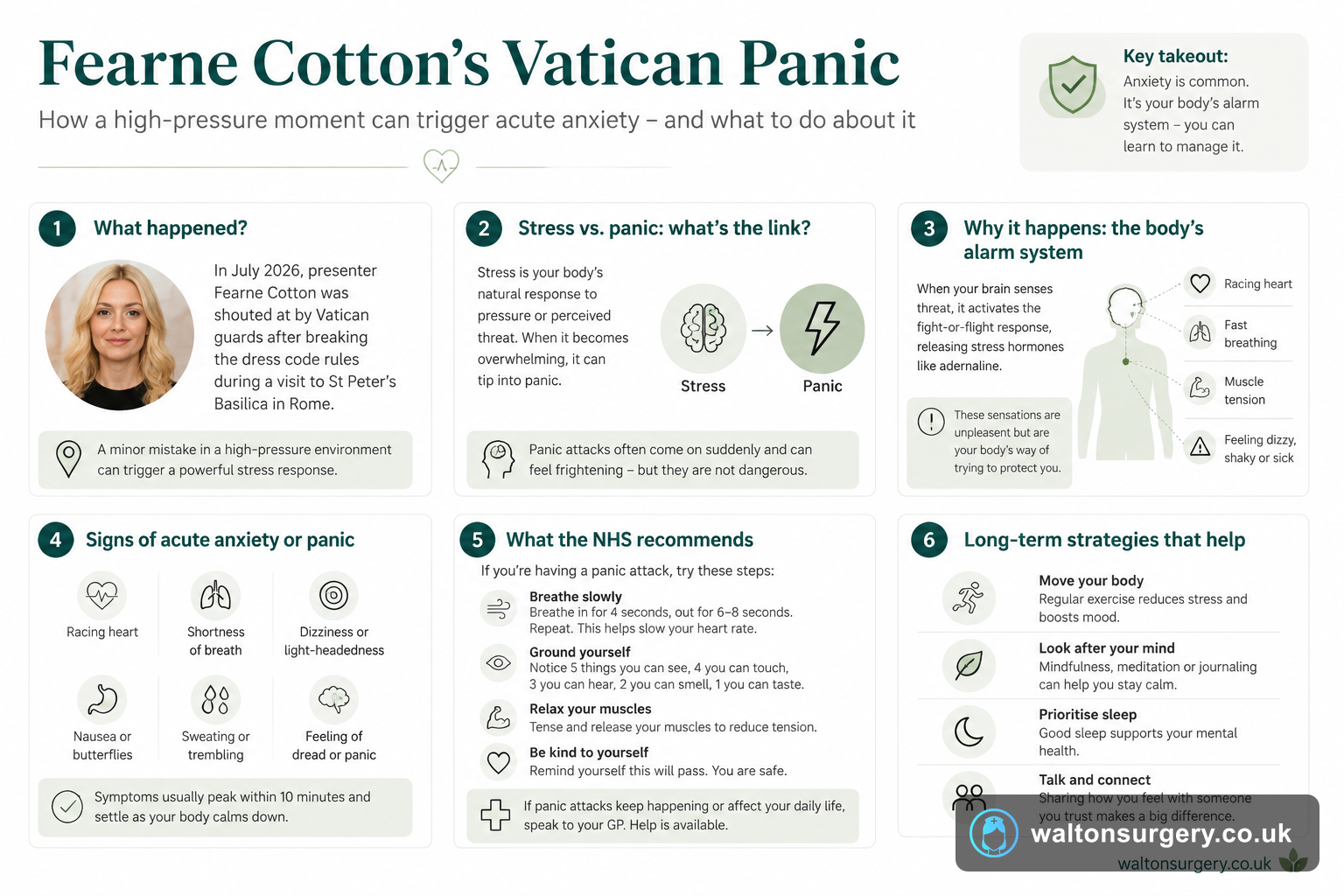
Back in July 2026, presenter Fearne Cotton ended up being shouted at by Vatican guards after she broke some rules on a trip to Rome. It’s a good, clear example of how a sudden, high-pressure moment can bring on acute anxiety. What we’re looking at here is the link between stress and panic, how the body reacts when it thinks it’s under threat, and what the NHS actually recommends you do to handle that rush of adrenaline.
A report from The Mirror tells us that in July 2026, TV presenter Fearne Cotton had a confrontation with Vatican guards in Rome. They yelled at her for breaking some rules. The details of how she felt aren’t known, but the situation is textbook for triggering acute anxiety. It was sudden, high-stakes, public, and in an unfamiliar place. For a lot of people, getting told off by an authority figure in front of others can make stress levels go from bad to worse in a second, tipping you right into a panic.
Getting how this works matters if you ever feel swamped in moments like that. It’s not about being weak. It’s your body’s biology kicking in. When someone confronts you and shouts, your sympathetic nervous system switches on and dumps stress hormones into your system. This article looks at how places packed with tourists and pressure make this happen, and what you can actually do to manage the flood of anxiety when it arrives.
What Is Acute Anxiety?
Acute anxiety is an episode of fear or discomfort that hits you hard and fast, peaking in minutes. It’s not the same as Generalised Anxiety Disorder (GAD). GAD is a long-term, persistent thing. Acute anxiety is reactive. It happens because of a specific trigger. In this case, a loud telling-off or a sudden change in surroundings.
The symptoms can feel more medical than emotional. Your heart might pound or feel like it’s skipping beats. You could start trembling, sweating, or get short of breath. Nausea sometimes appears out of nowhere. The NHS explains this happens when your “fight or flight” response fires off when it doesn’t really need to. Your body gears up to fight a physical threat or escape from it, even if the “threat” is just a guard raising his voice at you for a rule you didn’t even know you’d broken.
Why High-Pressure Environments Trigger Panic
That incident at the Vatican shows how certain things about an environment can add to anxiety. Tourist spots that are already packed are tough on your nervous system. You’re dealing with sensory overload—the noise, the heat, all the people pressing in. Layer a sudden argument on top of that existing stress, and it’s easy for the system to get overloaded. For many people, carrying items like anxiety rings can offer a subtle, grounding distraction in such moments.
Social anxiety is part of it too. Being told off in public brings a strong sense of self-consciousness and shame. Your body sees social exclusion or public humiliation as a real danger. If you’re someone who’s already anxious, visiting places with strict rules or heavy security can have you on edge before you even walk through the door. A guard shouting at you then becomes the thing that tips you over into a serious stress response.
The Biology Behind the Reaction
When anyone, Fearne Cotton included, gets yelled at unexpectedly, the amygdala in the brain—the part dealing with emotions—fires a distress signal to the hypothalamus. The hypothalamus then talks to the rest of your body via the autonomic nervous system.
🔬 Key Facts
Your Brain on Adrenaline
- → The Amygdala triggers the distress signal when it senses a threat.
- → The Hypothalamus acts as the command centre, activating the nervous system.
- → Adrenaline & Cortisol are pumped out, increasing heart rate and breathing.
- → Sensory Sharpness increases, often leading to a feeling of being “frozen” or blank.
The adrenal glands get the message and start pumping out adrenaline and cortisol. These hormones make your heart beat faster to get blood to your muscles. Your breathing speeds up to pull in more oxygen. Your senses get sharper. In the context of the Vatican, where Cotton had flouted rules, this whole biological surge is happening at the same time your brain is trying to work out the social side of what’s going on. That’s what leads to that feeling of being “frozen” or mentally blank.
Acute Stress Disorder vs. Panic Attacks
It’s useful to know the difference between a moment of high stress and a clinical panic attack. Acute Stress Disorder (ASD) can happen right after a stressful event. Symptoms include dissociation, which is feeling detached from reality, re-experiencing the event in your mind, and avoiding anything that reminds you of it.
A panic attack is different. It’s a sudden surge of intense anxiety that comes without any warning. The NHS points out that panic attacks are physically harmless, even though they feel absolutely terrifying. If you find that a trip to a busy place like Rome leads to episodes of serious fear that stick around even after you’ve left the situation, you might be having panic attacks that need their own specific ways of coping.
How to Manage Immediate Symptoms
Stuck in a high-pressure situation—maybe you’ve been yelled at by security or you’re just lost in a crowd that’s too much—there are immediate, practical things you can do. Health bodies recommend these to calm your nervous system.
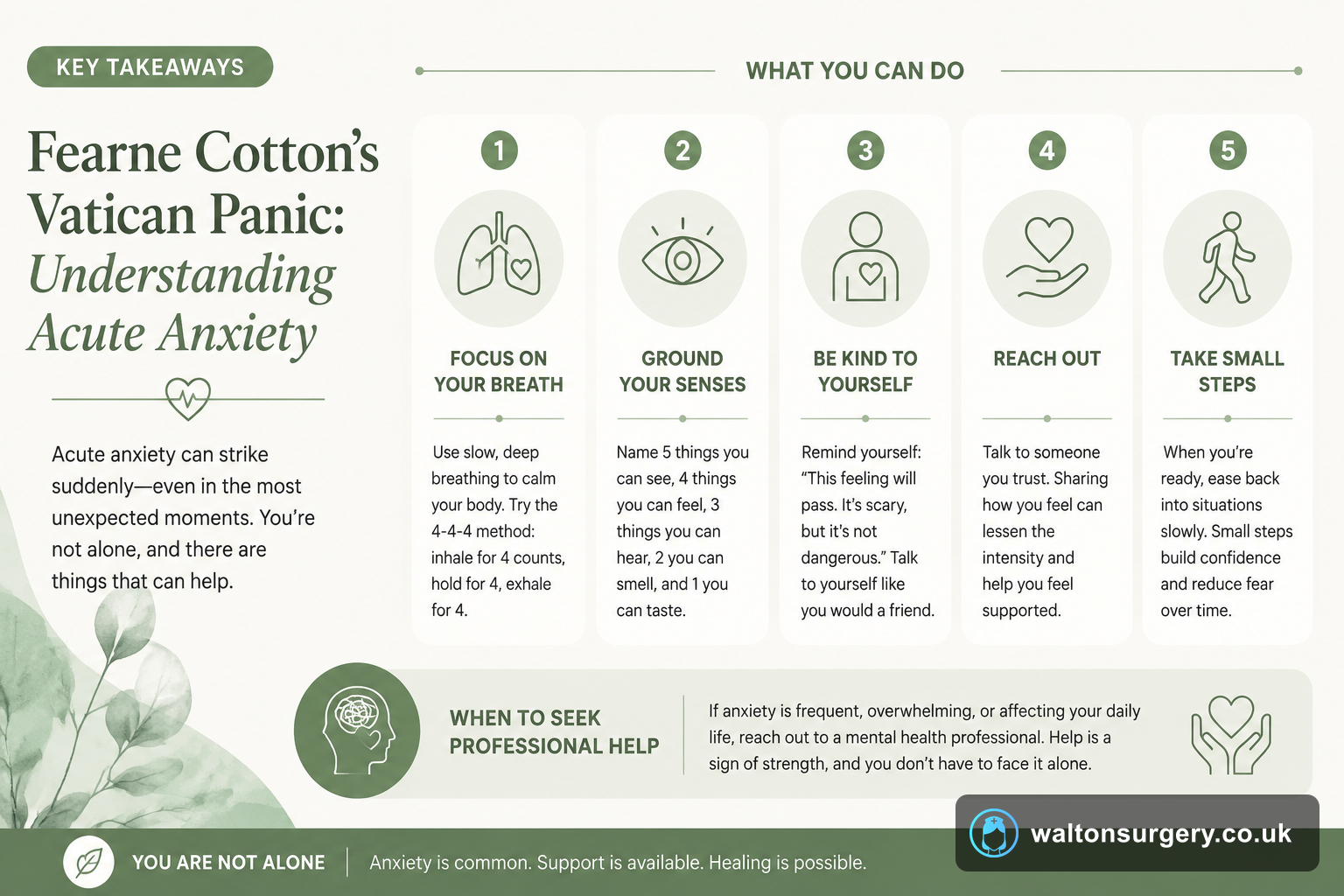
First, try to get a handle on your breathing. When you’re anxious, you tend to hyperventilate. That lowers the carbon dioxide in your blood and makes you dizzy. A technique people are often told about is “box breathing.” You breathe in for a count of four, hold it for four, breathe out for four, and then hold empty for four. It manually slows your heart rate down. Second, use grounding. Pick a physical object to focus on. Name five things you can see, four you can touch, three you can hear, two you can smell, and one you can taste. It forces your brain back into the here and now. Some people also find that herbal remedies for anxiety uk can provide a calming effect when used alongside these breathing techniques.
Navigating the Aftermath
The embarrassment of being told off in public often hangs around longer than the actual adrenaline rush. Rumination—going over the event again and again in your head—is a common symptom of social anxiety. You worry about what other people thought of you, or you feel ashamed for breaking the rules.
The Mental Health Foundation says that self-compassion is the answer to this shame. Remind yourself that mistakes happen, especially in a foreign country with rules you don’t know. If you were with other people, like Cotton was on her Rome trip, talking about what happened instead of keeping it bottled up can help let the tension out. Admitting it was a scary moment, rather than pretending you weren’t frightened, helps your nervous system settle back down.
Long-Term Strategies for High-Stress Travel
Travel means you have to hand over control to airlines, security staff, and foreign authorities. For someone with anxiety, that’s a primary trigger. To help with this, preparation is important. Look up the specific rules of the place you’re going to. If you know you’re visiting somewhere strict, check out the code of conduct beforehand so you feel sure you won’t accidentally do something wrong.
It’s also a good idea to plan some “low-stimulus” time into your schedule. If you’ve got a day of sightseeing in a chaotic city, make sure your evening is somewhere quiet where you can decompress. The NHS advises that keeping a routine going, even when you’re on holiday—like having meals and going to bed at roughly the same time—can help keep anxiety levels from getting out of control. Managing physical health is vital too; for instance, heart procedures like those famously undergone by Jeremy Clarkson health heart procedure highlight the importance of keeping stress low for cardiovascular well-being.
Frequently Asked Questions
The Bottom Line
⭐ The Bottom Line
What this means for you
The story about Fearne Cotton at the Vatican is a reminder that even places you know can suddenly turn into high-pressure zones. Acute anxiety is a biological reaction to what your brain perceives as a threat. It isn’t a sign of weakness. Once you understand what sets it off and use the breathing and grounding techniques the NHS recommends, you can handle these sudden spikes in stress. If you find these reactions are taking over your life, talking to your GP is the best step for long-term management.
Last updated: 2026-07-21 · Written by the Walton Surgery editorial team · Medical information is for educational purposes only and does not replace advice from a qualified healthcare professional.
