What is endometriosis? Symptoms, diagnosis and treatment in the UK
⚡ Quick Answer
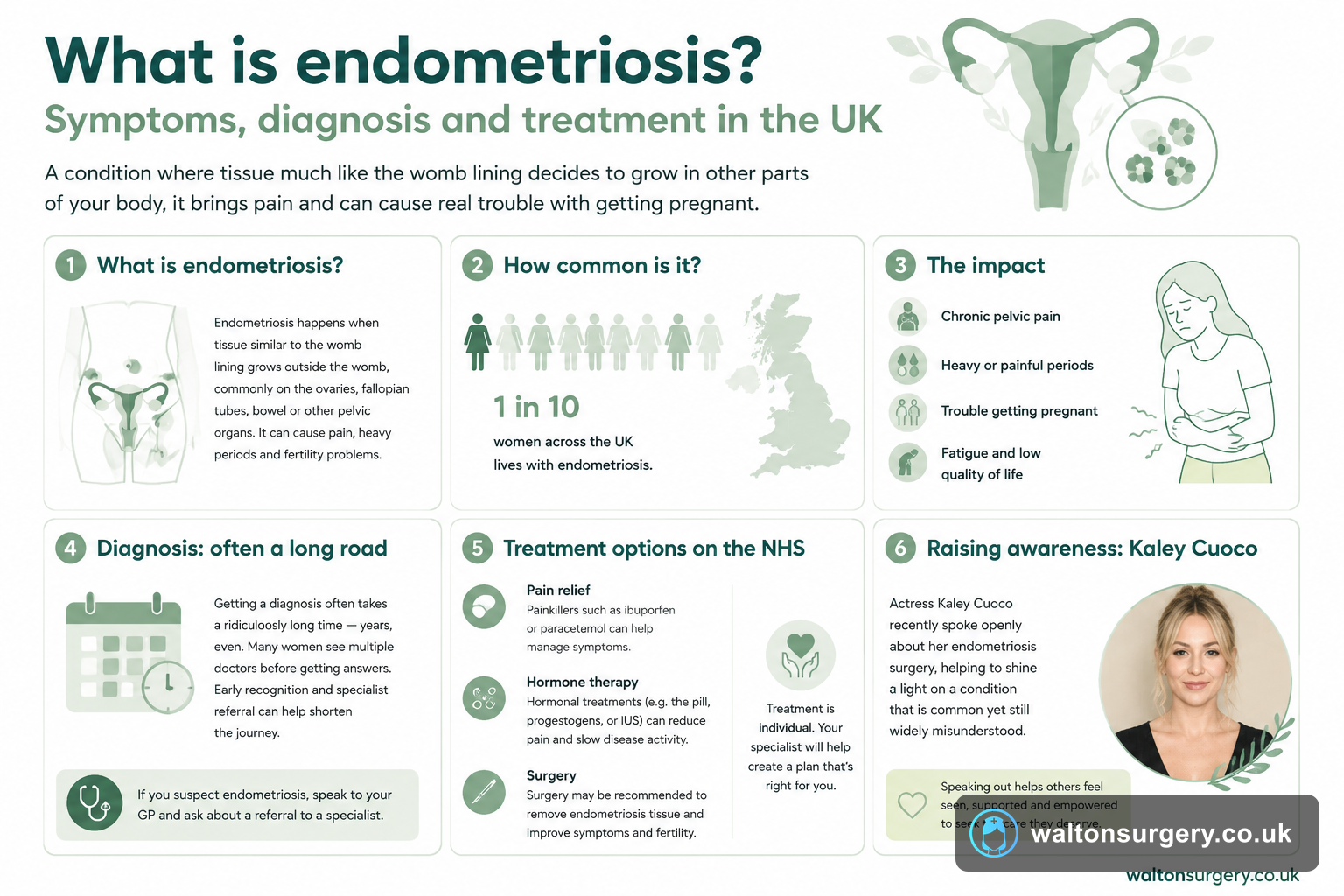
A condition where tissue much like the womb lining decides to grow in other parts of your body, it brings pain and can cause real trouble with getting pregnant. One in ten women across the UK lives with it. Getting a diagnosis often takes a ridiculously long time — years, even — yet treatments like painkillers, hormone therapy and surgery are all there on the NHS. The actress Kaley Cuoco recently spoke openly about her own endometriosis surgery, which has helped shine a light on something common yet still widely misunderstood.
Kaley Cuoco, known from 'The Big Bang Theory', having surgery for endometriosis has dragged this condition back into the conversation. If you've caught the headlines and actually want to know what it is, how the NHS treats it here in the UK, and what your own options might look like, stick around. You'll find straightforward, practical information below, grounded in what's officially understood. Her openness has encouraged wider discussions around celebrities with endometriosis and the reality of living with this condition.
Roughly one in ten women in the UK has endometriosis. What happens is tissue very similar to the womb lining — the endometrium — starts growing in places it really shouldn't be, like on the ovaries, the fallopian tubes, or the tissue that lines the pelvis. This tissue acts just like normal womb lining does: it thickens, breaks down, bleeds every menstrual cycle. Problem is, it's got no way out of the body. So it gets trapped. That leads to inflammation, pain, and scar tissue can start forming.
What exactly causes endometriosis?
Honestly, nobody can tell you the exact cause. There are several theories floating around, but not one of them has been proven as the single, definitive explanation.
One idea is retrograde menstruation — basically, some menstrual blood flows backwards, up through the fallopian tubes and into the pelvis, instead of leaving your body the way it should. That blood carries womb-lining cells, and those cells might implant on pelvic organs and start to grow. But here's the thing: retrograde menstruation probably happens in most women who get periods, and only a small number actually develop endometriosis. So clearly, something else must be going on.
Other possibilities that have been looked at include a genetic predisposition, issues with the immune system (it might not recognise and destroy the endometrial-like tissue growing where it shouldn't be), and cells spreading via the bloodstream or lymphatic system. The NHS basically says it's most likely a mix of these factors, rather than any single one.
What symptoms should you look out for?
The symptoms are all over the map. Some people get hit hard; others barely notice a thing. The ones that come up most often are:
Pelvic pain — usually worse when you're on your period. People describe it as intense cramping or sometimes just a dull ache that won't quit. Pain during or after sex. Pain when you wee or open your bowels, especially around your period. Heavy periods — soaking through pads or tampons every hour, maybe passing big clots. Trouble getting pregnant. Fatigue, low mood, and just feeling generally rough when you're menstruating.
Something worth understanding is that how bad your symptoms feel doesn't necessarily line up with how extensive the condition actually is. You can have fairly mild endometriosis and be in absolute agony, while someone with widespread growths might have hardly any symptoms at all. That mismatch is a big reason the condition gets missed or brushed off so often.
If any of that sounds familiar, book a GP appointment. You really don't have to soldier through "bad periods" — treatments exist that can help, and a diagnosis is where it all starts.
How is endometriosis diagnosed in the UK?
Diagnosis is often a painfully slow business. In the UK, it takes roughly 7 to 8 years on average from when symptoms first appear to a confirmed diagnosis. Partly that's because symptoms look a lot like other things — irritable bowel syndrome, pelvic inflammatory disease — and partly because a normal ultrasound or blood test doesn't rule it out.
Your GP should begin by asking about what you've been experiencing and your medical background. They might do an internal examination to feel for tenderness, lumps, or anything else unusual.
🔬 Key Facts
Diagnosis in the UK
- → Average time to diagnosis: 7 to 8 years
- → Definitive diagnosis requires a laparoscopy (keyhole surgery)
- → Pelvic ultrasound can only detect larger deposits (endometriomas)
- → Symptoms overlap with IBS and pelvic inflammatory disease
There's no straightforward test. A pelvic ultrasound can sometimes pick up bigger patches — endometriomas — sitting on the ovaries, but it won't catch smaller deposits. The only way to get a definitive answer is a laparoscopy. That's a keyhole operation. A surgeon puts a thin camera through a tiny cut in your abdomen and looks directly at your pelvic organs. If they find endometriosis, they can often deal with it right then and there. It's worth noting that while laparoscopy is standard, understanding the full picture of endometriosis surgery risks complications aorta is an important part of informed consent before any procedure.
Should your GP suspect endometriosis, they ought to refer you to a gynaecologist. Under NHS guidelines you have every right to ask for that referral if you're worried and initial treatment hasn't made things better.
What treatments are available on the NHS?
Treatment hinges on how much your symptoms bother you and whether you're trying for a baby. There's no cure, but the symptoms can definitely be managed.
Pain relief is usually the first port of call — over-the-counter options like ibuprofen, which is an anti-inflammatory, and paracetamol. Your GP can prescribe something stronger if those aren't cutting it.
Hormone treatments work by cutting down or stopping oestrogen production, since oestrogen encourages endometriosis tissue to grow and bleed. You've got the combined oral contraceptive pill, the progestogen-only pill, contraceptive injections or implants, and GnRH analogues — these last ones essentially put you into a temporary menopause-like state. One catch: hormone treatments stop you getting pregnant while you're on them, so they're no good if you're trying to conceive.
Surgery comes into play when symptoms are really severe or hormone treatments haven't done enough. The standard procedure is laparoscopic surgery to remove or destroy endometriosis deposits. In certain cases a hysterectomy — removing the womb entirely — gets considered, though that's very much a last resort and only really appropriate for someone who's finished having children. It's a subject that resonates beyond the clinic; public figures like angie best surgery condition have highlighted how life-changing these decisions can be.
All of these are available through the NHS. Your gynaecologist will talk through what makes sense for you personally, balancing benefits, side effects, and what you'd prefer.
How long does NHS treatment take?
How long you wait for gynaecology appointments and surgery really depends on where you are in the UK. In England, the NHS Constitution promises you should begin consultant-led treatment within 18 weeks of a GP referral. Reality is often messier, especially since the COVID-19 pandemic left huge backlogs.
If your symptoms are bad or getting worse while you're stuck in the queue, flag it with your GP. They might be able to speed up the referral or look at stopgap measures like painkillers or hormonal treatment in the meantime.
You've also got the right to choose which hospital you're referred to, via NHS e-Referral, and waiting times are listed on the NHS website. Scotland, Wales and Northern Ireland have similar referral systems, though their specific waiting time targets are slightly different.
Living with endometriosis — what can help day to day?
Beyond the medical stuff, there are everyday things that might ease symptoms:
Heat: A hot water bottle or a heat pad on your lower abdomen can genuinely help with cramps.
Movement: Gentle exercise — walking, swimming, yoga — reduces pain for some. Nothing works universally, so have a play around and see what your body responds to.
Diet: There's no scientifically proven endometriosis diet. That said, some people find cutting back on caffeine, alcohol, or processed foods makes a noticeable difference. If you reckon certain foods make yours worse, keep a food diary and track it.
Support: Endometriosis takes a toll on your mental health, relationships, and working life too. The charity Endometriosis UK runs support groups, a helpline, and has loads of practical resources. Talking to people who actually get it can be a lifeline.
None of this replaces proper medical treatment, mind you. These are things you do alongside it.
Endometriosis and fertility
Fertility can be affected — but it isn't always. Somewhere between 30 and 50 per cent of people with endometriosis find it harder to conceive, though plenty still manage to get pregnant naturally or with a bit of help.
If you're having trouble and you have endometriosis, your GP can refer you to a fertility specialist on the NHS. Depending on how severe things are, that might mean surgery to remove the endometriosis tissue (which can boost the chances of natural conception) or assisted methods like IVF.
Been trying for a year — or six months if you're over 35 — without success? Go see your GP. You don't need a confirmed endometriosis diagnosis to get a fertility referral; that assessment is available to you regardless.
Frequently Asked Questions
⭐ The Bottom Line
What this means for you
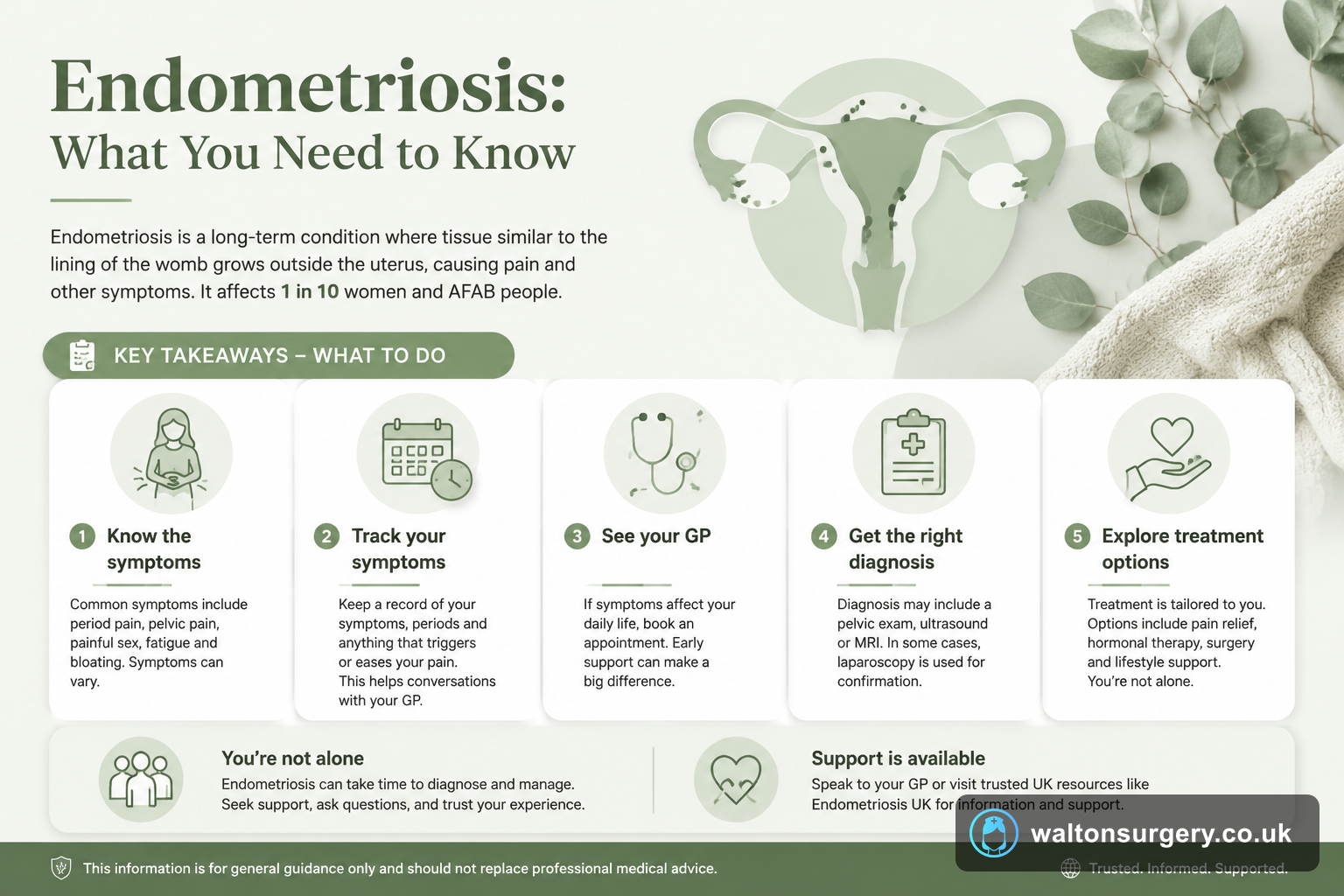
Endometriosis is a common, long-term condition. It causes real pain and can get in the way of having children. If you think you might have symptoms, don't sit on it — talk to your GP. Diagnosis might take a while, but effective treatments are there on the NHS. Stories like Kaley Cuoco's help get the word out, but what really matters is you getting the right information and proper support. You deserve to be heard, and you deserve to be taken seriously.
Last updated: 2026-07-20 · Written by the Walton Surgery editorial team · Medical information is for educational purposes only and does not replace advice from a qualified healthcare professional.