

⚡ Quick Answer
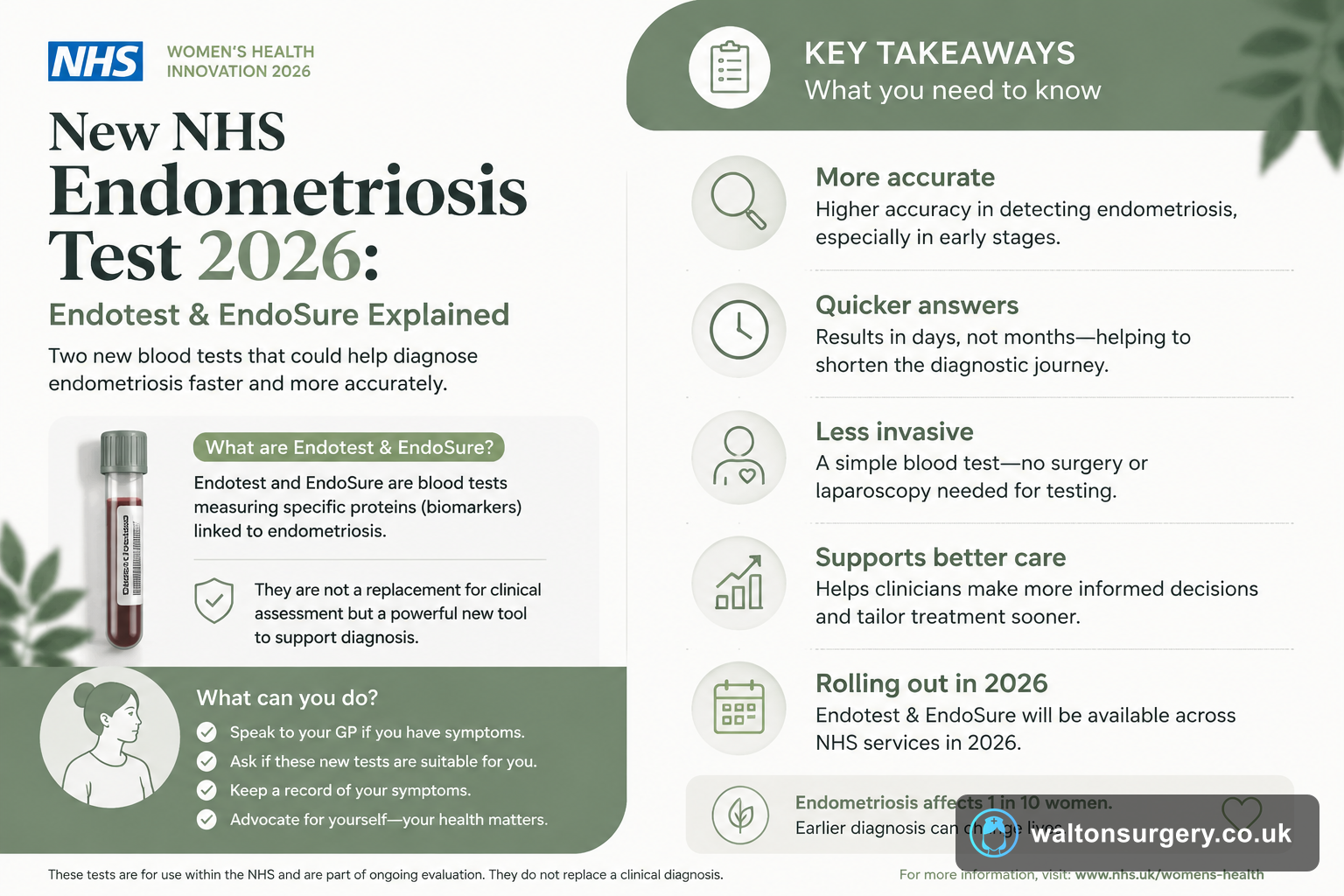
The NICE draft guidance has put forward two new tests, Endotest and EndoSure, which could be used in the NHS. Both aim to help GPs spot endometriosis much sooner. One uses saliva, the other uses gut sensor pads. They’re not a replacement for surgery, but they’re meant to speed up a diagnosis process that, right now, averages nine years and four months in the UK.
If you’ve been dealing with painful periods for what feels like forever, you might have caught the recent news about new NHS tests. On 7 July 2026, NICE put out its draft guidance, recommending two tests—Endotest and EndoSure—for use in primary care. This is a direct answer to the long, frustrating diagnostic road so many women have to walk. The idea is to give GPs better tools to spot endometriosis earlier, but it’s worth understanding exactly what these tests are, and what they aren’t.
What are the new endometriosis tests?
The guidance from NICE, the National Institute for Health and Care Excellence, recommends two distinct tests. They are designed to be used during the three-year period while more evidence is gathered on their effectiveness.
Endotest (The Saliva Test)
Endotest works by analysing a saliva sample. According to NICE, the test looks for specific microRNAs. These are tiny biological signal molecules in your saliva that are linked to the presence of endometriosis. You would provide a sample at your GP surgery or clinic. This sample is then sent to a laboratory for analysis. The result is returned to your clinician to help inform their decision on the next steps in your care.
EndoSure (The Gut Signal Test)
EndoSure takes a different approach. It is a 45-minute test that measures electrical signals in your gut. To prepare, you would need to fast and then drink water before the test. During the appointment, sensor pads are placed on your abdomen to pick up these electrical signals. The test is designed to be a supportive diagnostic tool that can be performed in a primary care setting.
How do these tests change the diagnosis process?
For many women, getting a diagnosis of endometriosis is a long and frustrating process. The current average time to diagnosis in the UK is 9 years and 4 months, according to Endometriosis UK. This figure has actually increased from about 8 years in 2020.
A survey by Endometriosis UK of 3,075 people diagnosed since 2015 found that around 1 in 4 had to visit their GP 10 or more times before endometriosis was even suspected. The hope is that these new tests, when used in primary care, could shorten this timeline. By giving GPs a non-invasive way to gather more evidence, the tests could help decide whether a referral to a specialist or further investigation is needed more quickly. The NHS waiting times for a diagnostic laparoscopy, the current gold-standard test, can be up to 2 years in some trusts.
🔬 Key Facts
The UK Diagnosis Landscape
- → Average time to diagnosis: 9 years and 4 months (up from 8 years in 2020).
- → GP visits: 1 in 4 people visited their GP 10+ times before suspicion arose.
- → Laparoscopy wait: NHS waiting lists can be up to 2 years in some trusts.
Can I get one of these new tests on the NHS?
The tests are recommended for use within NHS primary care, which means your GP could potentially order them. However, there are several important points to consider. The NICE guidance is currently in draft form, meaning it could be subject to change before being finalised.
The guidance recommends using these tests during a three-year evaluation period. This means NHS trusts will need to decide how and when to implement them. Availability might not be immediate or universal across all areas of the UK. Your first step should always be a conversation with your GP about your symptoms. They will be best placed to tell you about the options available in your local area and whether these new tests are suitable for your situation.
What do these tests NOT do?
It is essential to understand the limitations of Endotest and EndoSure. NICE is clear that neither test is a standalone diagnostic. A positive result on one of these tests does not confirm you have endometriosis. A negative result does not rule it out completely.
They are designed to be supportive tools. The result informs the GP’s next steps, which could include a referral to a gynaecology specialist. The gold standard for a definitive diagnosis of endometriosis remains a diagnostic laparoscopy. This is a keyhole surgery performed under general anaesthetic where a surgeon can directly see the endometriosis tissue. These new tests aim to make the path to that diagnosis, if needed, more efficient, but they do not replace the need for specialist assessment or surgery.
Understanding the broader context in the UK
Endometriosis is a condition where tissue similar to the womb lining grows elsewhere in the body, such as on the ovaries, fallopian tubes, or the lining of the pelvis. It affects around 1 in 10 women of reproductive age in the UK, according to NICE and Endometriosis UK.
The diagnostic journey varies by nation. Endometriosis UK reports the average diagnosis time in England and Scotland is 8 years 10 months. In Northern Ireland, it is 9 years 5 months. In Wales, it is the longest at 9 years 11 months. The introduction of these new tests is part of a wider effort to address these significant delays and the impact they have on women’s lives, careers, and mental health.
Frequently Asked Questions
⭐ The Bottom Line
A faster route to answers, not a shortcut
The new NHS tests, Endotest and EndoSure, represent a promising step towards reducing the long wait for an endometriosis diagnosis. They offer non-invasive ways to gather supporting evidence in a GP setting. However, they are not a magic bullet. They are supportive tools used during an evaluation period, and a definitive diagnosis still relies on specialist assessment. If you have symptoms, speak to your GP. They can guide you on the best path forward based on your individual needs and local NHS services.
Last updated: 2026-07-19 · Written by the Walton Surgery editorial team · Medical information is for educational purposes only and does not replace advice from a qualified healthcare professional.
