What Is Oesophageal Cancer? Signs, Diagnosis and Outlook
PART C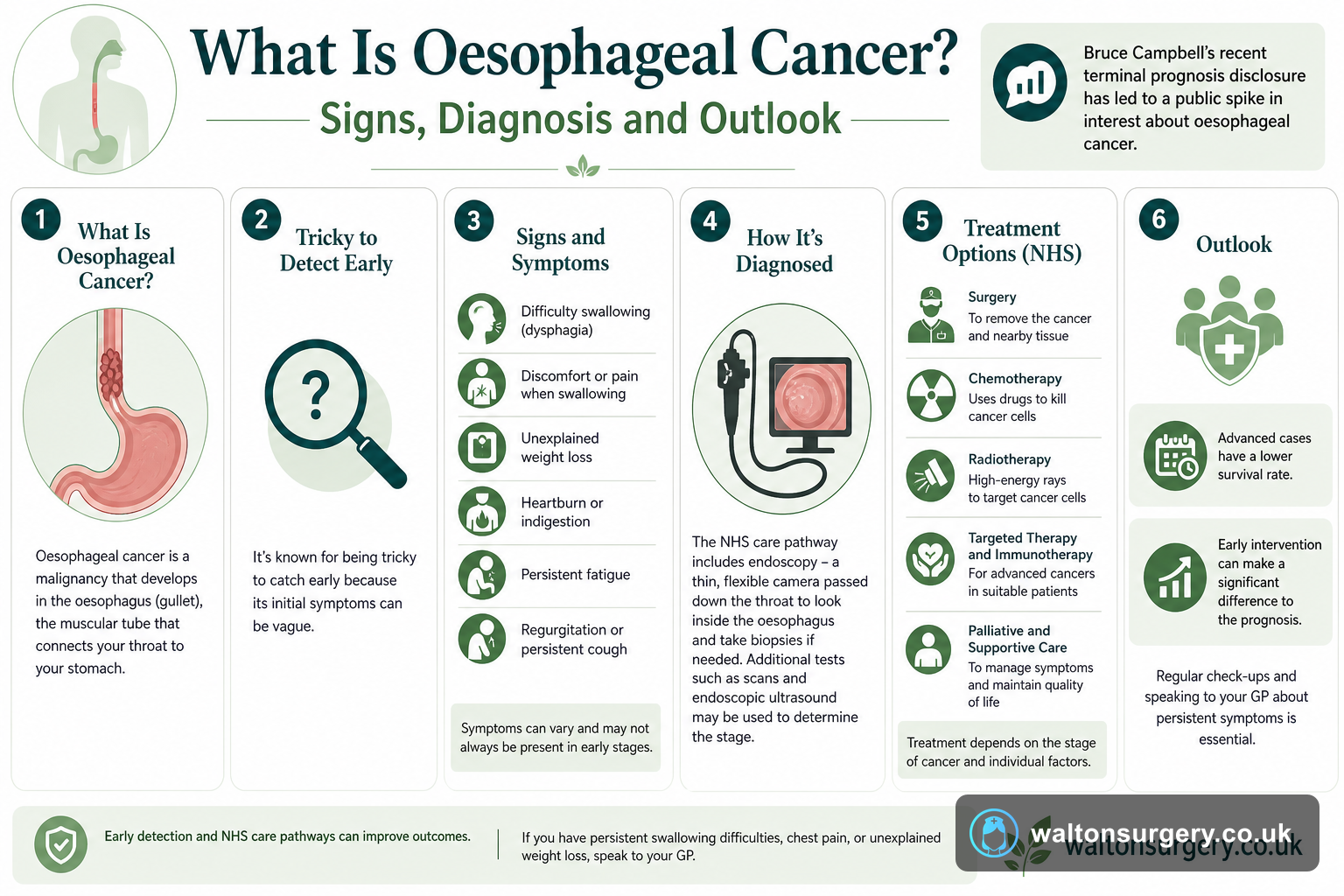
⚡ Quick Answer
Bruce Campbell's recent terminal prognosis disclosure has led to a public spike in interest about oesophageal cancer. This malignancy is one that develops in the gullet, which is the muscular tube connecting your throat to your stomach. It's known for being tricky to catch early because its initial symptoms can be vague. Within the UK, the NHS provides care pathways that include endoscopy and a range of treatments based on the stage. Advanced cases have a lower survival rate, but early intervention can make a significant difference to the prognosis.
The news about Bruce Campbell and his cancer has really brought oesophageal cancer into the spotlight. The actor, famous for some very distinct roles, has said he has about five years to live after his diagnosis. That timeline alone shows how aggressive this condition can be. For a lot of readers in the UK, this high-profile case is probably raising some immediate questions about their own throat health, especially if they're having trouble swallowing.
Getting to grips with this form of cancer is so important for early detection. Early detection is still the most critical factor when it comes to improving survival statistics. The disease affects the oesophagus, that tube that carries food from your mouth to your stomach. The prognosis for advanced stages, as we're seeing in Campbell's situation, can be limited. However, the NHS outlines clear pathways for diagnosis and management. This article looks at the condition, its risk factors, and what you can expect from healthcare professionals here in the UK.
What exactly is oesophageal cancer?
It starts when cells in the lining of the oesophagus begin to multiply out of control, which then forms a tumour. It's not just a single disease, though. It actually falls into two main categories, and these are classified by the type of cells where the cancer starts. Understanding the difference matters because the treatment approach can vary slightly between them, although the symptoms often stay similar in the early stages.
The two primary types are oesophageal adenocarcinoma and oesophageal squamous cell carcinoma. Adenocarcinoma usually starts in the glandular cells that produce mucus. You'll most often find it in the lower part of the oesophagus, near the stomach. Squamous cell carcinoma, on the other hand, typically develops in the flat, thin cells lining the upper and middle parts of the tube. While both types are serious, the NHS has noted that adenocarcinoma has become the more common type in the UK over recent decades.
Bruce Campbell cancer diagnosis: Why is prognosis often limited?
A prognosis of five years from a public figure like Bruce Campbell understandably causes concern. This specific timeframe suggests the disease was likely diagnosed at an advanced stage, meaning it had potentially spread beyond the oesophagus to nearby lymph nodes or other organs. The difficulty with oesophageal cancer is that it often grows silently. By the time it causes noticeable problems, such as significant weight loss or trouble swallowing solids, it may have already progressed. High-profile cases often highlight how a condition that starts subtly can become an incidental finding cancer diagnosis only when more serious issues appear.
NHS statistics in the UK reflect this challenge. If the cancer is found when it is localised strictly to the inner layers of the oesophagus, the chances of survival are much higher. But because symptoms are easy to dismiss as just heartburn or indigestion, many cases are only investigated once the tumour is large enough to obstruct the passage of food. This obstruction is usually the "alarm symptom" that prompts a GP referral, similar to how what was mums only symptom before cancer diagnosis can be something easily overlooked until it becomes severe.
Recognising the symptoms: What should you watch for?
Never wait for pain to appear, because oesophageal cancer rarely causes pain in its initial stages. The most common sign reported by the NHS is dysphagia, which is a medical term for difficulty swallowing. Initially, you might find it hard to swallow solid foods like bread or meat. You could feel as though the food is "sticking" in your chest or throat. As the tumour grows, even soft foods or liquids may become difficult to swallow.
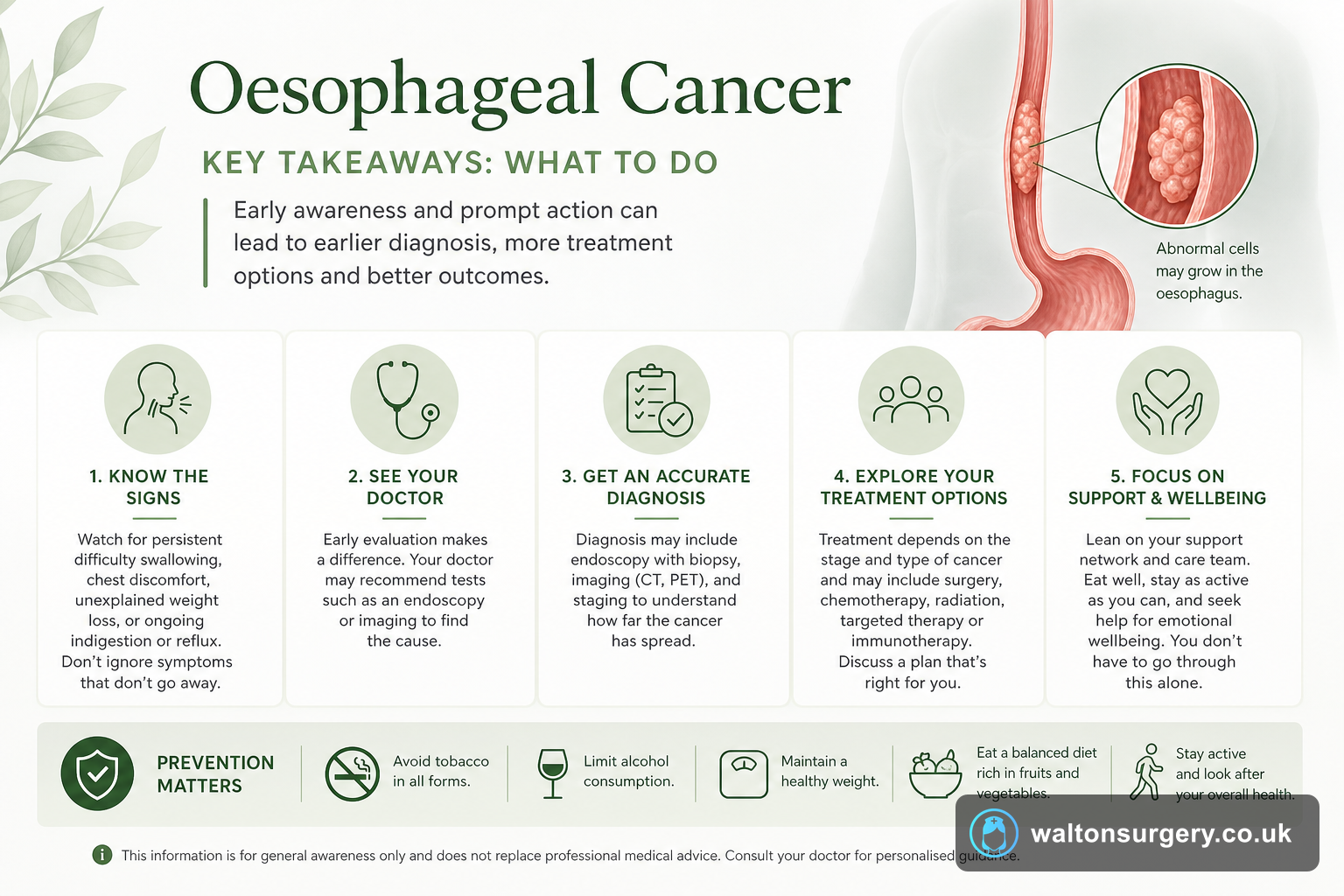
Other symptoms include unexplained weight loss, regurgitating food that hasn't been digested, and persistent indigestion or heartburn. Some people experience a chronic cough, hoarseness, or a sensation of pressure or burning in the chest. The NHS advises you contact your GP immediately if you experience difficulty swallowing for more than three weeks. Don't dismiss these signs as just a "sore throat" or something that comes with age.
Who is most at risk? Understanding the causes
The exact trigger isn't always clear, but specific lifestyle and medical factors are strongly linked to the development of this cancer. Long-term irritation of the oesophagus is a big contributor. For example, Gastro-Oesophageal Reflux Disease (GORD), where stomach acid frequently leaks back into the throat, can damage the lining over time. This can potentially lead to a condition called Barrett’s oesophagus, which is a precancerous state.
Smoking and excessive alcohol consumption are major risk factors, particularly for squamous cell carcinoma. The NHS also points to diet and weight; being overweight or obese increases the risk of adenocarcinoma due to things like increased acid reflux and hormonal changes. On the flip side, a diet low in fruit and vegetables is associated with higher risks. It's important to remember that having risk factors does not guarantee a diagnosis, but it does suggest you should be more vigilant regarding symptoms, much like the public interest following the lucy davis cancer diagnosis brought attention to early warning signs.
How is it diagnosed in the UK?
If you visit your GP with symptoms like difficulty swallowing, they will usually refer you to a hospital specialist for an urgent investigation. The NHS uses a "two-week wait" referral system for suspected cancer, ensuring you are seen quickly. The gold standard for diagnosis is an endoscopy. This is a procedure where a thin, flexible tube with a light and camera, an endoscope, is passed down your throat.
During the endoscopy, doctors can look directly at the lining of your oesophagus. If they see any abnormal areas, they will take a small tissue sample, known as a biopsy. This sample is sent to a laboratory to check for cancer cells. If cancer is confirmed, you will likely undergo further scans, such as a CT scan, PET scan, or an endoscopic ultrasound (EUS). These tests help doctors determine the exact size of the tumour and whether it has spread to lymph nodes or other organs. This is essential for staging the cancer.
🔬 Key Facts
Diagnosis and Staging
- → Endoscopy is the gold standard for direct visual examination of the oesophagus.
- → Biopsy samples are taken during endoscopy to confirm the presence of cancer cells.
- → CT, PET, or EUS scans are used post-diagnosis to determine tumour size and spread for accurate staging.
- → NHS "two-week wait" pathway ensures urgent specialist assessment for suspected cancer cases.
Treatment options and clinical pathways
Treatment for oesophageal cancer depends heavily on how far the disease has spread and your general health. For early-stage cancers that are still within the lining of the oesophagus, treatments might be less invasive. These can include endoscopic mucosal resection (EMR) or radiofrequency ablation, procedures used to remove or destroy the cancerous cells without needing open surgery.
For more advanced cancers, the treatment plan is often more aggressive and combines different methods. Surgery is a common route, potentially involving the removal of part or all of the oesophagus (an oesophagectomy). This major operation is often preceded by chemotherapy, sometimes combined with radiotherapy, known as chemoradiotherapy, to shrink the tumour first. If surgery isn't possible due to the cancer's location or the patient's fitness, chemotherapy and radiotherapy are used as the primary treatments. Their aim is to manage the disease and relieve symptoms like swallowing difficulties.
Living with the diagnosis: Palliative care and support
When a cancer is diagnosed at a stage where a cure is not possible, the focus shifts to controlling the cancer and managing symptoms for as long as possible. This is known as palliative care. In Bruce Campbell’s case, the "five years" prognosis indicates a situation where managing the disease is the priority. Palliative care is not just about end-of-life; it is about quality of life, starting from the moment of diagnosis.
Treatments like chemotherapy or radiotherapy might still be used to shrink a tumour and make swallowing easier. In some cases, a stent may be placed in the oesophagus to hold it open. Support teams in the NHS, including Macmillan nurses and dietitians, play a huge role in helping patients maintain nutrition and manage pain. Emotional support is equally important. Cancer charities provide counselling services to help both patients and their families cope with the psychological weight of the diagnosis.
Frequently Asked Questions
⭐ The Bottom Line
What this means for you
The news about Bruce Campbell is a stark reminder of how aggressive oesophageal cancer can be, particularly when diagnosed late. If you're in the UK and you're experiencing symptoms like food sticking in your throat or persistent heartburn, don't delay in speaking to your GP. The NHS has clear, rapid pathways to investigate these signs. While the disease is serious, early detection offers the best chance of successful treatment.
Last updated: 2026-09-05 · Written by the Walton Surgery editorial team · Medical information is for educational purposes only and does not replace advice from a qualified healthcare professional.