Early cancer signs: why you should never ignore subtle symptoms
PART C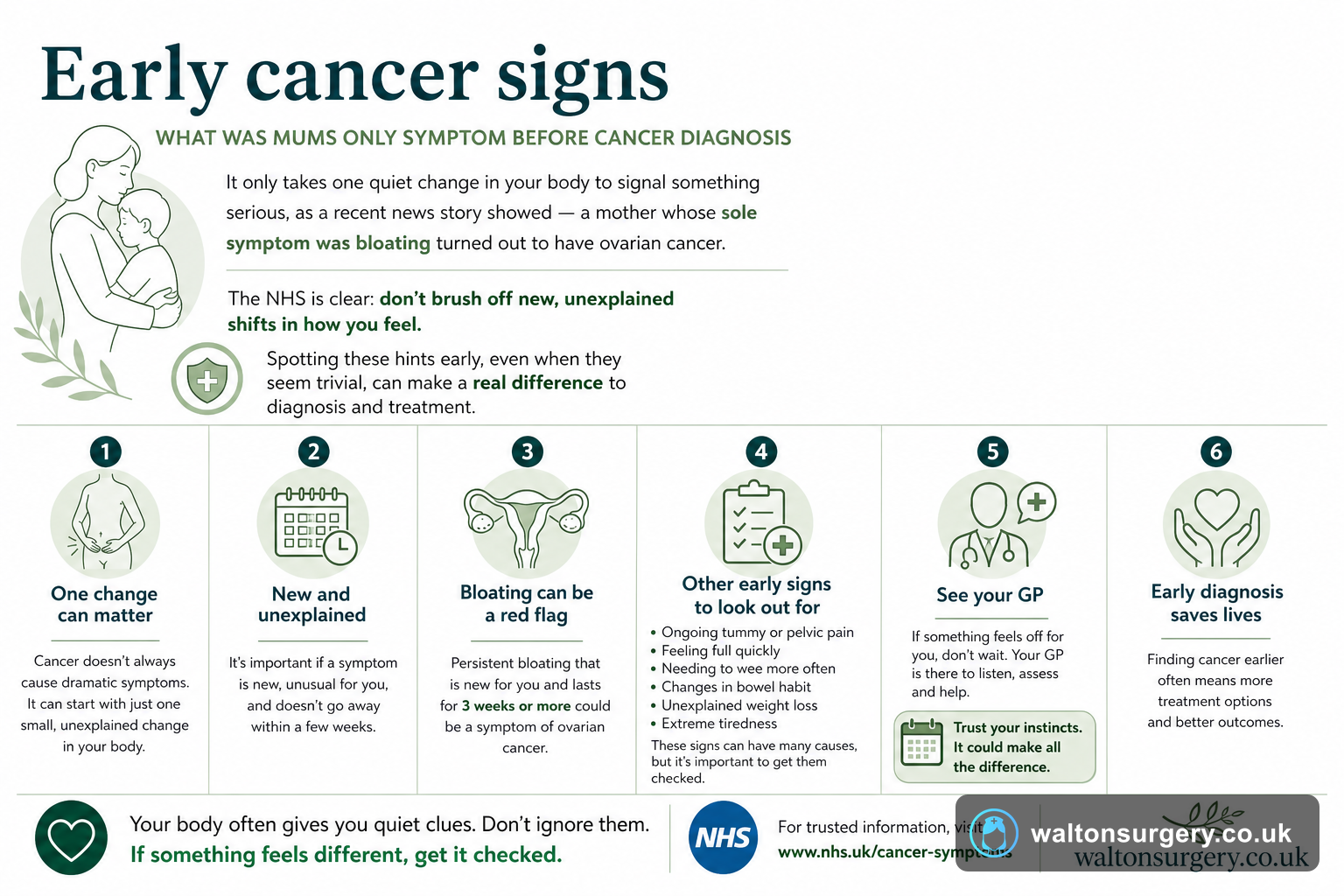
⚡ Quick Answer
It only takes one quiet change in your body to signal something serious, as a recent news story showed — a mother whose sole symptom was bloating turned out to have ovarian cancer. The NHS is clear: don't brush off new, unexplained shifts in how you feel. Spotting these hints early, even when they seem trivial, can make a real difference to diagnosis and treatment. If something feels off for you, see your GP.
Persistent bloating. That was it — the only clue a mother had before receiving a cancer diagnosis. Her story drives home a point we sometimes forget: cancer doesn't always arrive with a fanfare of dramatic symptoms. Occasionally, just one quiet shift is all your body gives you to work with. The NHS puts it plainly: picking up on cancer early is one of the best defences we have, and it begins with you noticing what's going on in your own body.
This piece looks at why you shouldn't dismiss minor changes as nothing. We'll walk through what to look out for, when it's time to talk to a doctor, and answer some questions people commonly have. Knowing what these signals mean gives you the power to act — not to panic, but to stay informed and sensible about your health.
Why a single symptom can be a serious warning
It's easy to wave away a small ache or a subtle change. Stress, maybe. Diet. Just the years catching up. But the mother in that news story — bloating and nothing else — is a reminder that our bodies sometimes whisper rather than shout when something is wrong. The NHS advises that any new symptom which sticks around, even if it feels insignificant, is worth mentioning to your doctor. For anyone unsure about the next steps after noticing something unusual, our guide on cancer diagnosis what happens next explains what to expect.
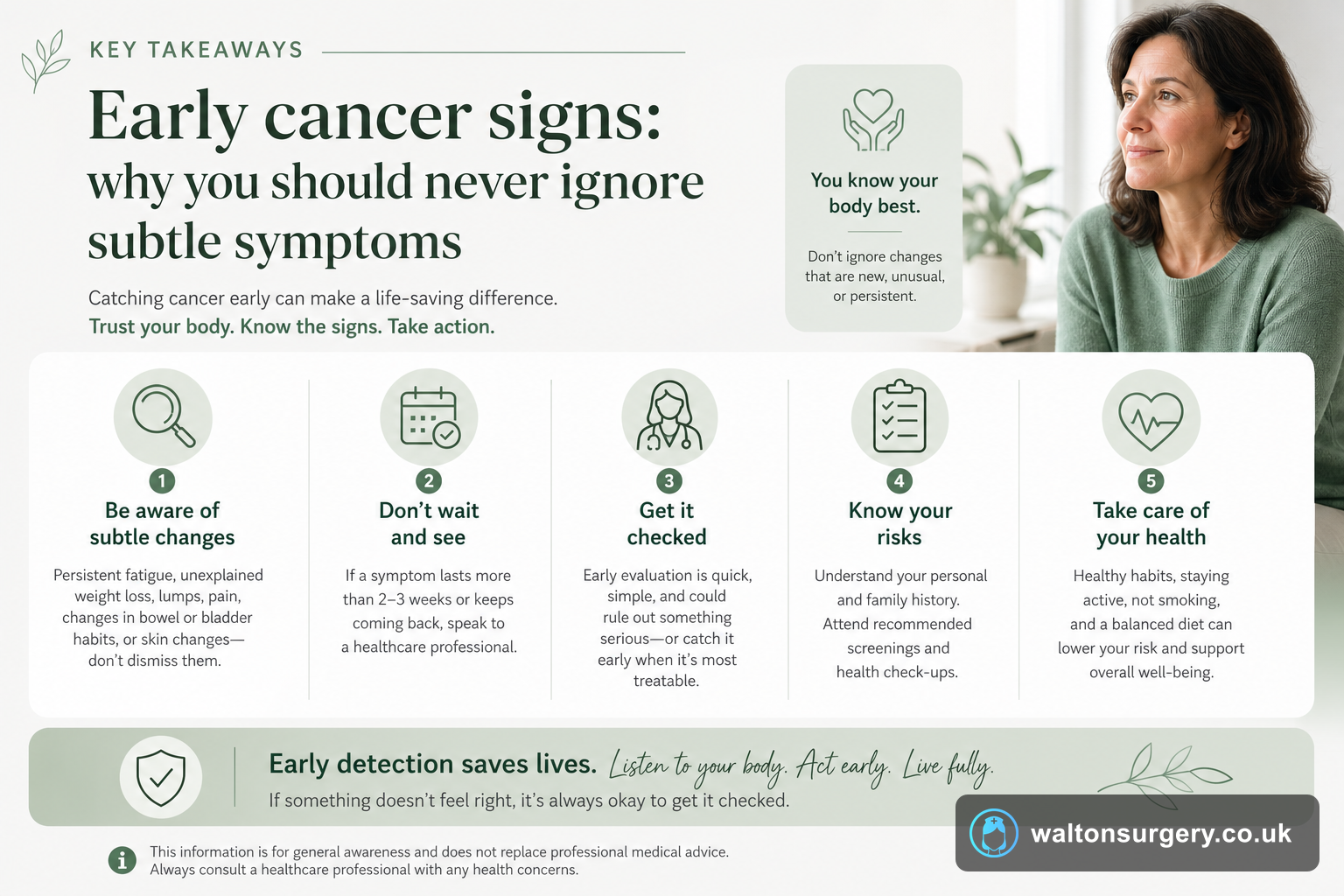
Here's the thing: nobody knows your body like you do. You're the authority on what's normal for you. When something shifts and stays shifted for more than a few weeks — even if it's only one thing — that could be your body flagging a problem. Dismissing it, or sitting around waiting for more symptoms to show up, gives something like cancer time to get worse. Caught early, cancer outcomes tend to be significantly better. Awareness is a genuine ally here.
The NHS checklist: symptoms you shouldn't ignore
Bloating was the red flag in that mother's case, but the NHS has put together a broader list of signs that can occasionally point toward cancer. Worth remembering: most of the time these symptoms are caused by something far less serious. Still, they need checking. Changes to watch for include:
- Unexplained weight loss or loss of appetite.
- A new lump or swelling anywhere on your body.
- Pain that doesn’t go away, especially if it’s new.
- Unusual bleeding (e.g., from the bottom, in your urine, between periods, or when you cough).
- A persistent cough, hoarseness, or breathlessness.
- Changes in bowel or bladder habits (e.g., constipation, diarrhoea, or needing to go more often).
- A sore that doesn’t heal.
- A new mole or a change to an existing mole.
- Persistent bloating (as in the news story).
- Difficulty swallowing or persistent indigestion.
The NHS message couldn't be more straightforward: don't try to figure out what it is yourself. If you're experiencing any of these, ring your GP and book in. It's the responsible thing to do.
What happens when you see your GP about a symptom?
Loads of people worry they'll be wasting the doctor's time. Genuinely — your GP does not think that way. They would far rather see you about something harmless than have you stay away while a real problem quietly grows. When you go, try to describe the symptom as clearly as you can: when it first turned up, how often it happens, and whether anything seems to trigger or ease it.
Expect your GP to ask some questions and possibly examine you. You might be sent for blood tests, scans, or referred to a specialist. None of that means you've got cancer — it's simply the process of working out what's behind your symptom. The NHS operates fast-track pathways for suspected cancer cases, specifically to speed up diagnosis. Here's a reassuring fact: the majority of people referred for tests don't end up having cancer. But getting checked either gives you peace of mind or kickstarts treatment at the earliest possible stage.
🔬 Key Facts
Your GP Appointment: What to Expect
- → GPs would rather see you about something harmless than have you stay away while a real problem quietly grows.
- → Tests do not mean you have cancer — they are simply the process of working out what's behind your symptom.
- → The majority of people referred for tests don't end up having cancer.
- → NHS fast-track pathways exist to speed up diagnosis for suspected cancer cases.
Should you be screening for cancer without symptoms?
Certain NHS screening programmes exist to catch specific cancers before symptoms even appear, usually tied to your age and risk profile. For example:
- Breast cancer screening: Offered to women aged 50-71 every three years via mammogram. If you have concerns about early detection, you can read about what happened in Clea Shearer's breast cancer diagnosis to understand why awareness matters.
- Cervical screening: Offered to women and people with a cervix aged 25-64 to check for human papillomavirus (HPV) and cell changes.
- Bowel cancer screening: Offered to everyone aged 60-74, with a home test kit sent every two years.
These programmes are designed for people who feel perfectly well. If you've got symptoms, you should see your GP straight away — it doesn't matter whether your next screening appointment is coming up. Screening and symptom-led investigation are separate tracks.
The role of family history and risk factors
The likelihood of developing cancer is shaped by things like your family history, the way you live, and other personal factors. Having close relatives who've had particular cancers can mean your genetic risk is higher. The NHS suggests having that conversation with your GP, who can tell you whether enhanced screening or genetic testing might make sense for you.
Then there are lifestyle factors, which carry real weight. Cancer Research UK identifies smoking as the single biggest preventable cause of cancer in this country. Alcohol intake, diet, body weight, and how much physical activity you get all matter too. These things influence your risk, true enough, but they don't seal your fate. They're areas where you can make changes for the better — and they certainly shouldn't stop you from paying attention to new symptoms, even if you live what most people would call a healthy life. Just ask Lucy Davis about her cancer diagnosis — a reminder that symptoms can affect anyone, regardless of lifestyle.
Frequently Asked Questions
⭐ The Bottom Line
What this means for you
Your health is, without question, the most valuable thing you have. A mother whose only cancer sign was bloating — that story is a sharp reminder to listen when your body speaks quietly. The NHS keeps saying it: early detection matters enormously. Don't brush off a new, lingering change as nothing. Pick up the phone and book with your GP. It's the most proactive single step you can take for yourself. Staying alert isn't about living in fear — it's about giving yourself the strongest possible chance at a long, healthy life.
Last updated: 2026-08-29 · Written by the Walton Surgery editorial team · Medical information is for educational purposes only and does not replace advice from a qualified healthcare professional.