What is a young carer? Support and help for young carers in the UK
PART C — HTML body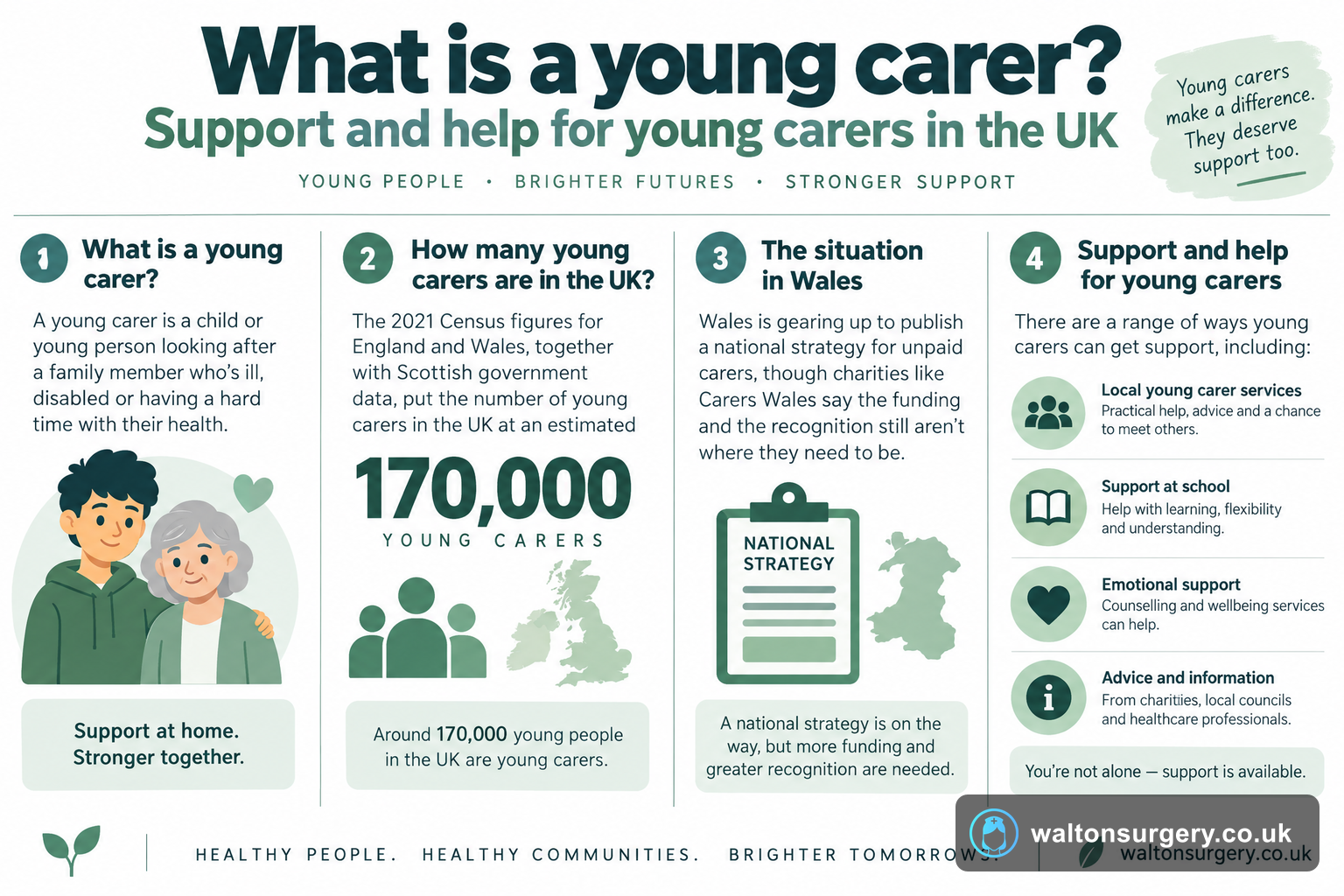
⚡ Quick Answer
A young carer is a child or young person looking after a family member who's ill, disabled or having a hard time with their health. The 2021 Census figures for England and Wales, together with Scottish government data, put the number of young carers in the UK at an estimated 170,000. Wales is gearing up to publish a national strategy for unpaid carers, though charities like Carers Wales say the funding and the recognition still aren't where they need to be.
Helping to care for a family member — usually a parent or a sibling — who has an illness, disability, mental health problem or an addiction: that's what being a young carer means. The 2021 Census picked up roughly 120,000 carers aged five to 17 in England, and around 8,200 in Wales. Up in Scotland, the government's 2021-22 Carers Census counted 42,050 unpaid carers. Add the wider estimates in and the total figure for unpaid carers across the UK currently stands at 5.8 million.
Getting your head around what the role actually involves is the first step towards help if you're a young carer yourself, a parent, or a teacher. Neraya, fifteen, from Bridgend, has looked after her two sisters for as long as she can remember — and she's had to explain the whole thing to her teachers along the way. What young carers like Neraya ask for is simple enough: "a childhood of our own" plus the support to go with it.
What does being a young carer actually involve?
Most kids their age aren't thinking about practical and emotional responsibilities. Young carers are. Getting a sibling dressed, nudging a parent to take their medication, cooking the tea, cleaning up, doing the shopping, or just sitting with someone to keep them calm when they're distressed. Neraya's looked after her two sisters since she was very small — she can't remember a time before any of it started.
Nobody pays you for it and nobody sees it half the time. It gets folded into ordinary family life so neatly that the young person themselves, along with everyone around them, can stop clocking it altogether. That invisible quality is a big reason why recognition features so heavily in the new Welsh strategy for unpaid carers.
How many young carers are there in the UK?
Getting an exact number here is genuinely tricky — plenty of young carers don't call themselves that. What we can point to are census and government figures. Roughly 120,000 carers aged five to 17 in England were logged by the 2021 Census, alongside about 8,200 in Wales. The Scottish government, meanwhile, found 42,050 unpaid carers in its 2021-22 Carers Census.
Factor in the wider estimates and we're looking at around 170,000 young carers in the UK, out of 5.8 million unpaid carers overall. The space between those numbers tells its own story: a lot of young people are doing this work and nobody is counting them.
🔬 Key Facts
Young carers in the UK: the numbers
- → Roughly 120,000 carers aged five to 17 in England were logged by the 2021 Census, alongside about 8,200 in Wales
- → The Scottish government's 2021-22 Carers Census identified 42,050 unpaid carers
- → Around 170,000 young carers are estimated across the UK
- → 5.8 million unpaid carers overall across the UK
Why do young carers need more support?
Schoolwork, friendships, sleep, mental health — the role reaches into all of it. Neraya has spoken out publicly as an ambassador for young carers and described having to tell her teachers what a young carer even is. When schools don't know, young carers can quietly fall behind and nobody works out the reason.
And they've been pretty clear about what would help: "a childhood of our own", the recognition, and practical support to go with it. Carers Wales has said something similar — parts of the upcoming national strategy look positive, but manifesto promises have been excluded and the funding picture is still unclear. There's a gap between what's being promised and what's actually going to arrive, essentially. Watching how institutions handle accountability matters here too, which is why so many readers followed the nhs grampian what went wrong story so closely.
What is the Welsh government's national strategy for unpaid carers?
On Monday, a national strategy for unpaid carers will be published by the Welsh government. Seven priorities sit inside it. Earlier recognition of carers and mental health support are two that have been picked out, and both speak directly to people like Neraya, who gets spotted late or not at all.
Carers Wales responded to it cautiously — cautiously optimistic, the charity said. Some of it looked good. But manifesto promises being left out was a disappointment, and there are open questions about how any of this gets paid for. Policy commitments and resources on the ground aren't the same thing, as Carers Wales pointed out in effect.
How can teachers and schools recognise a young carer?
Ask yourself who sees a young person most often outside their home. Teachers, usually. Which makes them the ones well placed to notice when attendance slips, concentration goes, tiredness creeps in, or behaviour shifts — all possible first signs that something is going on underneath.
A teacher reading this: the single most useful thing you can do is ask questions and then actually listen to the answers. Earlier recognition is one of the priorities in the Welsh strategy precisely so this kind of spotting happens more consistently. But it still comes down to individual schools building an environment where a young person feels able to say out loud, "I'm a carer." Not every conversation about a young person's wellbeing lands on screen either — our take on what is gogglebox celebrity health covers how casually health talk can be handled in public.
Where can young carers and families find help?
Your local authority is usually the place to begin — they have a legal duty to carry out an assessment of a young carer's needs. Charities like Carers Wales can give you information, advice, and someone to talk to. If the caring role is knocking your own physical or mental health around, your GP is the person to see. Worth saying, though: this article is general information and not personalised medical advice.
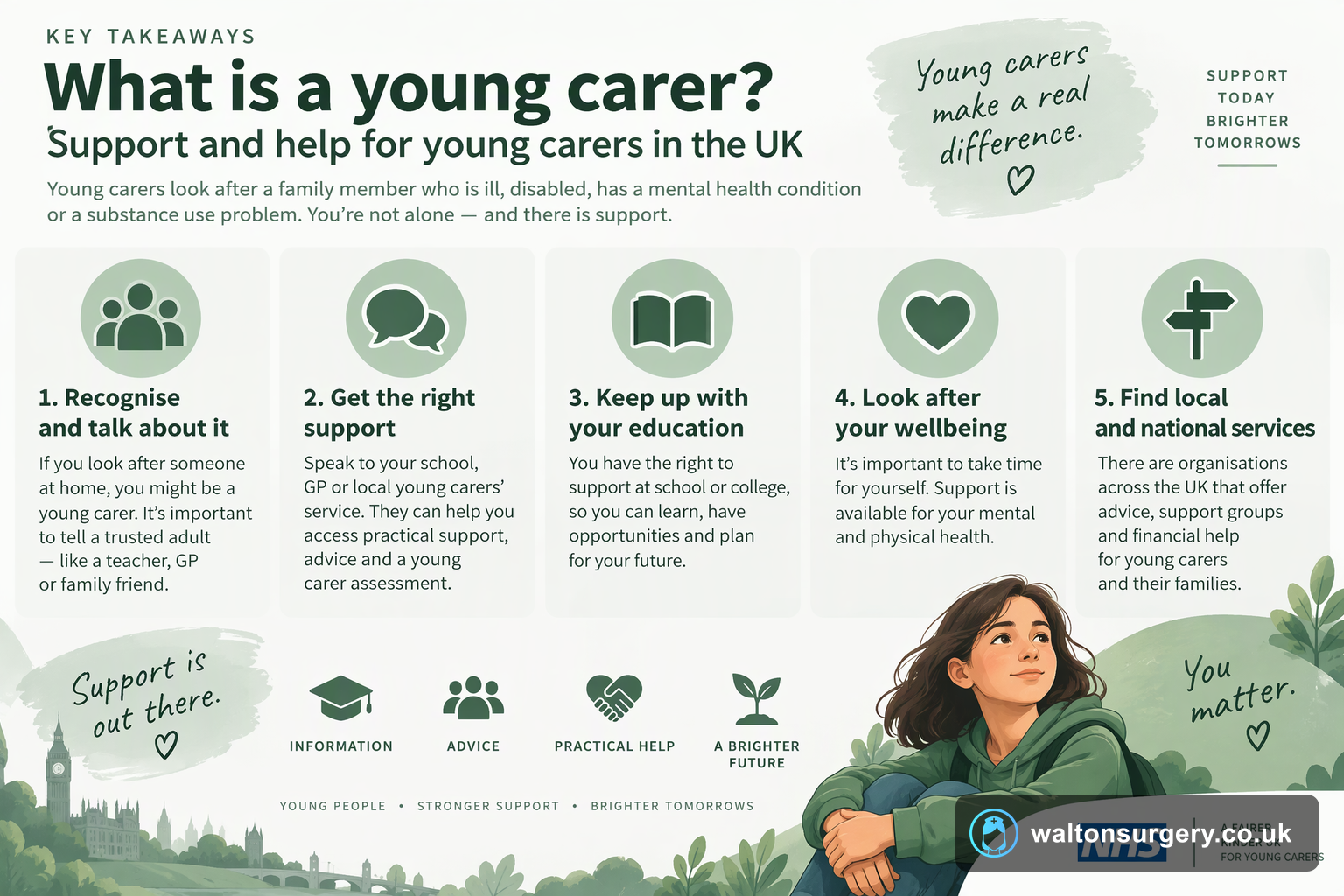
Peer support and ambassador roles have helped young carers like Neraya too, building confidence and taking the edge off feeling alone with it all. If your mental health is suffering because of caring responsibilities, talk to your GP, or go straight to a support service.
Frequently Asked Questions
⭐ The Bottom Line
What this means for you
Around 170,000 young carers live in the UK — young people carrying genuine, unpaid responsibilities for a family member. Recognition, support, and "a childhood of our own" is what they're asking for. The Welsh government's national strategy moves things forward, and Carers Wales is right to press on how it gets funded. If this reads like your situation, or someone close to you, your local authority and your GP are where to start.
Last updated: 2026-11-16 · Written by the Walton Surgery editorial team · Medical information is for educational purposes only and does not replace advice from a qualified healthcare professional.