Spotting Lies: What Science Says About Deception and Health
PART C — HTML Body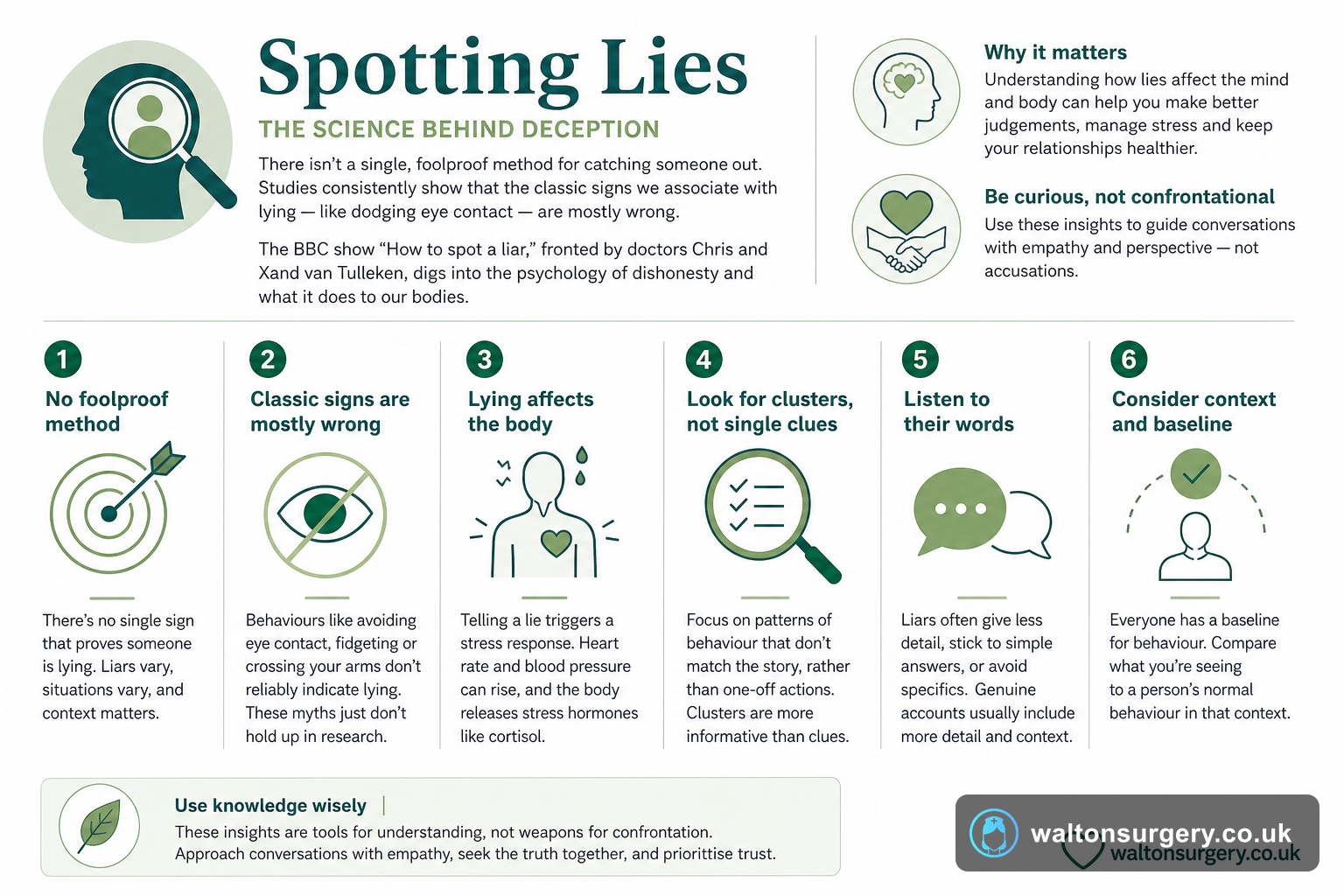
⚡ Quick Answer
There isn't a single, foolproof method for catching someone out. Studies consistently show that the classic signs we associate with lying — like dodging eye contact — are mostly wrong. The BBC show "How to spot a liar," fronted by doctors Chris and Xand van Tulleken, digs into the psychology of dishonesty and what it does to our bodies. Getting your head around this stuff can actually help you manage stress better and keep your relationships healthier.
Most of us reckon we can tell when someone's lying — a shifty look, a nervous twitch, that sort of thing. It's a comforting idea, but it's mostly rubbish. Spotting deception is genuinely complicated, far more than any crime drama would have you believe. The BBC programme "How to spot a liar," made by identical twins Chris and Xand van Tulleken (both doctors), takes a proper look at the science of lying and what it means for our health.
So what does the research actually tell us? This piece covers why the usual "tells" aren't reliable, the psychological damage lying can cause, and how understanding all this might help you look after yourself a bit better. Worth remembering: this is general information, not tailored medical advice. If stress or anxiety is getting on top of you, have a chat with your GP.
Why We Think We Can Spot Lies
Loads of people are fairly convinced they're decent at catching liars. That confidence usually comes from a mental checklist of supposed giveaways picked up from telly, films, or just chatting with mates. The big one is avoiding eye contact — followed by fidgeting too much, touching your face, that kind of thing. These ideas have been around so long they feel like common sense.
But the research Chris and Xand van Tulleken present tells a different story. Someone who's nervous because they're telling the truth can do all those same things. And on the flip side, a good liar might stare you straight in the face and look completely relaxed. Trusting these folk theories is a recipe for false accusations and relationships that fall apart.
What Does the Science Actually Say?
Looking at deception scientifically — which is what the BBC programme does — there's no universal set of behaviours that screams "this person is lying." Humans are just too varied. What matters more is a person's baseline, meaning how they normally act when they're being themselves.
Researchers do look for clusters of changes from that baseline, but even then the hit rate is pretty poor. The programme points out something striking: even trained professionals, police officers for instance, only do slightly better than chance in controlled experiments. That doesn't mean detecting lies is hopeless, but it's nowhere near the straightforward skill most people assume. The real value lies in understanding the psychology, not in playing human lie detector.
🔬 Key Facts
What the Research Shows
- → No universal set of behaviours indicates lying — humans are too varied for a simple checklist.
- → Baseline behaviour matters most — researchers look for changes from how a person normally acts.
- → Trained professionals only do slightly better than chance in controlled experiments.
- → Understanding psychology is more valuable than trying to play human lie detector.
The Health Impact of Lying on the Liar
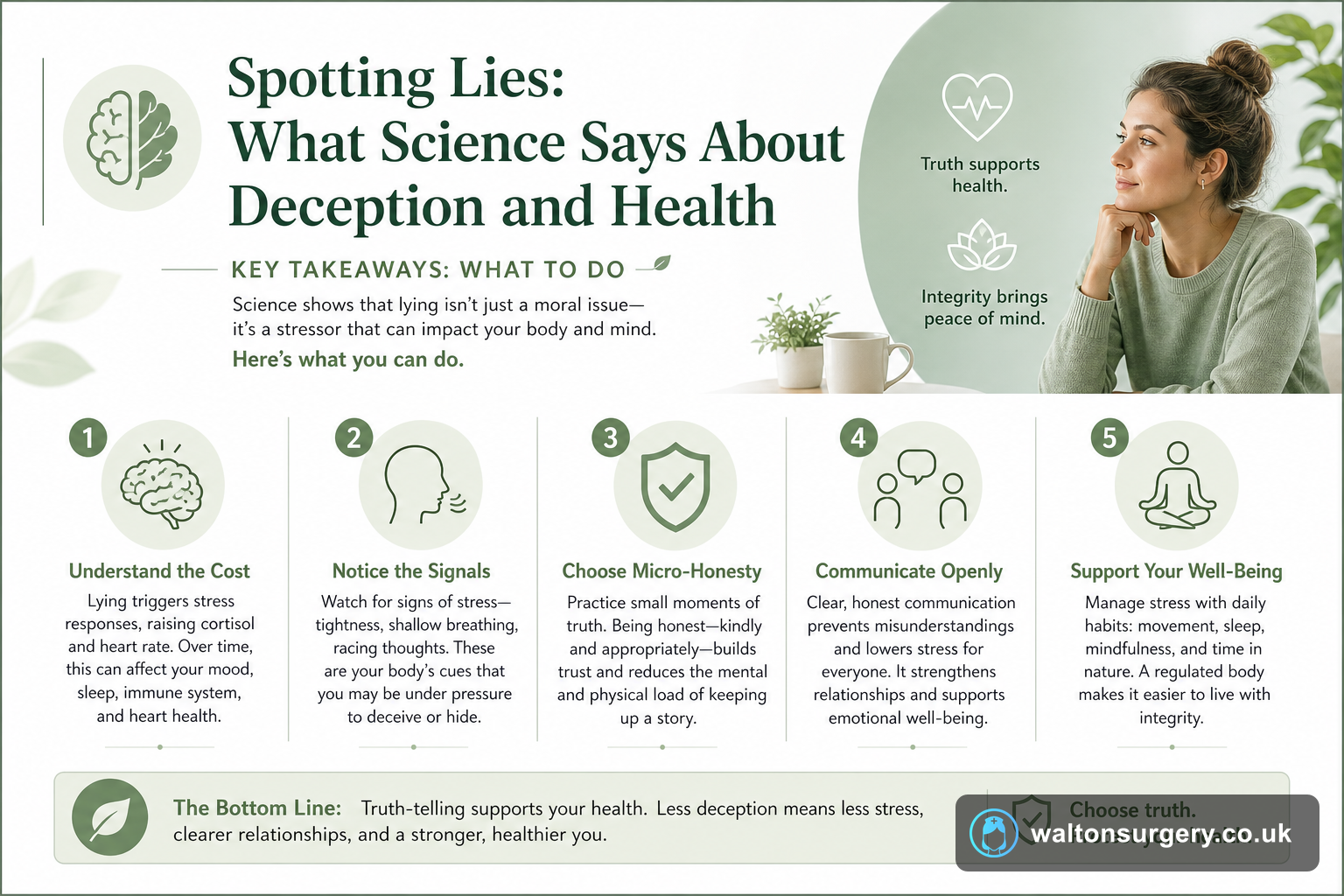
Lying isn't just a social thing — it leaves a physical mark. When someone tells a whopper, especially one that matters, the body kicks into a stress response. Cortisol and other stress hormones get released. The BBC programme looks at how this kind of chronic stress, the sort that comes from keeping a big deception going, can feed into anxiety and other health problems. Prolonged stress responses like these are well documented in medical literature and can manifest alongside depression signs symptoms treatment uk resources.
Chris and Xand van Tulleken talk about the cognitive load involved in dishonesty. You're juggling a false story, watching how the other person reacts, and trying to keep the truth buried — all at once. It's mentally draining, and over time it gets harder to keep your story straight. The strain of carrying a lie around can mess with your sleep, your mood, your general sense of wellbeing.
The Health Impact of Being Lied To
Being deceived takes its own toll on your health. Finding out someone's been dishonest with you can hit hard — betrayal, anger, self-doubt, all of it swirling around at once. That emotional upheaval sets off the body's stress machinery, not unlike what happens inside the liar themselves.
The programme also covers how repeated dishonesty in close relationships slowly eats away at trust. You end up in a state of hypervigilance, always watching for the next lie. Living like that is exhausting and can spiral into anxiety or even the relationship breaking down entirely. It's a pretty clear illustration of how deception messes with both social and emotional health.
Practical Steps for Your Wellbeing
Given that catching lies is so difficult, what's actually within your control? Start by adjusting your expectations. Once you accept that you won't reliably spot every dishonest moment, a lot of the frustration and anxiety around trying just... drops away.
Put your energy into relationships where open communication and trust are the foundation. If something feels off about a person's honesty, having a calm and direct conversation tends to work better than playing detective. Watch for patterns over time rather than fixating on one-off moments. And if the stress of a situation involving dishonesty is weighing on your mental health, talking to a counsellor or your GP is a sensible move. This same principle of watching for patterns applies to physical health too — whether that means checking breast cancer signs and symptoms or understanding how public figures like clare balding cancer diagnosis spotting signs can raise awareness.
Frequently Asked Questions
⭐ The Bottom Line
What this means for you
The science behind deception, as Chris and Xand van Tulleken lay it out, makes one thing clear: catching a liar isn't about ticking off a list of physical giveaways. It's a messy psychological business with real consequences for everyone's health. Rather than obsessing over detection, put your effort into honest relationships and managing the stress that dishonesty brings. If the emotional weight of lying — or being lied to — is getting to you, reaching out to a healthcare professional is a perfectly reasonable thing to do.
Last updated: 2026-08-25 · Written by the Walton Surgery editorial team · Medical information is for educational purposes only and does not replace advice from a qualified healthcare professional.