Understanding Depression: Signs, Symptoms and Support in the UK
PART C — HTML Body Components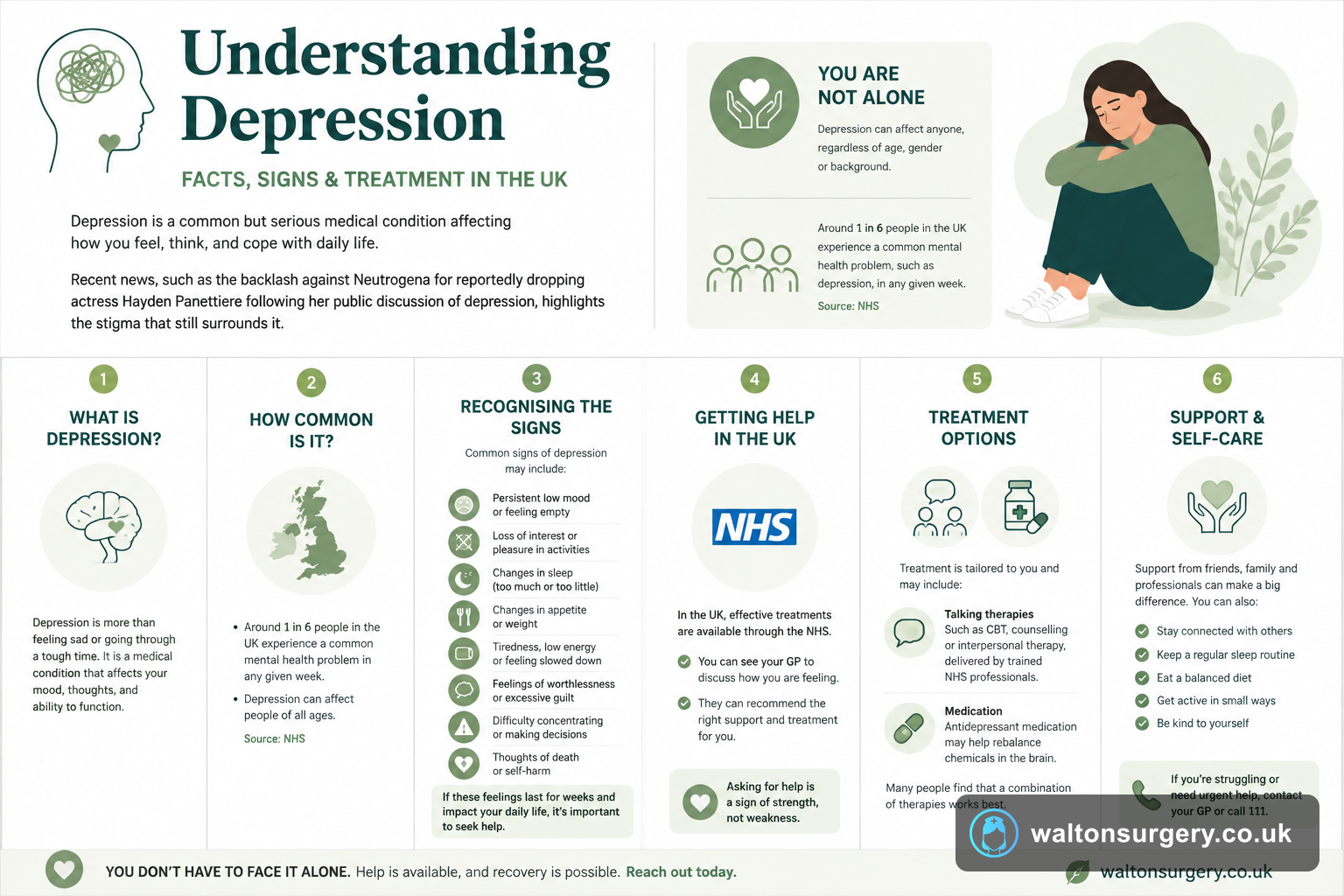
⚡ Quick Answer
Depression is a common but serious medical condition affecting how you feel, think, and cope with daily life. Recent news, such as the backlash against Neutrogena for reportedly dropping actress Hayden Panettiere following her public discussion of depression, highlights the stigma that still surrounds it. Recognising the signs, such as persistent low mood, loss of interest, and changes in sleep or appetite, is the first step. In the UK, effective treatments are available through the NHS, including talking therapies and medication. If you're concerned, your GP is the right place to start.
It's not just feeling a bit down for a few days. Depression is a proper medical condition, and it can touch anyone — no matter their age, background, or how successful they might look from the outside. The recent situation with Neutrogena and Hayden Panettiere is a reminder that even now, in 2026, talking openly about mental health can still be met with a fair bit of misunderstanding.
Maybe you've seen that story and it's got you thinking about your own feelings, or perhaps about someone close to you. If so, you're certainly not on your own. What follows is a look at the common signs and symptoms, how depression gets diagnosed, and what kind of treatment and support you can actually access here in the UK. This is for general information, mind — it's not a replacement for proper medical advice. We cover this in more depth in health anxiety symptoms and treatment. There's more on this in our breast cancer signs and symptoms explainer. If you want the fuller picture, our guide to leukemia symptoms treatment uk goes further.
What is Depression?
In clinical terms, it's called major depressive disorder, but put simply, it's a low mood disorder that goes much deeper than ordinary sadness. You might find you've lost interest in things you used to enjoy, or you're carrying a persistent feeling of sadness that just won't shift. These feelings need to have been around for at least two weeks, and they have to be bad enough to get in the way of your work, your social life, or looking after your family.
It's surprisingly common, too. The NHS reckons about 1 in 6 people in the UK will deal with depression at some point. It's definitely not a sign of weakness, and you can't just will yourself to feel better. It's a genuine health problem, and it usually comes from a mix of biological, psychological, and social causes.
Recognising the Signs and Symptoms
The symptoms can look different from one person to the next. Doctors often group them into emotional, physical, and behavioural changes. You might get a handful of these, or quite a few, and how bad they are can go up and down.
On the emotional side, you're often looking at a low mood that hangs around, feelings of sadness, anxiety, or just a sort of emptiness. Hopelessness and a sense of worthlessness are common. Losing interest or pleasure in hobbies, socialising, or sex is a big one. You might also find yourself getting irritable or frustrated more easily, or crying for no clear reason.
The physical symptoms creep in as well. Your appetite or weight might change — either way. Sleep can be a problem, whether that's not being able to drop off or sleeping far too much. Fatigue and a general loss of energy are typical, and some people get unexplained aches, pains, headaches, or stomach issues. You could feel restless, or on the flip side, notice your movements and speech have slowed right down.
Then there are the behavioural shifts. You might pull away from friends and family, start neglecting things you need to do, or struggle to concentrate, remember details, or make choices. In the worst cases, thoughts about death or suicide can surface. If you or someone you know is in immediate danger, call 999 or get to your nearest A&E.
🔬 Key Facts
Recognising the Signs and Symptoms
- → Emotional symptoms include persistent low mood, feelings of sadness, anxiety, emptiness, hopelessness, and a sense of worthlessness.
- → Physical symptoms can involve changes in appetite or weight, sleep disturbances, fatigue, and unexplained aches or pains.
- → Behavioural shifts often include withdrawing from others, neglecting responsibilities, and difficulty concentrating or making decisions.
- → In severe cases, thoughts about death or suicide may occur, requiring immediate help by calling 999 or visiting A&E.
How is Depression Diagnosed in the UK?
There isn't a single blood test that can spot depression. The diagnosis really comes down to your symptoms and how much they're affecting your day-to-day life. Usually, your GP is the first person you'd speak to.
They'll want to talk about how you're feeling, what you're thinking, and how you're behaving. A questionnaire like the PHQ-9 might be used to get a sense of how severe things are. They'll also want to rule out other physical conditions that can look a lot like depression — thyroid problems or vitamin deficiencies, for instance — which might mean having a blood test.
Being as open and honest as you can with your doctor is really important here. They need to get a clear picture to help you properly. And remember, GPs see people with depression all the time; it's a normal part of what they do.
What Causes Depression?
There's no single cause. It's almost always a combination of things coming together. Understanding that can sometimes help ease the self-blame people often carry.
Biologically, it can be down to genetics — depression does tend to run in families. Changes in brain chemistry, especially with neurotransmitters like serotonin and norepinephrine, play a part. Hormonal shifts, such as those after childbirth or during menopause, can also be involved.
Psychologically, things like low self-esteem, a habit of worrying too much, or a past history of trauma or abuse can contribute. Your personality and the thinking patterns you've learned over time matter too.
Social and environmental factors carry a lot of weight as well. Stressful life events — a bereavement, a relationship ending, money troubles, losing a job — can all trigger it. Loneliness, not having enough support around you, and living with a chronic illness are other common pieces of the puzzle. Often, it's a few of these things mixing together that tips someone over.
Treatment Options Available on the NHS
Here's the thing: depression is treatable. The NHS has a range of effective options, and the right one for you will depend on how severe your depression is and what you'd prefer. Your GP will talk you through the choices.
For mild depression, your GP might suggest a "watchful waiting" approach to see if things improve by themselves, or they might recommend self-help strategies like exercise or a guided self-help book. A referral to a psychological therapy service is another possibility.
When it comes to moderate to severe depression, treatment usually means a mix of talking therapy and medication. The NHS Improving Access to Psychological Therapies (IAPT) programme offers free, evidence-based therapies such as Cognitive Behavioural Therapy (CBT) and counselling. You can actually self-refer to your local IAPT service without needing to see your GP first.
Antidepressants are also commonly prescribed. They work by balancing the chemicals in your brain that affect mood and emotions. They don't kick in straight away — it usually takes 2 to 4 weeks before you feel any benefit, and you'll need to keep taking them for several months. Your GP will keep a close eye on you, particularly when you're starting or changing medication.
Self-Help and Lifestyle Strategies
Professional treatment is a big part of it, but there are things you can do yourself to support your recovery and look after your wellbeing. These strategies are often suggested alongside medical treatment.
Getting regular physical activity has a solid evidence base behind it for helping with depression. The NHS suggests at least 150 minutes of moderate-intensity activity a week — think brisk walking, cycling, or swimming. Exercise can lift your mood by releasing endorphins and helping you sleep better.
Keeping a routine can give you some structure when you're feeling low. Try to eat regular, balanced meals, get up and go to bed at roughly the same times, and plan small, manageable things to do each day. Steering clear of alcohol and recreational drugs is also a good idea, as they can make depression worse and interfere with medication.
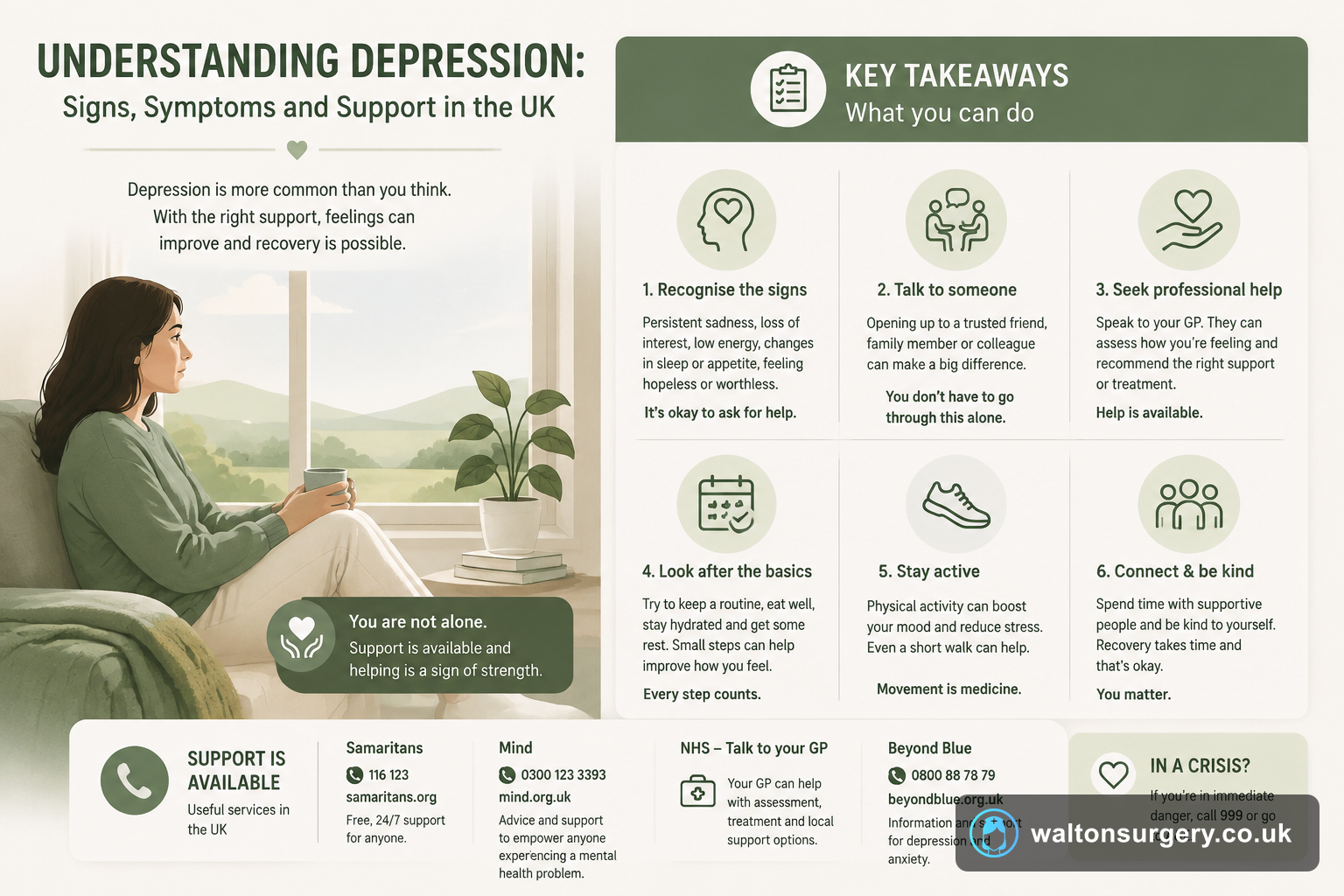
Staying connected to people, even when you really don't feel like it, is important. Isolation tends to make depression worse. Talking to a trusted friend or family member about how you're feeling can bring some relief. Support groups, whether in person or online, can also help you feel less alone.
Frequently Asked Questions
⭐ The Bottom Line
What this means for you
Depression is a common and treatable medical condition, not a personal failing. Spotting the signs — persistent low mood, loss of interest — is the first step towards feeling better. In the UK, effective help is available through your GP and NHS services like IAPT. If recent news has got you thinking about your own mental health, take it as a positive nudge to reach out. You don't have to manage it alone.
Last updated: 2026-08-22 · Written by the Walton Surgery editorial team · Medical information is for educational purposes only and does not replace advice from a qualified healthcare professional.