NHS Staff Abuse: Why It Happens and How to Help
PART C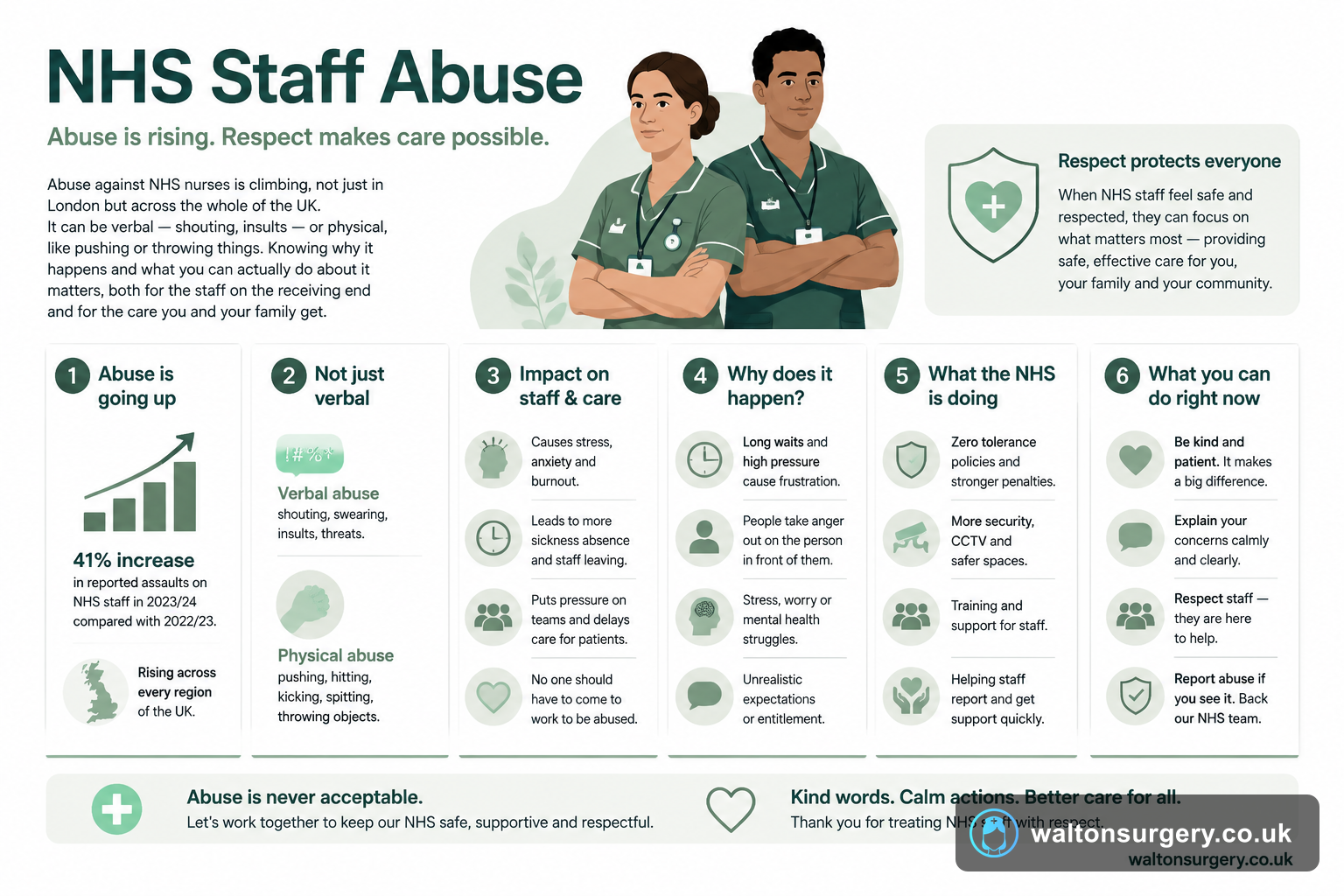
⚡ Quick Answer
Abuse against NHS nurses is climbing, not just in London but across the whole of the UK. It can be verbal — shouting, insults — or physical, like pushing or throwing things. Knowing why it happens and what you can actually do about it matters, both for the staff on the receiving end and for the care you and your family get. There are straightforward steps patients and carers can take right now to help make NHS workplaces a bit less hostile.
Abuse aimed at NHS nurses is getting worse. ITVX reported on 29 July 2026 that staff across London are facing a growing wave of hostility from both patients and visitors. This is not some abstract problem you only read about — it hits the real people who treat you and your family when you're at your most vulnerable.
Maybe you're a patient yourself, or you look after someone who uses NHS services. Either way, you've probably wondered what's behind it all and whether there's anything you can actually do. This article pulls together verified reporting on the issue and gives you practical things you can do, starting today.
What Does NHS Nurse Abuse Actually Look Like?
There isn't just one kind of abuse directed at nurses. It ranges from verbal insults and swearing to outright threats and shouting. Sometimes it gets physical — pushing, hitting, objects being thrown. Racist and sexist language comes up regularly too. Then there's the online side of things, with harassment through social media adding yet another layer.
The ITVX report from July 2026 made clear that London nurses are dealing with these incidents more and more often. A&E departments, mental health services, and GP surgeries bear the brunt. Much of it comes from patients who are frightened, in pain, or at the end of their tether. Though not always — relatives and friends can be the source too. If you want the fuller picture, our guide to saira khan health condition goes further.
Why Is Abuse Against NHS Staff Rising?
No single reason explains it. Waiting times that drag on and on build frustration, and frontline staff often can't do much about it. Departments are overcrowded, so people sit for hours before anyone sees them. Frightened or uncomfortable patients sometimes snap at whoever happens to be nearby — and that's almost always a nurse or healthcare assistant. Wider workforce pressures, such as those explored in our article on the nhs outsourcing staff shortage effect, compound the problem further.
Staff numbers have dropped, which piles more pressure on those who remain. Consultations get shorter as a result, and some patients walk away feeling dismissed. Misinformation online plays its part as well. When someone arrives convinced by something they read on the internet and reality doesn't match up, the confrontation often lands on nursing staff. In other cases, patients or their families arrive already distressed — sometimes having fallen victim to schemes like the fake nhs manager scam — which adds an extra layer of anxiety to their visit.
How Widespread Is the Problem?
ITVX focused its reporting on London, but the issue isn't a capital-only phenomenon. Staff in England, Wales, Scotland, and Northern Ireland all report the same kinds of experiences. NHS-published data shows thousands of staff experiencing physical violence every year. Verbal abuse numbers run even higher than that.
London's situation is really just a sharper version of what's happening nationally. Bigger urban hospitals see more incidents partly because they simply treat more people. But rural services aren't spared. Community nursing teams and district nurses sometimes face hostility when they visit patients in their own homes.
🔬 Key Facts
NHS Abuse by the Numbers
- → Thousands of NHS staff experience physical violence every year
- → Verbal abuse numbers run significantly higher than physical violence figures
- → A&E, mental health, and GP surgeries bear the brunt of incidents
- → Rural and community services are not spared from hostility
Does Abuse Affect Patient Care?
It does. When nurses leave because they can't take the abuse anymore, there are fewer hands to deliver care. Recruitment gets tougher too once word gets round that a particular workplace feels unsafe. Those who stay on often struggle with anxiety, burnout, or even post-traumatic stress. Every one of those outcomes chips away at the quality and consistency of care patients receive.
What Is the NHS Doing to Protect Its Staff?
Policies against workplace violence do exist across the NHS. Quite a few trusts have rolled out body-worn cameras for staff working in high-risk areas. Others have beefed up security in A&E departments. Training in de-escalation techniques is offered so staff can try to calm things down before situations get out of hand.
There are also reporting systems in place — staff can log incidents, and those records help trusts spot patterns and direct resources where they're needed. Underreporting is still a stubborn problem though. A lot of nurses have come to accept abuse as just part of the job and don't bother recording every instance. That makes getting a true picture of the problem much harder than it should be.
What Can You Do as a Patient or Carer?
You probably have more influence here than you realise. Some things worth doing:
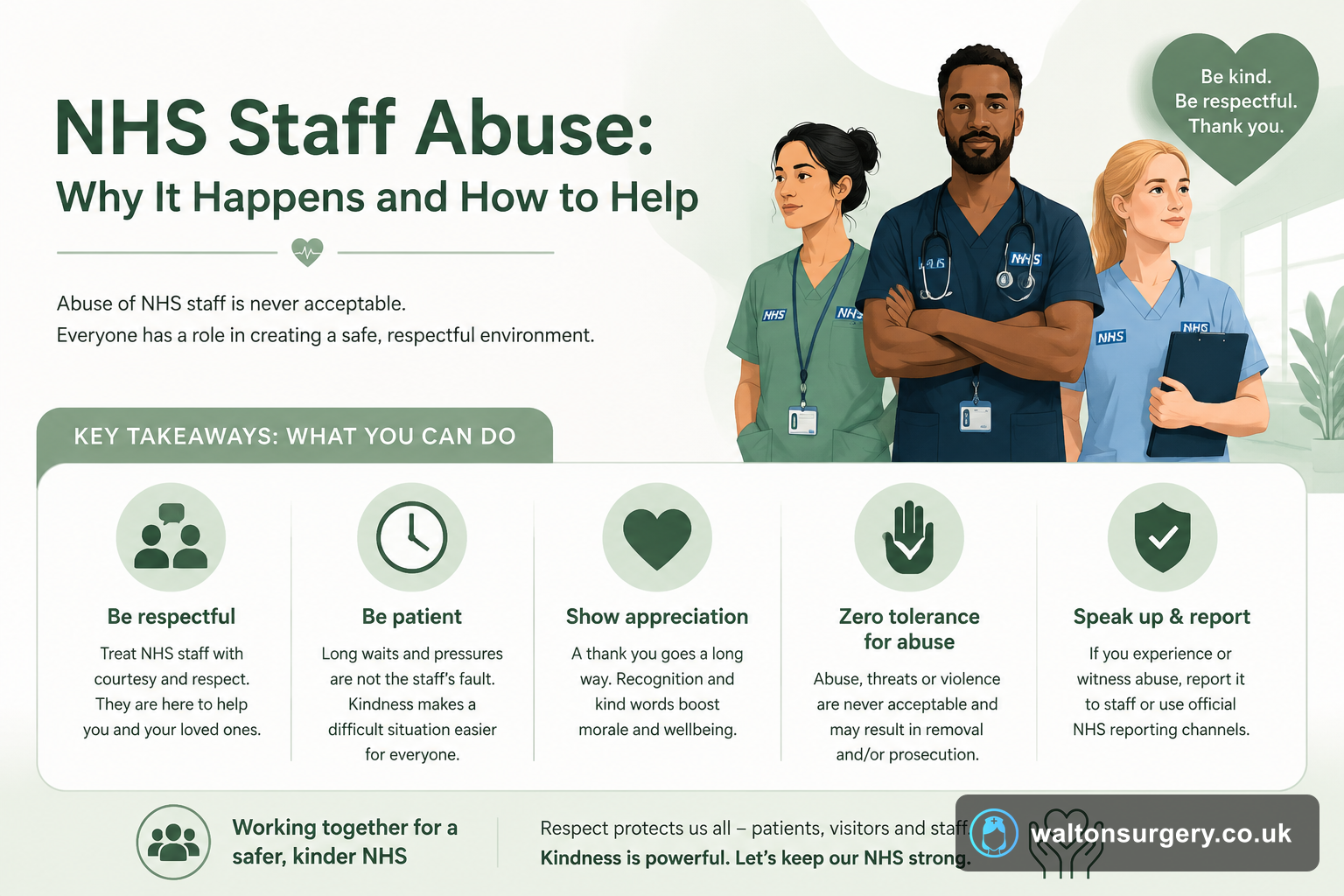
Keep your composure when waits stretch out. If you need an update, ask reception staff — don't take your frustration out on the nurse looking after you.
The person treating you did not create the bed shortage or the scheduling chaos. They're working within it.
If something about your care feels wrong, go through the proper complaints route. PALS — the Patient Advice and Liaison Service — exists for exactly this purpose, and raising things there tends to be far more effective than having a go at a staff member on the ward.
Your behaviour sets a tone. If you stay calm and reasonable, it genuinely does rub off on other patients sitting in the same waiting area.
Frequently Asked Questions
⭐ The Bottom Line
What this means for you
Abuse against NHS nurses is on the rise in the UK, and it ripples out to affect everyone who uses the health service. You probably can't fix the structural problems behind it — nobody expects you to. What you can do is treat the staff helping you with ordinary decency, raise worries through proper channels rather than on the ward floor, and speak up when you witness someone being mistreated. Those individual choices might feel small. Collectively, though, they go some way toward protecting the people whose whole job is to look after your health.
Last updated: 2026-07-29 · Written by the Walton Surgery editorial team · Medical information is for educational purposes only and does not replace advice from a qualified healthcare professional.