Imposters in the NHS: What it means for patient safety
⚡ Quick Answer
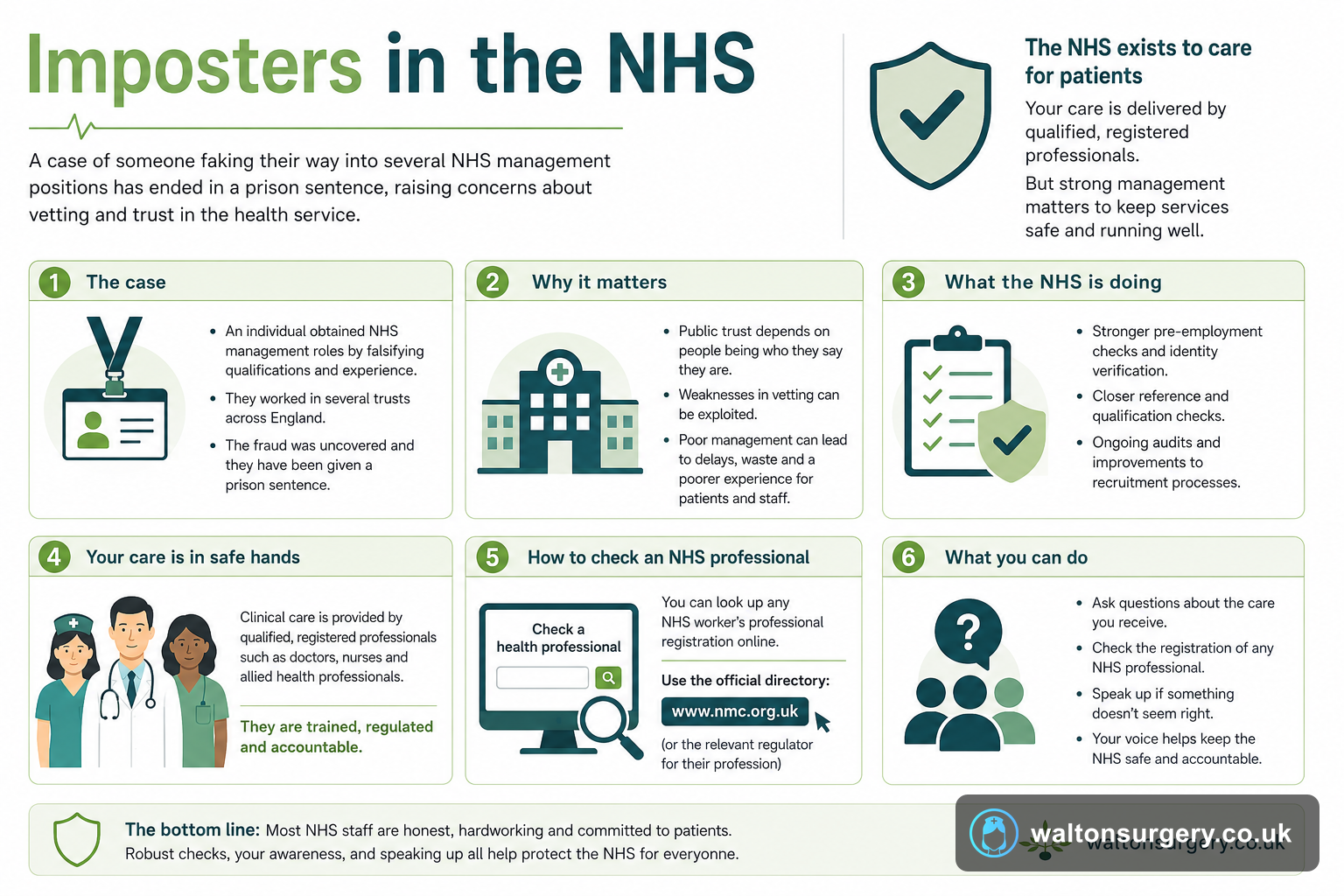
Someone who faked their way into several NHS management positions has now been given a prison sentence. It raises genuine questions about how thoroughly people get checked before being hired in the health service. The good news for patients is that your actual clinical care comes from registered professionals, but slack management can still affect how hospitals run. You're well within your rights to look up any NHS worker's professional registration online. If you want the fuller picture, our guide to saira khan health condition goes further.
Back in July 2026, a case came to light where an individual had lied extensively about their background to land senior posts within the NHS, and they've since been jailed for it. The whole thing really does put a spotlight on recruitment checks — because clearly, somewhere along the line, the process of verifying someone's history broke down. It's a breach of trust that most people would find quite unsettling.
And honestly, you'd be right to feel concerned about what this means for you. This person wasn't treating patients directly, no — they weren't a doctor or nurse. But management roles carry real weight when it comes to hospital budgets, staffing decisions, and overall policy. Shoddy leadership can let problems trickle down into the quality of care that actually reaches you.
What happened in this case?
Court proceedings in July 2026 dealt with an individual who had managed to secure a string of NHS management jobs by misrepresenting both their qualifications and their employment history. A jail sentence followed. The specific hospitals and trusts involved were detailed during the trial, though for our purposes what matters more is what the case exposed — which is a vulnerability in how managerial CVs get vetted. Nobody was pretending to be a clinician here. This was about someone exploiting the trust that's generally extended to people in management positions. Checks that should have caught the deception, apparently, didn't.
How does this affect you as a patient?
The clinicians looking after you — doctors, nurses, physiotherapists, pharmacists — are all registered with national bodies. Their qualifications get checked against official registers, so that side of things is relatively robust. NHS managers, though, are a different story. They oversee budgets, decide on staffing levels, run the operational side of services, but they don't face the same kind of public scrutiny. Someone incompetent or dishonest in a management post could end up making decisions that cause understaffing, waste resources, or create a pretty toxic work environment. Those things don't stay contained — they leak into patient experience and safety. Imagine a manager who skimps on equipment maintenance or ignores staff burnout. That's the kind of indirect hit your care could take.
Can you check if your NHS staff are legitimate?
Short answer: yes, and you should — particularly for anyone involved in your direct care. Doctors are listed on the General Medical Council register, which you can search on the GMC website. It'll show their registration status, their qualifications, any fitness to practise history. Nurses and midwives sit with the Nursing and Midwifery Council; same deal, you can look them up on the NMC online register. For physiotherapists, radiographers, and similar professions, the Health and Care Professions Council holds their records. All of this is free and takes a few minutes. For managers, though, there isn't really an equivalent — no single public register exists. Which is, frankly, part of the problem this case throws into sharp relief.
What are NHS trusts doing to prevent this?
🔬 Key Facts
NHS Recruitment Safeguards
- → DBS checks flag criminal records but don't verify employment history or qualifications.
- → Identity verification, right to work checks, and past employment confirmation are standard.
- → Clinical staff have mandatory professional registration checks; managers currently do not.
- → Trusts are now reviewing procedures to ensure CV claims are verified directly with issuing bodies.
After something like this hits the headlines, trusts come under quite a bit of pressure to tighten things up. The standard approach for hiring anyone — managers included — involves a Disclosure and Barring Service check, which flags criminal records. There's also identity verification, right to work checks, and past employment confirmation. Clinical staff have the extra layer of mandatory professional registration checks. For managers, it tends to boil down to contacting previous employers and getting academic certificates verified directly with whoever issued them. Clearly, in this particular case, those steps weren't carried out with anything like enough rigour. Trusts across the board are now looking at their own procedures, trying to make sure claims on CVs are actually verified rather than taken at face value.
What should you do if you have concerns?
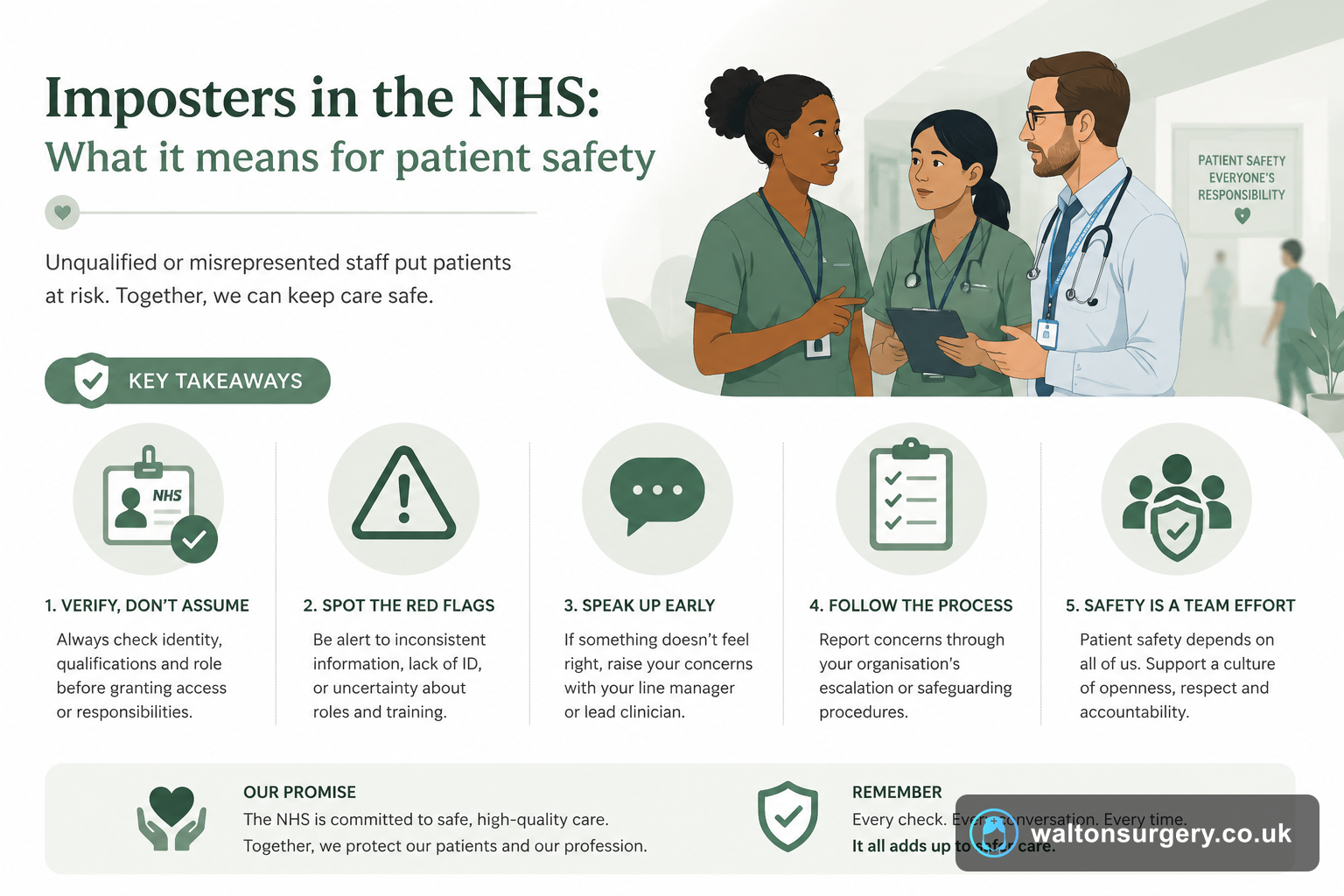
Worried about a particular staff member? You've got options. Start with the free online registers for any clinician — check whether they come up and what their status shows. If they don't appear, or if their registration comes back as inactive, flag it straight away through the hospital's Patient Advice and Liaison Service. Alternatively, you can raise it with the ward sister or charge nurse. If your worries are more about how the hospital itself is being run, you're entitled to lodge a formal complaint with the trust. And should you suspect actual criminal behaviour — fraud, for instance — you can report it to the police.
If you ever suspect a clinical error or a delay in your diagnosis has led to harm, understanding your options is crucial. For instance, guides on cancer misdiagnosis UK what to do can outline the steps for seeking a second opinion and making a formal complaint.
Frequently Asked Questions
⭐ The Bottom Line
What this means for you
A scammer ending up in prison for holding NHS management jobs they never actually qualified for is a pretty stark reminder that fraud can happen almost anywhere. For you as a patient, the direct risk from a non-clinical impostor is low — your care still comes from registered people. But the indirect risk, the one that flows from poor management decisions, is very real. Always take a moment to verify the registration of clinicians who are treating you; the official online registers make it easy. If something doesn't sit right, use the NHS complaints procedure or contact PALS. Being vigilant, and expecting transparency, remain the best defences patients have.
Last updated: 2026-07-28 · Written by the Walton Surgery editorial team · Medical information is for educational purposes only and does not replace advice from a qualified healthcare professional.