Living With Endometriosis: You Are Not Alone
PART C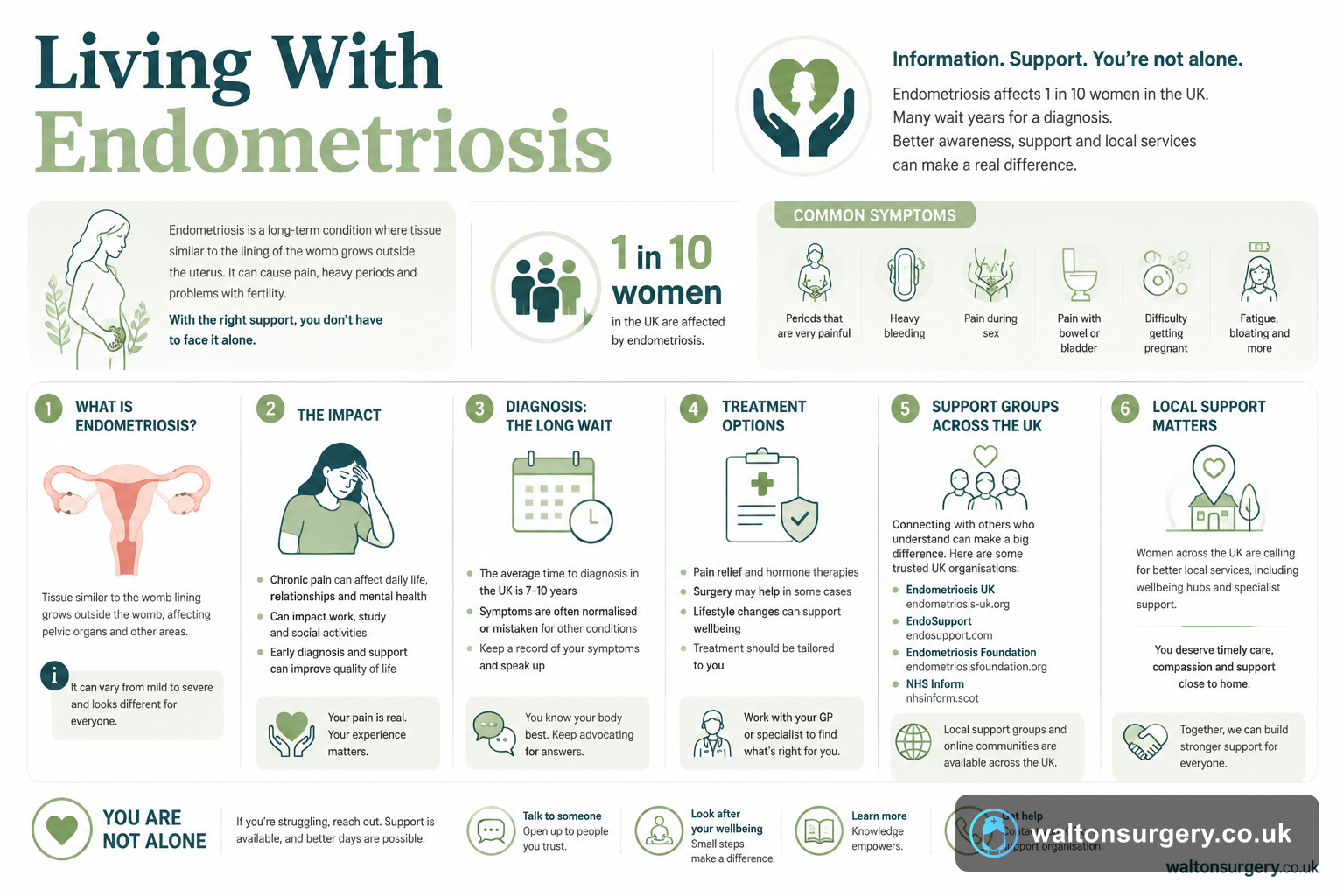
⚡ Quick Answer
If you're living with endometriosis, you're not alone. This condition touches one in ten women, but a lot of them spend ages waiting to actually get diagnosed. A woman in Chatham is pushing for better local help, like wellbeing hubs. Here, we look at what endometriosis actually is, the pain that comes with it, and where to find support across the UK.
You're not alone with endometriosis pain. Christiana Hansen, who's 49 and from Chatham, was diagnosed with the condition in 2023, five years after her symptoms first showed up. She's now fighting for a dedicated wellbeing hub in Medway to help women with reproductive health conditions. That need is clear when you think about the numbers—endometriosis affects one in 10 women. The condition is where cells similar to those in the womb lining grow in other parts of the body, and they can end up affecting your bladder or bowel. If you're looking for endometriosis support groups in the UK, it's a really positive move towards managing your health alongside what your doctor offers.
What Is Endometriosis, Exactly?
So, endometriosis is when tissue that's a lot like the womb lining starts growing in places it shouldn't. These cells react to your menstrual cycle hormones, so they thicken and break down just like normal womb tissue would. The problem is, this tissue has nowhere to go. It can't leave your body. That leads to inflammation, a lot of pain, and sometimes scar tissue forms.
The condition can affect different organs, your bladder and bowel included. Symptoms are often severe period pain, pelvic pain that won't quit, tiredness that really outstays its welcome, and trouble getting pregnant. People describe the pain as a constant, heavy, stabbing thing that just takes over your day. Christiana Hansen puts it plainly: "It is like a stabbing pain, a very very heavy stabbing pain. I cry all the time, I'm not going to hide that." If you think this might be you, your GP is the place to start. Have a chat about your symptoms, and they can look at referring you for more tests, which might be an ultrasound or a laparoscopy.
🔬 Key Facts
Endometriosis: The Basics
- → Prevalence: Affects 1 in 10 women.
- → Core Problem: Tissue similar to the womb lining grows elsewhere (e.g., bladder, bowel), causing inflammation and pain.
- → Common Symptoms: Severe period pain, constant pelvic pain, extreme fatigue, and fertility issues.
- → Diagnosis Wait: Average wait is 5+ years, as symptoms are often mistaken for other conditions.
The Long Road to Diagnosis
Getting a diagnosis for endometriosis can take years, and that's not an exaggeration. Christiana Hansen lived with symptoms for five years before she was diagnosed in 2023. This wait is common, and it's incredibly frustrating. The government knows it's a problem too, and says it's determined to shorten those waiting times.
Why does it take so long? Well, the symptoms often get mistaken for other things, like IBS, or they're just brushed off as "bad periods." Hansen found that sometimes when you ask for help, you can feel a bit dismissed. That delay means years of unnecessary pain and a real sense of being on your own with it all.
A diagnosis, when it finally comes, brings mixed feelings. There's relief at having a name for the pain, but also frustration because it can mark the start of a complicated treatment path. Connecting with other people who know exactly what this is like is where support groups become so valuable, whether it's hearing stories from celebrities with endometriosis or finding comfort in shared experiences.
Understanding Your Treatment Options
Treatment for endometriosis is all about managing the symptoms and trying to make life better. The options vary a lot depending on the person. They include painkillers, hormone treatments like the contraceptive pill or an IUD, and sometimes surgery to remove the endometrial tissue.
Christiana Hansen's daily routine is built around symptom control. "I am on the highest dose, it eases my pain. I take it two to four times a day," she says, showing the different medications she relies on. Finding the right mix of treatments is usually a bit of trial and error with your healthcare team.
It's important to keep talking to your GP or gynaecologist about what's working and what isn't. Your treatment plan might need to change as your symptoms do. Having support from others can help you get ready for these appointments and feel less like you're figuring it all out by yourself, similar to the support needed for conditions covered in our guide to kaley cuoco endometriosis surgery.
Finding Endometriosis Support Groups in the UK
You really don't have to go through this alone. Support groups all over the UK are a place to swap stories, share practical tips, and just be understood. For anyone feeling isolated or not listened to, they can be a genuine lifeline.
Big charities like Endometriosis UK keep a directory of local groups. Some meet face-to-face, others are online, so support is there no matter where you live. These groups are usually run by volunteers, often people who have the condition themselves.
Christiana Hansen's campaign for a wellbeing hub in Medway is a direct answer to this need. She wants a specific, local place for women and girls with reproductive conditions, because she knows that community support can make a real difference to how you feel.
What Can a Support Group Offer You?
A support group gives you something a doctor's appointment often can't: shared understanding. Hearing someone else describe your exact pain or frustration is incredibly validating. It breaks down the loneliness that comes with a chronic illness.
There's practical help too. Members share tips on dealing with pain at work, talking to your partner, or how to handle NHS appointments. This advice comes from real experience. You might discover a heat pad brand everyone rates, or the right words to use when you're speaking to a GP.
These groups are a non-judgemental space. You can talk openly about the emotional and physical toll without having to explain or defend yourself. For a lot of people, it's the first time they feel truly heard about their condition, a feeling also vital when navigating other challenging health journeys, such as seeking gambling addiction support uk.
How to Access Support and Resources
Finding endometriosis support groups in the UK is pretty straightforward. A good first step is the Endometriosis UK website. Their "Get Support" section has a tool where you can type in your postcode to find local groups, both in-person and online.
Your GP or practice nurse is another option. They might know about local services or patient groups. Sometimes, hospital gynaecology departments have info on local charities and support networks too.
Facebook has lots of closed groups for people with endometriosis. Look for UK-based ones that are moderated by reputable organisations or experienced people. They can be good for daily support, but it's always wise to double-check any health advice you get with a professional.
The Role of Wellbeing Hubs
Christiana Hansen's push for a wellbeing hub in Medway shows a growing awareness of what's needed. A dedicated space for reproductive health conditions could offer more than just medical treatment—it could provide holistic support.
A place like that might offer counselling, physiotherapy, dietary advice, and peer support all in one spot. That could take some pressure off GPs by providing specialised wellbeing services. For the people using it, having one point of contact for multiple needs is far less overwhelming than trying to navigate different services on your own.
These hubs aren't everywhere yet, but the idea points to how important community and joined-up care are. Campaigns like Hansen's show that individuals are leading the conversation about what better endometriosis support should look like.
Frequently Asked Questions
⭐ The Bottom Line
What this means for you
Living with endometriosis can feel very isolating, but you are not alone. It affects one in 10 women, and it's common, even if getting a diagnosis can take years. Support groups across the UK offer shared understanding, practical advice, and a break from the loneliness of chronic pain. Whether you go to a local meeting or join an online community, connecting with people who really get it can be a powerful part of looking after your health and wellbeing.
Last updated: 2026-08-15 · Written by the Walton Surgery editorial team · Medical information is for educational purposes only and does not replace advice from a qualified healthcare professional.