Breast Cancer Screening: Why Young Women Need To Be Breast Aware
PART C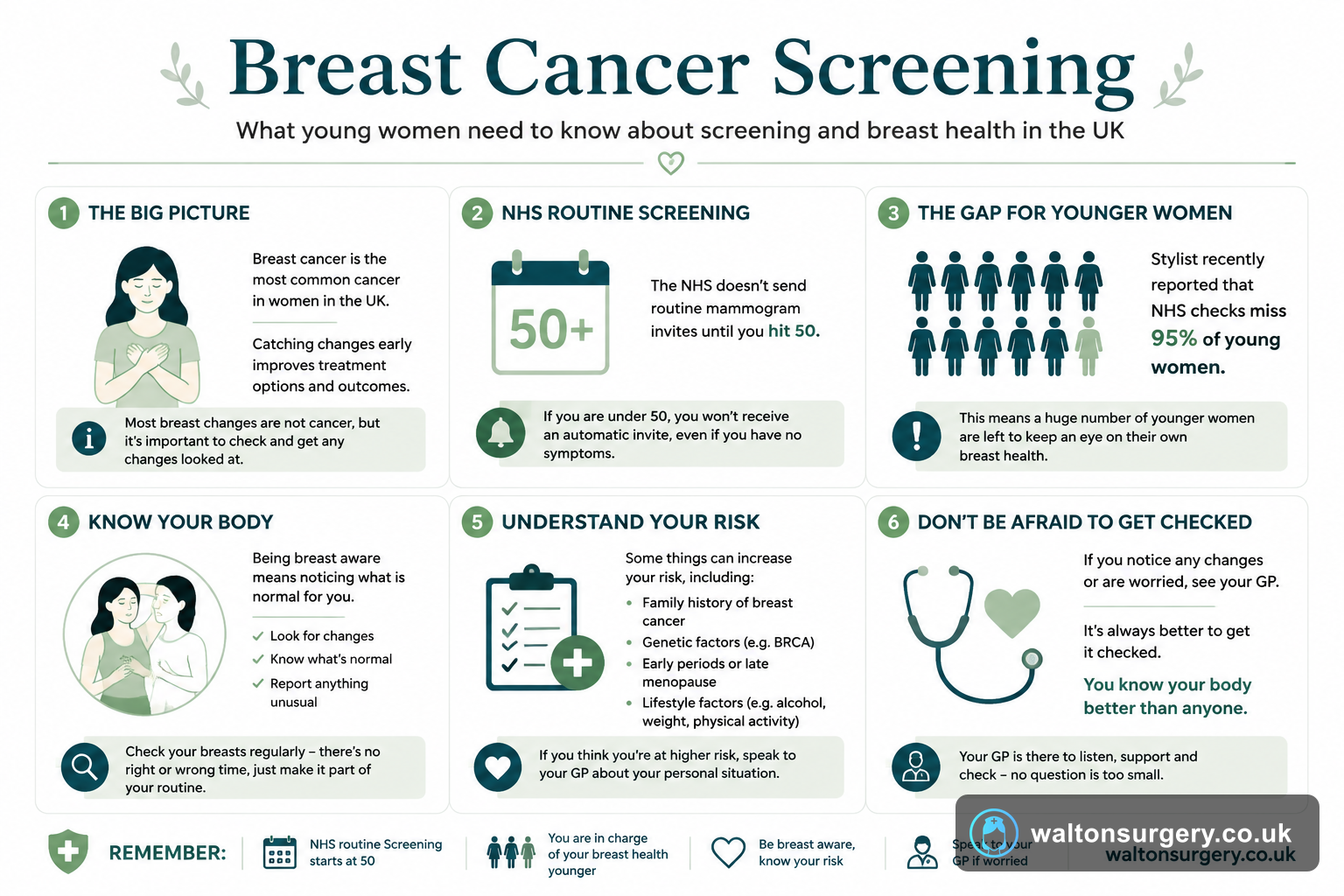
⚡ Quick Answer
The NHS doesn't send routine mammogram invites until you hit 50, which means a huge number of younger women are left to keep an eye on their own breast health. Stylist recently reported that NHS checks miss 95 per cent of young women. What that boils down to is knowing your own body. Being breast aware, understanding what might put you at higher risk, and not being afraid to see your GP — that's the toolkit you've got right now.
The NHS Breast Screening Programme invites women for mammograms once they're between 50 and 71. If you're younger than that, you won't get a letter through the door. A report from Stylist, dated 5 August 2026, made the point that this age-based system means NHS breast cancer checks are missing 95% of young women. Breast cancer isn't as common when you're younger, sure, but it does happen — and that's exactly why paying attention yourself matters so much.
Understanding why the system works like this isn't about brushing off your worries. It's about getting your head around how the NHS operates and knowing the steps you can take. So here's what matters when it comes to being proactive with your breast health.
Why doesn't the NHS screen younger women?
The NHS Breast Screening Programme is built on population-level data. It relies on mammography, which is essentially an X-ray of the breast. In younger women, breast tissue tends to be denser. That density can make it harder for the mammogram to pick up anything abnormal — which means you might get a false negative, or a false positive that leads to further, more invasive tests that weren't really needed.
The decision to focus on the 50-71 age group comes from a cost-benefit analysis done at a national level. The programme weighs detection rates in older women against the risk of false results and the anxiety those cause in younger ones. It's a resource allocation choice for the health service overall, not a judgement on any one person's risk. A system built for mass screening, not for individual risk assessment.
What does 'missing 95% of young women' mean?
That 95 per cent figure — which Stylist reported — points directly to the gap in the screening programme's age range. For women outside that 50-71 window, the NHS's main detection tool, the routine mammogram, simply isn't being offered.
It doesn't mean 95% of young women with cancer are getting the wrong diagnosis. What it means is the primary public health screening tool isn't reaching them. So the responsibility for spotting anything unusual falls much more heavily on you and your GP. That's the reason the message of breast awareness gets hammered home so much if you're under 50.
So, what is breast awareness and how do you do it?
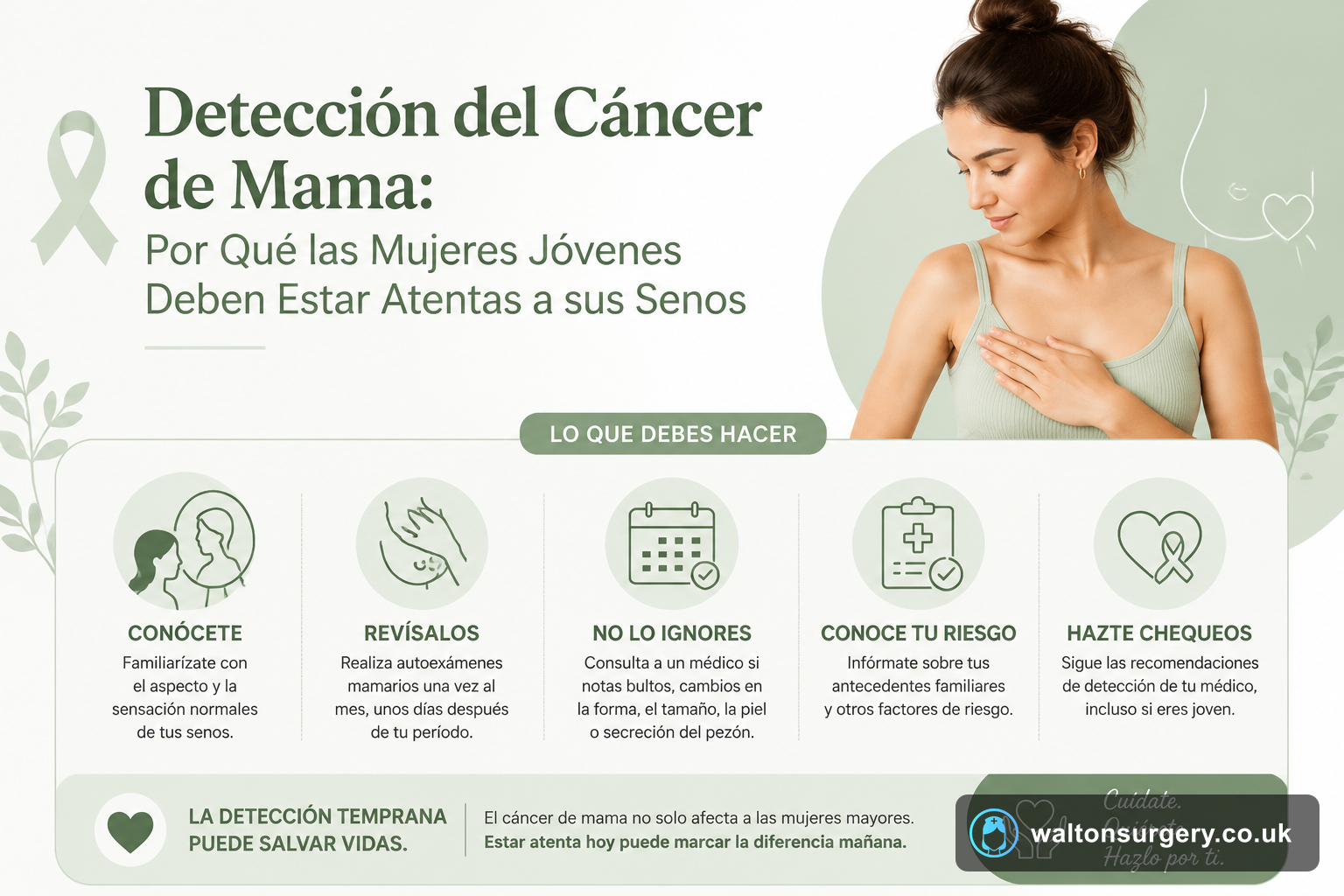
Breast awareness means knowing what your breasts normally look and feel like, so you can spot changes when they happen. It's not a rigid monthly self-examination with a specific technique you have to follow. The NHS actually promotes something more relaxed, more ongoing.
The idea is to get familiar with how your breasts feel throughout your cycle. Run your hands over them regularly — maybe when you're in the bath or shower, or while you're getting dressed. Have a look in the mirror. You're trying to catch a new, persistent change that doesn't fit your usual hormonal pattern. Normal breast tissue feels lumpy and uneven, honestly, and that texture can shift with your period. High-profile stories, like Jessie J's cancer-free breast cancer mastectomy update in 2026, have helped bring these conversations into the mainstream, encouraging more women to pay attention to their bodies.
What changes should you look out for?
Get yourself to the GP if you notice any of the following. Most breast changes aren't cancer, but it's always worth checking. Recognising the early indicators is a key part of understanding breast cancer diagnosis symptoms in the UK.
- A new lump or thickening in your breast or armpit.
- A change in the size, shape, or outline of your breast.
- A change in the skin, such as puckering, dimpling, a rash, or redness.
- A change in the position of your nipple, or it being pulled in (inverted).
- Nipple discharge that happens without squeezing.
- Any pain in your breast that is new and doesn't go away.
Remember — you're looking for a change from what is normal for you.
How can you assess your personal risk?
Routine screening goes by age, but your own risk might be higher than average. Knowing where you stand can help you have a more informed chat with your GP about whether earlier or more frequent monitoring makes sense for you.
Things that can raise your risk include:
- A strong family history of breast or ovarian cancer (e.g., a mother, sister, or daughter diagnosed before age 50).
- A known faulty gene in your family, such as BRCA1 or BRCA2.
- Previous radiotherapy to the chest area before age 30.
- Having a previous breast cancer diagnosis.
If any of those ring true, bring it up with your GP. They can refer you to a specialist genetics clinic or a breast clinic for a proper risk assessment.
🔬 Key Facts
Risk Factors for Younger Women
- → Family History: A mother, sister, or daughter diagnosed before age 50 significantly raises your risk.
- → Faulty Genes: Carrying the BRCA1 or BRCA2 gene mutation is a major risk factor.
- → Prior Chest Radiotherapy: Having radiotherapy to the chest before age 30 increases risk.
- → Previous Diagnosis: A history of breast cancer is a clear risk factor for recurrence.
What happens if you find a change and see your GP?
If something feels off, your first move is booking that GP appointment. Don't sit on it because you're worried about wasting their time — it is a completely valid reason to walk through their door.
Your GP will ask about what you've noticed and might examine you. If they reckon the change warrants further investigation, they'll refer you to a specialist breast clinic. Under the NHS, that's typically a two-week wait referral. At the clinic, you'll probably have a mammogram — or an ultrasound, which tends to work better on younger, denser breast tissue — and possibly a biopsy. The vast majority of people who get referred to a breast clinic turn out not to have cancer. This principle of early detection and rapid referral is consistent across NHS pathways, similar to how NHS lung cancer screening uses targeted follow-ups for high-risk individuals.
Frequently Asked Questions
⭐ The Bottom Line
What this means for you
The NHS screening programme is a useful tool, but it works within clear age boundaries. If you're a young woman, you sit outside its routine scope. Your strongest defence is your own awareness. Learn how your breasts normally look and feel, so you're the first to know if something shifts. Don't hesitate to talk to your GP about any concerns or your family history. Being proactive about your breast health is a form of self-care that's genuinely in your hands.
Last updated: 2026-08-05 · Written by the Walton Surgery editorial team · Medical information is for educational purposes only and does not replace advice from a qualified healthcare professional.