What Is the NHS Lung Cancer Screening Programme?
PART C — HTML Body Components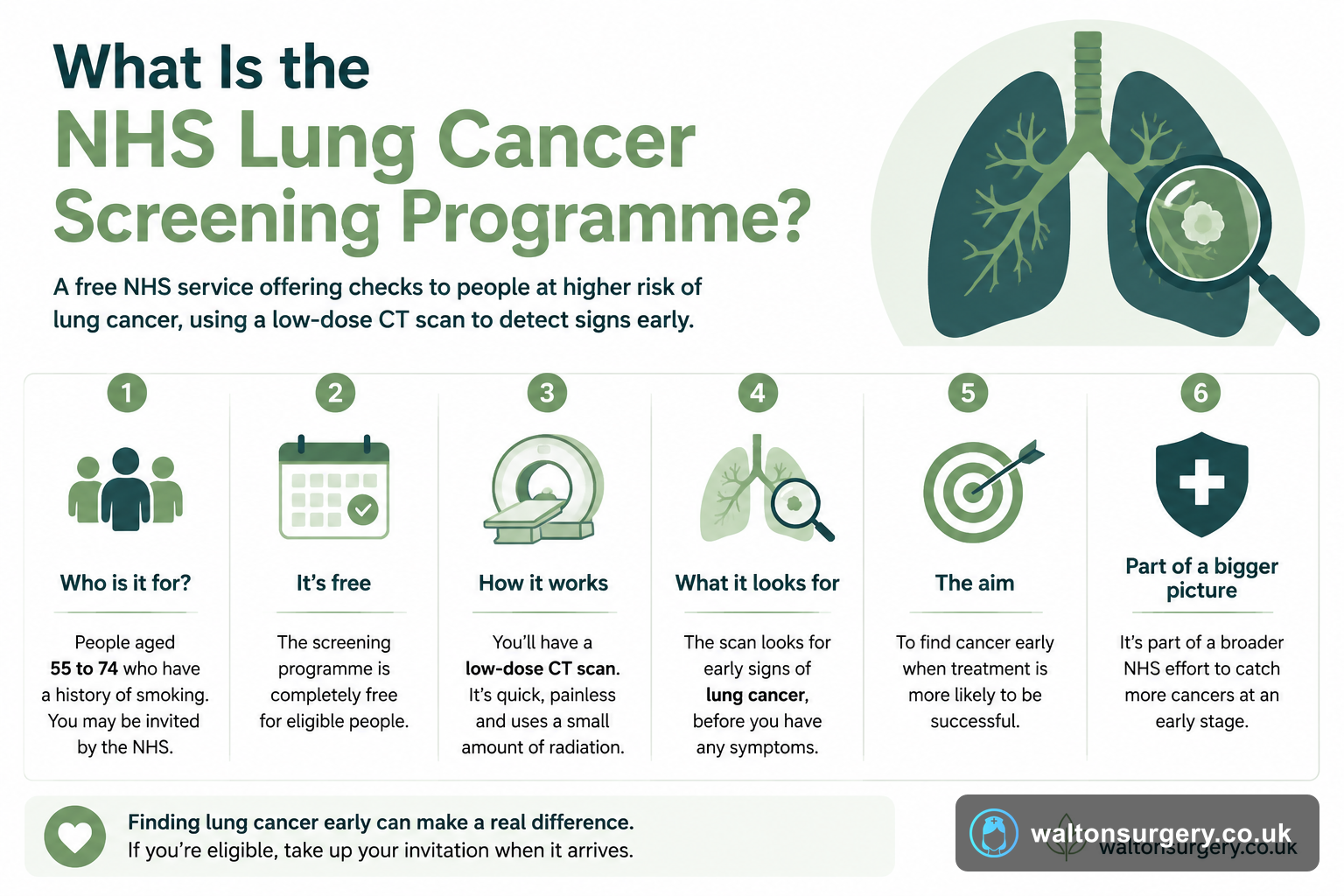
⚡ Quick Answer
The NHS Lung Cancer Screening Programme offers free checks to people aged 55 to 74 who have a history of smoking. It uses a low-dose CT scan to look for early signs of lung cancer. The aim is to find cancer early when treatment is more likely to be successful. It's part of a broader NHS effort to catch more cancers at an early stage.
If you're between 55 and 74 and have a history of smoking, you might get a letter through the door inviting you for a lung health check. That's the NHS Lung Cancer Screening Programme in action. It's aimed squarely at people who, statistically speaking, face the biggest risk of developing lung cancer.
What it boils down to is a low-dose CT scan. The whole point is to spot trouble in your lungs before you even feel any different. Finding it early, that's the name of the game here. Because when lung cancer is caught at an early stage, the treatments available tend to work a lot better. The NHS is rolling this out more widely as part of its Long Term Plan, which is basically their big push to improve how we deal with cancer across England.
Who Is Eligible for Lung Cancer Screening?
You don't need to fill in a form or ring up your surgery. If you're registered with a GP in one of the areas where the programme is up and running, and you're in the right age bracket with a smoking history on file, you should get an invitation letter sent out to you automatically. Your practice uses your NHS records to work out who qualifies.
If there's no smoking history recorded, or you gave up decades ago and it never made it onto your notes, you probably won't get that call-up. This isn't a universal screening — it's deliberately targeted. The data is clear: people with a smoking background carry the highest statistical likelihood of lung cancer, which is why the programme focuses its resources there. High-profile stories, such as the recent jessie j cancer free breast cancer mastectomy update 2026, show how vital early detection is across all cancer types.
What Happens During the Screening?
More often than not, things kick off with a phone call from a lung cancer screening nurse. You'll have a conversation about how much you smoked, when you stopped (if you did), how you're feeling generally, and you can fire any questions at them. It's a chat, really, but it helps pin down your level of risk and makes sure the scan is the right next step.
Depending on how that call goes, you'll either get booked in for a low-dose CT scan or told you don't need one right now. The scan itself doesn't take long at all — we're talking a few minutes, and there's no discomfort involved. You just lie flat on a narrow bed that glides you through a big, ring-shaped scanner. Honestly, the wait to get the appointment is often longer than the procedure itself.
Understanding Your Scan Results
A specialist doctor — usually a radiologist — looks at the images from your scan. Your results typically come back as a letter, and most people get them within a few weeks. The vast majority of scans come back showing nothing to worry about. No shadows, no abnormalities. All clear.
If something does show up, though, it's really important not to panic. Most of the time, what they've spotted turns out to be harmless — old scarring from a chest infection, maybe, or another benign condition. Still, you might be asked to come back. Perhaps for another scan in a few months to check things haven't changed, or for a more in-depth investigation. The NHS page on follow-up pathways, which was reviewed fairly recently, notes that this doesn't automatically point to cancer.
🔬 Key Facts
The Screening Process
- → Initial Call: A screening nurse phones you for a risk assessment chat.
- → The Scan: A quick, painless low-dose CT scan takes just a few minutes.
- → Results: You'll usually hear back via letter within a few weeks.
- → Follow-up: If something is spotted, it is often harmless, but further checks may be arranged.
Why Is This Programme Important for Public Health?
Lung cancer has a reputation for being diagnosed late. The symptoms — a cough that lingers, getting out of breath more easily — they're vague, aren't they? Easy to put down to getting older or a winter bug. The NHS has reported that screening can pick up lung cancer at an earlier stage, sometimes even before it's started causing any bother at all. This push for early detection is especially relevant given stories like the nivea singer cancer diagnosis uk, which highlight the importance of catching the disease early.
The NHS Long Term Plan set out a pretty ambitious target: to get three-quarters of cancers caught at stage one or two by 2028, up from roughly half. That's a massive jump. Screening programmes like this one are one of the main ways they're trying to get there. And the lung cancer model they've developed is now being looked at as a blueprint for other future imaging programmes too, which is quite something when you think about it. Support for patients, including understanding malnutrition after cancer diagnosis, is also a crucial part of the wider cancer care strategy.
Does This Replace Other Health Checks?
No, it doesn't. Lung cancer screening is one specific tool in the box. It's not a replacement for other NHS health checks, and it definitely doesn't mean you can ignore symptoms you're worried about. A cough that just won't shift, coughing up blood, or losing weight without trying — those things still need a trip to your GP.
Keep attending your other routine appointments too. Bowel cancer screening, breast screening, cervical screening — they're all separate, each designed for a particular purpose and age group. This lung programme slots in alongside them, not instead of them.
Frequently Asked Questions
⭐ The Bottom Line
What this means for you
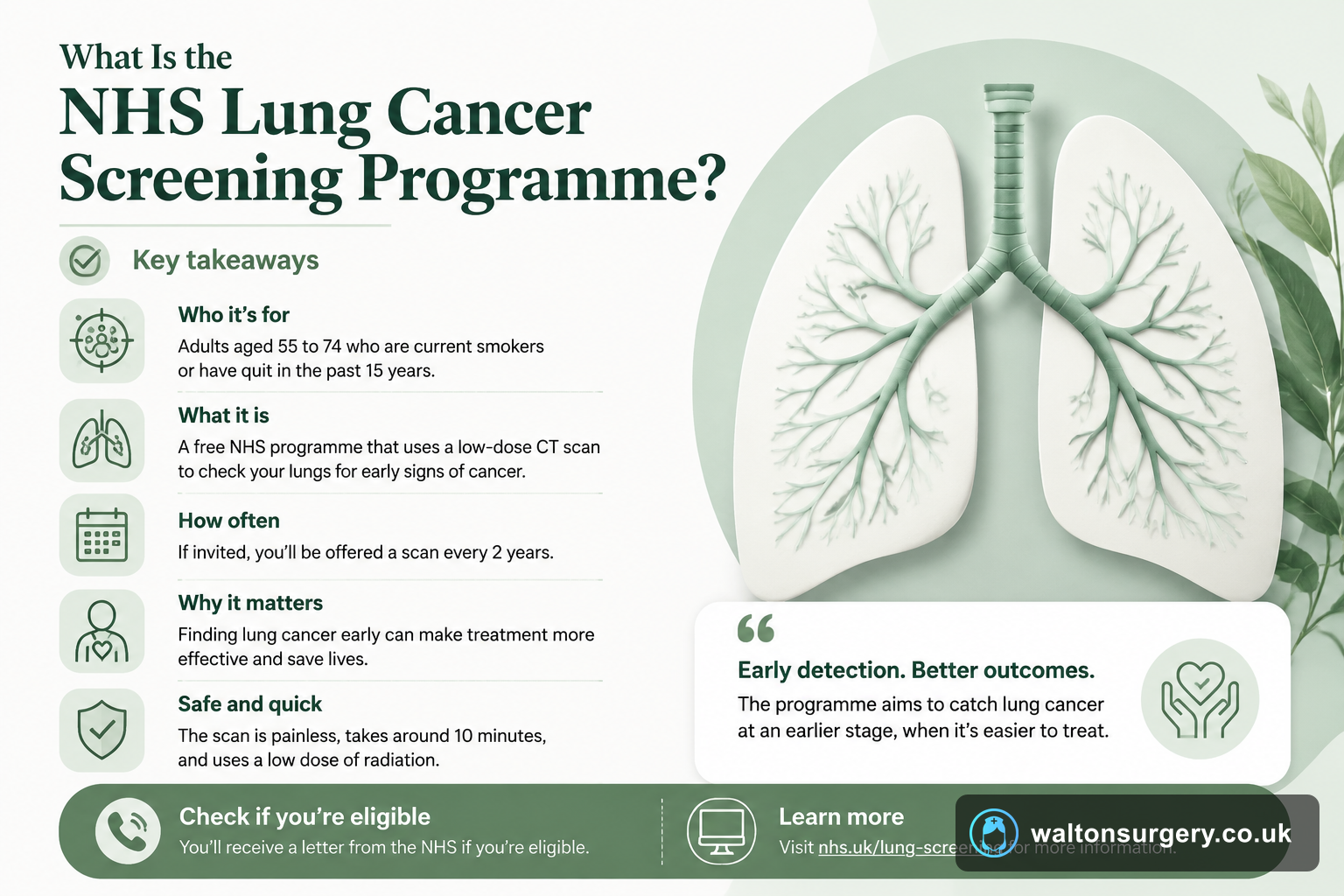
The NHS Lung Cancer Screening Programme is a targeted health check for current and former smokers aged 55 to 74 in England. It uses a low-dose CT scan to detect potential lung cancer early. While it's a positive step for public health, it's not a substitute for seeing your GP if you have worrying symptoms. The programme is part of a wider NHS push to improve cancer survival rates by catching more cases when treatment can be most effective.
Last updated: 2026-07-25 · Written by the Walton Surgery editorial team · Medical information is for educational purposes only and does not replace advice from a qualified healthcare professional.