What Is Multiple Organ Failure? Causes, Symptoms & Treatment
PART C — HTML Body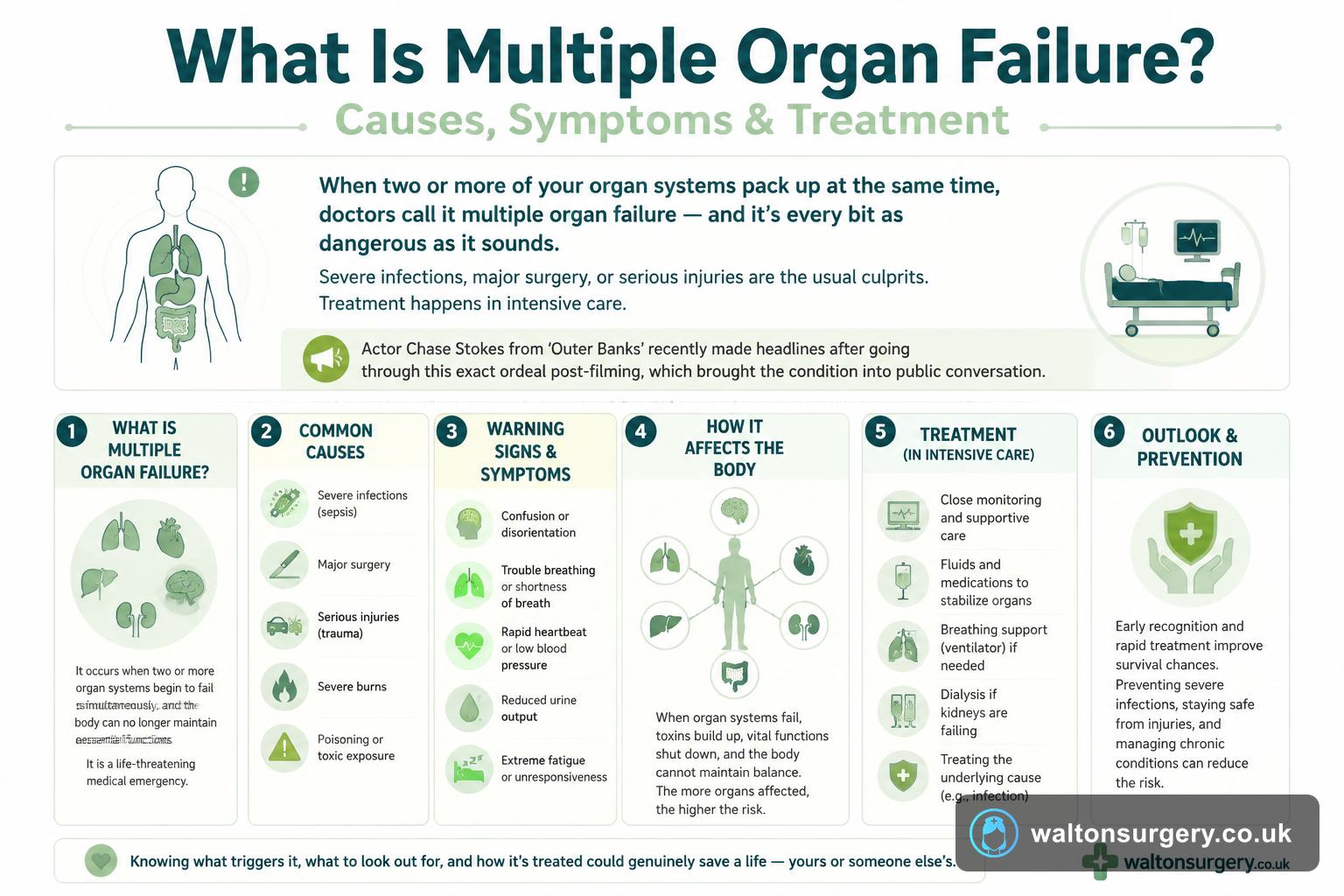
⚡ Quick Answer
When two or more of your organ systems pack up at the same time, doctors call it multiple organ failure — and it's every bit as dangerous as it sounds. Severe infections, major surgery, or serious injuries are the usual culprits. Treatment happens in intensive care. Actor Chase Stokes from ‘Outer Banks’ recently made headlines after going through this exact ordeal post-filming, which brought the condition into public conversation. Knowing what triggers it, what to look out for, and how it's treated could genuinely save a life — yours or someone else's.
Thousands of people across the UK end up in hospital every year with multiple organ failure. What happens is that several organs start shutting down together, and once that domino effect begins, things can turn fatal surprisingly fast without emergency medical intervention.
The condition hit the headlines recently thanks to Chase Stokes, the actor from Netflix's ‘Outer Banks’. According to Entertainment Weekly, he developed multiple organ failure once filming wrapped — a stark reminder that this can happen to anyone, no matter how young or fit they seem.
What Exactly Is Multiple Organ Failure?
Sometimes you'll hear doctors refer to it as multiple organ dysfunction syndrome, or MODS. Either way, it means two or more organ systems have stopped working properly at the same time. The NHS calls it a serious complication, and it almost always crops up as a consequence of some other major health crisis happening in the background.
Think of your organs as a team that depends on each other. When one member drops out, the rest come under huge pressure — and that pressure can set off a chain reaction where everything starts failing in quick succession. The lungs, kidneys, liver, heart, and blood clotting system tend to be the ones most commonly hit.
There are two types worth knowing about. Primary organ failure results directly from a specific injury — say, a hard blow to the abdomen that damages the liver. Secondary organ failure is different. It develops because of the body's own inflammatory response to an initial injury or infection, even after the original problem has already been dealt with.
One thing that trips people up: multiple organ failure isn't actually a disease on its own. It's a syndrome, which is really just a collection of symptoms telling you the body is in serious trouble. How fast it develops depends on the individual, but one thing stays constant — you'll need treatment in an intensive care unit.
What Causes Multiple Organ Failure?
There are several broad categories of trigger, and each one essentially overwhelms the body beyond what it can handle on its own. Looking at these causes helps make sense of why some situations are riskier than others.
Sepsis — that's a severe infection that gets into the bloodstream — is probably the most common trigger. What happens is the immune system goes haywire. Instead of targeting the bacteria or pathogen properly, it starts attacking the body's own tissues and organs. The UK Sepsis Trust puts the numbers at roughly 245,000 people affected in the UK every year, making sepsis a major driver of organ failure.
Serious trauma does it too. Road accidents, falls from height — the kind of injuries that cause significant tissue damage and blood loss. That initial trauma kicks off widespread inflammation, and the inflammation can end up affecting organs that weren't even near the original injury.
Big surgical operations carry their own risks, particularly emergency procedures, heart and major vessel surgeries, or anything involving substantial blood loss. The Chase Stokes situation is a useful example here — the physical toll of filming apparently pushed his body into a crisis that nobody saw coming.
Other things on the list include severe burns, pancreatitis (which is inflammation of the pancreas), and anything that keeps blood pressure dangerously low or cuts off oxygen to the tissues for a prolonged stretch. Occasionally, a bad drug reaction or toxic exposure can set the whole cascade off.
🔬 Key Facts
Common Triggers for Multiple Organ Failure
- → Sepsis — severe bloodstream infection; ~245,000 cases in the UK annually
- → Serious trauma — road accidents, falls from height causing widespread inflammation
- → Major surgery — especially emergency or cardiac procedures with significant blood loss
- → Other causes — severe burns, pancreatitis, prolonged low blood pressure, toxic exposure
Recognising the Symptoms and Warning Signs
Which symptoms show up depends on which organs are struggling, but there are some general red flags that ought to send you straight to hospital. Catching things early matters enormously because without treatment, the condition accelerates fast.
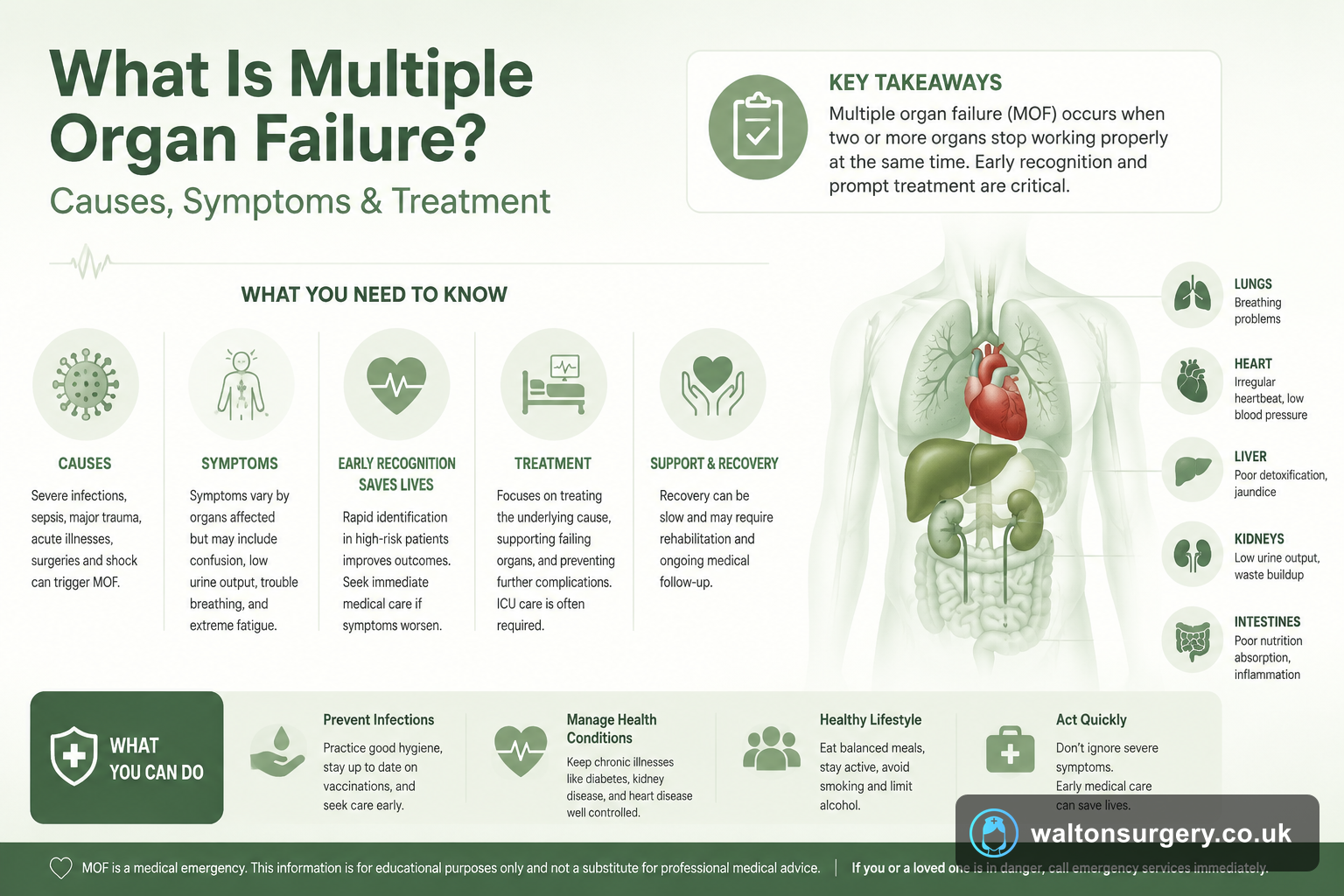
If the lungs are involved, breathing becomes difficult. You might notice rapid, shallow breaths, or the lips and fingertips turning a bluish colour — that happens because the lungs aren't getting enough oxygen into the blood. The NHS is pretty clear on this: unexplained breathlessness, especially alongside other worrying symptoms, needs urgent assessment.
Kidney trouble often shows up as a dramatic drop in how much you're urinating. You might be drinking normally but barely producing any urine, or it could look unusually dark. Swelling in the legs, ankles, or around the eyes is another telltale sign that the kidneys aren't doing their filtering job properly.
When the liver packs up, jaundice tends to appear — that's the yellowing of skin and the whites of the eyes. Confusion, nausea, and a swollen abdomen are common too. The liver detoxifies your blood and makes essential proteins, so when it fails, the consequences ripple out across the whole body.
Heart involvement brings low blood pressure, a heartbeat that's too fast or irregular, and sometimes chest pain. The cardiovascular system simply can't pump blood around the body effectively, which makes the dysfunction in every other organ worse.
More broadly, watch for extreme tiredness, confusion, fever or an abnormally low temperature, and just a general feeling of being really unwell. If several of these hit at once — especially after surgery, an injury, or a bad infection — dial 999 or get to A&E without delay.
How Is Multiple Organ Failure Diagnosed?
Doctors piece together a diagnosis using physical exams, blood tests, and continuous monitoring of how each organ is performing. In intensive care, they rely on established scoring systems to measure how badly things have deteriorated.
Blood work is the backbone of the whole process. Tests measure creatinine and urea to check kidney function, liver enzymes like ALT and AST, blood gases to see how well the lungs are working, and lactate levels which tell them whether tissues are getting enough oxygen. All of this helps the clinical team figure out which organs are affected and to what degree.
Imaging comes into play as well — chest X-rays, CT scans, ultrasounds. These let doctors actually see organ damage and track down what's causing it. A chest X-ray might show fluid on the lungs, for instance, while an abdominal CT could reveal an abscess or hidden source of infection.
The SOFA score — that's Sequential Organ Failure Assessment — is widely used in UK ICUs. It tracks dysfunction across six organ systems: respiratory, coagulation, liver, cardiovascular, central nervous system, and renal. Higher scores mean worse dysfunction, and the results directly inform treatment choices.
In the ICU, monitoring never stops. Heart rate, blood pressure, oxygen saturation, urine output — all of it tracked around the clock. That constant vigilance means the medical team can spot changes fast and tweak treatment as needed.
Treatment Options for Multiple Organ Failure
The approach boils down to keeping the failing organs going while sorting out whatever caused the problem in the first place. Nearly always, that means an intensive care unit with all the specialist kit and expertise on hand.
Supportive care is the foundation. The idea is to give the body what it needs to keep functioning while the organs have a chance to recover. Mechanical ventilation steps in when the lungs can't oxygenate blood properly — the machine pushes oxygen-rich air in and pulls carbon dioxide out, essentially breathing for the patient.
If the kidneys go, renal replacement therapy — most people know it as dialysis — takes over. Blood gets routed through a machine that strips out waste products and extra fluid, then sends it back into the body. For some patients this is temporary, just until the kidneys bounce back. For others it becomes permanent.
Medications do a lot of heavy lifting here. Vasopressor drugs constrict blood vessels to push dangerously low blood pressure back up. Antibiotics get started when infection is behind it all, with the specific drug chosen based on blood culture results. The NHS guidance is that antibiotics should be given within an hour of suspecting sepsis.
Nutritional support matters more than people realise. Patients who can't eat normally might get a feeding tube or nutrition delivered intravenously. The body needs calories and protein to repair tissue damage and fight off infection.
Addressing the root cause is just as critical as propping up the organs. Sepsis means antibiotics plus source control — draining an abscess, removing infected tissue, that sort of thing. Trauma might require surgical repair of damaged structures.
What Is the Recovery Process Like?
How recovery plays out depends on a lot of things — how severe the illness was, the patient's age and general health, and how fast treatment got started. Even after the immediate crisis passes, the effects can linger for a long time.
ICU stays can stretch from a few days to weeks or months. Survivors often face a lengthy recovery involving rehabilitation, physiotherapy, and regular medical check-ups. The physical toll is real — muscle weakness, fatigue, and reduced exercise tolerance are common, and it can take months before those improve.
The psychological side deserves just as much attention. Anxiety, depression signs symptoms treatment uk, and PTSD are all common among critical illness survivors. The ICU experience is often disorienting and frightening, and some patients only have patchy, fragmented memories of their time there. The NHS recommends that every ICU survivor gets offered psychological support during recovery. We cover this in more depth in health anxiety symptoms and treatment.
Lasting organ damage is a genuine possibility. Some people develop chronic kidney disease and need ongoing dialysis or eventually a transplant. Others deal with persistent lung problems or cognitive difficulties. Hospital specialists typically arrange regular follow-up to keep an eye on these complications.
Chase Stokes went through multiple organ failure and came out the other side, which shows that getting back to a normal life is possible. But the road there isn't easy, and it usually requires sustained medical support.
Frequently Asked Questions
⭐ The Bottom Line
What this means for you
Multiple organ failure is what happens when two or more organ systems stop working, usually triggered by a severe infection, trauma, or major surgery. Intensive care treatment — including organ support and tackling the underlying cause — is essential. Survival rates have improved, but recovery can be long and may come with lasting effects. If you or someone around you shows signs of organ failure or sepsis, get emergency medical help without hesitation. This article gives you general information, but it isn't a replacement for personalised advice from your GP or hospital specialist.
Last updated: 2026-08-26 · Written by the Walton Surgery editorial team · Medical information is for educational purposes only and does not replace advice from a qualified healthcare professional.