Veozah (Fezolinetant): The Non-Hormonal Menopause Treatment for Hot Flushes
**PART C**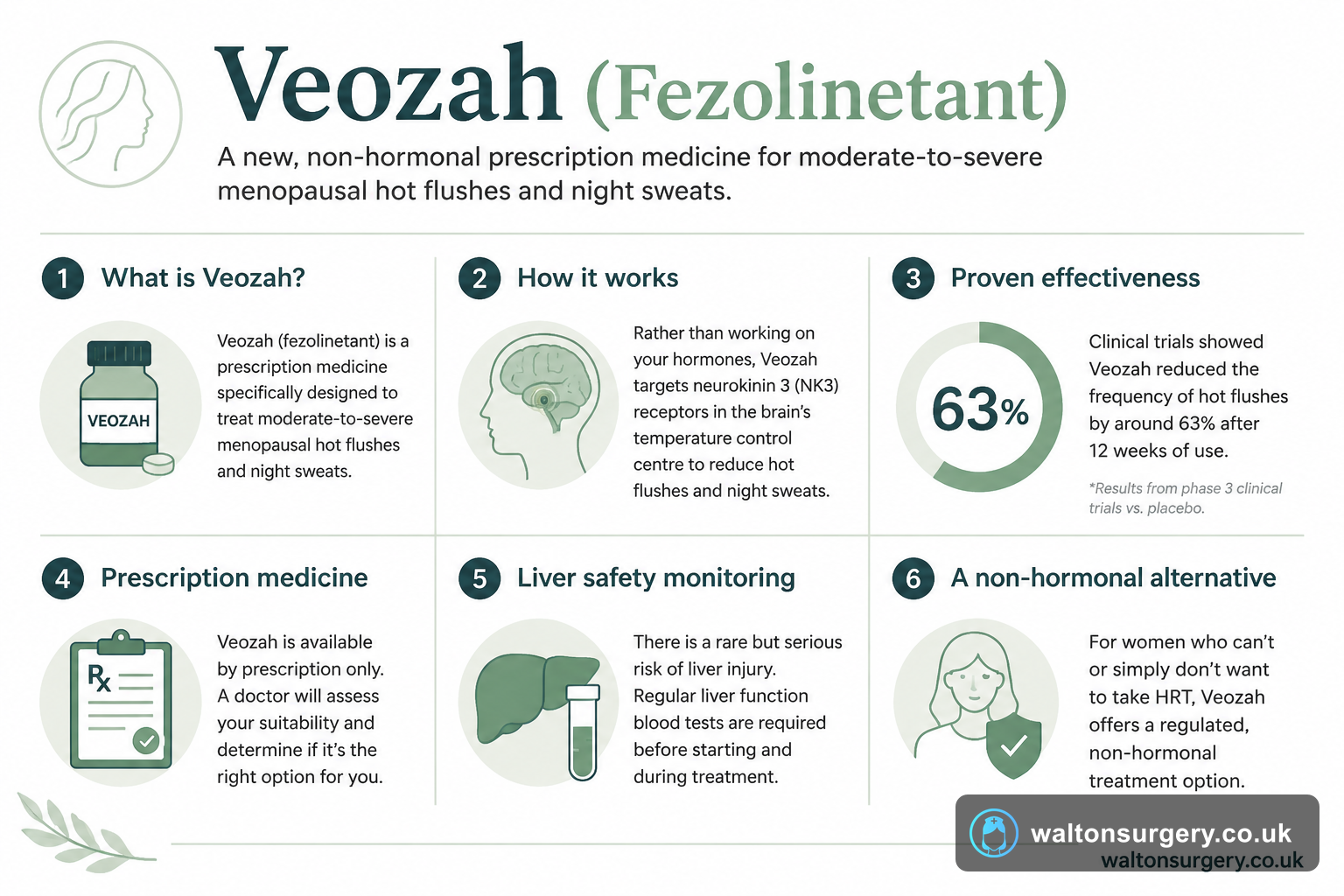
⚡ Quick Answer
Veozah, or fezolinetant as it's also known, is a new prescription medicine designed specifically for moderate-to-severe menopausal hot flushes and night sweats. Rather than working on your hormones, it targets the brain's temperature control centre. Clinical trials showed it could reduce hot flushes by around 63% after twelve weeks of use. A doctor needs to prescribe it, and you'll need regular liver function blood tests because of a rare but serious risk of liver injury. For women who can't or simply don't want to take HRT, it offers a regulated, non-hormonal alternative.
Sold under the brand name Veozah in the United States and Veoza across Europe, fezolinetant is a prescription medicine built for one specific job: tackling moderate-to-severe hot flushes and night sweats brought on by the menopause. Crucially, it's not a hormone therapy. Its mechanism of action is completely different, which is the whole point.
Both the US Food and Drug Administration (FDA) and the European Medicines Agency (EMA) have given it the green light. The treatment is aimed squarely at women who, for whatever reason, either can't take hormone replacement therapy (HRT) or would rather avoid hormonal options altogether. It is a targeted approach that contrasts with broader health management, such as recovery pathways for conditions requiring stem cell transplant recovery UK.
What Exactly Is Veozah?
Veozah is the brand name given to a drug called fezolinetant. It falls into a class of medications you might hear called neurokinin-3 (NK3) receptor antagonists — essentially, a medicine that interferes with specific chemical signals inside your brain. For hot flushes, the most common and frankly annoying symptom of menopause, this is a targeted, non-hormonal way to get things under control.
Don't make the mistake of thinking it's some kind of supplement you can just pick up. It's a proper regulated prescription medicine that has been through clinical trials and got approval from major health authorities. Its job is narrow: it treats vasomotor symptoms, which is the medical way of saying hot flushes and night sweats. It won't do anything for the other menopause symptoms like mood swings, aching joints, or vaginal dryness. Just the heat.
How Does This Non-Hormonal Treatment Work?
You need to understand what actually happens during a hot flush to get why this medicine works. As you go through the menopause, your oestrogen levels fall and this affects a part of your brain called the hypothalamus. Think of it as your body's internal thermostat. The hormonal shift can make this thermostat incredibly sensitive, so the comfortable temperature range you can tolerate gets very narrow. Then even a tiny change in your core body temperature can set off a huge, wildly disproportionate response: a sudden flush of heat, sweating, and redness.
Scientists found that a brain chemical called neurokinin B, or NKB, is central to this overactive signalling going haywire. Veozah is designed to step in right at that point. It stops NKB from latching onto its receptors — the NK3 receptors — in the hypothalamus. By blocking that signal, the drug helps to calm the overactive thermostat down, which in turn reduces how often you get hot flushes and how bad they are. It's targeting this brain pathway rather than the hormonal system, which is what makes it a non-hormonal option.
What Does the Clinical Evidence Say?
Veozah got approval because of results from rigorous clinical trials. In these studies, researchers were measuring how well the drug cut down the number of moderate-to-severe hot flushes women were having each day, compared with a placebo — a dummy pill, basically.
🔬 Key Facts
Clinical Trial Results
- → 4 Weeks: Average 53% reduction in daily hot flushes.
- → 12 Weeks: Average 63% reduction in daily hot flushes.
- → Placebo (12 Weeks): Average 40% reduction in daily hot flushes.
- → Outcome: Consistent, meaningful drop in symptom burden.
The findings were pretty clear-cut. After four weeks on the 45 mg dose, women saw, on average, a 53% drop in how often they experienced hot flushes each day. The placebo group, by contrast, only managed a 32% reduction. The benefits kept building the longer women took it. By twelve weeks, those on fezolinetant were seeing an average reduction of about 63% in their hot flushes, while the placebo group had reached a 40% reduction. These numbers point to a consistent, meaningful drop in symptom burden for people taking the medicine. It's not a magic bullet, but the data is solid.
Who Might Consider This Option?
Veozah is specifically for women dealing with moderate-to-severe vasomotor symptoms caused by menopause. Put simply, that means hot flushes and night sweats happening often enough to mess with your daily life, your sleep, and how you feel overall.
The main group of women this treatment is really relevant for are those for whom HRT just isn't an option. That might be because of a personal or family history of certain conditions — things like breast cancer, blood clots, or liver disease — where hormones are contraindicated. It's also for women who, for personal reasons, would rather steer clear of hormonal treatments full stop. Talking to your GP or a menopause specialist is non-negotiable here; they need to work out if this is the right path for you and your specific health situation. We cover this in more depth in amy dowden crohn's disease friendship.
Understanding the Side Effects and Liver Safety
Every prescription medicine comes with potential side effects, and Veozah is no different. From the clinical trial data, the most common ones — affecting up to roughly one in ten people — are diarrhoea and difficulty sleeping, or insomnia.
The safety concern that really matters, though, is a rare but serious risk of liver injury. Because of this, regulatory bodies like the US FDA and the EMA have made certain safety measures mandatory. Your doctor will need to run blood tests to check your liver function before you even start treatment. After that, they'll arrange for more blood tests at intervals during your treatment to keep an eye on your liver health. It is absolutely critical that you tell your doctor straight away if you notice any signs of a potential liver problem. Those warning signs include yellowing of the skin or the whites of your eyes (jaundice), dark-coloured urine, feeling sick, or pain in your abdomen.
How to Get Veozah
You can't just walk into a chemist and buy Veozah off the shelf. It's prescription-only. The process starts with a conversation — a proper consultation with a qualified healthcare professional, like your GP or a menopause specialist. They'll assess your symptoms, go through your medical history, and decide if Veozah is an appropriate treatment for you.
If they think it is, your doctor will write a prescription. They'll also explain the dosing and, importantly, the schedule for those all-important liver function blood tests. This isn't a treatment to start without that medical oversight. The British Menopause Society makes the point that treatment for menopausal symptoms should be individualised — what works for one person might not be right for another. A doctor can help you weigh up the potential benefits of a treatment like Veozah against the risks, looking at your specific circumstances.
Frequently Asked Questions
⭐ The Bottom Line
The bottom line
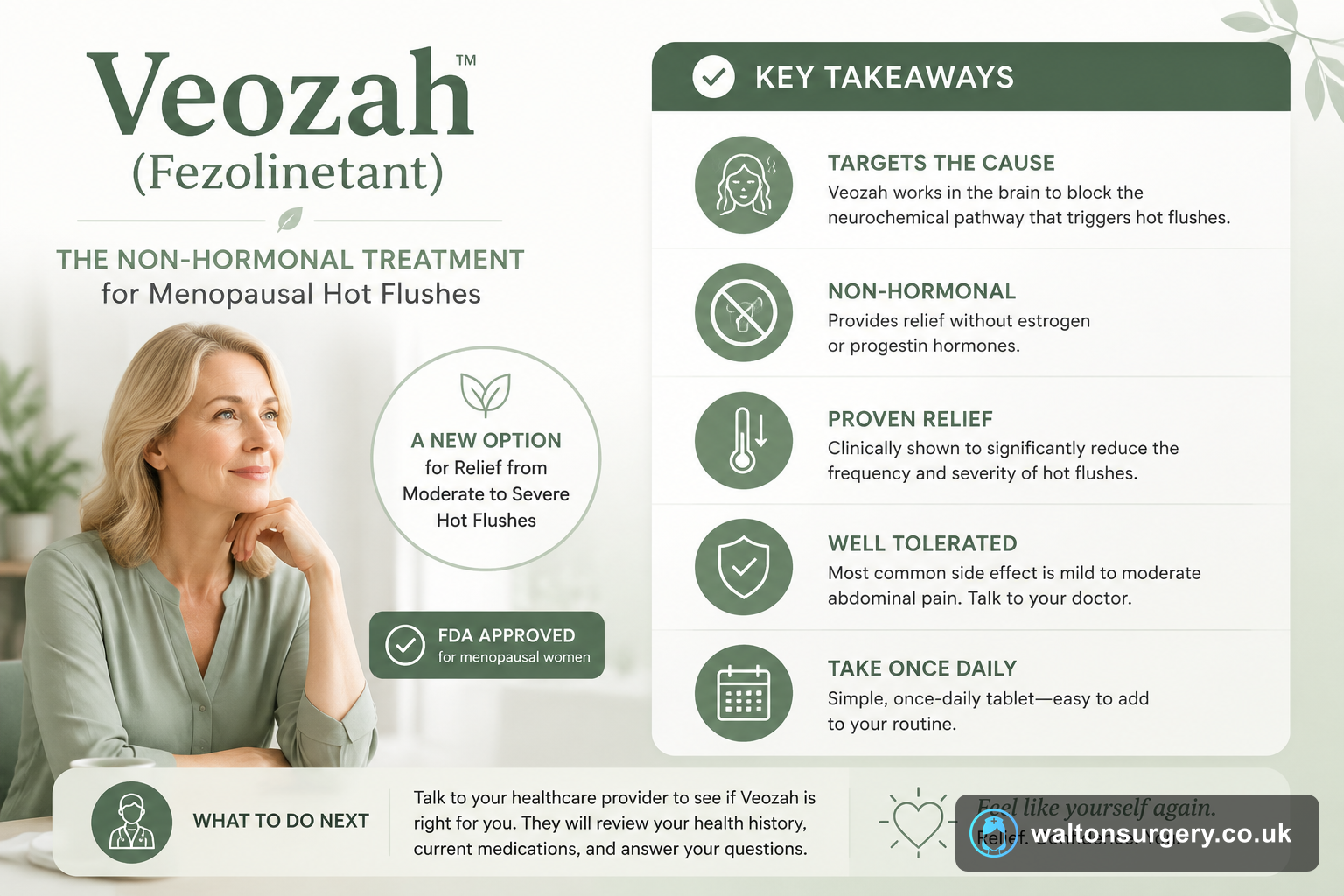
Veozah (fezolinetant) is a new class of non-hormonal treatment for menopausal hot flushes. It works by targeting the overactive temperature signalling in the brain, and clinical trials show it can reduce hot flush frequency by over 60%. A doctor's prescription is needed, along with regular liver blood tests due to a rare but serious safety risk. For women who cannot or prefer not to use HRT, it's a valid option — but it must be started and monitored under medical supervision. Talk to your doctor about your menopause symptoms and all your treatment options.
Last updated: 2026-07-31 · Written by the Walton Surgery editorial team · Medical information is for educational purposes only and does not replace advice from a qualified healthcare professional. We cover this in more depth in james bourne illness health update.