Stem Cell Transplant Recovery: Understanding the Journey Back to Health
⚡ Quick Answer
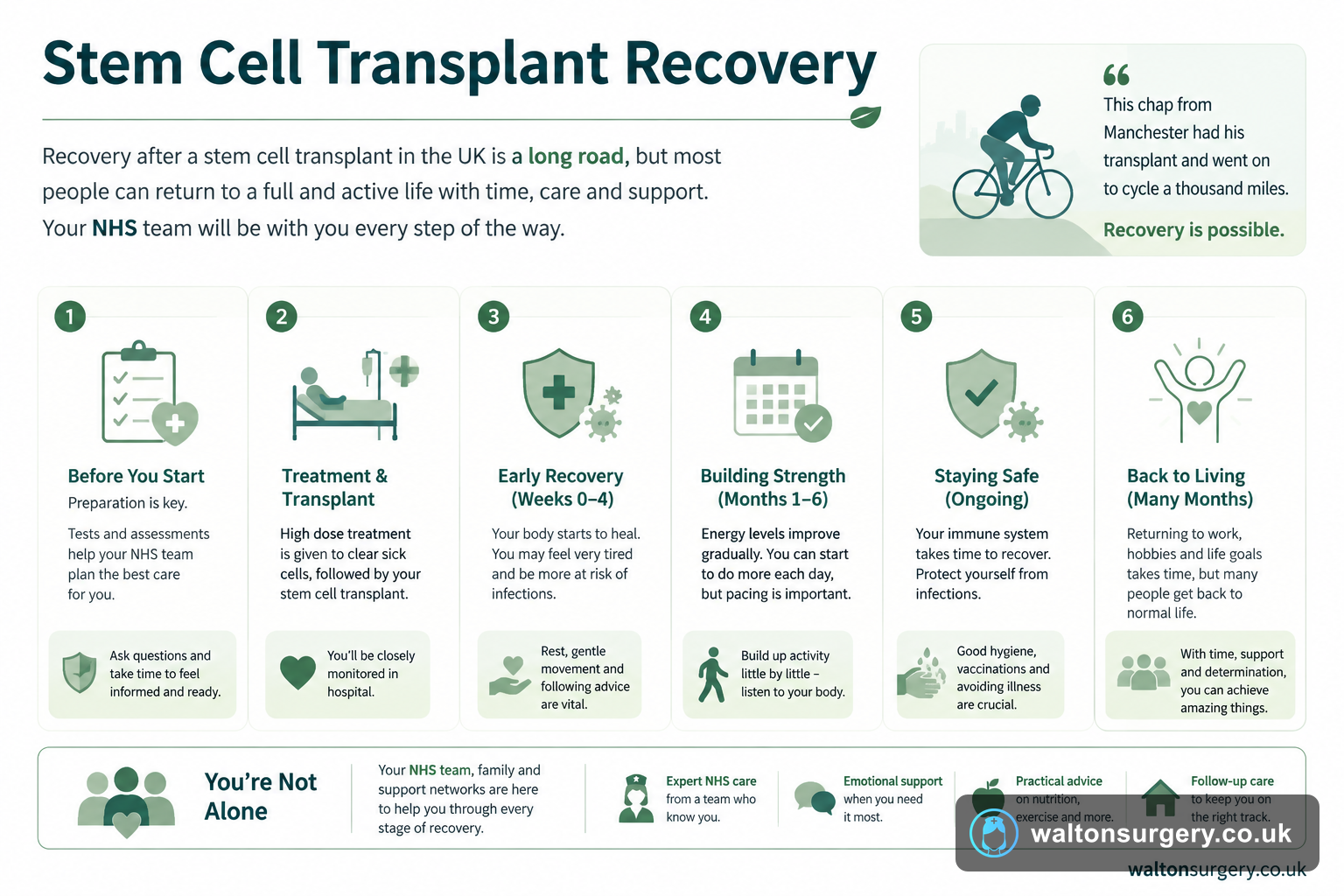
It's a long road back after a stem cell transplant here in the UK, and you should go in knowing that. You can get back to your normal life, but it takes a good while. There's this chap from Manchester, for example, who had his transplant and went on to cycle a thousand miles. Your NHS team will walk you through each stage, from handling the side effects to keeping infections away and slowly getting your strength back over many months.
Recovering from what's also known as a bone marrow transplant is a really big deal. Basically, the process replaces blood-forming stem cells that are damaged, usually after someone has had very strong chemo or radiotherapy. It is a treatment for things like leukaemia, lymphoma, and other blood conditions. The NHS handles this treatment, and the recovery time is something that is structured and watched over, and it needs you to have a lot of patience and good support.
How long it all takes and what you go through depends on loads of things. Your exact diagnosis, what kind of transplant you had, and how healthy you were to begin with all play a part. Getting your head around the usual stages can really help you or your family get ready for what's coming next.
What Does the Immediate Recovery Phase Look Like?
That first month is the really tough bit. You will be in hospital, or they will be keeping a very close eye on you. This is when the new stem cells engraft, which is a fancy way of saying they are finding their way into your bone marrow and starting to make new blood cells. This bit usually takes somewhere between two and four weeks.
You're at a high risk of infection while you wait for that to happen, because the conditioning treatment—the chemo or radiotherapy you had before—wipes out your immune system. Antibiotics and antifungal medicines will be given. Nausea, mouth sores, feeling wiped out, and diarrhoea are common side effects you might get. The haematology team at the hospital will tackle these aggressively with medication and other care.
How Long Until I Feel More Like Myself?
The next three to six months is a period of slowly building yourself back up. Once you leave hospital, you will be back at the transplant centre for regular appointments. Your energy will be low, and you have to find a balance between resting and doing a little bit of gentle activity.
You are still very open to infection during this time. Crowded places and people who are unwell should be avoided. Your diet needs to be careful too, to dodge food-borne bacteria. It's quite common to still need blood and platelet transfusions until your bone marrow is working properly again. Feeling frustrated by how slow it all is is totally normal, but this steady, careful recovery is just how it goes.
What Is Graft-versus-Host Disease (GvHD)?
GvHD is a common complication where the donor's immune cells start attacking your body. It can be acute, happening in the first 100 days, or chronic, coming on later. Your skin, gut, liver, and lungs can all be affected by the symptoms.
For an allogeneic transplant, which uses donor cells, your NHS team will put you on immunosuppressant drugs to try and stop GvHD from happening. Dealing with it is a major part of long-term recovery. The treatment often means adjusting these drugs or using steroids. While GvHD can be serious, the medical teams in UK transplant centres have loads of experience managing it.
🔬 Key Facts
Graft-versus-Host Disease (GvHD) at a Glance
- → Acute GvHD occurs within the first 100 days post-transplant.
- → Chronic GvHD can develop months or even years later.
- → Common sites affected include the skin, gut, liver, and lungs.
- → Management involves immunosuppressants and steroids, overseen by specialist NHS teams.
A Real-World Example of Recovery
Getting back to full fitness takes ages, but good outcomes are definitely possible. A news story from 31 July 2026 shows this: a stem cell transplant recipient managed to complete a 1,000-mile bike ride after getting lifesaving care at Manchester Royal Infirmary. This kind of thing, while it's just one person's story, shows that with successful treatment and proper rehab, people can get back a lot of their physical strength and stamina. Whether you're recovering from a complex procedure or just dealing with everyday aches like what helps sore muscles after workout uk 2026 doms recovery, the principle of patient, structured rehabilitation is the same. There's more on this in our what helps sore muscles after workout uk 2026 doms recovery explainer.
How Will My Immune System Recover?
Your immune system rebuilds itself slowly. Vaccinations are a critical part of this. After the transplant, any immunity you had from childhood jabs or past infections is gone. The NHS has a specific post-transplant vaccination schedule that usually kicks off about a year after your procedure.
You will get a series of vaccines, a bit like a baby's schedule. It takes time, often one to two years, for your immune system to get to a level where you can be more relaxed around other people. Your transplant team will give you clear guidance on what to avoid and when.
Returning to Work and Daily Activities
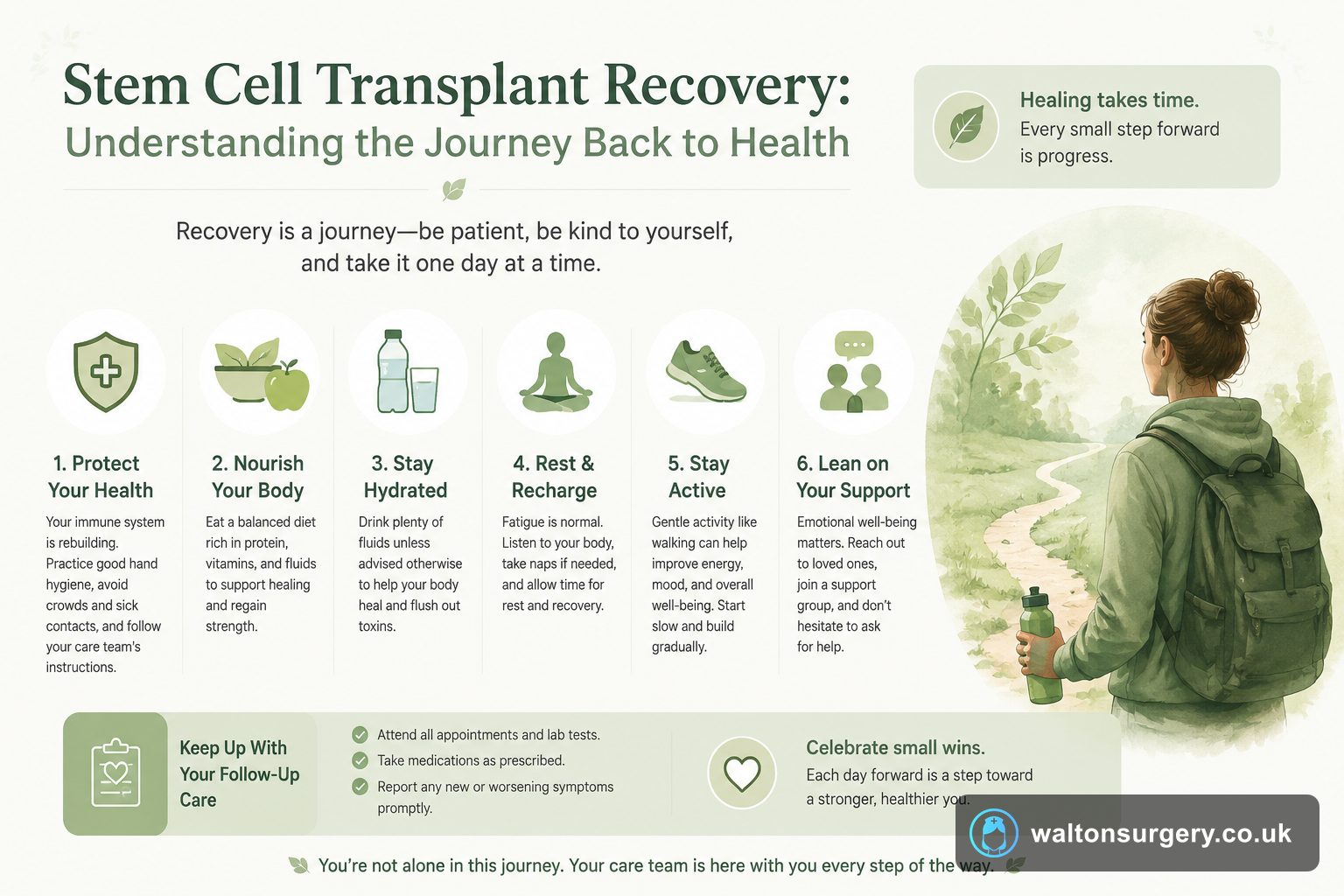
There's no single answer for everyone. Most people need at least a year off work, and sometimes it's longer. Your return to work should be gradual and based on advice from your GP and transplant consultant. Fatigue is a major hurdle.
Maybe start with a phased return, just a few hours a week at first. You have to listen to what your body is telling you. Simple things like a trip to the shops or getting on a bus might feel really exhausting to start with. Your employer has a duty to make reasonable adjustments for you. It is a marathon, not a sprint, to get back to your old routine, much like the journey detailed in our pam bondi thyroidectomy uk nhs recovery readers explainer 2026 guide. If you want the fuller picture, our guide to almond eye surgery uk cost recovery canthoplasty 2026 explainer goes further. There's more on this in our pam bondi thyroidectomy uk nhs recovery readers explainer 2026 explainer.
Frequently Asked Questions
⭐ The Bottom Line
What this means for you
Recovery from a stem cell transplant is a long-term project that needs patience and medical support. The NHS provides structured care through the critical first year and beyond. The road is challenging, it involves infection prevention, managing potential GvHD, and slowly rebuilding your strength, but positive outcomes are achievable. As the Manchester cyclist's story shows, with successful treatment, it is possible to regain a fulfilling and active life. Always work closely with your GP and transplant team.
Last updated: 2026-07-31 · Written by the Walton Surgery editorial team · Medical information is for educational purposes only and does not replace advice from a qualified healthcare professional.