How to Stop Feeling Sick: Practical Tips for Nausea Relief
PART C — HTML BODY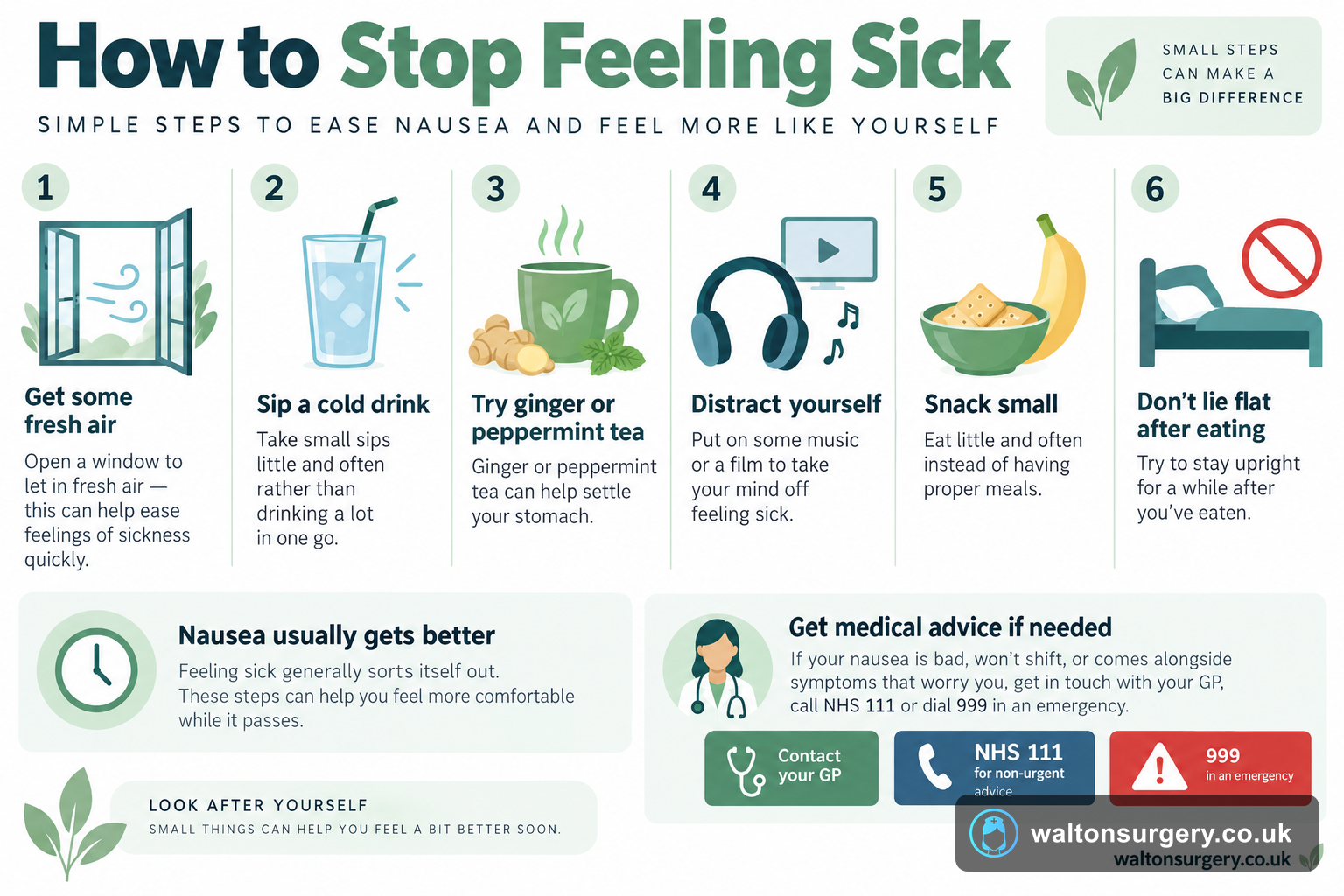
⚡ Quick Answer
Feeling sick can be eased fast — open a window, sip a cold drink little and often, and reach for ginger or peppermint tea. Put on some music or a film to take your mind off it, snack small instead of eating proper meals, and don't lie flat once you've eaten. Nausea generally sorts itself out, but if it's bad, won't shift, or comes alongside symptoms that worry you, get in touch with your GP, call NHS 111 or dial 999 in an emergency.
Feeling sick — nausea — shows up all the time, and more often than not it goes away without you doing anything at all. That said, there are a handful of things you can do right now at home which take the edge off: fresh air, regular small sips of a cold drink, and ginger or peppermint tea. Putting on music or a film genuinely helps too, more than people expect.
Plenty of things can trigger nausea in the first place — a stomach bug, something dodgy you ate, travel, being pregnant, a new medicine, anxiety, or an ongoing health condition. What follows sets out the home measures most commonly suggested in UK health information, takes a proper look at why ginger keeps cropping up as a remedy, and spells out exactly when to speak to a pharmacist, ring your own GP practice, call NHS 111 or dial 999. It is general health information, not advice tailored to you personally.
What helps straight away when you feel sick?
Most people land on this bit first, so it's worth going through properly. The steps below draw on UK health information resources covering feeling sick (nausea), nausea and vomiting in adults, and coping with nausea — none of which is a personalised treatment plan, just tips lots of people find useful while nausea does its thing.
Get plenty of fresh air
Crack a window, step outside, sit somewhere airy — for a fair number of people that alone takes some of the edge off. Warm close rooms, cooking smells, feeling overheated: all of it makes a sick feeling worse, which is why cool moving air is the cheapest and simplest thing to try first. The Marie Curie guidance on nausea and vomiting also mentions keeping tissues, water and a bowl within reach so you're prepared if you are sick, and that alone can settle the anxiety which sometimes feeds into the nausea itself.
Sip a cold drink — slowly and often
Sipping a cold drink, on and off, is probably the single tip that turns up most consistently. Some people swear by fizzy stuff; others want still water. Either way the trick is small amounts often instead of a whole glass in one go. Fruit juice or something sweet is worth trying if eating has been off the table, since you get a bit of energy along with the fluid.
Once you've actually been sick, hydration becomes the thing that matters most. The nausea and vomiting in adults guidance makes the point plainly: little sips of water so you don't tip into dehydration is the single most important thing you can do while you're unwell. If you've been sick repeatedly and fluids won't stay down, rehydration sachets from a pharmacy can be useful — a pharmacist will tell you what's suitable for your situation.
Try ginger or peppermint tea
Ginger and peppermint tea both come up time after time in UK information on easing nausea. Ginger isn't limited to tea either — biscuits, sweets, cooking — and plenty of people find ginger ale settles things. If hot drinks don't appeal, cold ginger beer or a splash of ginger cordial might go down easier. Peppermint tea gets described as calming for the stomach but some folk find strong minty smells actually make the nausea worse, so trust your own nose on this one.
Eat small, plain snacks instead of big meals
An empty stomach can make you feel worse, oddly enough. The advice under coping with nausea is small regular meals and snacks dotted through the day — plain crackers, toast, that sort of light food — rather than three big sit-down meals. Marie Curie's nausea and vomiting guidance says the same thing in its own way: reach for little snacks often rather than big meals. You're trying to dodge both extremes here, a totally empty stomach and one that's packed full.
Slow down when eating and drinking
Bolting your food, gulping down drinks, talking through mouthfuls — all of it works against you when you're nauseous. Slowing things down gives your stomach less to cope with. Once you've eaten, sit up for a while and don't lie flat for around 30 minutes. Guidance on coping with nausea and vomiting pushes in the same direction: take your time over meals, stay upright, let yourself relax afterwards, even a short walk before eating can help things along.
Distract yourself
Sounds almost too obvious, and yet distraction is a properly recognised way of coping with nausea. Music, a film, a book, a conversation — anything that pulls your attention elsewhere helps. Nausea tends to arrive in waves and it feeds on being focused on, so pushing your mind onto something else can shorten those waves and take some of the sharpness out of them.
Cool compress and acupressure
Something cool across your forehead or the back of your neck can be soothing, especially if you're hot and flustered along with the sickness. There's also acupressure, which some health information on easing nausea mentions — gentle pressure around the wrist — as a thing people try. Nobody's entirely sure how well acupressure works for nausea in general. It is low risk though, and some people do swear it helps.
What to avoid
While you're feeling rough there's a short list of things best dodged. Greasy, spicy or very rich food sits heavily and aggravates a stomach that's already upset. Cooking smells and strong smells generally can set the sick feeling off. Lying down straight after a meal isn't a good idea either — stay upright for a bit instead. Smokers might find avoiding cigarettes while nauseous helps too.
🔬 Key Facts
What helps straight away when you feel sick?
- → Cool moving air is the cheapest and simplest thing to try first — warm close rooms and cooking smells make it worse
- → Small sips of water so you don't tip into dehydration is the single most important thing once you've been sick
- → Ginger and peppermint tea come up time after time in UK information on easing nausea
- → Don't lie flat for around 30 minutes after eating — sit up and let yourself relax afterwards
Why does ginger help with nausea?
If there's one home remedy everyone's heard of for feeling sick it's ginger, and the reason it keeps showing up in UK health information on nausea is that it's one of the most widely used traditional remedies and loads of people say it settles their stomach. You've got options too — fresh ginger in cooking, ginger biscuits, ginger tea, ginger sweets, ginger ale — so there's normally something you can stomach even when nothing else appeals.
Being straight about what the evidence supports is worth a moment. Ginger has been used for nausea, upset stomach and diarrhoea for a long time, and it gets recommended in UK information alongside peppermint. For lots of people it seems to genuinely blunt the sick feeling. What it isn't, though, is a guaranteed fix. It doesn't deal with whatever's causing the nausea in the first place and it's no stand-in for medical care if the nausea is bad or just won't go. Anyone who's pregnant, taking regular medication or managing a long-term condition should check with a pharmacist or their GP before reaching for ginger in concentrated forms like supplements, just to be sure it's appropriate.
What could be causing me to feel sick after eating?
Sickness after a meal is common as anything, and there's no shortage of possible reasons behind it. The most straightforward is to do with what or how you've eaten — a big greasy spicy or very rich meal can just sit there and make you nauseous. Eating too fast, washing a meal down with lots of drink, or lying straight down afterwards all add to it.
A stomach bug (gastroenteritis), food poisoning, indigestion, acid reflux, side effects from medication — these all get a look in too. Anxiety, migraine, travel sickness, hormonal shifts like pregnancy can be behind nausea as well. Where the sick feeling after eating keeps turning up rather than being a one-off, that's the point to speak to your own GP practice and get to the bottom of it. They'll ask about symptoms, what you're eating, which medicines you're on, and refer you for tests if that's needed.
Short term, the practical stuff above — smaller plainer meals more often, sitting upright afterwards, steering clear of trigger foods — can buy you some relief while you get the underlying cause sorted. If a stomach bug is behind the nausea and it moves to your bowels, you may also want to read how to stop diarrhoea alongside this.
Common causes of morning nausea in men
Men wake up feeling sick too, not just pregnant women, and there's a handful of reasons this happens. Going all night without food can leave blood sugar running low by morning, and that alone can bring on a sick feeling. Hunger, dehydration, or a heavy or late meal the night before all play their part.
Acid reflux or indigestion features often, particularly since lying down overnight makes them worse. Medication swallowed on an empty stomach, anxiety, a migraine gathering pace — all possible. A stomach bug or food poisoning can kick off with morning nausea as well. Should morning nausea carry on for weeks, or not obviously tie to anything you're eating or drinking, or turn up alongside weight loss, trouble swallowing or persistent pain, book yourself in with your own GP practice to have it looked at properly.
Anti-sickness tablets and other pharmacy options
When home measures aren't enough, anti-sickness tablets (antiemetics) enter the conversation. A pharmacist can sell you some of these over the counter; others want a prescription. Which one fits depends on what's behind the nausea, how old you are, what else is going on health-wise and what else you're taking — so a pharmacist really is the best first port of call. They'll tell you what's suitable to buy and what interactions to keep an eye out for.
Drowsiness is a side effect some anti-sickness tablets have, which matters if you're driving or using machinery, so ask the pharmacist about that before you take anything. And if the over-the-counter stuff isn't doing anything and the nausea keeps returning, your own GP practice can talk through prescription options and dig into why it's happening at all.
Pepto Bismol is one you'll spot on UK pharmacy shelves too. Some people reach for it when their stomach's playing up — it's generally aimed at digestive discomfort, indigestion, heartburn, nausea, diarrhoea. Same rules as any medicine: check with a pharmacist first, especially if you're pregnant, breastfeeding, taking other medication (blood thinners or gout medicines in particular) or managing a long-term condition. A pharmacist can tell you if it suits you and how to take it safely. Don't pin your hopes on one product for nausea that keeps coming back — persistent symptoms need looking at properly.
Frequently Asked Questions
When to contact your GP, NHS 111 or 999
On its own, nausea — particularly when you can point at a likely cause like a stomach bug, a heavy meal, travel or a new medicine — usually fades by itself or with a bit of simple home care. There are moments though where you want professional help on board.
Get in touch with your own GP practice if nausea has dragged on more than a few days with no improvement, keeps returning, is getting worse, or is stopping you eating, drinking, sleeping or getting on with normal life. Unexplained weight loss, trouble swallowing, blood in your vomit, or a new lump in your stomach area all deserve a GP appointment as well. If you're pregnant and the nausea is severe — particularly if nothing stays down — contact your GP practice, your midwife or NHS 111, since treatment to prevent dehydration may be needed.
NHS 111 is there for urgent advice when it isn't life-threatening. So if you've been vomiting on and off and can't keep fluids down, or you're feeling steadily worse, or you're worried but can't tell whether it counts as an emergency, give them a call. They can direct you to the right service, out-of-hours care or an urgent treatment centre included.
Phone 999 or head to A&E for vomiting with severe tummy pain, a stiff neck alongside a bad headache, confusion or a very high temperature, blood in the vomit (red, or looking like coffee grounds), chest pain, trouble breathing, or signs of severe dehydration such as passing hardly any urine. Someone drowsy, hard to rouse or looking seriously unwell with sickness is an emergency. Don't wait. If a cough is also part of the picture alongside the sickness, there's separate guidance on how to stop coughing, and if the worry is more about whether it's even OK to take the day off, our piece on why feel guilty calling in sick work covers that side of it.
⭐ The Bottom Line
What this means for you
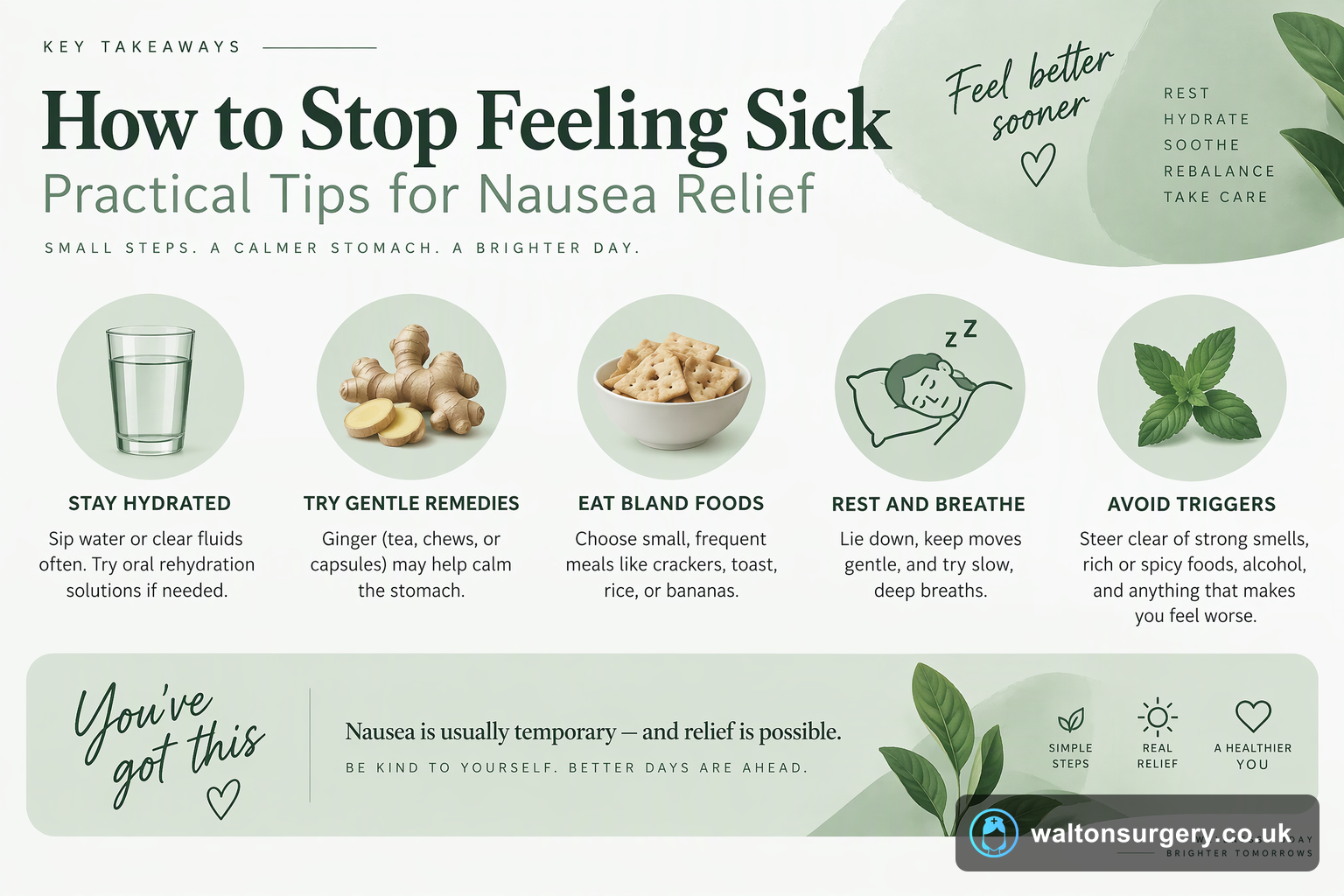
Nausea is usually short-lived and something you can manage at home: fresh air, small sips of cold drink, ginger or peppermint tea, plain snacks, distraction. The simplest moves to try first. Rich food and lying flat straight after eating are the two habits to drop. Should the nausea hang around, keep returning, or arrive with worrying symptoms, contact your own GP practice or call NHS 111. Emergencies, always 999. This article is general information, not personal medical advice.
Last updated: 2026-11-28 · Written by the Walton Editorial Team · Walton Health News is an independent health information site, not a GP practice. Information is for educational purposes only and does not replace advice from your own GP, pharmacist or NHS 111.