How to Stop Diarrhoea: Fast Relief and Home Remedies That Work
PART C — HTML BODY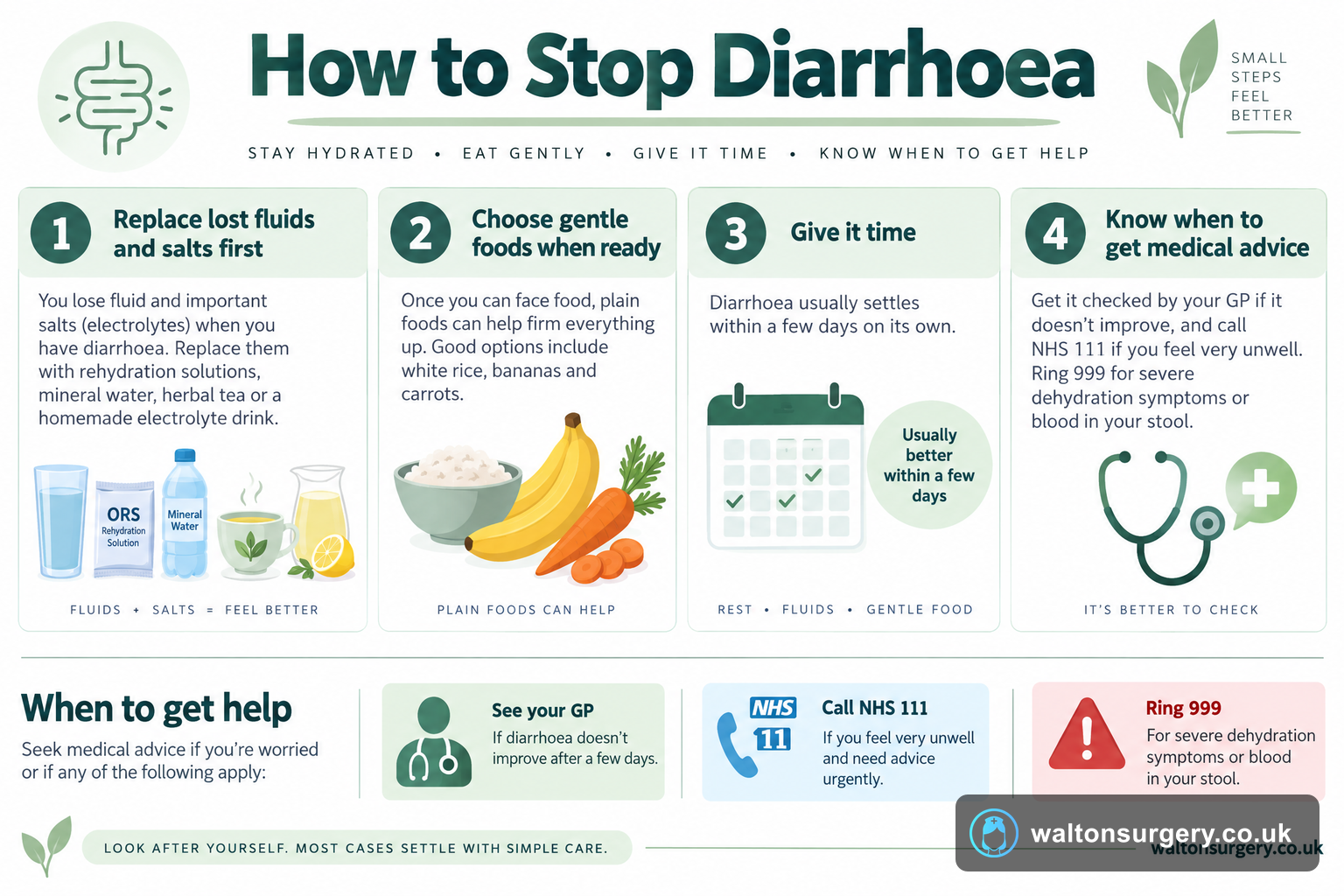
⚡ Quick Answer
Replace the fluid and salts you're losing first — rehydration solutions, mineral water, herbal tea or a homemade electrolyte drink all do the job. Once you can face food, plain things like white rice, bananas and carrots can help firm everything up. Diarrhoea generally settles within a few days on its own. Get it checked by your GP if it doesn't improve, and call NHS 111 if you feel very unwell. Ring 999 for severe dehydration symptoms or blood in your stool.
There are few things more miserable than sudden diarrhoea, and if you're reading this you probably want it gone, ideally yesterday. The fastest sensible move is to rehydrate — small sips of a rehydration solution, mineral water, herbal tea or an electrolyte drink, taken steadily, keep your body's fluid and salt levels where they should be while the upset works itself out. Plain foods like white rice, bananas and carrots usually come next and often help.
Most bouts clear up on their own without anything prescribed, but dehydration is the real danger while you wait, and a handful of symptoms do need a doctor's eye. This article for Walton Health News covers practical ways to stop diarrhoea at home, gives you an overview of diarrhoea medicine, and sets out exactly when to contact your GP, NHS 111 or 999. General information only — not personal medical advice.
Why Rehydration Comes First
What diarrhoea actually does is strip water and electrolytes out of your body faster than normal. It's that loss, rather than the loose stools themselves, behind the weakness, the dizziness, the lightheaded feeling. A Ferwer article on stopping watery diarrhoea (published 12 May 2025) names dehydration as one of the greatest risks of the condition, and a companion Ferwer piece (26 October 2024) puts replenishing fluids right at the front of gentle home management.
So what are you replacing it with? Rehydration solutions and electrolyte drinks are built for exactly this — they put back what you've lost. A Ferwer feature on stopping watery diarrhoea (12 May 2025) lists rehydration solutions, root vegetable broth, and homemade electrolyte drinks such as water with honey, salt and lemon as suitable options. Mineral water and herbal teas come through as ideal fluid choices in the Ferwer piece on natural diarrhoea relief (26 October 2024). Sip steadily is the idea rather than downing big glugs in one go, which is kinder to a stomach that's already had enough.
Worth thinking about who's ill here. If it's a child, an older adult, or somebody living with a long-term condition, dehydration can arrive faster than you'd expect, so picking up the phone to a pharmacist or your own GP early is the sensible call if you're not sure.
What to Drink to Replace Fluids and Salts
Picking the right fluid actually matters. The Ferwer guide to stopping watery diarrhoea (12 May 2025) points to three practical routes to rehydration: rehydration solutions, root vegetable broth, and homemade electrolyte drinks. Making one at home is straightforward — water with honey, salt and lemon, according to that same guide. Not keen on the DIY route? Oral rehydration sachets from a pharmacy do the same job and a pharmacist can talk you through how to use them.
Herbal teas and mineral water serve well as plain fluids too, going by the Ferwer article on naturally and gently stopping diarrhoea (26 October 2024). Warm, clear liquids such as broth are often easier on a sensitive stomach than anything straight from the fridge.
Avoiding certain things counts just as much. Alcohol and caffeine will add to your fluid loss and rile up your stomach further, and very sugary drinks tend to make looser stools worse. Should you find you can't keep anything down at all, or you spot signs of dehydration — a dry mouth, dizziness, dark urine, or passing far less urine than is normal for you — call NHS 111 or your own GP.
Foods That Help Firm Loose Stools
Once eating is back on the table, gentle starchy foods are the standard starting point. White rice shows up in almost every home-remedy list for diarrhoea going, including a roundup titled "10 Natural Reliefs To Stop Diarrhea Quickly" currently ranking on Google. That same roundup has carrots in it, while bananas and white rice are paired together in guidance compiled by the Cleveland Clinic's health library, summarised in a Google-listed article titled "How to Cure Diarrhea: Natural & Medicinal Treatments to Try." There's more on this in our ai in social care guidance uk explainer.
Yogurt, plain and unsweetened, is another one you'll see again and again. A Google-listed home-remedy roundup includes it, and a Dr Berg article (16 August 2016) on stopping diarrhoea fast specifically points to plain, unsweetened yogurt with blackberries as a combination that can support firmer stools and the gut microbes behind them.
Double duty is what makes root vegetable broth worth a mention — the Ferwer guide (12 May 2025) notes it gives you fluid and salt along with something gentle to eat. Cooked, bland, no added fat or spice is the rule while your gut settles. Diarrhoea that keeps cropping up, or problems with particular foods that won't shift, is a conversation for your own GP — food intolerance and irritable bowel syndrome are two of the things they might want to explore.
🔬 Key Facts
What the sources actually say about fluids and food
- → Dehydration is one of the greatest risks of watery diarrhoea, not the loose stools themselves (Ferwer, 12 May 2025)
- → Three practical rehydration routes: rehydration solutions, root vegetable broth, and homemade electrolyte drinks such as water with honey, salt and lemon (Ferwer, 12 May 2025)
- → Root vegetable broth does double duty, giving fluid and salt alongside something gentle to eat (Ferwer, 12 May 2025)
- → White rice, bananas and carrots appear across nearly every home-remedy list, with unsweetened yogurt repeatedly recommended too
Home Remedies That May Bring Relief
Look past fluids and bland food for a moment and there's a whole shelf of home remedies repeated across the sources currently ranking on Google for diarrhoea. In a roundup titled "10 Natural Reliefs To Stop Diarrhea Quickly," the suggestions run to yogurt, peppermint tea, ginger, chamomile tea, honey, black tea, activated charcoal, apple cider vinegar, white rice and carrots. Peppermint and chamomile have a long history of use for a gripey stomach, and ginger is the go-to for nausea when it's travelling alongside loose stools. If you want the fuller picture, our guide to how to stop periods immediately home remedies uk goes further.
Ferwer's guide to stopping watery diarrhoea (12 May 2025) also flags up root vegetable broth and homemade electrolyte drinks made from water with honey, salt and lemon. Another Google-listed home remedy piece, attributed to Dr Berg (16 August 2016), suggests green bananas as well as plain, unsweetened yogurt with blackberries.
Mixed evidence base, honestly. Some of these — rehydration fluids being the obvious one — have a clear rationale behind them. Others like apple cider vinegar or activated charcoal rest more on tradition than on good evidence, and activated charcoal can mess with how other medicines get absorbed. Taking regular prescription medication? Ask a pharmacist before you go near charcoal or any supplement. And absolutely no honey for a baby under one year. If it's a persistent cough rather than a gut upset bothering you, we have a separate guide on how to stop coughing, though the two can occasionally travel together after a viral infection.
Over-the-Counter Diarrhoea Medicine
Home measures not cutting it quickly enough? Diarrhoea medicine from a pharmacy is your next port of call. Anti-diarrhoeals such as loperamide slow down the movement of the gut, and that reduction in movement means fewer loose stools passing through. You can buy them without a prescription, and a pharmacist will tell you whether one's right in your situation. The Cleveland Clinic health library, summarised in a Google-listed article, mentions over-the-counter anti-diarrhoeals alongside hydration and bland foods as routes to short-term relief.
There are limits to how much you should treat yourself. Loperamide doesn't suit everyone — blood in your stool, a high temperature, or diarrhoea that's come on after recent antibiotic treatment are all reasons it's usually not recommended, since slowing the gut down in those circumstances can do harm. Oral rehydration sachets aren't strictly a medicine, but they sit on the same shelf as diarrhoea treatments in UK pharmacies and are frequently the better buy for that first day or two.
Not sure what to pick? That's what pharmacists are for. If your diarrhoea carries on past a few days despite treatment, or it returns over and over, book a proper review with your own GP instead of cycling through over-the-counter options indefinitely.
How Long Diarrhoea Lasts (and What To Expect)
Acute diarrhoea — the sudden sort, set off by a gut infection or something that disagreed with you — mostly eases within a few days with no specific treatment at all. Rehydration and bland food get you through the middle stretch while your gut does its repairing. Ferwer's guide to natural diarrhoea relief (26 October 2024) frames home care as a gentle way of supporting the body through an episode rather than forcing it to stop.
Persistent or recurrent diarrhoea is a different beast entirely. Anything going on longer than a few days, or returning again and again, could be pointing at something that deserves proper assessment — food intolerance, irritable bowel syndrome, other gut conditions. Google's Diarrhea Information Hub summarises diarrhoea as a symptom with a number of different causes, and notes the importance of identifying why it's happening.
Unintentional weight loss, blood in your stool, diarrhoea wrecking your sleep and daily life. Any of those, get an appointment with your own GP and have it looked into properly.
When to See Your GP, Call NHS 111 or Call 999
Diarrhoea usually isn't an emergency, but there are times when you shouldn't wait it out at home. This section sets out practical signposts so you know who to contact and when.
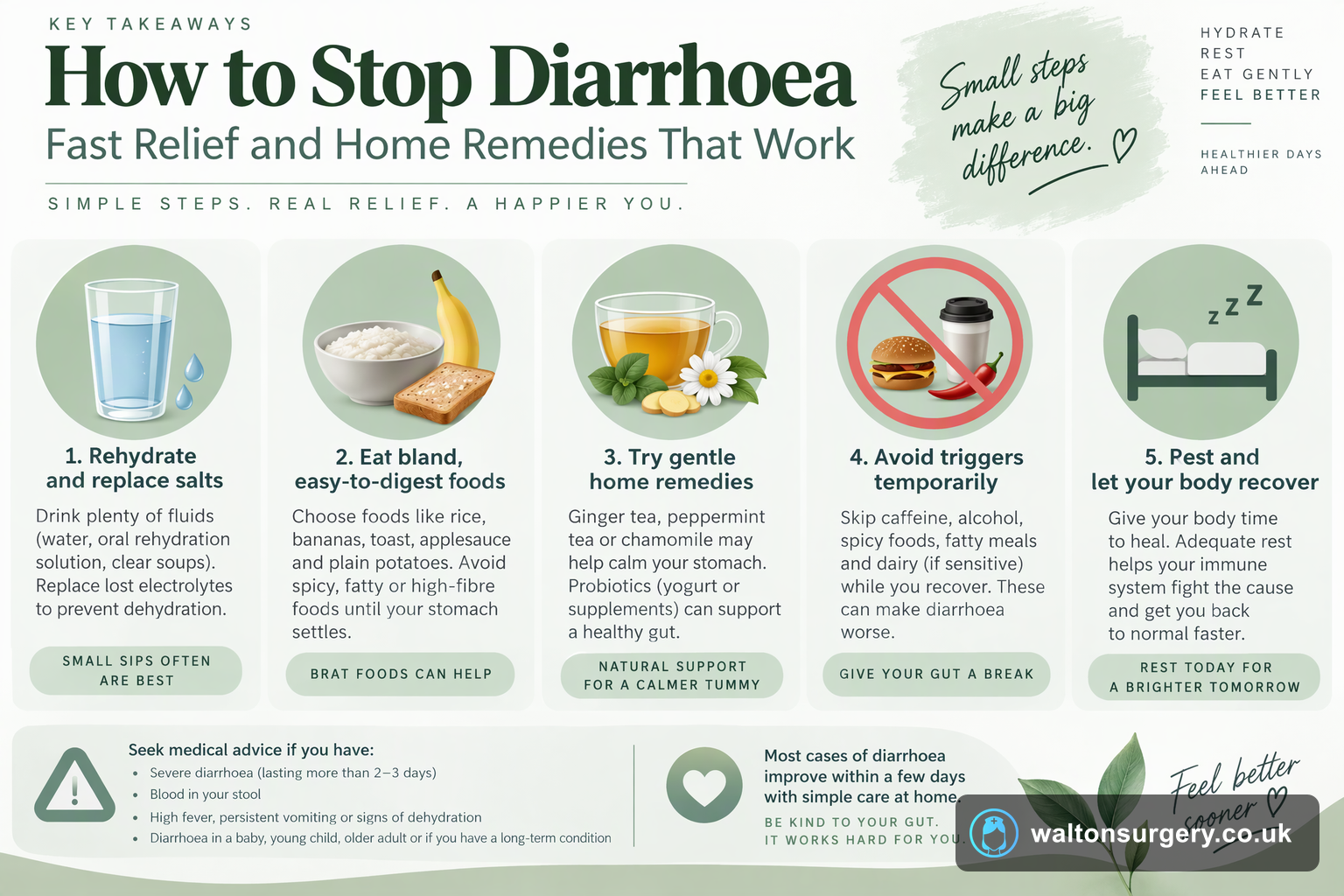
Call 999 or go to A&E immediately if you have signs of severe dehydration, such as confusion, a very fast heartbeat, breathing difficulties, or no urine output for many hours; or if you have black, tarry stools or large amounts of blood in your stool. Severe abdominal pain that comes on suddenly and doesn't settle also needs urgent assessment.
Call NHS 111 if you feel unwell and need advice but your symptoms aren't life-threatening — for example if you can't keep fluids down, you're dizzy or weak, or you're worried about a baby, young child, older adult or someone with a long-term condition who has diarrhoea. NHS 111 can direct you to the right local service, including out-of-hours care.
See your own GP if diarrhoea lasts more than a few days without improving, if it keeps coming back, if you've recently been abroad or taken antibiotics, or if you have ongoing symptoms like weight loss or blood in your stool. Your GP can arrange tests and review your medicines. And if you simply want advice on which pharmacy product to use, a pharmacist is often the quickest route.
Frequently Asked Questions
⭐ The Bottom Line
What this means for you
To stop diarrhoea, focus on fluids first: rehydration solutions, mineral water, herbal teas and simple electrolyte drinks replace what you lose. White rice, bananas, carrots and unsweetened yogurt are gentle foods that many people find helpful. Over-the-counter anti-diarrhoeals can reduce symptoms when needed. If diarrhoea persists beyond a few days, keeps returning, or brings blood or severe dehydration, contact your GP, NHS 111 or 999 as appropriate.
Last updated: 2026-11-27 · Written by the Walton Editorial Team · Walton Health News is an independent health information site, not a GP practice. Information is for educational purposes only and does not replace advice from your own GP, pharmacist or NHS 111.