

⚡ Quick Answer
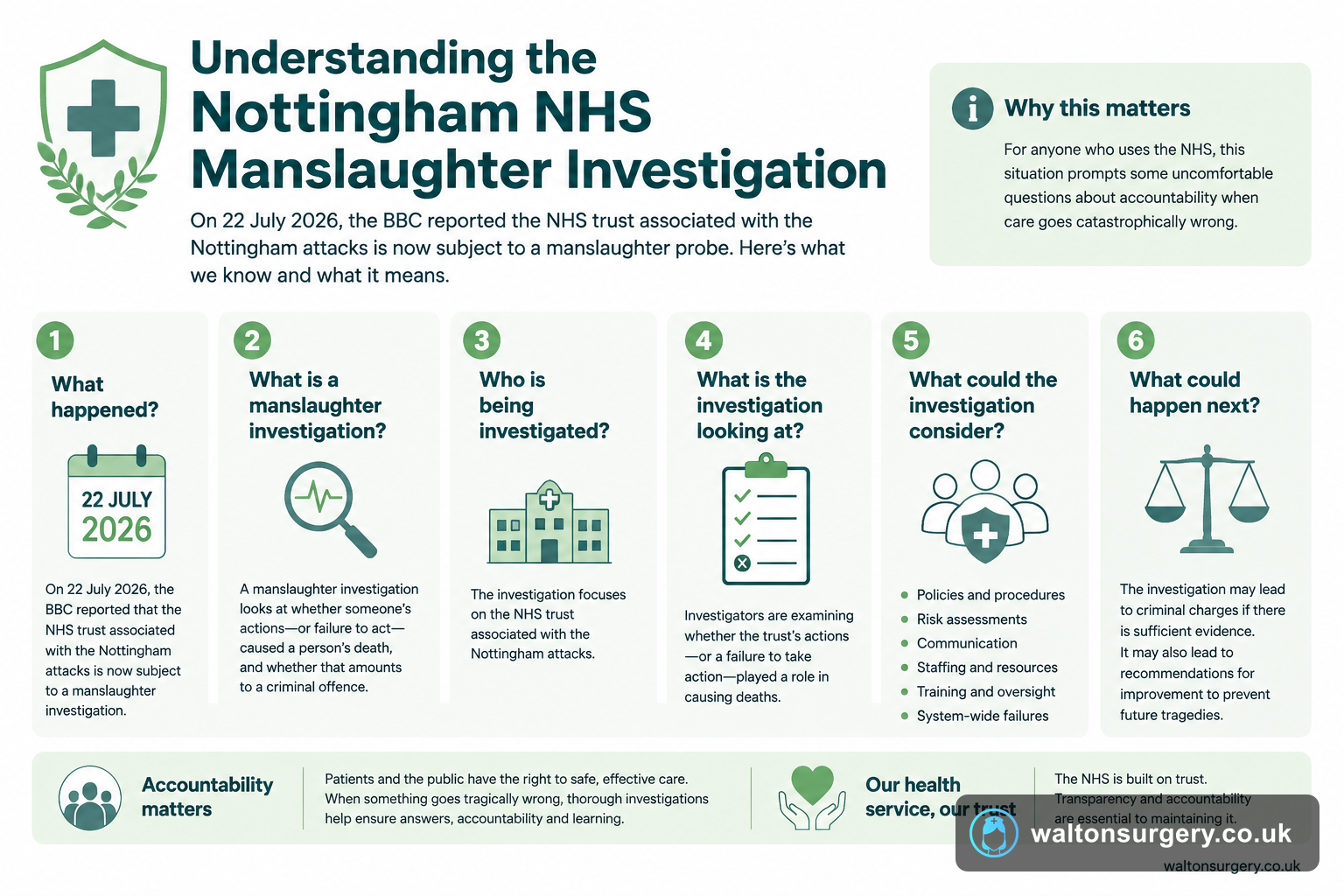
On 22 July 2026, the BBC reported the NHS trust associated with the Nottingham attacks is now subject to a manslaughter probe. The investigation’s focus is whether the trust’s actions—or a failure to take action—played a role in causing deaths. For anyone who uses the NHS, this situation prompts some uncomfortable questions about accountability when care goes catastrophically wrong. Here is the key information.
According to BBC reporting on 22 July 2026, a criminal manslaughter investigation has begun into the NHS trust linked to the Nottingham attacks. This is far from a routine inquiry. What we are talking about here is a formal probe by legal authorities to determine if the trust, or individuals working for it, hold criminal responsibility for any deaths.
So, what does this actually mean for you as an NHS patient? It is natural to wonder how the system ensures healthcare organisations are held to account, particularly when the worst happens. The facts below, based on what has been reported, are designed to explain the wider context of NHS accountability.
What Exactly Is Being Investigated?
Based on the BBC’s report from 22 July 2026, an NHS trust connected to the Nottingham attacks is facing a manslaughter investigation. This tells us that police and legal authorities are looking into whether the trust, or indeed specific individuals within it, committed the criminal offence of gross negligence manslaughter.
Gross negligence manslaughter in English law is relevant when someone’s actions, or their inaction, fall so far below the expected standard of care that a jury deems them criminal. In a healthcare context, that is an extraordinarily high bar to clear. We are not talking about a simple error. This is about behaviour a reasonable person would view as a serious and obvious risk to life.
How Does NHS Accountability Work?
Multiple layers of oversight exist within the NHS. NHS England, for example, keeps an eye on trusts and can step in if standards slip. The Care Quality Commission (CQC) inspects services and gives them ratings. When something goes seriously wrong, trusts are required to report the incident through a national system, which is now called the Learn from Patient Safety Events (LFPSE) service.
But these are all regulatory or administrative tools. A manslaughter investigation is a different beast entirely. It operates outside the NHS’s own structures and is handled by the police and the Crown Prosecution Service (CPS). This means the focus is on criminal law, not just on fixing processes or offering apologies. Recent high-profile cases involving healthcare professionals, such as the plastic surgeon NHS employment rights dispute, have also highlighted the complex legal landscape staff navigate, but a criminal probe like this raises the stakes considerably.
Why Is This Case Different?
Most failures within the NHS are addressed through internal reviews, coroner inquests, or regulatory action from bodies like the CQC. A manslaughter investigation in healthcare is rare. It is a clear signal that authorities believe the evidence before them is serious enough to warrant considering criminal charges.
The Nottingham attacks were a series of violent events that shocked the UK. The fact that an NHS trust is now involved in a subsequent manslaughter probe suggests investigators are examining the care given to victims, or perhaps systemic decisions that might have left people at risk. While the BBC report from 22 July 2026 does not spell out the specific allegations, the very nature of the probe makes it obvious they are looking at potential failures that contributed to loss of life.
What Is Gross Negligence Manslaughter?
Four things must be proven for a charge of gross negligence manslaughter in England and Wales. First, the defendant owed a duty of care to the victim. Second, they breached that duty. Third, the breach caused the victim’s death. Fourth, and most difficult to establish, the breach was so serious that it amounted to a criminal act.
🔬 Key Facts
The Legal Test for Gross Negligence Manslaughter
- → Duty of Care: The defendant must have owed a duty to the victim.
- → Breach of Duty: The defendant’s actions or inaction must have breached that duty.
- → Causation: The breach must have caused the victim’s death.
- → Criminality: The breach must be so serious it amounts to a criminal act.
For NHS staff, a duty of care is almost always established once a patient is under their supervision. The tricky part is proving the breach was criminal rather than just negligent. Courts will consider whether the conduct was so bad that it went beyond a matter for professional discipline or civil compensation. It has to be truly shocking.
What Does This Mean for NHS Patients?
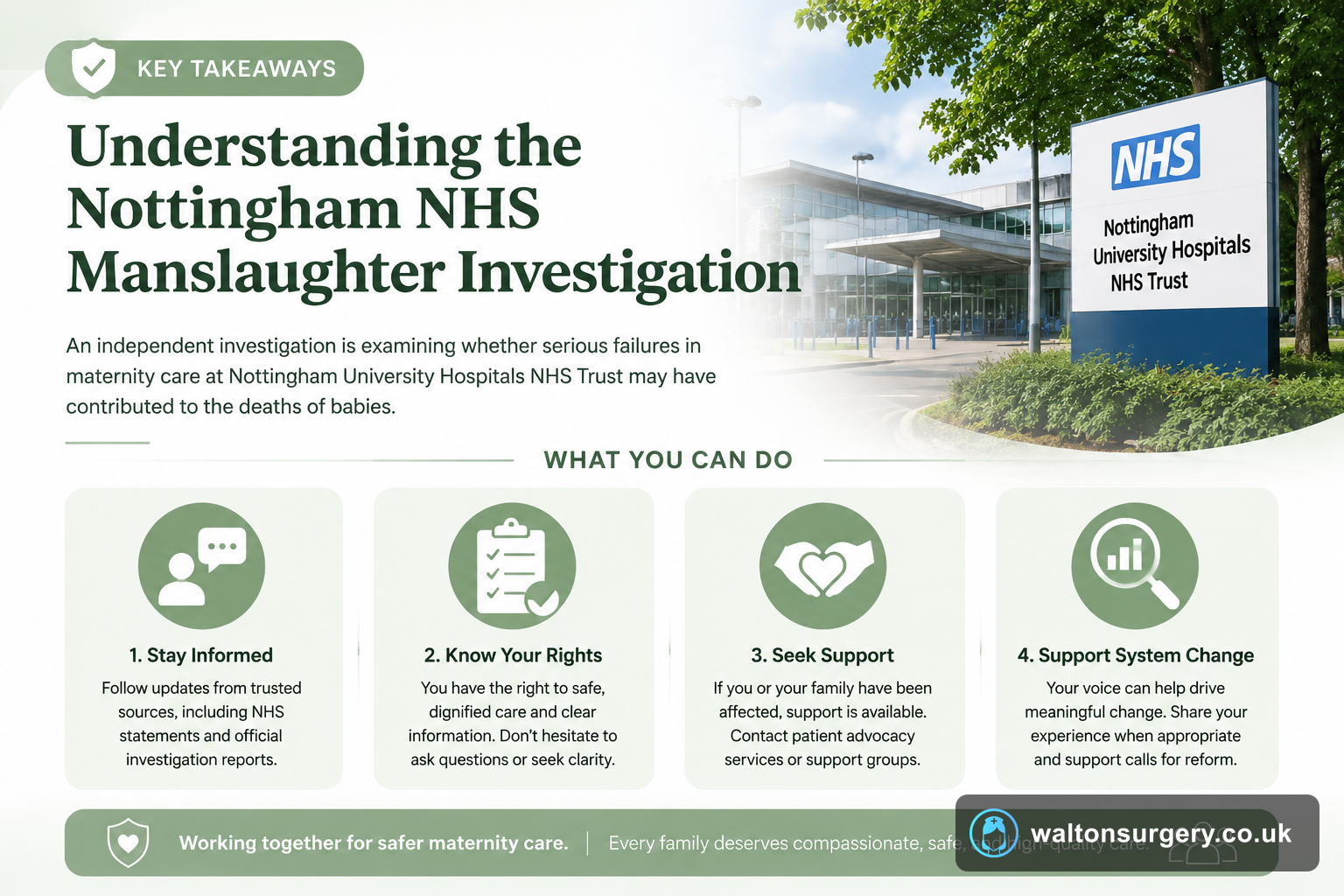
Headlines about a criminal investigation into a trust are bound to make you worry about whether your own care is safe. Feeling concerned is perfectly natural in this situation. That said, it is important to remember that the vast majority of NHS care is delivered safely and competently by staff who are dedicated to their work.
This case is nevertheless a reminder that accountability matters. If you ever have concerns about your care, you have every right to raise them. You could speak to your GP, for instance, or contact the Patient Advice and Liaison Service (PALS) at your local trust. You can also make a formal complaint. Your rights as a patient are clearly set out in the NHS Constitution. Public health stories, from celebrity health journeys like Samantha Morton’s health condition to investigations of this nature, serve as reminders to stay informed about the systems we rely on.
How Can You Raise Concerns About Your Care?
Start by talking to the clinician involved if something does not feel right about your treatment. Often, a straightforward conversation is all it takes to sort things out. If that does not work, every NHS trust has a PALS team, which can guide you through the complaints process.
For more serious worries, you have the option of contacting the CQC, the body that inspects and monitors health and social care services in England. Another avenue is to write to your local MP, who is able to raise issues on your behalf. And if you believe a criminal act has taken place, you are within your rights to contact the police directly. Even in the world of celebrity news, such as the recent Matty Healy and Gabbriette Bechtel wedding, discussions about wellness and support systems often surface, reminding us that knowing where to turn is always important.
Frequently Asked Questions
The Bottom Line
⭐ The Bottom Line
What this means for you
As the BBC’s 22 July 2026 report on the Nottingham case confirms, a criminal manslaughter investigation into an NHS trust is a serious and uncommon event. For patients, it serves as a reminder that accountability mechanisms do exist, even when they are slow and difficult to navigate. If you have concerns about your care, use the channels available to you. This article is for information only and is not a substitute for speaking with your GP or a qualified healthcare professional.
Last updated: 2026-07-22 · Written by the Walton Surgery editorial team · Medical information is for educational purposes only and does not replace advice from a qualified healthcare professional.
