

⚡ Quick Answer
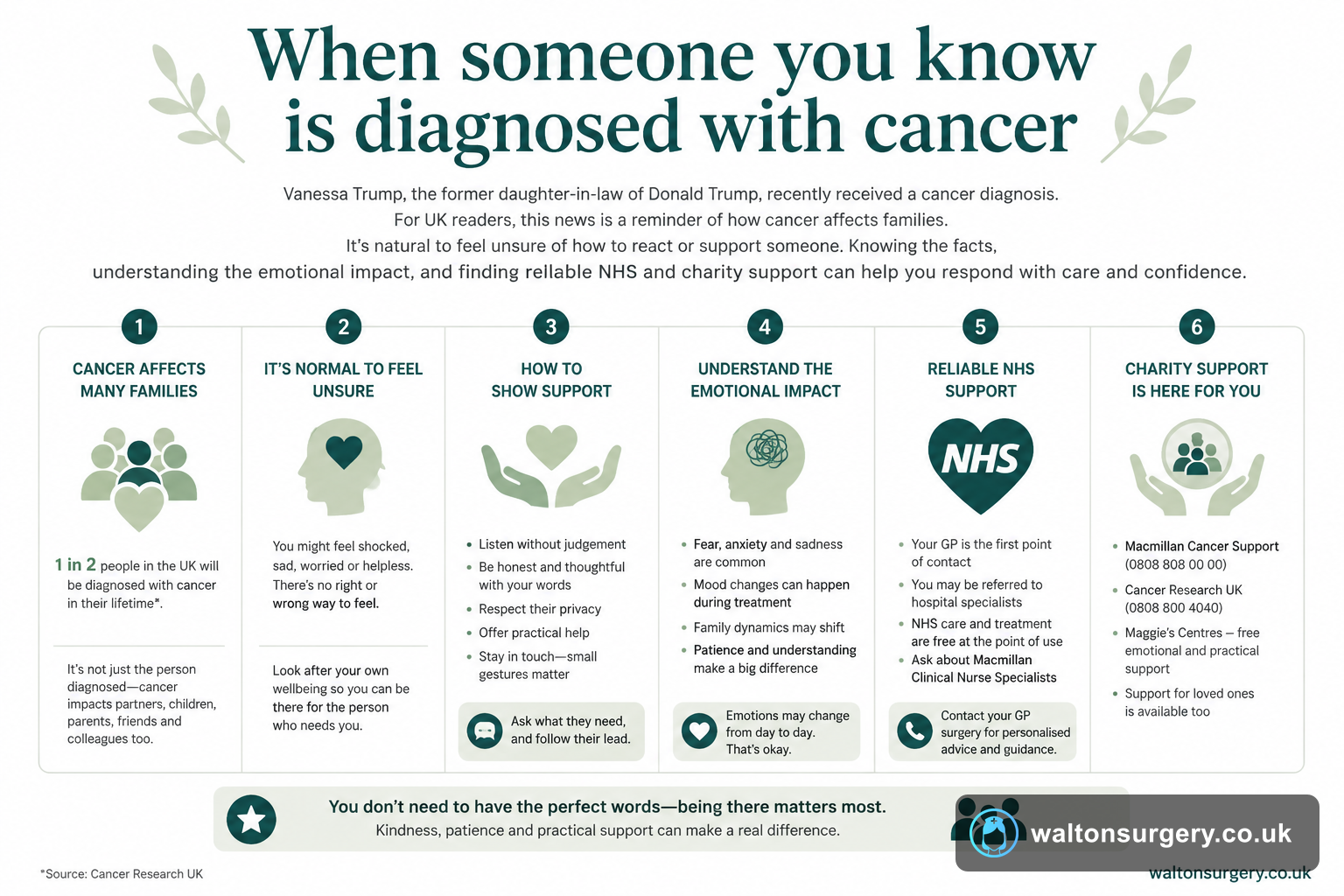
Vanessa Trump, the former daughter-in-law of Donald Trump, recently received a cancer diagnosis. For UK readers, this news is a reminder of how cancer affects families. It’s natural to feel unsure of how to react or support someone. Knowing the facts, understanding the emotional impact, and finding reliable NHS and charity support can help you respond with care and confidence.
The news about Vanessa Trump’s cancer diagnosis has, once more, pushed the subject into the public eye. Her experience is deeply personal, of course, yet it mirrors what millions of families go through. Here in the UK, Cancer Research UK tells us a new cancer case is diagnosed roughly every 90 seconds. That’s a staggering number. It’s just part of life, really, but it doesn’t mean any of us feel ready for it when it happens to someone we know.
When a friend or relative gets that kind of news, what you do next counts. You might be hit with shock, or a deep sadness, or maybe just a feeling of being useless. All of those are normal. This guide is here to give you some practical, UK-focused info — what a diagnosis actually involves, how you might talk about it, and where to get support for the person who is ill, as well as for yourself.
What does a cancer diagnosis actually mean?
Getting a cancer diagnosis changes everything, but it’s worth remembering that “cancer” isn’t just one illness. It’s a huge category. The NHS states there are over 200 different types. Each behaves in its own way, grows at its own pace, and has its own treatment path.
Basically, a diagnosis means doctors have found cells that are growing out of control. These can form a lump, which we call a tumour, or they might be in the blood or bone marrow. The next stage is usually “staging,” which helps the team see how far the disease has spread. That information is what guides them in planning the best treatment.
It’s a mistake to panic based on the word alone. Some cancers are caught very early and are quite treatable. Others are more serious. What actually matters are the specifics — the type, the stage, the person’s general health. The NHS website is a solid place to look; it has straightforward details on different cancers, including symptoms, diagnosis, and what the treatment options are.
🔬 Key Facts
Understanding a Cancer Diagnosis
- → Cancer is not one disease — the NHS identifies over 200 distinct types, each with unique behaviour and treatment paths.
- → Staging is crucial — it determines how far the disease has spread and guides the treatment plan.
- → Early detection matters — many cancers caught early are highly treatable; specifics (type, stage, health) matter more than the word alone.
- → Reliable sources are key — the NHS website offers straightforward, medically reviewed information on cancer types, symptoms, and treatments.
How to talk to someone with a cancer diagnosis
Finding the right words is often the hardest part. You don’t need to be perfect. Sometimes, just being there and listening is the most helpful thing you can do.
Start by just acknowledging what’s happened. Something like, “I’m really sorry to hear your news. I’m here for you,” is usually enough. Try to avoid clichés such as “everything happens for a reason” or “stay positive.” People mean well with those, but they can come across as brushing aside the person’s fear and grief.
Let them set the pace for the conversation. If they want to discuss their diagnosis, listen. If they’d rather chat about something else entirely, that’s fine too. Don’t push for information about their prognosis or treatment plan. They’ll tell you what they’re comfortable with, when they’re good and ready.
A better approach is to use open questions that put them in control. For instance, “How are you feeling today?” or “Is there anything you’d like to chat about?” works better than something direct like “Are you scared?” which can feel a bit intrusive. Macmillan Cancer Support has some brilliant resources on this — what to say and, just as crucial, what not to say.
What to avoid saying
Some remarks, even with the best intentions, can actually hurt. Don’t compare their situation to someone else’s. Saying “My aunt had that and she was fine” isn’t comforting; it just downplays what they’re going through. Recent public experiences, like the beverley callard cancer diagnosis, show how personal and unique each journey is.
Resist the urge to give medical advice you haven’t been asked for. Recommending special diets, supplements, or alternative treatments you found online is not helpful and could be harmful. Have faith that their medical team knows what they’re doing.
And try not to make promises you might not be able to keep. Telling someone “I’ll always be there” might not be realistic. Offering specific, practical help that you know you can deliver is a much better bet.
Practical ways to offer support
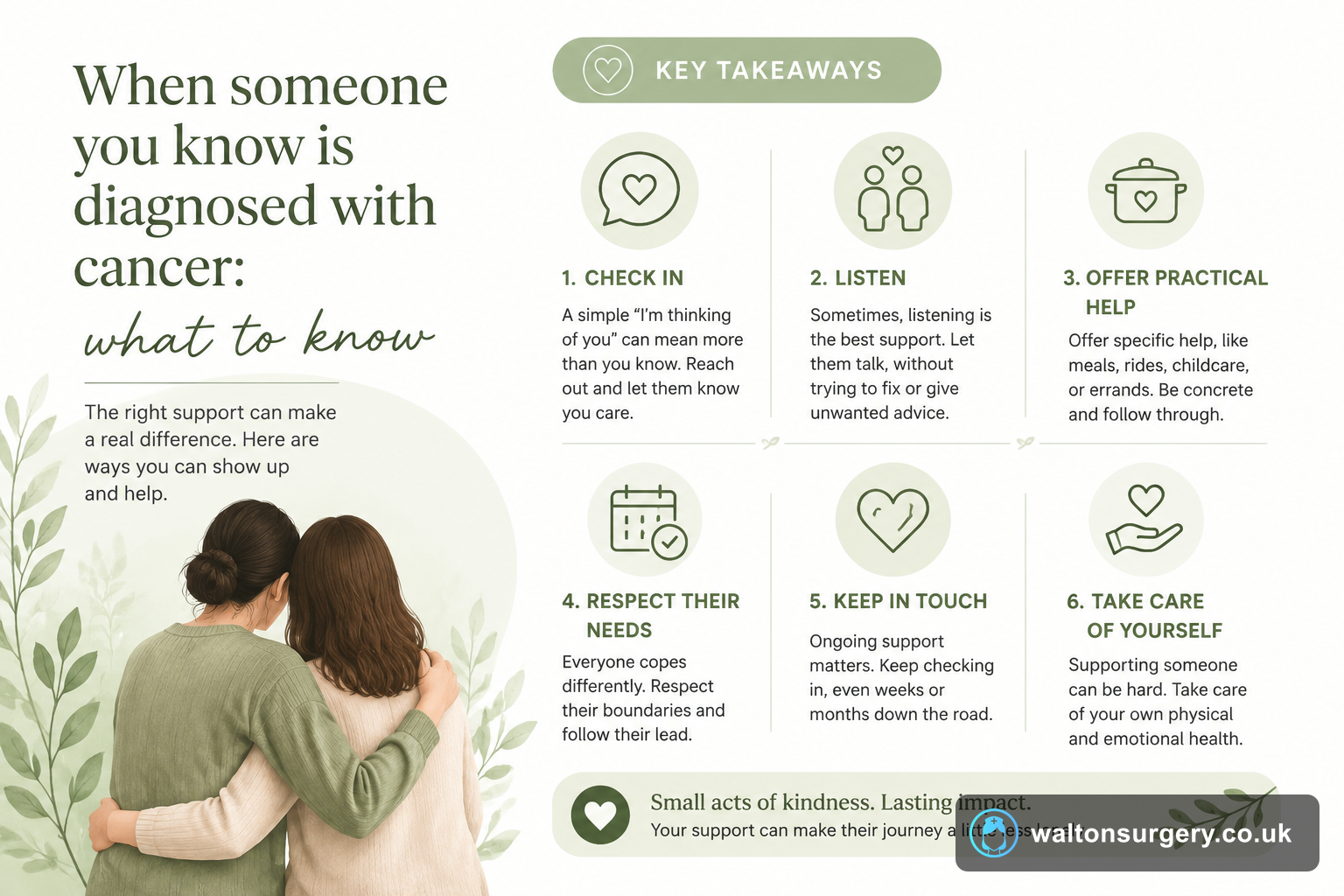
Kind words are good, but actions often speak louder. A person with cancer is usually swamped with appointments, dealing with treatment side effects, and carrying a huge emotional load. Real, practical help can lift a genuine burden.
The offers that work best are specific. Instead of a vague “Let me know if you need anything,” which makes them do the work of asking, try something concrete:
- “I’m going to the shops on Tuesday. Can I pick up some groceries for you?”
- “I’ve made a lasagna for your freezer. When would be a good time to drop it off?”
- “I’m free on Thursday afternoon. Can I drive you to your appointment or sit with you for a bit?”
Other useful things are helping with childcare, walking the dog, collecting prescriptions, or doing some of their laundry. These small acts can make a massive difference to someone’s day-to-day life.
And remember, support isn’t a one-off gesture. Cancer treatment can go on for months or even years. Checking in regularly, even with a quick text saying “Thinking of you,” shows them you haven’t forgotten. For those navigating treatment themselves, stories like the jessie j cancer free breast cancer mastectomy update 2026 can offer a sense of hope and perspective on the long road ahead.
Understanding the emotional impact
A cancer diagnosis hits mental health hard. The person who is ill might go through a whole range of emotions: fear, anger, sadness, anxiety, and sometimes even guilt. These feelings can swing from one hour to the next.
Family and close friends get hit hard too. You could be dealing with your own shock, grief, and fear for their future. You might also feel helpless, or guilty for being healthy yourself. Those are all valid reactions. You’re not a bad person for feeling them.
Finding your own outlet for these feelings is vital. Talking to someone you trust, a counsellor, or a support group for families can be a real help. You can’t pour from an empty cup, after all. Looking after your own mental health puts you in a stronger position to be there for them.
The NHS suggests talking therapies like Cognitive Behavioural Therapy (CBT) for anxiety and low mood. Your GP can point you to local services. Charities like Macmillan and Mind also have resources and support lines for people affected by cancer, and that includes family members. The public journey of colleen hoover cancer treatment radiation diagnosis 2026 has also highlighted the intense emotional weight that comes with a diagnosis and treatment.
Where to find reliable information and support in the UK
It’s easy to find misleading or scary stuff online these days. Stick to trusted, UK-based sources for your facts.
- The NHS website (nhs.uk): Your first port of call for clear, factual information on cancer types, symptoms, and treatments. It’s written and reviewed by medical professionals.
- Macmillan Cancer Support: A major UK charity offering extensive information, a support line (0808 808 00 00), and local services. They have guides for friends and family, too.
- Cancer Research UK: The leading cancer research charity in the UK. Their website has detailed information on cancer types and the latest research, written in an accessible way.
- Maggie’s Centres: These are drop-in centres located near NHS hospitals across the UK. They offer free practical, emotional, and social support to people with cancer and their families in a calm, homelike environment.
If you’re helping someone, you can also talk to their cancer nurse specialist (CNS). This person is a main point of contact within the hospital team and can usually signpost you to the right support.
Frequently Asked Questions
⭐ The Bottom Line
What this means for you
Vanessa Trump’s diagnosis reminds us that cancer can touch anyone, no matter who they are. The most valuable things you can give someone facing this are your time, your patience, and your help with the everyday stuff. Listen without judging, offer support without expecting anything back, and use reliable sources like the NHS and Macmillan for information. By looking after yourself as well, you’ll be in a better position to walk alongside them.
Last updated: 2026-07-14 · Written by the Walton Surgery editorial team · Medical information is for educational purposes only and does not replace advice from a qualified healthcare professional.
